
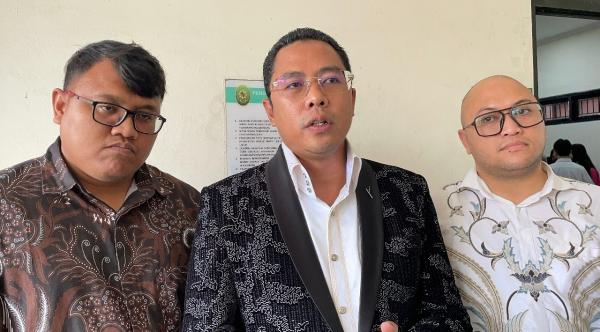
The legal team representing prominent Indonesian doctor and entrepreneur Richard Lee has expressed strong optimism that their client will be acquitted of all charges currently being deliberated at the Tangerang District Court in Banten. Speaking to reporters following the latest court session, Faizal Hafied, the lead defense counsel for Richard Lee, asserted that several crucial elements of the indictment presented by the Public Prosecutor (JPU) have essentially collapsed based on concrete factual revelations uncovered throughout the ongoing judicial proceedings.
The defense team’s confidence stems primarily from testimonies and evidentiary records that surfaced during the trial, which they argue severely undermine the prosecution’s foundational arguments. Among the most contested points is the second alternative charge leveled against Richard Lee, which invokes violations of Indonesia’s Consumer Protection Law. According to the defense, this specific component of the indictment lacks both legal standing and factual backing, a vulnerability they believe will critically influence the final formulation of the prosecution’s sentencing demands.
Legal Deficiencies in the Consumer Protection Indictment
At the heart of the defense’s argument regarding the Consumer Protection Law is the question of legal standing—specifically, who possesses the lawful right to file a complaint or report concerning a violation of the statute. Faizal Hafied emphasized that under the legal framework governing consumer protection, a formal grievance and subsequent legal action must be initiated by an actual consumer who has directly utilized the product in question and suffered verifiable harm, loss, or injury as a direct result.
During the evidentiary phase of the trial, the defense scrutinized the identity and background of the witness presented as the primary complainant by the prosecution. Hafied pointed out that this reporting witness failed to qualify as an active, bona fide user of the disputed skincare or health products associated with Richard Lee’s brand. Furthermore, the defense highlighted that the witness could not demonstrate any material, financial, or physical damages stemming from product usage.
"It will certainly have an impact. Why? Because first, the second indictment relating to consumer protection has effectively fallen apart," Faizal stated outside the Tangerang District Court. "Regarding the consumer protection law, the party eligible to report potential violations under this statute must be a consumer who actively uses the product and has suffered losses."
By establishing that the reporting individual did not experience direct consumer harm, the defense maintains that the essential elements constituting a violation of the Consumer Protection Law have not been fulfilled. Legal analysts observing the case note that establishing a direct causal link between a product and consumer detriment is a fundamental requirement in prosecuting offenses under consumer rights regulations in Indonesia, potentially leaving a significant void in the state’s case.
Background Context and Chronology of the Case
The legal battle facing Richard Lee is part of a broader, highly publicized series of regulatory and legal challenges that have shadowed the entrepreneur and aesthetic clinic owner over recent years. Richard Lee, widely known for his prominent presence on digital media platforms where he reviews cosmetic products and discusses skincare safety, has frequently found himself at the center of industry controversies.

The genesis of the current criminal trial traces back to investigative reports and subsequent police filings that led to formal charges being brought against him. Investigators initially scrutinized various marketing claims, product formulations, and distribution practices associated with his business ventures. Following a series of police interrogations and case files handover to the state prosecution office, the case was formally elevated to the Tangerang District Court, where formal hearings commenced.
Throughout the trial timeline, the prosecution has presented various witnesses, including regulatory experts, investigators, and the initial complainants, attempting to prove that the distribution and promotion of the products violated existing regulations. Conversely, the defense has systematically countered these assertions by bringing forward independent experts, documentation regarding product testing, and rigorous cross-examinations designed to challenge the validity of the state’s technical findings.
Broader Implications for Regulatory Enforcement and the Beauty Industry
The outcome of Richard Lee’s trial at the Tangerang District Court carries significant implications not only for the defendant personally but also for the broader Indonesian cosmetic, wellness, and digital commerce sectors. As social media-driven commerce and celebrity-endorsed beauty brands continue to proliferate rapidly across the archipelago, regulatory bodies such as the Indonesian Food and Drug Authority (BPOM) and law enforcement agencies have intensified scrutiny over marketing claims and product safety.
Legal experts suggest that the court’s final interpretation of the Consumer Protection Law in this high-profile case could establish a critical legal precedent. If the judiciary accepts the defense’s argument that consumer protection charges require a verified, aggrieved end-user as a complainant, it may reshape how future commercial and regulatory disputes involving digital entrepreneurs and influencers are litigated. Such a ruling could impose stricter evidentiary standards for state prosecutors seeking to penalize business owners based on third-party reports or bureaucratic grievances rather than direct consumer complaints.

Conversely, a ruling favoring the prosecution could empower regulatory agencies and industry watchdogs to pursue legal actions against commercial entities based on broader public interest or preemptive safety standards, even in the absence of direct consumer victims. Consequently, stakeholders across the retail, cosmetic, and digital marketing sectors are closely monitoring the proceedings in Tangerang as a bellwether for future commercial accountability.
Next Steps in the Judicial Process
With the evidentiary phase progressing and key defense arguments placed on the judicial record, the trial is now moving toward its concluding stages. The legal teams on both sides are preparing for the submission of the formal sentencing demands (surat tuntutan) by the Public Prosecutor. This document will outline the specific punishments or legal consequences the state believes are warranted based on the evidence presented thus far.
Following the submission of the prosecutor’s demands, the defense will be afforded the opportunity to present a comprehensive plea, known as a pledoi, to counter the state’s arguments and reiterate their request for a full acquittal. The final verdict will ultimately rest with the panel of judges at the Tangerang District Court, who will weigh the testimonies, documentary evidence, and statutory interpretations before rendering their judgment.
Richard Lee’s legal counsel remains confident that the discrepancies identified during the hearings will compel the panel of judges to deliver a verdict of not guilty, bringing a definitive close to a turbulent chapter in the entrepreneur’s high-profile career.