The intersection of professional sports and the entertainment industry has long been a subject of cultural fascination, representing two of the most lucrative and high-profile career paths in modern society. While the traditional narrative often depicts a strict bifurcation between the sweat of the athletic training ground and the glamour of the Hollywood red carpet, a select group of globally recognized figures has successfully navigated both worlds. Long before they commanded box office hits, sold out arena tours, or captured international television audiences, several prominent actors, musicians, and performers harbored serious aspirations of becoming professional footballers.
The historical crossover between these two demanding domains is more extensive than casual observers might realize. A surprising number of major entertainment icons spent their formative years participating in elite football academies, securing professional contracts with top-tier European clubs, or representing their respective national teams on the international stage. Their collective journeys offer a compelling look at how early athletic pursuits can profoundly influence subsequent artistic careers, providing a blueprint for resilience, discipline, and public performance under intense scrutiny.
The Cultural Phenomenon of Athlete-Turned-Entertainers
The transition from sports to entertainment is historically rooted in the shared demand for physical presence, charisma, and the ability to perform under high-pressure environments. In the modern era, athletes enjoy unprecedented celebrity status, frequently blurring the lines between sport and pop culture. However, the reverse trajectory—where athletes abandon or conclude their sporting careers to enter the arts, or where aspiring footballers pivot to entertainment following career-altering injuries or missed opportunities—represents a unique narrative arc.
Industry analysts note that the discipline required to reach the professional tier in association football heavily mirrors the rigorous demands of the entertainment industry. The grueling training schedules, tactical discipline, media management, and resilience required to recover from physical setbacks serve as effective preparation for the unpredictable nature of film production and music recording. Below is a comprehensive examination of five notable figures who successfully transitioned from the football pitch to the global entertainment stage, detailing their athletic backgrounds, career pivots, and lasting impacts on both industries.
Vinnie Jones: From Hard-Hitting Midfielder to Cinematic Enforcer
For millions of film enthusiasts worldwide, Vinnie Jones is instantly recognizable as a quintessential cinematic tough guy. Over the past three decades, the British actor has carved out a distinct niche in Hollywood and European cinema, starring in critically acclaimed and commercially successful crime comedies and action thrillers such as Guy Ritchie’s Lock, Stock and Two Smoking Barrels (1998) and Snatch (2000), as well as blockbuster franchises like X-Men: The Last Stand (2006), where he portrayed the formidable mutant Juggernaut.
However, long before Jones was memorably delivering menacing dialogue on the silver screen, he was striking fear into the hearts of opposing attackers across the English professional football leagues. Operating primarily as a combative, uncompromising defensive midfielder during the 1980s and 1990s, Jones built a reputation as one of the most fiercely competitive and feared players of his generation.
Athletic Career and Major Milestones
Jones’s professional playing career spanned over a decade, during which he represented several prominent English clubs. He enjoyed notable stints with Leeds United, Sheffield United, Chelsea, and Queens Park Rangers, alongside two distinct spells with Wimbledon FC. It was during his tenure with Wimbledon that Jones achieved the defining moment of his athletic career.
In the 1988 FA Cup Final, Jones played an instrumental role as part of the legendary Wimbledon squad famously dubbed the "Crazy Gang." In one of the most famous upsets in English football history, Wimbledon triumphed over the dominant Liverpool side of the era, securing a historic 1–0 victory. Jones, serving as the heartbeat of the team’s relentless midfield press, lifted the prestigious trophy at Wembley Stadium. Furthermore, his leadership qualities and uncompromising style earned him international recognition, culminating in his selection for the Wales national team, where he earned nine caps and served as team captain.
The Transition to Acting
Following his retirement from professional football in 1999, Jones made a seamless and remarkably rare pivot into feature films. Recognizing that his intimidating public persona and distinct physical presence carried significant commercial value in the action genre, director Guy Ritchie cast him in Lock, Stock and Two Smoking Barrels. The film proved to be a watershed moment for Jones, instantly establishing his credibility as a character actor.
Critics and industry analysts have frequently observed that the uncompromising, fierce persona Jones projected on the football pitch translated almost directly to his early cinematic roles. Rather than attempting to distance himself from his reputation as a hardman athlete, Jones embraced it, utilizing his athletic background to execute his own stunts and lend authentic grit to his performances. Today, Jones stands as one of the most successful examples of a professional athlete evolving into a bankable international film star.
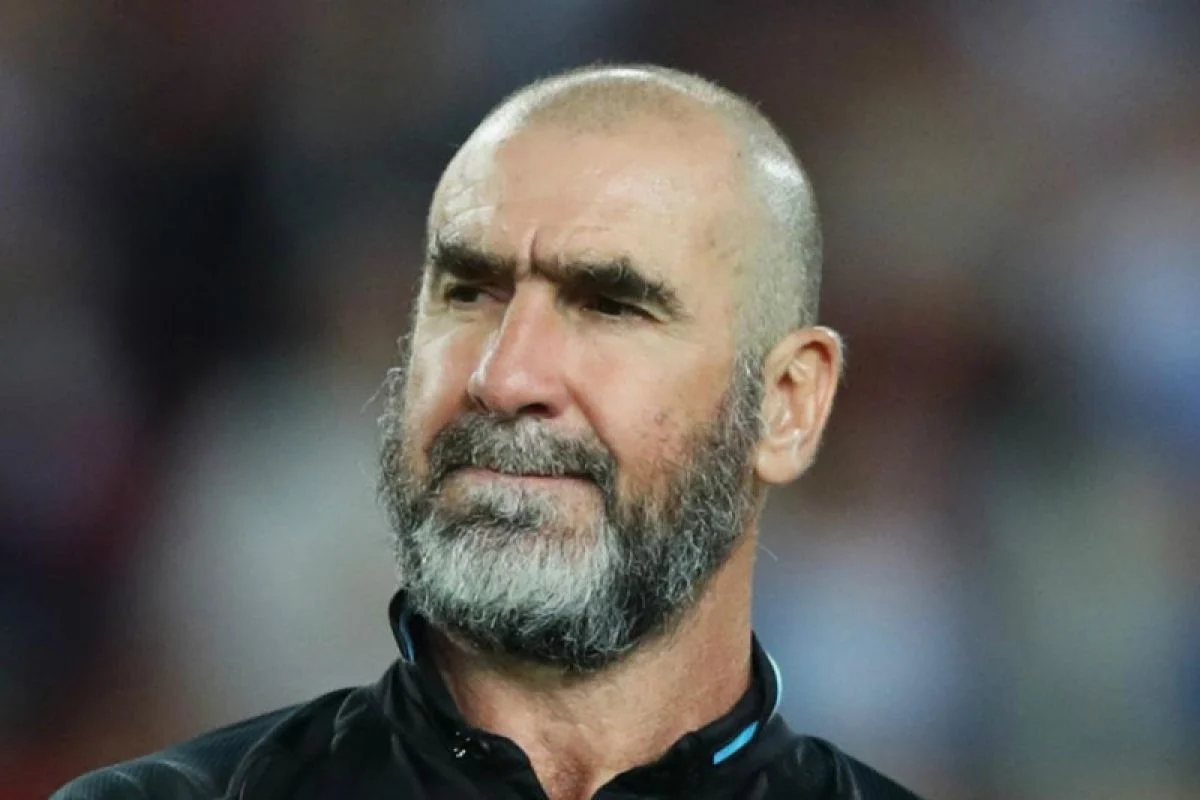
Eric Cantona: The French Maestro of Manchester and the Silver Screen
Few figures loom as large over the history of the English Premier League as Eric Cantona. Revered by supporters of Manchester United as "King Eric," the enigmatic French forward was the catalyst for the club’s domestic dominance during the 1990s under the management of Sir Alex Ferguson. Yet, alongside his legendary status on the football pitch, Cantona has cultivated a prolific and respected parallel career as an actor, producer, and cultural icon.
The Architect of Manchester United’s Golden Era
Cantona arrived in English football in the early 1990s, first making an impact with Leeds United before securing a high-profile transfer to Manchester United in November 1992. His arrival is widely credited by football historians as the final missing puzzle piece that transformed Ferguson’s talented young squad into an unstoppable championship-winning machine.
During his five seasons at Old Trafford, Cantona redefined the aesthetic and tactical standards of English football. Adorned with his trademark upturned collar, supreme technical ability, and unmatched on-field vision, he guided Manchester United to four Premier League titles in five years, alongside two domestic FA Cups. He was twice named PFA Players’ Player of the Year and was inducted into the Premier League Hall of Fame in 2021.
Cantona’s playing career was famously characterized by a volatile mix of artistic brilliance and fiery temperament, most notably illustrated by his suspension in 1995 following an altercation with a spectator. Despite the controversy, his status as a footballing visionary remained uncontested when he announced his shock retirement from the sport in May 1997 at the peak of his powers.
Cinematic Pursuits and Artistic Expression
Rather than stepping away from the public eye or entering traditional sports management like many of his contemporaries, Cantona immediately immersed himself in the arts. He demonstrated a profound passion for cinema, literature, and painting.
His acting debut came in the critically acclaimed historical drama Elizabeth (1998), starring Cate Blanchett, where he played the French ambassador. Over the subsequent decades, Cantona has built an impressive cinematic resume, appearing in more than 25 films and television productions. Notably, he starred as a fictionalized version of himself in Ken Loach’s acclaimed 2009 comedy-drama Looking for Eric, a film that explored the psychological impact of his footballing persona on a troubled Manchester postman.
According to retrospective analyses by Manchester United’s official media channels, Cantona’s post-football career represents one of the most successful artistic reinventions in sports history, proving that his creative flair was never strictly confined to the green rectangular turf of the stadium.
Frank Leboeuf: World Cup Champion to Hollywood Silver Screen
The path from winning international football’s most prestigious silverware to studying theatrical arts in Southern California is an unconventional one. Yet, this is precisely the trajectory traveled by former French central defender Frank Leboeuf, whose post-athletic career stands as a testament to reinvention and intellectual curiosity.
International and Domestic Success
Leboeuf enjoyed a distinguished professional playing career, anchoring the defenses of top-tier European clubs including Strasbourg, Olympique de Marseille, and English Premier League side Chelsea. During his five-year spell with Chelsea between 1996 and 2001, Leboeuf became a fan favorite, renowned for his composure on the ball, exceptional positional awareness, and reliability as a penalty taker. He played a pivotal role in helping the London club secure the FA Cup in 1997 and 2000, as well as the League Cup and UEFA Cup Winners’ Cup.
However, Leboeuf’s crowning achievements occurred on the international stage with the France national team. As an integral member of Les Bleus‘ golden generation, Leboeuf was part of the historic squad that triumphed on home soil at the 1998 FIFA World Cup, featuring in the final against Brazil following an injury suspension to Laurent Blanc. Two years later, he added a European Championship medal to his collection, starting in the final as France defeated Italy to win Euro 2000.
Transition to Acting and Theatrical Training
Upon concluding his active playing career, Leboeuf made the bold decision to relocate to Los Angeles, California, with the explicit goal of pursuing a professional acting career. Recognizing the stark differences between athletic performance and dramatic arts, Leboeuf committed himself to formal training, enrolling at the prestigious Lee Strasberg Theatre & Film Institute.
His dedication to his new craft paid off when he secured notable roles in both independent and mainstream film projects. Most notably, Leboeuf appeared in James Marsh’s critically acclaimed biographical romantic drama The Theory of Everything (2014), portraying a medical doctor alongside Academy Award winner Eddie Redmayne. In addition to his acting pursuits, Leboeuf has maintained a prominent presence in the football world as a respected television analyst and media commentator, successfully balancing both of his passions.
Nicky Byrne: From Leeds United Academies to Global Boyband Stardom
Long before he was performing to sold-out arenas across the globe as a member of one of Ireland’s most successful musical exports, Westlife, Nicky Byrne was on track to build a professional career as a high-level association football goalkeeper.
Early Footballing Promise
Growing up in Dublin, Ireland, Byrne displayed exceptional athletic talent from an early age, specifically showing natural prowess as a goalkeeper. He honed his skills within the competitive youth structures of prominent local clubs, including Home Farm and St. Kevin’s Boys, which are renowned for producing elite footballing talent.
In 1995, Byrne’s performances caught the attention of scouts from English powerhouse Leeds United. He was subsequently offered a youth contract and relocated to England to join the club’s professional academy at the age of 16. Byrne spent two formative years developing his craft within the professional English system, training alongside future Premier League stars and representing the club at youth levels. The pinnacle of his footballing journey arrived in 1997, when he was part of the Leeds United squad that lifted the prestigious FA Youth Cup.
The Shift to Music and Westlife
Despite his early promise, Byrne’s contract with Leeds United was not extended, prompting a pivotal crossroads in his young life. Faced with the reality of the hyper-competitive football landscape, he made the decision to return to Ireland and refocus his creative energies on music.
In 1998, Byrne successfully auditioned for a new vocal harmony group being assembled by music manager Louis Walsh. That group became Westlife, which rapidly evolved into one of the best-selling boybands of all time. Alongside bandmates, Byrne recorded a string of consecutive international number-one singles, including iconic ballads such as My Love, Uptown Girl, and Flying Without Wings, selling over 50 million records worldwide.
Though his professional football career was cut short, Byrne has frequently utilized his athletic background, participating regularly in high-profile charity matches such as Soccer Aid and maintaining a deep-rooted connection to the sport through television broadcasting and media work in Ireland.
Julio Iglesias: A Car Crash That Redirected World Music History
Perhaps the most dramatic and life-altering pivot from sport to art belongs to Spanish singing legend Julio Iglesias. Today recognized as one of the best-selling music artists of all time—with over 300 million records sold in 14 languages—Iglesias’s entry into the entertainment industry was born out of profound personal tragedy and physical adversity.
Real Madrid’s Youth Goalkeeper
During his youth in Madrid during the late 1950s, Iglesias harbored a singular ambition: to become the first-choice professional goalkeeper for his beloved club, Real Madrid. His exceptional reflexes and dedication earned him a spot in the youth academy of Real Madrid Castilla in 1959, where he played alongside future legends of the Spanish game. At the time, a professional football career appeared to be his guaranteed destiny.
The Tragic Accident and Discovery of the Guitar
That promising athletic future was abruptly shattered on September 22, 1962, just prior to his twentieth birthday. Iglesias was involved in a severe automobile accident in Madrid that left him with multiple fractures to his spine and temporarily paralyzed from the waist down. Doctors informed him that he would likely never walk again, effectively ending his dreams of a professional football career.
During nearly two years of grueling physical rehabilitation in a hospital, Iglesias faced immense psychological distress. To aid in his recovery and help restore dexterity in his hands, a medical nurse presented him with an acoustic guitar.
Initially intended merely as therapeutic exercise, playing the instrument unlocked a dormant creative talent. Iglesias began writing poetry and composing melodies that reflected his isolation, recovery, and internal struggles. Miraculously, he regained his mobility through sheer determination, though the physical limitations of his injuries permanently precluded a return to professional athletics.
Redirecting his competitive drive into the music industry, Iglesias entered the Benidorm International Song Festival in 1968 with an original composition titled La vida sigue igual ("Life Goes On"). He won the competition outright, securing a record deal with CBS and launching a legendary global career that would span over half a century. Iglesias’s journey stands as one of the most remarkable examples of athletic tragedy serving as the catalyst for unprecedented artistic greatness.
Broader Implications and Legacy
The intersecting narratives of Vinnie Jones, Eric Cantona, Frank Leboeuf, Nicky Byrne, and Julio Iglesias collectively challenge the rigid compartmentalization of modern career paths. They underscore the reality that high-level athletic training—characterized by discipline, performance under pressure, physical endurance, and public scrutiny—frequently serves as an effective foundational platform for success in the demanding worlds of cinema, television, and music.
Furthermore, these stories highlight the resilience required of professional athletes when confronting career-ending injuries, contract expirations, or the natural physical limitations of aging. While the transition from the sports arena to the entertainment stage remains statistically rare, the enduring cultural footprint left by these figures proves that the journey from the football pitch to global stardom is not only possible, but capable of producing some of the most compelling and enduring legacies in modern popular culture.