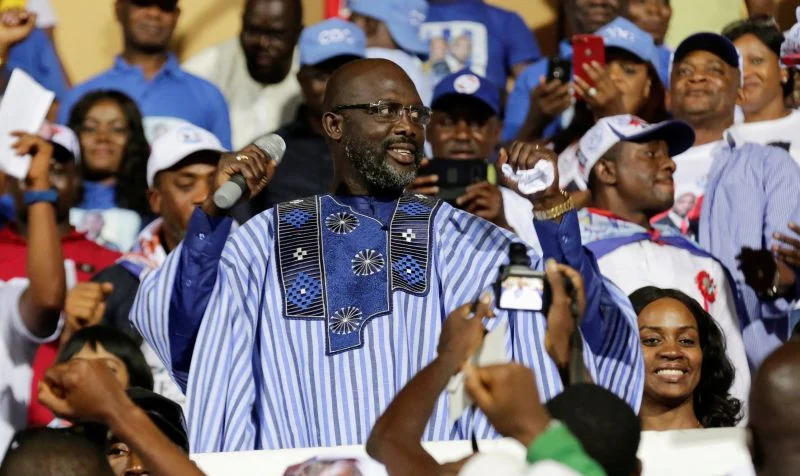
The journey of George Tawlon Manneh Oppong Ousman Weah remains one of the most remarkable and improbable narratives in modern history, bridging the worlds of elite global sports and high-stakes statecraft. Long before he assumed the highest office in his homeland, Weah was celebrated across continents as a trailblazing athlete who conquered European football. Culminating in his official election as the President of Liberia in December 2017, his transition from the stadiums of Milan, Paris, and London to the executive mansion in Monrovia stands as a testament to profound personal ambition, grassroots popularity, and an unwavering commitment to national service.
This historic political victory marked a defining moment not only for the West African nation of Liberia—a country historically scarred by civil conflict and economic instability—but also for the global perception of sports figures entering the political arena. Weah’s ascension was not merely a celebrity election; it was the culmination of a multi-decade evolution from a barefoot prodigy on the dusty pitches of Monrovia to an internationally seasoned statesman determined to rescue his nation from systemic poverty and infrastructural decay.
Early Life and the Genesis of a Football Prodigy
Born on October 1, 1966, in the Clara Town suburb of Monrovia, George Weah grew up in a modest household raised primarily by his grandmother, Emma Klonh Brown. Liberia during his formative years was a complex society facing underlying socio-economic disparities. Despite the lack of formal athletic infrastructure, Weah’s passion for football manifested early. He honed his skills on makeshift pitches, playing barefoot on sandy surfaces that demanded exceptional close-control and resilience—traits that would later define his professional playing style.
His natural athletic prowess quickly drew the attention of local talent scouts. Weah began his organized club career playing for several Liberian teams, including Invincible Eleven, Mighty Barolle, Bongrange Bonguine, and Young Survivors of Claretown. During his teenage years, his leadership and exceptional goal-scoring ability propelled Young Survivors—a side competing entirely without the benefit of a professional coach—all the way to the nation’s top division. This early success highlighted not only his athletic superiority but also an innate ability to inspire and lead peers under adverse conditions.
The turning point in his early career arrived in 1987 when Cameroonian manager Jean-Vincent Belle Allam recognized his immense potential and recommended him to Tonnerre Yaoundé, a powerhouse in the Cameroonian top-flight league. Moving away from Liberia for the first time, Weah wasted no time making an impact. In his debut season with Tonnerre, he led the club to the Cameroonian league championship. His explosive speed, towering physical presence, and clinical finishing made it immediately apparent that African domestic football was merely a stepping stone for the young striker.
Conquering European Football: The Rise of an African Icon
Recognizing his raw and dynamic talent, European scouts soon descended upon West Africa. In the summer of 1988, French club AS Monaco, then competing in Division 1, secured Weah’s signature. Under the meticulous tactical guidance of manager Arsène Wenger—who would forge a lifelong mentorship with the young forward—Weah adapted rapidly to the rigorous demands of European football. Over five seasons with Monaco, from 1987 to 1992, Weah netted 57 goals across all competitions. His crowning team achievement during this initial French chapter came in 1991, when he helped Monaco capture the prestigious Coupe de France.
By the early 1990s, Weah’s reputation as one of the most lethal and complete strikers in the world was cemented. His combination of breathtaking acceleration, sublime dribbling technique, and unmatched physical power caught the attention of Paris Saint-Germain (PSG), whom he joined in 1992. His tenure in the French capital elevated his status to global stardom. During his time with PSG, Weah captured another French Cup, a Ligue 1 title, and spearheaded the club’s memorable run to the semi-finals of the UEFA Champions League in the 1994–95 season. Across 123 appearances for PSG, he found the back of the net 37 times and provided numerous assists, establishing himself as a nightmare for elite European defenders.
The pinnacle of his club career, however, unfolded in Italy. In the summer of 1995, Italian giants AC Milan acquired Weah. In the iconic red and black stripes of the Rossoneri, Weah delivered some of the most memorable moments in Serie A history. His legendary individual goal against Hellas Verona in September 1995—where he collected the ball inside his own penalty box, dribbled past nearly the entire opposing team, and slotted home—remains etched in football lore.
During his five seasons at San Siro (1995–2000), Weah scored 51 goals in 114 appearances, capturing Serie A titles in 1996 and 1999. It was also during this golden era that individual accolades converged upon him. In 1995, Weah made history by winning the prestigious FIFA World Player of the Year award, the Ballon d’Or, and the African Footballer of the Year simultaneously. To this day, he remains the only African-born player in history to win the FIFA World Player of the Year and the Ballon d’Or, a testament to his unparalleled impact on the global game. Following his successful stints at Milan, Weah enjoyed brief spells in the English Premier League with Chelsea and Manchester City, before finishing his professional playing career with Al-Jazira in the United Arab Emirates in 2003.
Transition from Athletic Glory to Political Activism
Even at the height of his athletic fame, George Weah never detached himself from the struggles of his homeland. Throughout the 1990s, while Liberia was ravaged by a brutal civil war that claimed hundreds of thousands of lives and displaced millions, Weah used his personal wealth to finance the Liberian national football team (the Lone Stars), paying for airfare, equipment, and accommodations out of pocket when the national sports federation lacked funds. Furthermore, he served as a UNICEF Goodwill Ambassador, utilizing his global platform to campaign against child soldiers, promote education, and advocate for peace across war-torn regions in Africa.
When Weah officially hung up his boots in 2003, Liberia was emerging from over a decade of devastating conflict under the interim governance of national leaders and international peacekeepers. Rather than retiring to a life of luxury in Europe or North America, Weah chose to return permanently to Monrovia to enter the political arena. His rationale was simple: the youth of Liberia needed a voice, and the country required leaders who understood poverty, hardship, and the transformative power of opportunity.
In 2005, Weah founded the Congress for Democratic Change (CDC), a political party that quickly mobilized a massive following, particularly among disenfranchised urban youth and working-class citizens who viewed him not as a traditional politician, but as a national hero. He contested the 2005 presidential election, running against seasoned economist and former World Bank official Ellen Johnson Sirleaf. Although Weah secured the plurality of votes in the first round, he was defeated in the subsequent runoff election, with critics pointing to his lack of formal higher education and political experience as vulnerabilities.
Rather than abandoning politics following this initial defeat, Weah demonstrated profound patience and strategic foresight. He returned to the classroom, earning a high school diploma and subsequently pursuing higher education degrees in the United States, ultimately obtaining a bachelor’s degree in business administration from DeVry University and a master’s degree in public administration from Keller Graduate School of Management. This commitment to self-improvement silenced critics who questioned his intellectual readiness to govern.
The Road to the Presidency: 2014 Senate Victory and 2017 Triumph
Weah methodically rebuilt his political capital over the next decade. In 2014, he ran for the Liberian Senate representing Montserrado County, the nation’s most populous and politically significant electoral district. He achieved a landslide victory against Robert Sirleaf, the son of the sitting president, securing nearly 80% of the vote. This senatorial victory served as a crucial proving ground, demonstrating his ability to legislate, build institutional coalitions, and manage regional political dynamics.
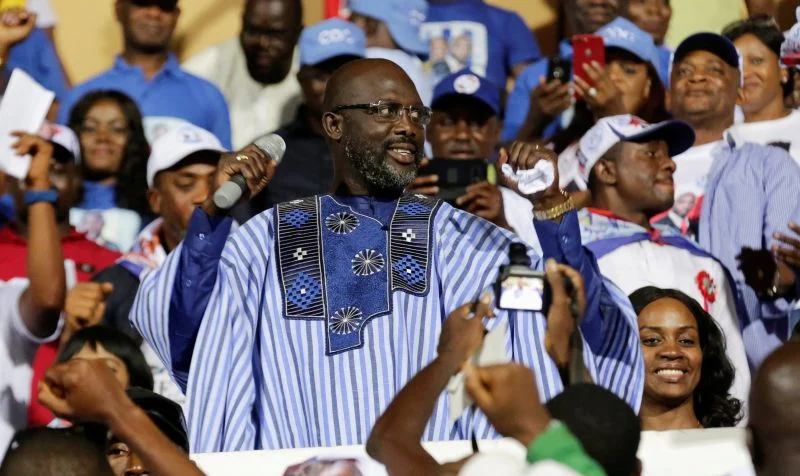
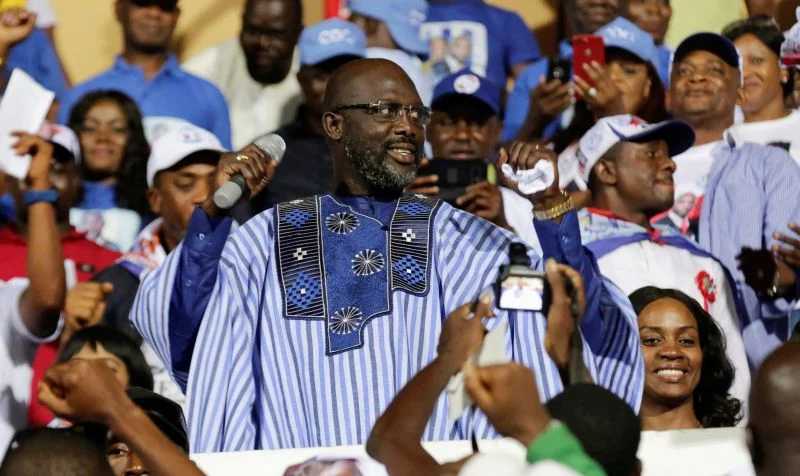
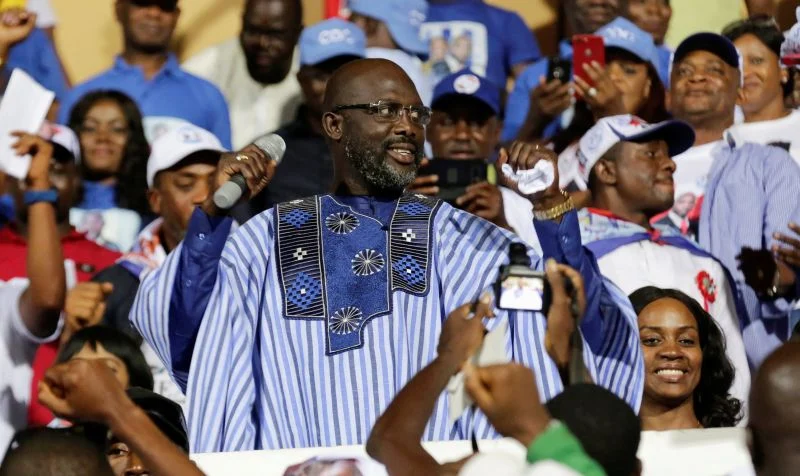
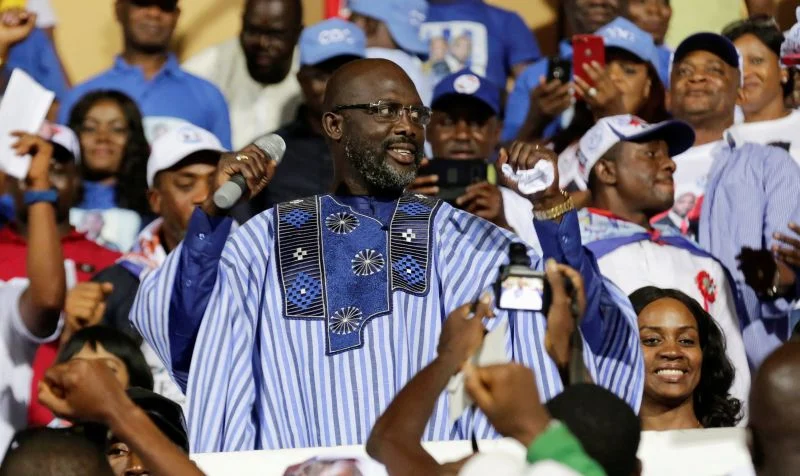
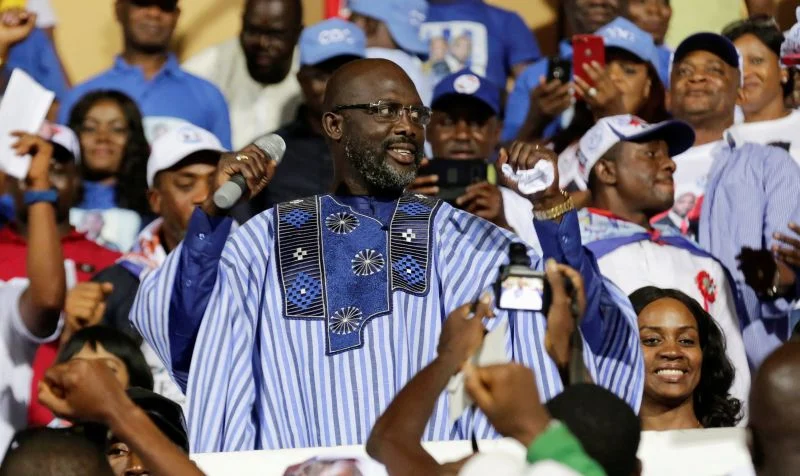
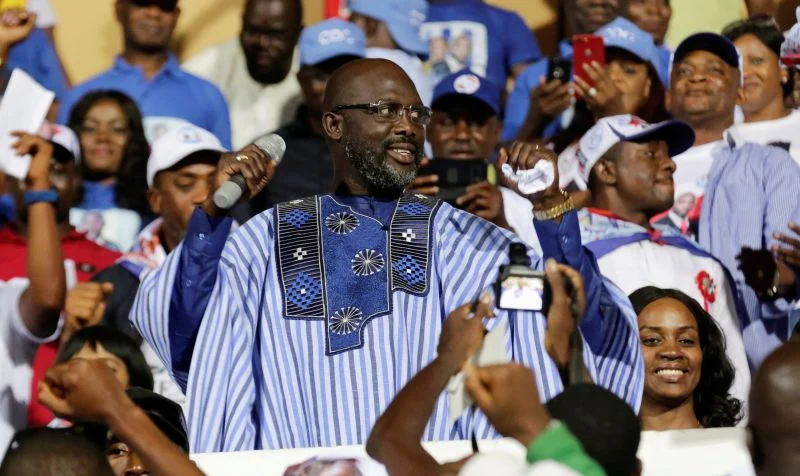
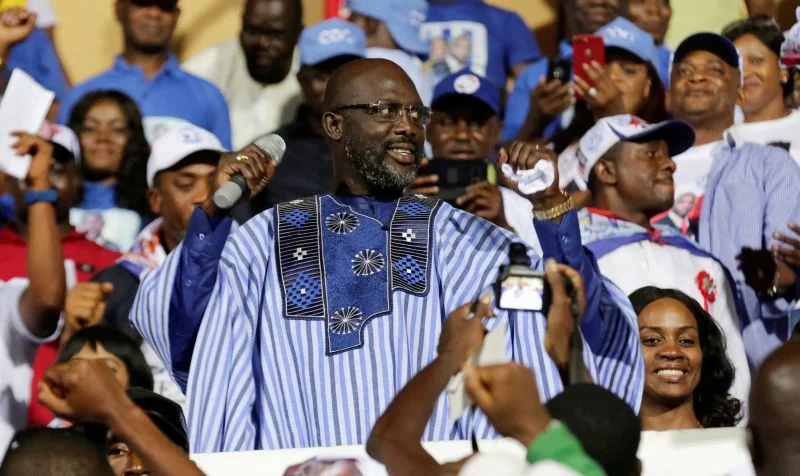
By 2017, as President Ellen Johnson Sirleaf prepared to step down following two constitutionally mandated terms, Weah launched his second presidential bid under the Coalition for Democratic Change (CDC) banner. This time, he paired his immense grassroots popularity with a more structured political platform focused on infrastructure development, educational reform, job creation, and the eradication of corruption. His vice-presidential running mate was Jewel Howard-Taylor, a powerful senator and former wife of former Liberian president Charles Taylor, a strategic alliance that consolidated support in key rural and traditional constituencies.
In the October 2017 general election, Weah won the highest number of votes, defeating his main rival, Vice President Joseph Boakai, though he fell short of the absolute majority required to avoid a runoff. Following legal challenges and administrative delays that postponed the second round, the historic runoff election took place on December 26, 2017. The National Elections Commission announced the final results on December 29, 2017, confirming that George Weah had won a decisive victory, capturing over 61% of the vote across the nation’s 15 counties.
Implications, Challenges, and Global Reactions
The peaceful transition of power resulting from the 2017 election marked a monumental milestone for Liberia. It represented the first democratic transfer of power from one elected president to another in the country since 1944, signaling a fragile yet resilient maturation of Liberian democratic institutions following decades of autocracy and civil war.
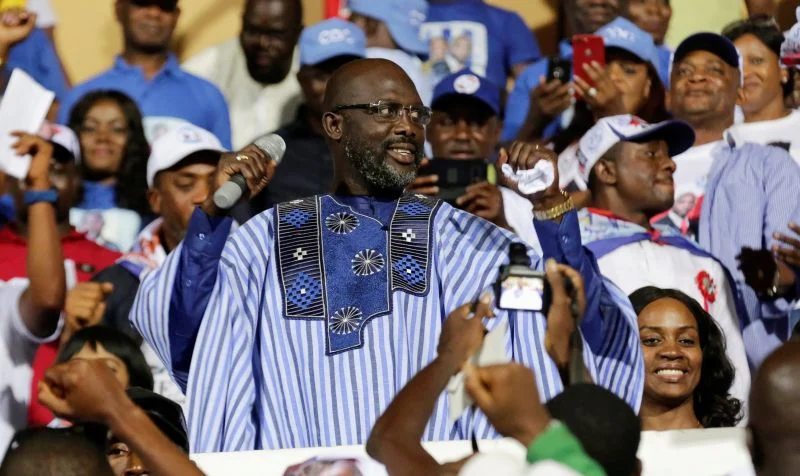
International leaders, sporting organizations, and global human rights advocates flooded Monrovia with congratulatory messages. FIFA President Gianni Infantino hailed Weah’s victory as an inspiration for athletes worldwide, while regional bodies such as the Economic Community of West African States (ECOWAS) praised the peaceful conduct of the electorate. For the citizens of Liberia, the inauguration of President George Weah on January 22, 2018, embodied a profound sense of national renewal. Supporters flooded the Samuel Kanyon Doe Sports Complex—the very stadium where Weah had once led the national football team as a player—to witness the swearing-in ceremony.
However, political analysts and economic experts quickly emphasized that the monumental goodwill and euphoria surrounding Weah’s inauguration would soon be tested by formidable structural realities. Upon taking office, Weah inherited an economy struggling with high inflation, a depreciating national currency, severe infrastructural deficits in electricity and road networks, and lingering public health challenges in the wake of the West African Ebola epidemic. Furthermore, expectations among the youth were stratospheric; millions who viewed Weah as a personal savior expected immediate economic relief and job creation.
Fact-Based Analysis of the Weah Presidency’s Legacy
In the years following his historic election, the administration of President George Weah faced intense scrutiny from both domestic watchdogs and international financial institutions. Critics pointed to persistent economic hardships, allegations of administrative corruption, and public sector salary delays as evidence of the challenges inherent in transitioning from athletic icon to effective executive administrator. Conversely, supporters highlighted significant investments in free tuition for public universities, nationwide road construction projects, and the preservation of absolute press freedom and civil liberties as major achievements of his tenure.
The trajectory of George Weah’s life—rising from the impoverished streets of Clara Town to the summit of world football, and ultimately securing the highest political office in his country—remains an unprecedented narrative in modern global history. Whether viewed through the lens of sports mythology or complex political science, Weah’s journey demonstrates the profound capacity of individuals to transcend societal limitations. As history continues to evaluate his dual legacies on the pitch and in the executive mansion, the story of George Weah remains a powerful reminder that perseverance, public service, and a deep-seated connection to the grassroots can alter the destiny of both an individual and an entire nation.