The journey from the dusty, improvised football pitches of Monrovia to the corridors of executive power is one of the most remarkable narratives in modern political and sporting history. In December 2017, George Tawlon Manneh Oppong Ousman Weah achieved a historic milestone by winning the presidential election in Liberia, transitioning from a global sporting icon to the leader of a nation striving for democratic stability, economic recovery, and national healing. This monumental electoral victory followed a decorated athletic career that saw Weah conquer the highest echelons of European club football, most notably capturing the FIFA World Player of the Year and the Ballon d’Or in 1995—an unprecedented feat for an African athlete that remains etched in the annals of global sports history.
Main Facts and the Historic 2017 Presidential Election
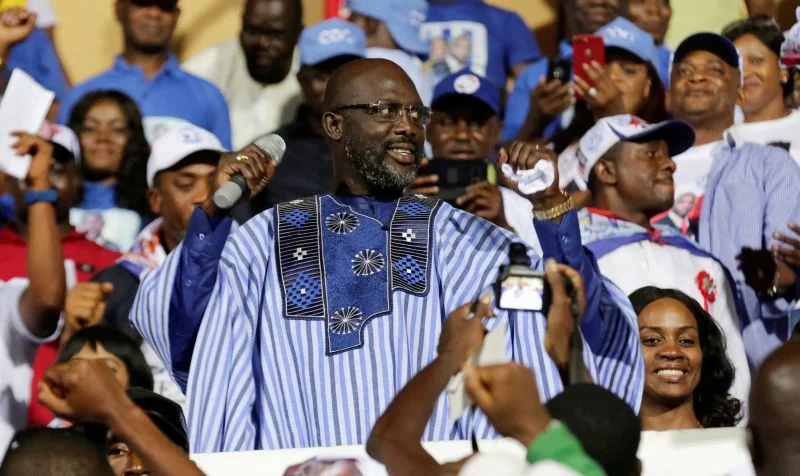
The culmination of George Weah’s political ambitions arrived in December 2017, when the National Elections Commission of Liberia declared him the winner of the presidential runoff. Weah, representing the Coalition for Democratic Change (CDC), defeated his opponent, the incumbent Vice President Joseph Boakai, securing a decisive mandate from the Liberian electorate. This peaceful democratic transition marked a critical juncture for the West African nation, representing the first time in over seven decades that power was transferred from one democratically elected leader to another in Liberia.
For millions of Liberians, particularly the country’s vast youth demographic, Weah was not merely a politician; he was a national symbol of hope, resilience, and upward mobility. Growing up amidst severe socio-economic challenges, Weah’s life story resonated deeply with citizens who had endured decades of civil conflict, institutional instability, and systemic poverty. His campaign capitalized on this immense goodwill, focusing heavily on youth empowerment, educational reform, infrastructure development, and the eradication of corruption. Upon taking the oath of office, Weah inherited an economy struggling with the aftermath of the devastating Ebola epidemic of 2014–2016, sluggish commodity prices, and high unemployment rates. Despite these daunting challenges, his electoral triumph redefined the intersection of celebrity, sportsmanship, and statecraft, proving that extraordinary popularity earned through athletic excellence could be successfully channeled into political leadership.
Early Life and Humble Beginnings in Monrovia
Long before he walked the red carpets of global award ceremonies or addressed the United Nations General Assembly, George Weah’s story began on October 1, 1966, in the Clara Town neighborhood of Monrovia, the capital of Liberia. Raised predominantly by his paternal grandmother, Emma Klonh Brown, in a financially constrained household, Weah displayed an innate passion for association football from an early age.
In the densely populated and underdeveloped neighborhoods of Monrovia, structured training facilities were non-existent. Instead, young Weah honed his extraordinary technical skills on makeshift pitches, playing barefoot on hard dirt and sandy lots. Despite these adverse conditions, his natural athleticism, balance, and tactical awareness quickly caught the attention of local talent scouts and community teams.
Weah’s early club career reflected the grassroots nature of Liberian football during the late 1970s and early 1980s. He played for a succession of local clubs, including Invincible Eleven, Mighty Barolle—one of the historic giants of Liberian football—Bongrange Bonguine, and a self-organized local youth team named Young Survivors from Claretown. During his teenage years, Weah achieved the remarkable feat of leading Young Survivors, a team operating entirely without the guidance of a professional coach, to promotion into the nation’s top-flight division. This early leadership experience and display of individual brilliance served as the foundational stepping stone for a professional career that would eventually transcend continental borders.
The African Launchpad: Moving to Cameroon
The turning point in Weah’s professional journey occurred in 1987 when his exceptional talent attracted the attention of Jean-Claude Deleuelle, a French football coach and scout working in central Africa. Recognizing Weah’s immense potential, Deleuelle facilitated his transfer to Tonnerre Yaoundé, one of the most prestigious football clubs in Cameroon.
Relocating to Cameroon represented a major cultural and professional adjustment for the young striker, yet he adapted with astonishing speed. During his single season with Tonnerre Yaoundé in 1987, Weah made an immediate impact, helping the club secure the Cameroonian championship title. His powerful physical presence, blistering acceleration, and clinical finishing set him apart from his peers in the Central African league. It became increasingly evident that domestic and regional competitions could no longer contain his rapidly expanding talents. European scouts stationed in Africa quickly took notice, setting the stage for Weah’s historic migration to the elite leagues of European football.
Conquering European Football: From Monaco to Paris Saint-Germain
In 1988, at the age of 22, George Weah made the monumental leap to European football by signing with AS Monaco, then competing in the French Division 1. The transition from African club football to the tactical rigidity and physical intensity of European leagues posed a formidable challenge, but Weah mastered it under the astute guidance of legendary French manager Arsène Wenger. Wenger played a pivotal role in Weah’s early development, refining his positional awareness, tactical discipline, and mental fortitude.
During his five-season tenure with AS Monaco spanning from 1988 to 1992, Weah established himself as one of the most feared strikers in French football. He scored 57 goals across all competitions, showcasing a rare combination of raw power, exceptional dribbling ability from deep positions, and precise shooting accuracy. His stellar performances culminated in 1991 when he helped Monaco lift the Coupe de France (French Cup), cementing his status as a rising superstar in European football.
Building upon his success in the French Riviera, Weah secured a high-profile transfer to Paris Saint-Germain (PSG) in 1992. His time in the French capital elevated his career to global prominence. At PSG, Weah became the focal point of an ambitious squad that challenged the traditional dominance of Marseille and Europe’s established powerhouses.
During his prolific spell with PSG, Weah captured another Coupe de France title in 1993 and the French Division 1 league championship in the 1993–1994 season. His defining European moment with the Parisian club occurred during the 1994–1995 UEFA Champions League campaign, where he finished as the tournament’s top goalscorer with seven goals, guiding PSG to an unforgettable appearance in the semi-finals. Across 123 official appearances for PSG, Weah netted 37 goals and provided numerous assists, leaving an indelible mark on the club’s modern history and earning the admiration of football purists worldwide.
The Pinnacle of Glory: AC Milan and Historic Global Honors
The absolute zenith of George Weah’s football career arrived in the summer of 1995 when Italian giants AC Milan secured his signature. Entering the fiercely competitive environment of the Italian Serie A—widely regarded at the time as the strongest league in the world—Weah seamlessly adapted to the tactical nuances of Italian defense.
Under the management of Fabio Capello and later Alberto Zaccheroni, Weah became the spearhead of the Rossoneri attack. His impact was instantaneous. In his debut 1995–1996 season, Weah played a pivotal role in helping AC Milan capture the Serie A Scudetto. He repeated this domestic league triumph during the 1998–1999 campaign, establishing himself as a beloved figure among the passionate Milanista supporters.
It was during this golden period in Milan that Weah achieved individual immortality. In December 1995, he was awarded the prestigious FIFA World Player of the Year award, alongside the Ballon d’Or (European Footballer of the Year) and the African Footballer of the Year. To date, George Weah remains the first and only African player in history to win the FIFA World Player of the Year and the Ballon d’Or. Furthermore, because non-European players were historically ineligible for the Ballon d’Or prior to 1995, rule modifications allowed Weah to become the very first non-European recipient of the legendary award. Across 114 league appearances for AC Milan, Weah scored 51 goals, producing moments of individual brilliance that continue to be replayed by football historians—most notably his legendary coast-to-coast solo goal against Hellas Verona in 1996, where he picked up the ball inside his own penalty box and dribbled past seven opponents before scoring.
Following his successful stint in Italy, Weah enjoyed brief spells in the English Premier League with Chelsea and Manchester City, followed by a stint in the United Arab Emirates with Al-Jazira before officially retiring from professional football in 2003.
Transition to Politics: From the Pitch to the Public Sphere
Upon hanging up his boots, George Weah chose not to fade into the comfort of a quiet retirement. Instead, he directed his immense global capital, financial resources, and personal popularity toward addressing the socio-economic crises plaguing his homeland. Liberia was emerging from a cataclysmic civil war (1989–2003) that had claimed an estimated 250,000 lives, displaced millions, and destroyed the nation’s physical infrastructure and institutional framework.
Weah initially engaged in humanitarian work, serving as a UNICEF Goodwill Ambassador and utilizing his international platform to advocate for child soldiers, education, and health initiatives in war-torn regions across Africa. However, he soon realized that sustainable structural change required direct political engagement.
In 2005, Weah made his first foray into electoral politics, running for the presidency of Liberia. Despite winning the initial round of voting, he was defeated in the runoff election by Ellen Johnson Sirleaf, Africa’s first elected female head of state. Critics at the time questioned his political experience and educational background, prompting Weah to temporarily step back from frontline politics to pursue formal education. He subsequently earned a bachelor’s degree in business administration from DeVry University in Miami, followed by a master’s degree in public administration from Keller Graduate School of Management, silencing skeptics and demonstrating a rigorous commitment to self-improvement.
Chronology of Major Milestones
- October 1, 1966: George Tawlon Manneh Oppong Ousman Weah is born in Monrovia, Liberia.
- Early 1980s: Plays for various Liberian clubs including Invincible Eleven and Mighty Barolle, leading Young Survivors to the top division.
- 1987: Transfers to Tonnerre Yaoundé in Cameroon, winning the national league championship in his debut season.
- 1988–1992: Joins AS Monaco under Arsène Wenger, scoring 57 goals and winning the French Cup in 1991.
- 1992–1995: Moves to Paris Saint-Germain (PSG), winning the French league title (1994) and reaching the UEFA Champions League semi-finals (1995).
- 1995: Transferred to AC Milan; becomes the first African player to win the FIFA World Player of the Year and the Ballon d’Or.
- 1996 & 1999: Wins two Serie A championship titles with AC Milan.
- 2003: Officially retires from professional football after spells with Chelsea, Manchester City, and Al-Jazira.
- 2005: Unsuccessfully runs for the presidency of Liberia, finishing second behind Ellen Johnson Sirleaf.
- 2014: Elected to the Liberian Senate, representing Montserrado County.
- December 2017: Wins the Liberian presidential runoff election, officially succeeding Ellen Johnson Sirleaf as President of Liberia.
- January 2018: Inaugurated as the 25th President of the Republic of Liberia.
Official Responses and International Reactions
The election of George Weah in December 2017 elicited widespread international praise, diplomatic recognition, and cautious optimism from global leaders and humanitarian organizations. Representatives from the United Nations, the Economic Community of West African States (ECOWAS), the African Union, and the United States Department of State commended the Liberian people for conducting a largely peaceful and transparent electoral process.
International financial institutions, including the International Monetary Fund (IMF) and the World Bank, issued statements expressing readiness to collaborate with the incoming Weah administration to address Liberia’s pressing macroeconomic imbalances, high national debt, and infrastructure deficits. Neighboring heads of state lauded the smooth transfer of power, emphasizing that Liberia’s democratic maturity served as a stabilizing beacon for the entire West African sub-region.
Domestically, reactions among the Liberian populace were overwhelmingly celebratory. Street celebrations erupted across Monrovia as thousands of citizens—many of whom had idolized Weah during his footballing heyday—welcomed the historic inauguration. However, domestic political analysts and opposition figures also struck notes of pragmatic caution, emphasizing that translating athletic adoration into effective governance would require assembling a competent cabinet, managing public sector finances transparently, and tackling endemic corruption without compromise.
Broader Impact and Socio-Political Implications
The presidency of George Weah carries profound symbolic and practical implications for modern African politics. By demonstrating that a citizen of exceptionally humble origins could ascend from the informal football pitches of Monrovia to the highest office in the land through talent, perseverance, and democratic participation, Weah shattered traditional elitist barriers to political power.
His presidency underscored the growing political influence of Africa’s youth demographic. Across the continent, young populations increasingly demand leaders who understand contemporary socio-economic struggles rather than relying solely on traditional political dynasties or revolutionary credentials. Weah’s administration faced the immense responsibility of proving that populist appeal and athletic celebrity could translate into tangible policy outcomes—specifically job creation, anti-corruption enforcement, and the revitalization of public health and educational infrastructure.
Ultimately, the trajectory of George Weah—from a barefoot striker kicking a makeshift ball in Clara Town to a global Ballon d’Or laureate and finally to the head of state of the Republic of Liberia—stands as a singular testament to human potential. Whether viewed through the lens of sports history or political science, his life narrative remains a defining chronicle of ambition, national service, and the relentless pursuit of excellence against extraordinary odds.