
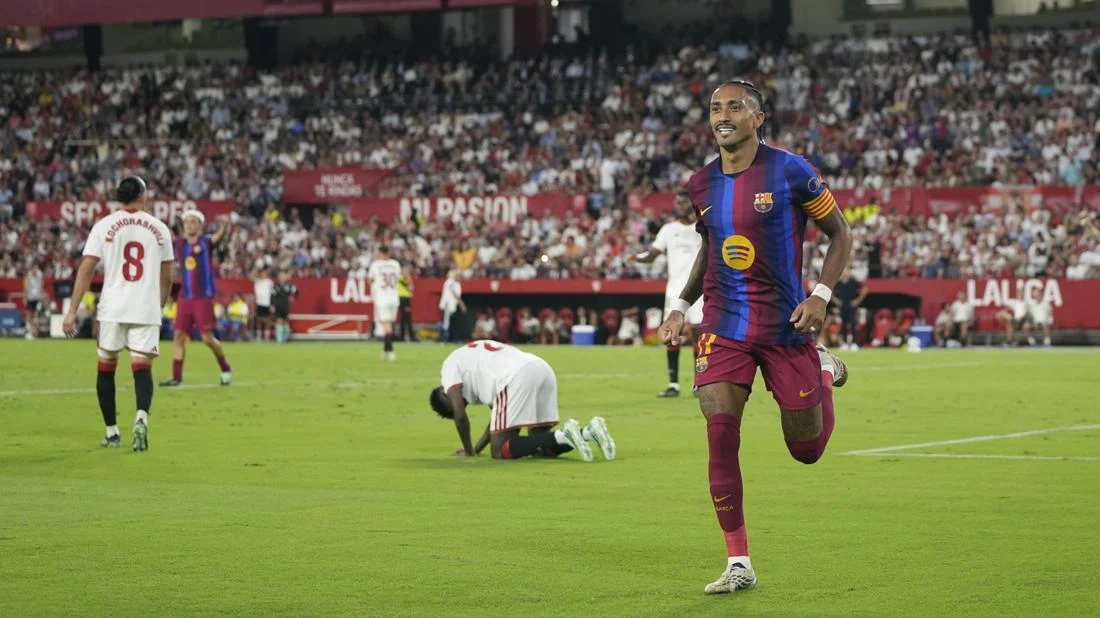
The Ramon Sanchez Pizjuan Stadium witnessed a masterclass in attacking efficiency on Sunday, September 20, as FC Barcelona continued their blistering form in the 2026/2027 LaLiga season. In a high-stakes encounter against Sevilla, the Catalan giants overturned an early deficit to secure a 3-1 victory, anchored by a spectacular hat-trick from Brazilian forward Raphinha. This result marks Barcelona’s seventh consecutive league win, solidifying their position at the pinnacle of the Spanish top flight with a perfect record of 21 points.
For Sevilla, the defeat serves as a sobering reality check. Despite a promising start that ignited hope among the home supporters, the Andalusian side struggled to contain the fluid interplay between Barcelona’s front line and their midfield engine room. As the final whistle blew, the contrast between the two clubs was palpable: Barcelona continues to look like a juggernaut capable of reclaiming the domestic crown, while Sevilla finds itself reflecting on defensive vulnerabilities that cost them dearly against elite opposition.
A Tense Opening at the Ramon Sanchez Pizjuan
The atmosphere in Seville was electric, with the home crowd sensing an opportunity to derail Barcelona’s momentum. Sevilla manager opened the match with a high-intensity press, aiming to disrupt Barcelona’s build-up play from the back. The strategy bore fruit early in the 19th minute. A well-constructed transition saw Youssouf Fofana capitalize on a moment of hesitation in the Barcelona defensive third, firing a clinical strike past goalkeeper Dominik Livakovic. The goal sent the stadium into a frenzy, providing Sevilla with the early advantage they desperately sought.
However, the lead proved short-lived. Barcelona, characterized by their psychological resilience under the current coaching staff, responded with immediate intensity. Just three minutes after falling behind, the visitors leveled the score. Raphinha, finding space in the final third, displayed the composure that has defined his season, slotting home an equalizer that effectively silenced the home support and neutralized Sevilla’s momentum before it could settle. The remainder of the first half turned into a tactical chess match, with both sides cautious not to concede before the interval.
The Raphinha and Yamal Connection: A Second-Half Surge
The complexion of the match changed decisively in the second half. Barcelona emerged from the tunnel with renewed tactical discipline, focusing their attacks through the right flank, where the partnership between Lamine Yamal and Raphinha began to dismantle the Sevilla defense.
In the 52nd minute, the breakthrough arrived. Lamine Yamal, exhibiting maturity beyond his years, delivered a pinpoint cross into the box. Raphinha rose above the Sevilla defenders, connecting with a powerful header that left goalkeeper Odysseas Vlachodimos helpless. The goal shifted the equilibrium of the game, forcing Sevilla to commit more men forward in search of an equalizer.
As Sevilla pushed, they left gaps in their defensive transition—a fatal error against a team of Barcelona’s caliber. The final blow came in the 69th minute. Once again, it was Yamal orchestrating the play, sliding a measured pass through the heart of the Sevilla backline. Raphinha, timing his run perfectly, showcased his clinical finishing with a composed sontekan (flick) inside the penalty area to complete his hat-trick. The strike effectively ended the contest, as Barcelona managed the remaining twenty minutes with controlled possession and defensive solidity, limiting Sevilla to half-chances.
Statistical Breakdown and Tactical Analysis
The match statistics underscore the efficiency of the visitors. Barcelona commanded 62% of ball possession and recorded 14 shots, six of which were on target. Conversely, Sevilla struggled to sustain pressure, managing only three shots on target throughout the 90 minutes.
The tactical significance of this match lies in Barcelona’s squad depth and the evolution of their attacking structure. The starting XI featured a blend of experienced international players and rising stars, with the likes of Rodri, Pedri, and Anthony Gordon providing the foundation for the attack. The late substitutions, including the introduction of Dani Olmo, Karim Adeyemi, and Gabriel Jesus, demonstrated that Barcelona possesses the personnel to maintain high-intensity pressure regardless of the game state.
For Sevilla, the personnel choices reflected a need for rejuvenation. While players like Juan Iglesias and Arouna Sangante showed defensive promise, the lack of a cohesive midfield pivot in the final stages allowed Barcelona to dictate the tempo of the game. Sevilla’s failure to sustain the intensity of the first 20 minutes was the primary factor in their second loss of the campaign, leaving them currently positioned fifth in the standings with 13 points.
Official Reactions and Post-Match Sentiment
While formal post-match press conferences often emphasize collective effort, the performance of Raphinha was the inevitable focal point. Analysts have noted that Raphinha’s role in this campaign has shifted, with his movement becoming more central and goal-oriented.
"The team’s ability to react after the early goal is a testament to the maturity of this squad," an assistant coach noted in the aftermath. "We knew that coming to the Ramon Sanchez Pizjuan would be difficult, but our patience and our tactical adherence allowed us to find the weaknesses in their defensive structure."
On the other side of the tunnel, Sevilla’s technical staff acknowledged the quality of the opposition. "We started with the right intensity, but you cannot afford to give players of Raphinha’s caliber space in the final third. We lost concentration for three minutes, and that was the difference," a spokesperson for the home team remarked. The sentiment in the dressing room was one of frustration, particularly regarding the defensive lapses that allowed the second and third goals.
The Broader Implications for the LaLiga Season
As the 2026/2027 season progresses, this result serves as a critical benchmark for both clubs. For Barcelona, the victory reinforces their status as the team to beat. Maintaining a perfect record through seven games is a significant achievement that builds internal belief and places immense pressure on their rivals, including Real Madrid and Atletico Madrid, to keep pace.
The integration of high-profile signings like Dominik Livakovic and Anthony Gordon into the starting lineup has provided Barcelona with a defensive security and attacking unpredictability that was occasionally missing in previous seasons. The leadership of veteran players alongside the explosive potential of Lamine Yamal creates a balanced squad capable of competing on multiple fronts.
For Sevilla, the challenge is to regroup and find consistency. Despite the loss, their position in the top five indicates that they remain a competitive force in the league. However, the club must address its defensive fragility if it hopes to secure a Champions League spot by the end of the term. The upcoming schedule will be a test of character for the Andalusians as they look to bounce back from this setback.
Conclusion
The encounter in Seville was a microcosm of the current LaLiga landscape: high-intensity football played at a blistering pace, defined by moments of individual brilliance and tactical shifts. Barcelona’s 3-1 victory was a comprehensive display of why they currently sit atop the table. Through the clinical finishing of Raphinha and the creative vision of Lamine Yamal, the Catalan club proved that they are currently operating at a level that is difficult for their domestic counterparts to match.
As the league enters its next phase, all eyes will be on whether Barcelona can sustain this pace or if the physical toll of a long season will eventually allow the chasing pack to close the gap. For now, however, the narrative is clear: Barcelona is in top form, and their title ambitions are as tangible as they have been in years. The fans in Catalonia will be encouraged not just by the win, but by the manner in which it was achieved—with grit, precision, and a ruthless desire to win.

