
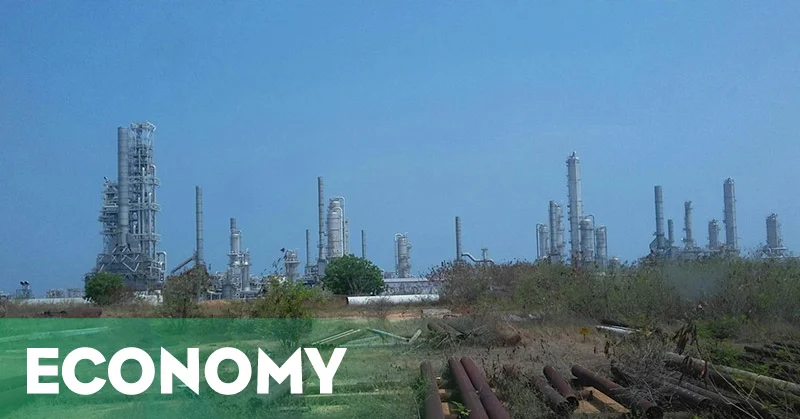
President Joko Widodo traveled to Tuban, East Java, on Wednesday, November 11, 2015, to conduct a high-level inspection of the Trans Pacific Petrochemical Indotama (TPPI) refinery. The visit marked a critical milestone in Indonesia’s ongoing efforts to achieve domestic energy security, reduce reliance on foreign fuel imports, and revitalize stalled strategic industrial assets. Accompanied by a high-ranking delegation that included State-Owned Enterprises (SOE) Minister Rini Soemarno, Pertamina President Director Dwi Soetijpto, and Director General of Oil and Gas IGN Wiratmaja Puja, the President sought to evaluate the operational readiness and early output of the facility following its official reactivation by state-owned energy giant PT Pertamina (Persero).
The integration and restart of the TPPI refinery represent a monumental step for Indonesia’s downstream oil and gas sector. For years, the facility had struggled with financial liabilities, operational standstills, and complex legal hurdles that kept one of Southeast Asia’s most valuable petrochemical and refining complexes offline or severely underutilized. By bringing the plant back into active service under the management of Pertamina, the Indonesian government aimed to address persistent structural deficits in the national trade balance, curb heavy dependence on imported fuel, and secure a reliable, domestic supply chain for refined petroleum products.
Background Context and Historical Significance of the TPPI Tuban Facility
The Trans Pacific Petrochemical Indotama complex in Tuban was originally conceptualized as a cornerstone of Indonesia’s petrochemical independence. Spanning a vast industrial footprint in East Java, the facility was designed not only to process crude oil into vital transportation fuels such as Premium gasoline and automotive diesel oil, but also to produce essential petrochemical feedstocks like paraxylene, benzene, orthoxylene, and liquefied petroleum gas (LPG). These materials form the foundational building blocks for domestic manufacturing industries, ranging from plastics and packaging to synthetic textiles.
Despite its immense strategic value, the history of the TPPI refinery has been plagued by corporate governance challenges, fluctuating global commodity prices, and immense debt burdens. Throughout the late 2000s and early 2010s, the facility operated far below its nameplate capacity or suffered prolonged shutdowns. These operational suspensions forced Indonesia to increase its reliance on imported finished fuels to meet surging domestic consumption. The drain on foreign exchange reserves caused by massive fuel imports became a persistent macroeconomic concern for successive administrations, making the revitalization of idle domestic refining capacity an urgent national priority.
When President Joko Widodo assumed office, energy sovereignty emerged as a central pillar of his administration’s economic agenda. The government recognized that owning and operating domestic refining assets was vital to insulating the national economy from external oil price shocks and supply chain vulnerabilities. Consequently, state intervention was mobilized to untangle the legal and financial roadblocks holding back TPPI, ultimately paving the way for Pertamina to assume operational control and inject the necessary capital and technical expertise to restart the plant.
Chronology of the Reactivation and the Presidential Inspection
The path to the November 2015 presidential inspection involved months of intensive coordination between the Ministry of Energy and Mineral Resources, the Ministry of State-Owned Enterprises, and Pertamina’s corporate leadership. Following complex debt-restructuring agreements and the formal assignment of operational responsibilities to Pertamina, technical teams worked diligently to overhaul processing units, test safety systems, and secure crude oil feedstocks.
By late 2015, the refinery achieved critical operational milestones, successfully resuming production of gasoline and aromatic petrochemicals. Recognizing the geopolitical and economic magnitude of this turnaround, President Joko Widodo scheduled an official site visit to Tuban to witness the operational facilities firsthand and receive briefings from key energy executives.
On the morning of Wednesday, November 11, 2015, the presidential aircraft landed in East Java, followed by a security convoy to the TPPI complex. Upon arrival, President Widodo, accompanied by Minister Rini Soemarno and Pertamina CEO Dwi Soetijpto, toured the sprawling refinery grounds, inspecting the primary distillation units, control rooms, and storage terminals. The delegation engaged directly with plant engineers and technical operators to assess production stability, safety protocols, and supply logistics. The inspection served both as a ceremonial acknowledgment of a successful industrial restart and a rigorous oversight mechanism to ensure that the state-owned enterprise maintained optimal operational efficiency.
Key Data and Financial Implications of the Restart
During the inspection, corporate communications officials and executive leadership provided detailed technical and financial data regarding the facility’s output and its immediate impact on the national economy. Wianda Pusponegoro, serving as the Vice President of Communication for Pertamina at the time, outlined the quantifiable benefits of the refinery’s return to service during a press briefing on-site.
According to Pertamina’s operational metrics, the TPPI Tuban refinery demonstrated a processing capacity capable of yielding approximately 61,000 barrels of petroleum products per day. This substantial output directly targeted the country’s most heavily consumed automotive fuel category: RON 88 Premium gasoline.
"This refinery is capable of cutting imports of Premium-type fuel production by 20 percent, with total production reaching 61,000 barrels per day," Wianda stated during her briefing at the Tuban complex.
To contextualize this volume within macroeconomic frameworks, industry analysts and energy economists evaluated the savings based on prevailing global crude oil benchmarks. Assuming a conservative global market price of approximately $60 per barrel for gasoline, the domestic substitution effect achieved by the TPPI refinery translated to staggering annual savings. The continued operation of the plant was projected to save the Indonesian economy approximately $1.2 billion annually, which at the prevailing exchange rates amounted to roughly Rp16 trillion.

These savings extended beyond mere corporate balance sheet improvements for Pertamina. By reducing the volume of finished gasoline that Indonesia needed to procure from international trading hubs, the country preserved vital foreign exchange reserves, mitigated the depreciation pressures on the Indonesian rupiah, and lowered the fiscal burden associated with energy subsidies.
Official Responses and Stakeholder Perspectives
The successful restart of the TPPI facility drew positive reactions from across the government and corporate sectors, underscoring a unified commitment to national energy resilience.
President Joko Widodo’s decision to personally inspect the facility signaled the highest level of political backing for domestic industrial revitalization. Throughout the visit, the President emphasized that state assets must be managed efficiently to serve the broader public interest and reduce vulnerability to external economic pressures. By supporting Pertamina’s expansion of refining capabilities, the administration demonstrated its resolve to eliminate inefficiencies within the state-owned enterprise sector.
Minister of State-Owned Enterprises Rini Soemarno played an instrumental role in aligning the corporate strategy of Pertamina with the broader macroeconomic goals of the cabinet. Her presence alongside the President reinforced the ministry’s mandate to turn around underperforming state assets and transform them into profitable, productive contributors to the national economy. Under her supervision, the financial restructuring of TPPI was handled in a manner that protected state interests while enabling rapid operational deployment.
Pertamina’s leadership, spearheaded by President Director Dwi Soetijpto and supported by technical teams on the ground, expressed confidence in the facility’s long-term viability. The integration of TPPI into Pertamina’s broader refining network—which included major facilities in Cilacap, Balongan, Dumai, Plaju, Balikpapan, and Kasim—created valuable synergies in crude procurement, supply logistics, and product distribution.
Furthermore, Director General of Oil and Gas IGN Wiratmaja Puja, representing the regulatory perspective from the Ministry of Energy and Mineral Resources, highlighted the alignment of the restart with national energy policy blueprints. He noted that augmenting domestic refining capacity was an essential prerequisite for enhancing national energy security, ensuring that Indonesia retained greater control over its petroleum value chain from wellhead to gas station.
Broader Economic Impact and Strategic Implications
The revitalization of the TPPI Tuban refinery carried far-reaching implications for Indonesia’s macroeconomic stability and industrial development strategy. For decades, Indonesia had transitioned from a net exporter of oil to a net importer, a structural shift that exposed the national budget to the volatile oscillations of the international crude market. Whenever global oil prices spiked, the cost of importing refined fuels ballooned, widening the current account deficit and exerting downward pressure on the national currency.
By bringing a major domestic refining complex back online, the government effectively created a structural buffer against external price shocks. The reduction in fuel imports by one-fifth provided immediate relief to the current account balance, a metric closely watched by international rating agencies and foreign investors.
Moreover, the upstream and downstream linkages generated by the refinery stimulated regional economic activity in East Java. The revival of petrochemical production provided stable, localized access to essential raw materials for manufacturing plants across Java, supporting industrial employment and fostering downstream economic clustering. The availability of locally produced paraxylene and benzene reduced the input costs for domestic textile and packaging manufacturers, thereby enhancing their global competitiveness.
In the broader context of Indonesia’s energy landscape, the 2015 inspection of TPPI served as a blueprint for subsequent infrastructure development. It proved that complex industrial assets, previously paralyzed by financial distress and bureaucratic inertia, could be successfully rehabilitated through decisive political leadership, inter-agency coordination, and the operational capacity of state enterprises. The lessons learned from the TPPI turnaround informed later initiatives aimed at upgrading Indonesia’s aging refinery infrastructure, including the massive Refinery Development Master Plan (RDMP) and Grass Root Refinery (GRR) projects launched in the ensuing years.
Conclusion
The visit by President Joko Widodo and Minister Rini Soemarno to the TPPI Tuban refinery on November 11, 2015, stands as a defining moment in Indonesia’s modern economic history. By transitioning the facility from a symbol of industrial stagnation to a thriving engine of domestic production, the administration demonstrated a practical, results-oriented approach to national energy security.
With production capacities reaching 61,000 barrels per day and generating annual savings estimated at $1.2 billion (Rp16 trillion), the revived refinery delivered immediate fiscal and macroeconomic benefits. The collaborative effort between the central government, regulatory bodies, and Pertamina not only curtailed fuel import dependence but also reinforced the foundation for sustainable industrial growth across the archipelago.
