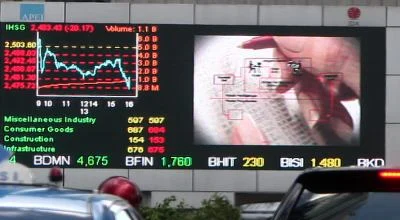
The financial performance of the Indonesia Stock Exchange (BEI) and its subsidiaries for the fiscal year ending December 31, 2011, revealed a notable contraction in profitability despite modest top-line revenue growth. According to the consolidated comprehensive income statement published by the exchange, BEI registered a 19.4 percent drop in net profit, falling to Rp299.825 billion from Rp358.041 billion recorded in the previous fiscal year of 2010.
The financial data highlights the delicate balance market infrastructure institutions must maintain between revenue generation and cost management during periods of fluctuating macroeconomic conditions. While the exchange successfully expanded its operational turnover, escalating business expenses exerted substantial pressure on the bottom line, culminating in the reduced net income figures reported to the public and regulatory bodies.
Financial Breakdown: Revenue Growth Versus Escalating Expenses
A granular examination of the 2011 financial report demonstrates that the exchange was not starved of revenue generation opportunities. In fact, total operating revenues experienced an upward trajectory, climbing from Rp667.16 billion in 2010 to Rp699.32 billion in 2011. This growth was largely supported by trading activities, listing fees, and various capital market services provided throughout the period.
However, the primary catalyst behind the 19.4 percent profit contraction lay within the expense ledger. Operating expenses surged significantly, jumping from Rp371.30 billion in 2010 to Rp445.21 billion in 2011. This sharp increase in operational outlays outpaced the growth rate of incoming revenues, neutralizing the gains made at the top line and compressing profit margins across the board.
Financial analysts reviewing the period noted that expenses were driven by ongoing investments in technological infrastructure, enhancements to trading systems, regulatory compliance frameworks, and human capital development necessary to support a growing and increasingly complex capital market. These structural investments, while essential for long-term scalability and system integrity, weighed heavily on annual profitability calculations.
Balance Sheet Expansion and Asset Growth
Despite the compression in net income, the overall financial health and asset foundation of the Indonesia Stock Exchange remained robust throughout 2011. The exchange’s consolidated balance sheet indicated a healthy expansion in total assets, which grew to Rp3.763 trillion by the end of December 2011, compared to Rp3.555 trillion at the close of 2010.
This asset accumulation reflected prudent balance sheet management and the capitalization of retained earnings from prior years. The expansion in total assets provided a secure financial cushion for BEI, reinforcing its capacity to withstand cyclical market downturns and supporting its mandate to maintain fair, orderly, and efficient market operations. The asset growth also mirrored the broader expansion of Indonesia’s financial sector during the post-global financial crisis recovery phase, wherein domestic capital markets attracted heightened interest from both retail and institutional participants.
Chronological Context of the 2011 Indonesian Capital Market
The fiscal year 2011 was a dynamic and challenging period for the global and domestic financial landscapes. The year began with optimism following a strong recovery in 2010 from the global financial crisis. However, as the months progressed, external macroeconomic headwinds began to materialize. The sovereign debt crisis in the Eurozone escalated, causing widespread volatility across global bourses and dampening investor risk appetite in emerging markets, including Indonesia.

Domestically, the Indonesian economy demonstrated remarkable resilience, supported by robust domestic consumption and high commodity prices. The Jakarta Composite Index (IHSG) experienced periods of notable volatility but managed to remain relatively resilient compared to its regional peers. Throughout 2011, BEI focused heavily on market deepening initiatives, including campaigns to increase domestic retail investor participation, the introduction of new financial products, and technological upgrades designed to increase transaction speed and transparency.
The publication of the financial report on Saturday, March 31, 2012, marked the culmination of the annual auditing process conducted by independent public accountants, adhering strictly to capital market regulations requiring public transparency and accountability from self-regulatory organizations (SROs).
Stakeholder Perspectives and Market Implications
While exchange officials did not issue an exhaustive public defense regarding the quarterly or annual earnings fluctuations, institutional stakeholders and market observers analyzed the figures through the lens of strategic investment versus short-term profitability. Within the context of running a self-regulatory organization, profitability is often viewed differently than in standard commercial enterprises. BEI’s core mission prioritizes market stability, technological advancement, and investor protection over aggressive profit maximization.
Industry analysts pointed out that the increase in operational expenses was a necessary byproduct of scaling up the exchange’s technological capabilities. During this era, global exchanges were aggressively investing in high-speed trading infrastructure and surveillance systems to detect market manipulation and ensure regulatory compliance. Consequently, the rise in BEI’s operating expenses from Rp371.31 billion to Rp445.21 billion was interpreted by many as capital expenditure directed toward future-proofing the nation’s financial infrastructure.
Furthermore, the growth in revenue from Rp667.16 billion to Rp699.32 billion underscored the underlying strength of transaction volumes and the growing number of listed companies on the board. As more corporations turned to the equity market for capital raising through Initial Public Offerings (IPOs) and rights issues, the exchange’s listing and transaction-based revenue streams demonstrated fundamental viability.
Broader Economic Impact and Future Outlook
The financial results reported by BEI for 2011 offered broader implications for the Indonesian financial ecosystem. As the primary facilitator of capital formation in Southeast Asia’s largest economy, the exchange’s financial stability serves as a barometer for the health of the country’s capital markets.
The ability of the exchange to grow its asset base to Rp3.763 trillion despite a contraction in net income demonstrated that the institution possessed sufficient capital reserves to absorb cost pressures without compromising its regulatory and operational mandates. This financial buffer was crucial as Indonesia prepared for subsequent phases of economic integration within the Association of Southeast Asian Nations (ASEAN) and sought to attract larger pools of foreign and domestic institutional capital.
Looking beyond the 2011 figures, the episode underscored the importance of cost discipline balanced against the imperative of technological modernization. As electronic trading platforms evolved and cyber security demands grew more complex, exchanges worldwide were forced to accept higher baseline operational expenditures to maintain market integrity. For BEI, the financial year 2011 served as a transitional period of absorbing higher operational costs in exchange for long-term infrastructure improvements, laying the groundwork for subsequent years of market expansion, increased liquidity, and broader financial inclusion across the Indonesian archipelago.