
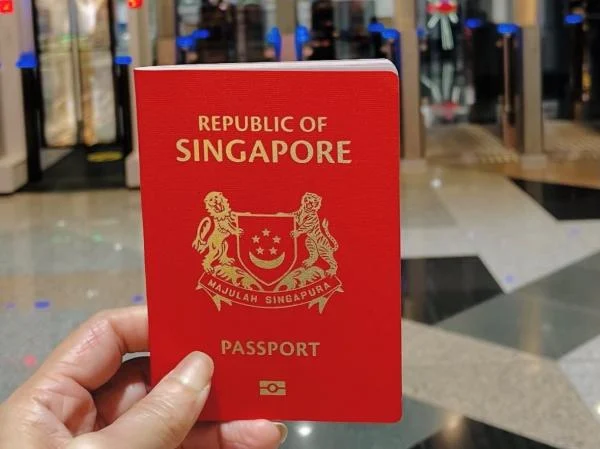
Singapore has officially solidified its status as the premier global leader in international mobility, successfully defending its title as the holder of the world’s most powerful passport. According to the latest results from the Henley Passport Index, released on July 21, 2026, Singaporean citizens now enjoy unprecedented access to 192 destinations worldwide without the need for a prior visa. This ranking underscores a decade of strategic diplomatic expansion and highlights the city-state’s commitment to fostering international relations that facilitate seamless travel for its citizens.
The Henley Passport Index, which is updated semi-annually, is widely regarded as the most authoritative ranking of the world’s passports. It bases its findings on exclusive data provided by the International Air Transport Association (IATA), the world’s largest and most comprehensive database of travel information. The 2026 edition reflects a shifting landscape in global diplomacy, where traditional Western powers are increasingly sharing the top tiers with Asian and Middle Eastern nations.
The Singaporean Paradigm: A Masterclass in Diplomatic Neutrality
Singapore’s ascent to the top of the index is not a matter of chance but the result of a calculated, long-term foreign policy strategy focused on neutrality and economic openness. By maintaining robust diplomatic ties with both Western and Eastern blocs, Singapore has secured visa-waiver agreements that few other nations can match. The ability to access 192 out of 227 possible travel destinations—either visa-free or via visa-on-arrival—provides Singaporean business travelers and tourists with a significant competitive advantage in terms of global agility.
For a nation that relies heavily on international trade and human capital, the strength of its passport is a critical component of its national brand. Experts suggest that the high level of trust associated with a Singaporean passport reflects the country’s high internal security standards, its adherence to international law, and its status as a global financial hub. The 2026 data shows that since the previous year, Singapore added two more destinations to its visa-free list, further widening the gap between itself and its closest competitors.
The Rise of the United Arab Emirates: A Strategic Surge
One of the most significant developments in the 2026 index is the meteoric rise of the United Arab Emirates (UAE). Climbing three spots to reach the second position, the UAE now shares this rank with perennial leaders Japan and South Korea. Citizens of these three nations can now access 188 destinations without a prior visa.

The UAE’s trajectory is particularly noteworthy. A decade ago, the UAE was nowhere near the top 10. Its rapid climb is attributed to the "Ministry of Foreign Affairs’ Passport Force" initiative, which aimed to position the UAE passport among the top five globally by 2021—a goal it has now exceeded. Through aggressive diplomatic outreach and the signing of bilateral agreements, the UAE has transformed its passport into a symbol of modern global integration. This shift also reflects the UAE’s broader "Vision 2031" and "Centennial 2071" plans, which seek to diversify the economy away from oil and transform the nation into a global crossroads for tourism, technology, and trade.
Asian Stability and the Japan-South Korea Dynamic
Japan and South Korea continue to demonstrate the enduring power of Asian passports. While Japan held the solo top spot for several years prior to 2023, it now remains firmly in the second-tier group. The parity between Japan and South Korea (both at 188 destinations) highlights the regional stability and the high level of international confidence in East Asian governance.
For Japan, the passport remains a tool of "soft power," reflecting its cultural influence and its reputation for being a low-risk country for immigration. South Korea, similarly, has leveraged its technological exports and "K-Culture" to build a global brand that encourages other nations to lower travel barriers for its citizens. Analysts note that for these nations, the focus is no longer just on adding more destinations, but on maintaining existing agreements amid changing global security protocols.
European Dominance and the Schengen Advantage
While Singapore and the UAE lead the pack, European nations continue to dominate the top ten list in terms of volume. Sweden holds the third position in 2026, granting its citizens access to 187 destinations. Following closely in fourth place is a dense cluster of 11 European nations, including Germany, France, Italy, the Netherlands, and Spain, all of which offer access to 186 destinations.
The strength of European passports is largely bolstered by the Schengen Area agreements, which allow for seamless movement across much of the continent. However, the index also measures their reach beyond Europe. The consistency of these rankings over the last five years suggests that while European nations are no longer the absolute "strongest" (a title now held by Singapore), they remain the most stable and reliable travel documents in the world.
Indonesia’s Strategic Reforms: A Regional Case Study
In the context of Southeast Asia, Indonesia is making significant strides to modernize its own travel documents, as highlighted by recent announcements from the Directorate General of Immigration. While Indonesia’s current ranking on the Henley Index remains in the mid-tier, the government is preparing a "National Passport" system that introduces a lifelong identification number for passport holders.

Director General of Immigration, Silmy Karim, recently noted that the move to a single national passport type with a permanent number is intended to streamline administrative processes and enhance security. "This is about efficiency and modernization," Karim stated. By adopting international best practices in biometric security and data management, Indonesia aims to increase the trust other nations have in its travel documents, which is a prerequisite for negotiating future visa-waiver agreements. These internal reforms are viewed as the necessary groundwork for Indonesia to eventually climb the Henley Passport Index rankings.
The Economic Implications of Passport Power
The correlation between passport strength and economic opportunity is a primary focus of the Henley & Partners research team. Dr. Christian H. Kaelin, Chairman of Henley & Partners, has frequently pointed out that a powerful passport is more than just a travel document; it is a gateway to international investment and business opportunities.
"Global mobility is becoming a key asset for high-net-worth individuals and entrepreneurs," Kaelin remarked in a statement following the 2026 release. "The ability to move freely across borders allows for better wealth management, access to superior healthcare and education, and the ability to diversify business operations in real-time."
The data suggests that countries with higher "visa-free scores" also tend to have higher GDP per capita and greater levels of foreign direct investment (FDI). For Singapore, its top-tier status serves as a magnet for global talent, as individuals seeking a "Plan B" or a global base of operations view Singaporean citizenship or residency as the ultimate mobility insurance.
The Growing Global Mobility Gap
Despite the overall increase in travel freedom for top-tier nations, the 2026 Henley Passport Index also highlights a widening "mobility gap." While a Singaporean citizen can visit 192 countries with ease, citizens of nations at the bottom of the index, such as Afghanistan, Syria, and Iraq, remain restricted to fewer than 30 destinations.
This disparity has profound implications for global inequality. Researchers argue that "birthright lottery"—the country in which one is born—remains the single greatest determinant of an individual’s global opportunity. As climate change and geopolitical instability drive migration, the barriers faced by those with "weak" passports become even more pronounced. The 2026 report calls for a more nuanced approach to international visa policies that balances security concerns with the need for global economic integration and humanitarian mobility.

Technological Evolution: The Future of the Passport
Looking ahead, the nature of the "passport" itself is undergoing a transformation. The 2026 index comes at a time when digital identities and biometric "seamless travel" initiatives are becoming the norm. Many of the top-ranked nations, including Singapore and the UAE, are at the forefront of implementing facial recognition and blockchain-based digital credentials at their borders.
The transition toward "contactless" travel is expected to eventually change how the Henley Index measures power. In the future, the speed of processing at the border and the integration of digital health certificates or security clearances may become as important as the number of visa-free destinations. The "Passport of the Future" will likely be a fully integrated digital identity that resides on a smartphone, backed by the same diplomatic agreements that currently empower the physical blue or red booklets.
Conclusion
The 2026 Henley Passport Index serves as a clear indicator of the shifting centers of global influence. Singapore’s continued dominance and the UAE’s rapid ascent signal a move away from a Eurocentric world toward a more multipolar landscape where Asian and Middle Eastern nations play a leading role in global connectivity. As nations like Indonesia continue to reform their internal systems and Western powers maintain their historical strength, the competition for global mobility will remain a key driver of international diplomacy and economic strategy. For the citizens of the top-ranked nations, the world has never been more accessible, providing a level of freedom that remains the envy of the global community.
