
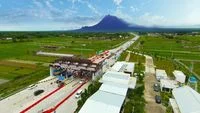
PT Jasa Marga (Persero) Tbk. (JSMR), the state-owned enterprise responsible for the management and development of Indonesia’s toll road network, has officially ratified a significant restructuring of its executive leadership. The move, finalized during an Extraordinary General Meeting of Shareholders (RUPSLB), signals a strategic shift in the company’s governance, aimed at streamlining operational efficiencies and enhancing its financial risk management capabilities. By consolidating key portfolios and appointing new leadership figures, Jasa Marga intends to bolster its long-term sustainability as the primary operator of the country’s infrastructure backbone.
Strategic Realignment of Executive Functions
The most notable outcome of the RUPSLB is the structural modification within the Board of Directors. The company has moved to merge two historically distinct portfolios—the Directorate of Business and the Directorate of Services—into a unified Directorate of Business and Services. This new division is now headed by Ari Respati, a move industry analysts view as an effort to eliminate departmental silos and create a more holistic approach to consumer engagement and revenue generation.
The consolidation of these roles reflects a broader corporate trend among Indonesian state-owned enterprises (SOEs) to reduce overhead and improve response times in an increasingly digitized infrastructure sector. Simultaneously, the company appointed Sigit Prastowo to lead the Directorate of Finance and Risk Management. Prastowo’s appointment is particularly critical given the capital-intensive nature of Jasa Marga’s ongoing projects and the fluctuating macroeconomic environment that impacts long-term debt financing.
A Chronology of Leadership Transition
The transition concludes a period of service for three prominent directors who have steered the company through a complex post-pandemic recovery phase. Pramitha Wulanjani, who served as the Director of Finance and Risk Management from 2023 to 2026, oversaw critical debt restructuring and balance sheet stabilization. Yaya Ruhiya, the former Director of Services (2025–2026), and Reza Febriano, the former Director of Business (2021–2026), were instrumental in expanding Jasa Marga’s digital toll payment initiatives and non-toll revenue streams.
The leadership transition follows a rigorous evaluation process initiated by the Ministry of State-Owned Enterprises (BUMN). The change reflects a standard cycle of corporate governance renewal, ensuring that the company’s leadership remains aligned with the government’s medium-term infrastructure goals. The newly appointed Board of Directors is as follows:
- President Director: Rivan A. Purwantono
- Vice President Director: Andry Tanudjaja
- Director of Business and Services: Ari Respati
- Director of Human Capital and Transformation: Riksa Prakoso
- Director of Finance and Risk Management: Sigit Prastowo
- Director of Operations: Yoga Tri Anggoro
- Director of Engineering: Fitri Wiyanti
Simultaneously, the Board of Commissioners has undergone a reconfiguration to ensure robust oversight. The board is now led by Juri Ardiantoro as President Commissioner, supported by a mix of experienced technocrats and independent commissioners, including Syamsul Bachri Yusuf, M. Asrorun Ni’am Sholeh, Tedi Kurniawan, Nachrowi Ramli, Rudi Antariksawan, and Nurul Ghufron.
Contextualizing Jasa Marga’s Financial Landscape
To understand the implications of this reshuffle, one must examine Jasa Marga’s current financial standing. As of the latest fiscal reports, the company continues to manage the largest toll road network in Indonesia, covering over 1,200 kilometers. The company’s revenue model is heavily reliant on traffic volume, which has seen a steady increase following the full normalization of post-pandemic mobility.
However, the company remains under pressure to maintain high capital expenditure (CAPEX) levels to complete ongoing sections of the Trans-Java and Trans-Sumatra toll road networks. The appointment of a specialized Director of Finance and Risk Management indicates a heightened focus on managing the company’s debt-to-equity ratio and optimizing interest expenses. With interest rates remaining a concern for infrastructure financing, the new management team is expected to prioritize liquidity management and the potential divestment of minority stakes in certain toll road subsidiaries—a strategy Jasa Marga has utilized in the past to recycle capital.
Operational Synergies and Future Challenges
The merger of the Business and Services divisions is not merely a cosmetic change; it suggests a pivot toward a more integrated "customer experience" model. Historically, "Business" focused on asset development and concessions, while "Services" focused on road maintenance and rest area management. By unifying these under one director, Jasa Marga aims to create a seamless interface between the toll road physical infrastructure and the digital services provided to commuters.
The addition of a Director of Human Capital and Transformation, Riksa Prakoso, also highlights the company’s intent to accelerate the digitalization of its workforce and internal processes. As the toll road industry moves toward a barrier-less "Multi-Lane Free Flow" (MLFF) system, the human element of toll management will require significant reskilling, a challenge that the new leadership team must address within the next 18 to 24 months.
Official Stance and Corporate Outlook
In a statement released via their official digital channels, Jasa Marga’s management emphasized the importance of institutional continuity. The company expressed its profound gratitude to the outgoing directors, acknowledging their role in maintaining operational excellence during their respective tenures. The statement further conveyed a sense of optimism regarding the new appointees, expressing hope that they would bring a fresh perspective to the company’s long-term growth strategy.
"We trust that the new Board of Directors and Board of Commissioners will be granted the clarity and resilience needed to fulfill their duties. We look forward to a leadership style that not only drives financial progress but also inspires our ‘Roadsters’—the dedicated employees of Jasa Marga—to pursue innovation in every aspect of our operations," the statement noted.
Implications for Stakeholders and Investors
For shareholders and investors, the key takeaway from the RUPSLB is stability. By maintaining experienced figures like Rivan A. Purwantono as President Director, the company signals a commitment to its existing five-year strategic plan. The reshuffle is viewed by market analysts as a "calibrated adjustment" rather than a radical change in direction.
Investors will likely monitor the new Board’s approach to three main areas:
- Deleveraging Efforts: How the new Finance Director manages the company’s debt load in the face of rising costs.
- Technological Integration: The pace at which the new Business and Services division implements advanced traffic management systems.
- Governance Standards: The role of the new Board of Commissioners in ensuring that internal controls remain transparent, particularly given the recent scrutiny of SOE governance across Indonesia.
Conclusion
The restructuring at Jasa Marga represents a strategic pivot aimed at modernizing the company’s organizational structure to meet the demands of a changing transportation landscape. By streamlining executive roles and emphasizing risk management, Jasa Marga is positioning itself to navigate the complexities of large-scale infrastructure maintenance while continuing to serve as a critical pillar of Indonesia’s national logistics chain. As the new team settles into their roles, the focus will inevitably shift toward how effectively these changes can be translated into improved service quality for motorists and enhanced value for shareholders. The road ahead for Jasa Marga is characterized by both significant opportunity and the ongoing requirement for disciplined, forward-thinking leadership.
