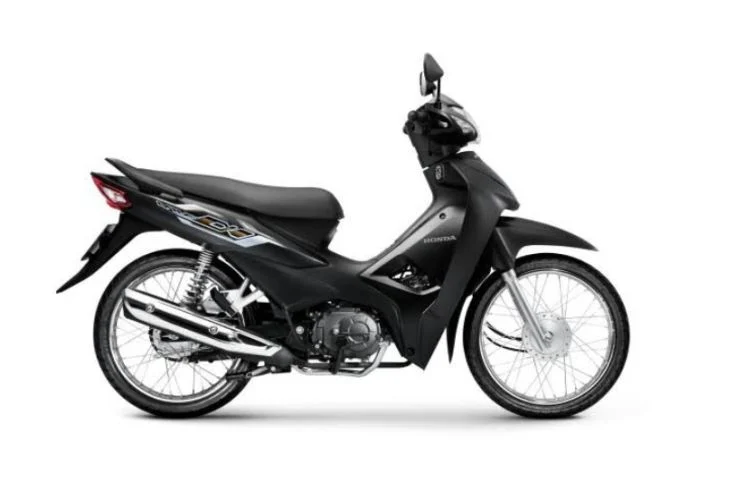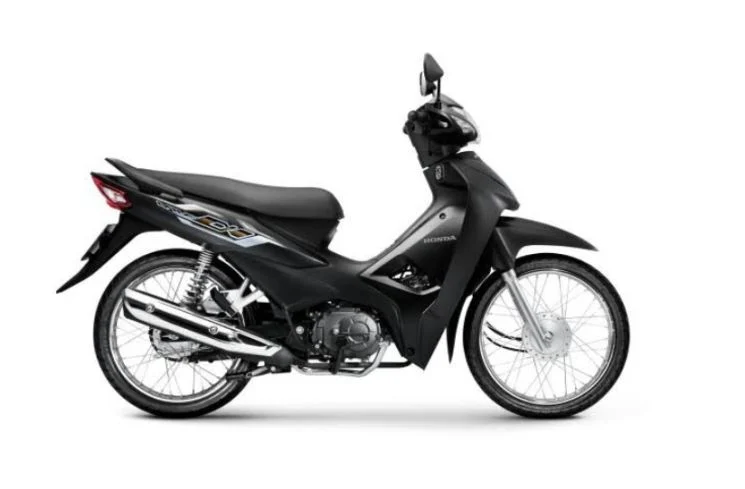
In the current economic climate, where operational overheads can dictate the viability of small-to-medium enterprises (SMEs) and independent service providers, the choice of transportation serves as a critical strategic decision. For delivery fleets, field agents, and independent entrepreneurs, the high costs associated with financing brand-new motorcycles often create unnecessary strain on cash flow. Consequently, the secondary market for underbone motorcycles—colloquially known as "bebek"—has emerged as a vital reservoir for reliable, low-cost mobility solutions. These machines, prized for their mechanical simplicity, exceptional fuel economy, and robust engineering, represent a pragmatic alternative to the debt-heavy acquisition of new vehicles. By securing a well-maintained underbone motorcycle for under 5 million Indonesian Rupiah (IDR), business owners can significantly optimize their operational capital, ensuring that resources are allocated toward growth rather than interest payments.
The Economic Case for Pre-Owned Underbone Motorcycles
The underbone motorcycle segment occupies a unique space in the automotive hierarchy. Historically, these vehicles were designed to serve as the backbone of emerging markets, prioritizing structural durability and ease of repair over aesthetic luxury. Unlike modern automatic scooters that rely on complex continuously variable transmissions (CVT) and electronic fuel injection systems, the vintage underbone models—typically produced between 2004 and 2011—feature straightforward carbureted engines and manual clutch-less transmissions.
From a financial perspective, the depreciation curve of a motorcycle is steepest in its first five years. By opting for a unit that is over a decade old, the buyer is essentially bypassing the most aggressive period of value loss. Furthermore, the "total cost of ownership" for these specific models is remarkably low. The ubiquity of parts in the secondary and aftermarket sectors ensures that maintenance costs remain negligible, and the mechanical architecture is familiar to almost every local mechanic, minimizing downtime during service intervals.
Detailed Analysis of Reliable Workhorses
For entrepreneurs seeking to bolster their logistics or field operations, five specific models have consistently demonstrated superior longevity and return on investment. These vehicles are selected based on their historical performance records, parts availability, and fuel efficiency metrics.
1. Honda Supra X 125 (2005–2010): The Industry Standard
The Honda Supra X 125 remains the benchmark for commercial-grade underbones. Equipped with a 124.8 cc SOHC engine, this model generates 10.1 PS, providing sufficient torque for traversing urban inclines while carrying cargo. Its reputation is built on the legendary durability of the Honda engine block. With a fuel consumption rate averaging 45 to 50 km/l, the Supra X 125 is a model of efficiency. In the current market, units in good condition range from IDR 3.5 million to IDR 5 million, making it a premium choice for high-frequency daily usage.
2. Honda Supra Fit (2004–2007): Efficiency on a Budget
For operations with extreme budget constraints, the Supra Fit offers an entry-level solution without sacrificing reliability. Utilizing a 100 cc engine, this model is engineered for maximum fuel economy, often exceeding 50 km/l under optimal riding conditions. Priced between IDR 2 million and IDR 4.5 million, the Supra Fit is frequently favored by street-food vendors and local delivery personnel who prioritize low operational costs over high-speed performance.
3. Yamaha Vega R (2005–2010): The Responsive Contender
The Yamaha Vega R is widely recognized for its high-torque delivery at low revolutions per minute. This specific characteristic is advantageous for delivery riders who frequently start and stop in traffic or maneuver with heavy loads. The engine design of the Vega R shares a significant number of components with other Yamaha models of the same era, which simplifies the supply chain for repairs. Priced competitively at IDR 3 million to IDR 5 million, it serves as a highly responsive tool for agile city-based logistics.
4. Suzuki Smash (2007–2011): Structural Integrity
Suzuki has long held a reputation for manufacturing engines with high structural tolerances. The Smash, with its 110 cc powerplant, features a chassis designed for durability under heavy loads. It is a favored choice for long-distance field work, where mechanical stability is more important than comfort. Available for approximately IDR 4.7 million to IDR 4.8 million, the Smash represents a middle-ground investment that rewards the owner with years of service life if basic maintenance schedules are strictly followed.
5. Yamaha Jupiter Z (2004–2010): The Legendary Performer
The Jupiter Z is perhaps the most iconic of the bunch, known for its punchy 110–115 cc engine. While it offers a sportier riding experience, it does not compromise on fuel efficiency, delivering between 40 and 45 km/l. With a price point ranging from IDR 2.5 million to IDR 4.2 million, it is an ideal candidate for businesses requiring a balance between speed and reliability. Its stable transmission system ensures that it can handle the rigors of heavy daily distribution cycles without frequent transmission failures.
The Crucial Role of Due Diligence
While the economic benefits of these machines are clear, the secondary market is fraught with risks for the uninitiated. A systematic inspection process is not merely a recommendation; it is an essential safeguard. Before any transaction is finalized, prospective buyers should follow a rigorous checklist.
1. Verification of Legal Documentation: The most critical step involves matching the frame and engine numbers of the motorcycle with those listed on the STNK (Vehicle Registration Certificate) and BPKB (Vehicle Ownership Document). Any discrepancy in these numbers is a red flag, as it may indicate a stolen or illicitly modified unit.
2. Physical and Mechanical Inspection:
- Suspension and Frame: Inspect the frame for signs of welding or structural stress, which could indicate a history of major accidents.
- Engine Sound: A cold start is essential. Listen for abnormal metallic knocking or ticking sounds, which may signal worn connecting rod bearings or timing chain issues.
- Transmission: During a test ride, ensure that gear shifts are smooth and that there is no slippage, particularly under acceleration.
- Electrical Systems: Verify that all signals, brake lights, and the horn are operational. A faulty electrical system in an older bike can be a persistent and costly nuisance to diagnose.
Broader Economic Implications for SMEs
The decision to utilize older, reliable motorcycles is a macro-level trend that reflects a shift toward "frugal innovation." By lowering the barrier to entry for transportation, small business owners are able to operate with lower fixed costs. This creates a competitive advantage, allowing these businesses to offer more competitive pricing to their customers or to scale their operations by acquiring more units for the same capital outlay required for one new vehicle.
Market analysts observe that as the automotive industry shifts toward newer, more expensive technology, the gap between the primary and secondary market will likely widen. This creates a sustainable cycle where used underbone motorcycles continue to serve as the "workhorse" of the informal economy. The implications are clear: the resilience of the local economy is, in part, tied to the mechanical resilience of these enduring machines.
Conclusion: A Strategic Partner in Business
Investing in a pre-owned underbone motorcycle is a calculated move that prioritizes utility over status. When sourced with care and maintained with diligence, these vehicles offer a level of reliability that rivals many modern counterparts, at a fraction of the cost. Whether it is the robust Honda Supra, the agile Yamaha Vega, or the dependable Suzuki Smash, the right choice depends on the specific operational needs of the business. By focusing on the fundamentals—mechanical health, legal transparency, and cost-efficiency—entrepreneurs can secure a transportation partner that will support their commercial endeavors for years to come, ensuring that their capital remains liquid and their business remains mobile.