
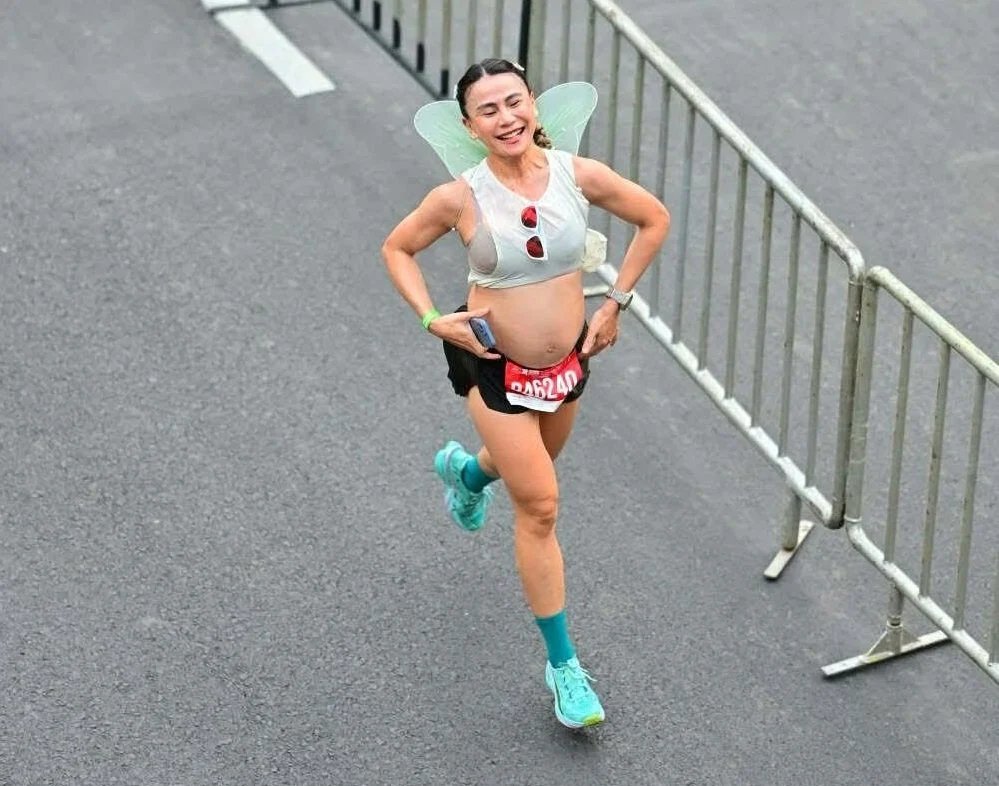
The Jakarta Running Festival (JRF) 2026 reached a poignant and inspiring climax this past Sunday, October 25, when Dina Bawden, a fitness professional and HYROX athlete, crossed the finish line of the 10-kilometer race while six months pregnant. Her participation in one of the city’s most anticipated sporting events has ignited widespread conversation regarding maternal health, the limits of physical endurance during pregnancy, and the evolving landscape of women’s sports in Indonesia.
Bawden, who operates as a personal trainer, completed the 10-kilometer course in a respectable time of 1 hour, 2 minutes, and 29 seconds. While professional marathoners often complete such distances in under 40 minutes, Bawden’s achievement is being lauded not for its competitive velocity, but for the discipline, physiological management, and adherence to safety protocols required to navigate such an endurance event while expecting.
A Chronology of the Event
The Jakarta Running Festival 2026, held against the backdrop of the capital’s central business district, drew thousands of participants ranging from elite international athletes to amateur enthusiasts. The 10K category, which commenced in the early hours of Sunday morning, was designed to test stamina and endurance.
Bawden began the race with a measured approach, cognizant of the physiological shifts inherent in the second trimester of pregnancy. According to her social media documentation, the decision to participate was not impulsive; rather, it was the culmination of a carefully monitored training regimen. By the time she reached the halfway point, spectators and fellow runners had begun to take notice of her condition. Her steady pace, maintained despite the physical burden of pregnancy, served as a focal point for many observers who were initially concerned about the safety of such exertion.
Professional Fitness Background as a Foundation
Dina Bawden is no stranger to high-intensity physical activity. As a personal trainer and a competitive HYROX athlete—a sport that combines functional fitness with endurance running—her cardiovascular base is significantly higher than the average individual. This background provided her with the necessary foundation to maintain a running program throughout her pregnancy.
Exercise during pregnancy, provided it is cleared by medical professionals, is widely supported by health organizations like the American College of Obstetricians and Gynecologists (ACOG). The benefits include improved mood, reduced risk of gestational diabetes, and better postpartum recovery. However, medical experts emphasize that the intensity must be adapted. Bawden’s own admission on her Threads account, @dinabawden87, highlights this awareness: "I couldn’t run like I usually do because I couldn’t be selfish. There was a fetus I needed to protect." This statement underscores the crucial distinction between elite athleticism and the necessary precautions required when training for two.
The Science of Pregnancy and Endurance Athletics
The physiological demands of a 10K race involve elevated heart rates, increased core body temperature, and significant biomechanical stress on the pelvic floor and joints. For a pregnant woman in her second trimester, the body experiences a shift in the center of gravity, increased blood volume, and the production of relaxin—a hormone that loosens ligaments in preparation for childbirth.
Bawden’s time of 62 minutes suggests a moderate, sustainable heart rate zone. By choosing to prioritize consistent movement over speed, she successfully mitigated common risks such as hyperthermia and excessive strain. Her performance provides a practical case study in "active pregnancy," a movement that encourages women to remain physically engaged in their pre-pregnancy passions, albeit with necessary modifications.
Broader Impact and Social Media Reception
The news of Bawden’s finish went viral almost immediately, trending across various platforms. The discourse has been largely positive, with many netizens praising her resilience and the normalization of active motherhood. However, the viral nature of the post also sparked necessary debates regarding the "right way" to be pregnant.
In the Indonesian context, traditional views on pregnancy often emphasize complete rest and a sedentary lifestyle. Seeing a woman participating in a mass-participation sporting event challenges these societal norms. Public health advocates suggest that stories like Bawden’s can help dismantle outdated myths, provided that they are accompanied by the caveat that every pregnancy is unique and requires individual medical consultation.

The Jakarta Running Festival: A Growing Cultural Phenomenon
The JRF 2026 is part of a larger trend in Indonesia where mass participation in running events has become a staple of urban lifestyle. The event serves not only as a sporting competition but as a massive social platform that promotes cardiovascular health. The participation of individuals like Bawden highlights the inclusive nature of the modern running community in Jakarta.
Organizers of the JRF have consistently aimed to broaden the appeal of the festival. By welcoming diverse participants, the event has transitioned from a niche gathering for serious runners to a community-wide celebration. The inclusion of runners with varying physical conditions—including pregnant women and the elderly—underscores the event’s commitment to accessibility.
Medical Considerations and Safety Protocols
While Bawden’s feat is impressive, it is important to contextualize her accomplishment within the framework of sports medicine. Obstetricians generally advise pregnant women to avoid high-impact activities if they have certain complications, such as placenta previa or pre-eclampsia. For a healthy pregnancy, the "talk test" is often recommended: if a runner can still hold a conversation while running, they are likely within a safe intensity range.
Bawden’s ability to finish the 10K suggests she maintained a conversational, aerobic pace throughout the event. Furthermore, the presence of medical teams at the JRF provided an essential safety net, though the responsibility ultimately rested on the athlete to listen to her body’s signals—a skill that her background as a professional trainer likely refined.
The Evolving Narrative of Women in Sports
Dina Bawden’s story is symptomatic of a broader shift in how society views female athletes. For decades, the "maternal wall" suggested that pregnancy was a career-ending or activity-limiting event. In recent years, high-profile athletes across the globe have challenged this narrative, returning to competition shortly after childbirth or training through pregnancy.
Bawden’s participation in the 10K is an extension of this global trend, bringing it to the local level in Indonesia. Her visibility as a pregnant runner provides a tangible example for other women, potentially encouraging them to maintain their fitness goals during pregnancy, thereby fostering a healthier generation of mothers and children.
Implications for Future Events
The success of the JRF 2026 and the buzz surrounding Bawden’s participation may lead to more inclusive policies in future athletic events. This could include designated categories or better medical support structures specifically tailored for pregnant participants. As more women prioritize fitness during pregnancy, event organizers will need to adapt their safety guidelines and promotional materials to ensure that these participants are both supported and monitored.
Moreover, the attention garnered by this story serves as a reminder of the power of digital platforms in shaping health literacy. While the social media narrative was largely one of admiration, it also opened the door for experts to weigh in on the importance of prenatal care, nutrition, and hydration—topics that are essential for any athlete, pregnant or otherwise.
Conclusion
Dina Bawden’s completion of the 10K at the Jakarta Running Festival 2026 is a significant milestone, both for her personal fitness journey and for the broader conversation regarding maternal health in Indonesia. By successfully navigating the race at six months pregnant, she has demonstrated that with the right preparation, medical oversight, and an intuitive approach to physical limits, pregnancy does not necessitate a total cessation of athletic ambition.
As the dust settles on the JRF 2026, the legacy of this event will likely include more than just the race times and podium finishers. It will be remembered as a moment where the boundaries of what is considered "possible" for a pregnant woman were pushed, sparking a constructive dialogue that values both the vigor of the athlete and the sanctity of the pregnancy. Bawden’s story remains a testament to the fact that when supported by experience and caution, the human body is capable of extraordinary feats, even during one of life’s most demanding transitions.
