
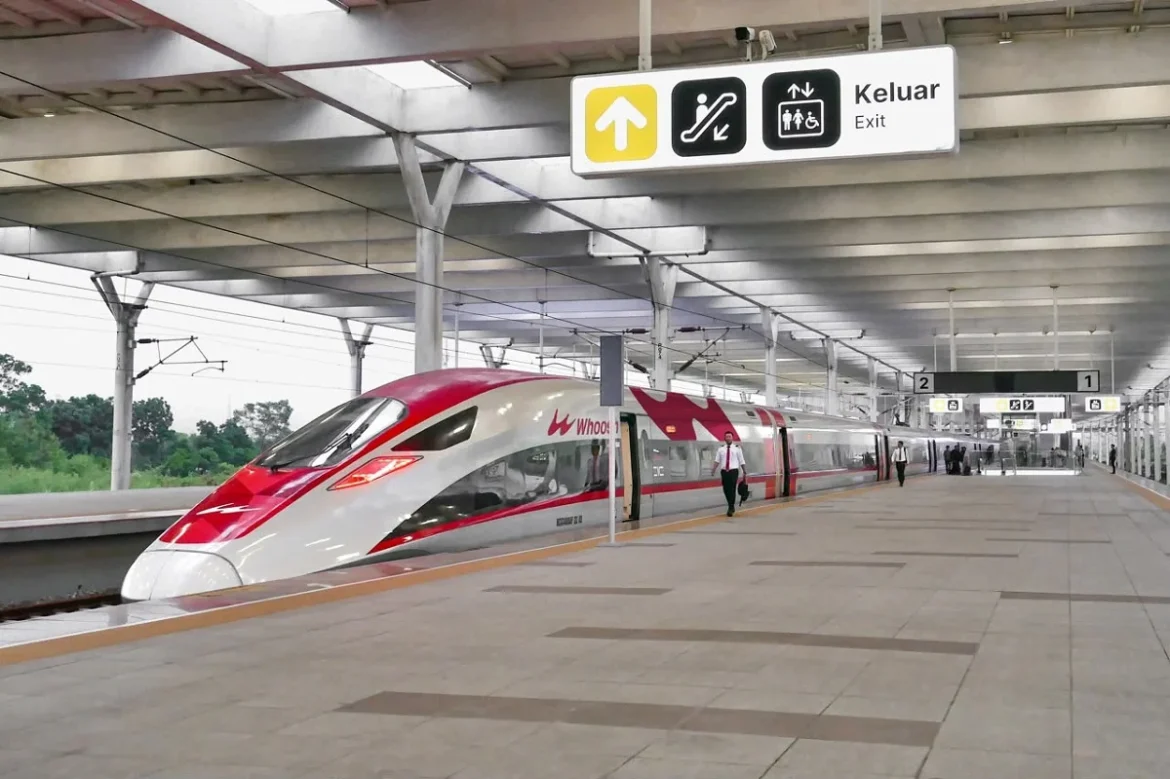
The Indonesian government has officially unveiled a restructured financial framework for the Jakarta-Bandung High-Speed Railway project, known as Whoosh. This strategic recalibration, announced by Minister of Finance Purbaya Yudhi Sadewa, marks a significant shift in the nation’s infrastructure financing approach. By extending the debt maturity period to 80 years, the administration aims to mitigate the immediate fiscal pressure of the project while ensuring long-term operational sustainability. The revised scheme effectively lowers the annual debt servicing burden to approximately Rp1 trillion, a move designed to stabilize the project’s cash flow amidst its ongoing integration into the national transportation network.
The Genesis of the Whoosh Financial Restructuring
The Jakarta-Bandung High-Speed Railway, a flagship project under the Belt and Road Initiative and a cornerstone of Indonesia’s modernization efforts, has faced complex financial scrutiny since its inception. Initially funded through a combination of equity from local and Chinese partners and significant loan facilities from the China Development Bank (CDB), the project encountered cost overruns due to land acquisition challenges, technical complexities, and the global economic disruptions caused by the COVID-19 pandemic.
As the project transitioned from the construction phase to full commercial operations, the pressure to service the mounting debt became a primary concern for the Ministry of Finance and the Ministry of State-Owned Enterprises (BUMN). The recent decision to restructure the debt reflects a pragmatic acknowledgment of the project’s long-term revenue generation timeline. Rather than forcing a high-intensity repayment schedule that could jeopardize the railway’s operational budget, the government has opted for a "long-tail" approach, effectively deferring the bulk of the principal repayment to future generations while maintaining interest obligations.
Understanding the 80-Year Tenor and Annual Obligations
The core of the new financial architecture lies in the extension of the tenor. Spanning eight decades, this timeline is highly unusual for conventional corporate loans but aligns more closely with the lifecycles of major sovereign-backed infrastructure assets. Minister Purbaya Yudhi Sadewa emphasized that this extended duration is not merely an act of necessity but a calculated risk management strategy.
By capping the annual debt service obligations at approximately Rp1 trillion, the government intends to provide PT Kereta Cepat Indonesia China (KCIC)—the joint venture operating the line—with sufficient financial breathing room. This annual figure is subject to fluctuations based on interest rate adjustments and specific loan agreement clauses, but the structural ceiling provides a predictable framework for the state budget. Minister Purbaya’s remark—that the government now views the debt as a manageable, long-term obligation—signals a shift from "crisis mode" to a "steady-state" management phase.
Chronology of the Whoosh Development
To understand the current fiscal situation, one must look at the timeline of the project’s financial evolution:
- 2015: Indonesia and China sign the formal agreement to develop the Jakarta-Bandung high-speed rail, with construction initially slated for completion by 2019.
- 2016: Groundbreaking ceremony takes place, signaling the start of the massive engineering undertaking.
- 2019-2021: The project faces significant delays due to the global pandemic and unforeseen geological hurdles in the tunnel construction segments. Costs begin to climb above the initial estimates.
- 2022: The Indonesian government authorizes state capital injections (PMN) to cover the cost overruns, sparking public debate over the financial viability of the project.
- 2023: Whoosh begins commercial operations, successfully reducing travel time between Jakarta and Bandung to approximately 45 minutes.
- 2026 (Present): The Ministry of Finance finalizes the restructuring of debt obligations, securing the 80-year tenor to ensure the project’s fiscal sustainability.
Implications for the State Budget and Infrastructure Financing
The decision to stretch the debt over 80 years carries profound implications for Indonesia’s fiscal policy. While it alleviates the immediate burden on the State Revenue and Expenditure Budget (APBN), critics and financial analysts often point to the total interest cost over such an extended period. Over 80 years, the cumulative interest paid will be significantly higher than the principal amount, making the project arguably more expensive in the long run.

However, the government’s counter-argument remains rooted in the concept of "social and economic multiplier effects." Proponents argue that the high-speed railway acts as a catalyst for regional economic growth, urbanization, and the integration of the Greater Jakarta and Bandung metropolitan areas. The economic activity generated by the transit-oriented development (TOD) around the stations is expected to eventually offset the long-term debt servicing costs.
Operational Efficiency and Revenue Management
Beyond the debt structure, the government is focusing on operational efficiency to ensure that KCIC can maximize its internal revenue. This includes optimizing ticket pricing, increasing passenger occupancy rates, and diversifying revenue streams through commercial spaces at the Halim, Karawang, Padalarang, and Tegalluar stations.
Minister Purbaya noted that the government is actively refining the structure of asset management. This involves ensuring that the railway’s operational costs do not balloon, maintaining high standards of maintenance, and leveraging technology to reduce labor-intensive manual processes. If the railway can maintain high demand, the Rp1 trillion annual payment will become an increasingly smaller percentage of the project’s total turnover.
Comparative Perspective: Global High-Speed Rail Financing
Globally, high-speed rail projects rarely turn a profit in their early years. Countries such as Japan (Shinkansen) and France (TGV) have historically relied on government subsidies or long-term public debt to sustain their rail networks for decades before achieving full self-sufficiency. Indonesia’s 80-year tenor places the Whoosh project in a similar category of "long-term infrastructure investment."
The challenge for the Indonesian government will be maintaining political and fiscal discipline over the next several decades. As administrations change, the commitment to servicing this long-term debt must remain a priority to maintain international investor confidence and sovereign credit ratings. The restructuring is, in essence, a promise that the state will honor its commitments, albeit on a timeline that recognizes the realities of large-scale infrastructure capital recovery.
Looking Ahead: The Future of High-Speed Connectivity
As the Whoosh enters its next phase of maturity, the focus will likely shift from construction and debt restructuring to service expansion and interconnectivity. Plans for extending the high-speed network to Surabaya remain a subject of discussion, and the success of the Jakarta-Bandung segment will serve as the primary litmus test for future projects.
For the public, the news of the 80-year debt structure is a reminder of the sheer scale of the project. While the figures associated with the debt are substantial, the government’s messaging remains clear: the project is now stable. By distributing the financial burden over eight decades, the administration is betting that the long-term benefits of enhanced mobility and connectivity will outweigh the costs of the initial capital investment.
The coming years will provide the data necessary to see if these financial projections hold true. As traffic numbers grow and the economic integration of the West Java corridor deepens, the Rp1 trillion annual installment is expected to become a manageable component of the broader national infrastructure strategy, proving that the gamble on high-speed rail was a calculated step toward Indonesia’s vision of a modernized, interconnected economy.
