
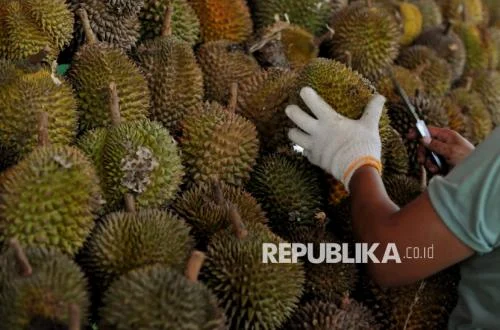
Indonesia is strategically positioning itself to capitalize on the escalating global demand for durian, with China emerging as the paramount consumer, a market estimated to be worth an astounding IDR 120 trillion annually. This monumental demand presents an unparalleled opportunity for Indonesia to significantly expand its agricultural exports, bolster its international trade standing, and empower its rural economies. The initial projections from the transmigration areas in Parigi Moutong Regency, Central Sulawesi, indicate a potential export value exceeding IDR 1 trillion within a single year, signaling a transformative shift in Indonesia’s durian trade paradigm.
Coordinating Minister for Infrastructure and Regional Development, Agus Harimurti Yudhoyono (AHY), highlighted this immense potential during a statement in Jakarta on Wednesday. "Within a mere three-month period, exports could reach IDR 400 billion. This translates to an annual export value of more than IDR 1 trillion destined for China," AHY affirmed, underscoring the rapid scalability and profitability of this agricultural venture. This optimism is underpinned by the government’s steadfast commitment to enhancing connectivity and infrastructure across key production regions. Adequate logistical support is crucial to ensure that agricultural commodities from remote areas, such as Parigi Moutong, are not isolated but seamlessly integrated into the global supply chain, allowing them to reach international markets efficiently.
China’s Insatiable Appetite: The Global Durian Powerhouse
China’s emergence as the world’s largest durian consumer is a phenomenon driven by several socioeconomic factors, including a rapidly expanding middle class with increased disposable income, a burgeoning interest in exotic fruits, and the fruit’s cultural status as the "King of Fruits." For many Chinese consumers, durian is not merely a fruit but a symbol of luxury and a highly sought-after delicacy, often gifted during special occasions. The annual growth rate of durian imports into China has been consistently high, with official data indicating a substantial increase in both volume and value over the past decade. In 2023 alone, China’s durian imports surpassed USD 6 billion, a significant leap from previous years, solidifying its position as the dominant force in the global durian trade.
Historically, Thailand has been the primary beneficiary of China’s durian craze, accounting for over 90% of China’s total fresh durian imports due to its well-established supply chains, vast plantations, and government-backed export strategies. Malaysia has also carved out a niche with its premium Musang King variety, often exported as frozen pulp or whole frozen fruit. Other Southeast Asian nations like Vietnam and the Philippines are also making inroads into the Chinese market. For Indonesia, breaking into this competitive landscape requires a robust strategy, unwavering commitment to quality, and efficient logistical solutions to challenge the established players and capture a meaningful share of this lucrative market.
Indonesia’s Untapped Potential: A sleeping Giant Awakens
Indonesia, as the world’s largest archipelagic nation, boasts an incredibly diverse agricultural landscape, including numerous indigenous durian varieties that have historically been cultivated for domestic consumption. While popular varieties like Montong, Petruk, and Bawor are known, countless local varieties, particularly from regions like Sulawesi, Kalimantan, and Sumatra, offer unique flavor profiles and textures that could appeal to discerning international palates. Despite being a major durian producer, Indonesia has traditionally focused on its vast domestic market, with formal exports remaining relatively modest compared to its Southeast Asian neighbors. This inward focus has meant that much of Indonesia’s durian potential has remained largely untapped on the global stage.
The focus on Parigi Moutong, Central Sulawesi, is particularly significant. This region, a product of Indonesia’s long-standing transmigration program, is rapidly transforming into a major agricultural hub. The transmigration program, initiated decades ago, aims to alleviate population density in Java and develop less populated islands by relocating communities and fostering agricultural development. These areas often possess fertile land, favorable climates, and a dedicated workforce, making them ideal for large-scale cultivation of high-value commodities like durian. The data from the Parigi Moutong Regency government indicates that the Bahari Tomini Raya Transmigration Area alone produces 903.9 tons of durian annually. This figure, while substantial, is projected to increase exponentially with enhanced agricultural practices, investment in modern horticulture, and robust export infrastructure.
Government-Led Initiatives and Strategic Diplomatic Engagements
The Indonesian government is orchestrating a multi-pronged approach to unlock this durian export potential. Muhammad Iftitah Sulaiman Suryanagara, the Minister of Transmigration, announced plans to directly oversee the initial large-scale durian export process to China. This initial phase is projected to involve tens of thousands of tons of durian, with an estimated value of approximately IDR 42 billion, marking a pivotal step in Indonesia’s export journey. Minister Suryanagara emphasized that the Parigi Moutong region is home to one of the largest durian plantations, not just within Indonesia but globally, a testament to the success of the transmigration program in fostering new economic centers built around superior commodities.
Crucially, concrete diplomatic steps have already been undertaken to facilitate this trade. On April 13, Minister Suryanagara held a bilateral meeting with the Chinese Ambassador to Indonesia, Wang Lutong, to discuss comprehensive cooperation opportunities for durian exports. During this meeting, China expressed strong interest in becoming a primary off-taker for Indonesian durian products, signaling a clear path for market entry. The proposed export scheme will strategically commence with frozen durian, a less perishable and easier-to-manage product, before progressively expanding to fresh durian. Fresh durian commands a higher economic value and experiences even greater demand in the Chinese market. This phased approach is considered realistic and prudent, allowing Indonesia to meticulously manage product quality, establish reliable supply chains, and meet stringent international market standards, thereby building a strong reputation for its durian products.
Economic Ripple Effects and Regional Transformation
The potential IDR 1 trillion durian export from Parigi Moutong alone stands to generate profound economic ripple effects, particularly for the local communities in the transmigration areas. Increased demand translates directly into higher incomes for farmers, creating more job opportunities in cultivation, harvesting, processing, and logistics. This economic stimulus can lift rural populations out of poverty, improve living standards, and drive local infrastructure development, such as better roads, schools, and healthcare facilities. The transmigration program, initially designed for population redistribution, is now proving to be a powerful engine for regional economic transformation, turning agricultural zones into vibrant hubs of productivity and prosperity.
Beyond the local impact, successful durian exports will significantly contribute to Indonesia’s national economy. It will diversify Indonesia’s export portfolio, reducing reliance on traditional commodities like palm oil, coal, and rubber, thereby making the economy more resilient to global market fluctuations. Furthermore, it will improve Indonesia’s balance of trade with China, a key trading partner. The shift from exporting raw commodities to higher-value agricultural products, potentially including processed durian products like paste, snacks, and beverages, could unlock even greater economic benefits through value-added industries, creating a more sophisticated and robust agricultural sector.
Navigating the Challenges: Quality, Consistency, and Competition
While the opportunities are immense, Indonesia faces several critical challenges in penetrating and sustaining its presence in the highly competitive Chinese durian market. The foremost challenge lies in meeting China’s stringent quality and phytosanitary standards. Chinese consumers are discerning, and regulators are rigorous; any lapses in quality control, pest management, or residue limits can result in rejected shipments and damage to Indonesia’s reputation. To address this, Indonesia must implement Good Agricultural Practices (GAP) across all durian farms, invest in advanced post-harvest handling technologies, and establish robust certification processes that are recognized internationally. This includes ensuring consistent fruit size, ripeness, appearance, and taste, which are paramount for market acceptance.
Consistency of supply is another significant hurdle. Durian is a seasonal fruit, and ensuring a year-round or consistently staggered supply to meet continuous demand requires strategic planning, including cultivating different varieties with varying harvest times or investing in advanced storage and freezing technologies. Indonesia will also need to overcome the logistical complexities of transporting perishable goods from remote regions to international ports and then across vast distances to China. This necessitates substantial investment in cold chain infrastructure, including refrigerated transport, modern warehousing, and efficient port facilities, to maintain the fruit’s freshness and quality throughout its journey.
Moreover, Indonesia must contend with the formidable competition from established players like Thailand and Malaysia, who have spent decades perfecting their durian export strategies and building strong brand recognition in China. To differentiate itself, Indonesia could leverage its unique indigenous durian varieties, offering novel taste experiences to Chinese consumers. Building a strong brand identity for "Indonesian Durian" that emphasizes its natural origins, diverse flavors, and high quality will be crucial. Furthermore, exploring sustainable farming practices and fair trade certifications could provide a competitive edge in an increasingly conscious global market.
Looking Ahead: The Road to Sustainable Durian Prosperity
The ambition to transform Indonesia into a global durian powerhouse, particularly for the Chinese market, is a testament to the nation’s agricultural potential and strategic vision. The initial success in Parigi Moutong, fueled by government initiatives and diplomatic efforts, provides a tangible blueprint for other regions. However, realizing the full IDR 1 trillion potential and beyond will require sustained investment, continuous improvement in agricultural practices, and unwavering adherence to international quality standards. Collaboration between government bodies, local farmers, private sector investors, and scientific institutions will be essential to overcome the inherent challenges and build a resilient, high-quality durian export industry.
As Indonesia embarks on this journey, the focus must remain on sustainability, ensuring that increased production does not come at the expense of environmental integrity or the livelihoods of local communities. By leveraging its vast agricultural resources, strategic government support, and the growing global appetite for durian, Indonesia stands on the cusp of unlocking a new era of agricultural prosperity, cementing its position as a significant player in the international fruit trade and bringing tangible benefits to millions across its archipelago.
Source: Antara
