
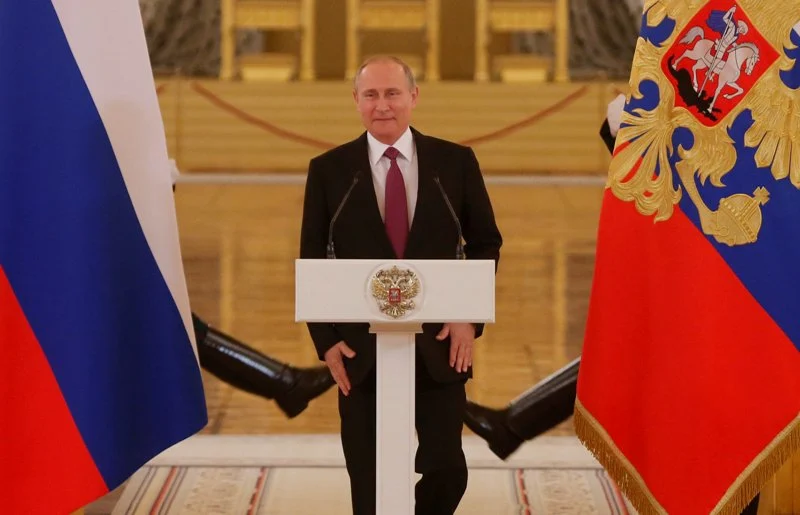
Vladimir Vladimirovich Putin has remained one of the most consequential and polarizing figures in modern geopolitics, guiding the trajectory of the Russian Federation for over two decades as either president or prime minister. Understanding the complex political operator of the twenty-first century requires examining the foundational years of his life, his formative experiences in Soviet Leningrad, his clandestine operations within the KGB, and his rapid ascent through the political machinery of post-Soviet Russia.
Main Facts and Family Origins
Born on October 7, 1952, in Leningrad—now Saint Petersburg—Vladimir Putin entered a society still heavily scarred by the immense devastation of World War II. His father, Vladimir Spiridonovich Putin, served in the Soviet Navy, specifically within the submarine fleet during the 1930s, and later fought in the Red Army during the Great Patriotic War, where he sustained severe injuries. His mother, Maria Ivanovna Shelomova, worked tirelessly as a factory laborer to help sustain the family in the war-torn city. Putin’s birth followed profound familial tragedy; two older brothers, Viktor and Albert, had been born prior to the war, but both tragically died during the catastrophic 872-day Siege of Leningrad—Albert passing away in infancy and Viktor succumbing to diphtheria while separated from his parents during the blockade.
Growing up in a communal apartment (kommunalka) shared with multiple other families on Baskov Lane, young Vladimir experienced a gritty, street-smart upbringing. Academic records show he attended School No. 193 near his home before transitioning to Saint Petersburg High School 281, where he focused intensively on the German language, achieving a level of fluency that would later prove vital during his foreign intelligence assignments.
Formative Years, Martial Arts and Academic Pursuits
Beyond his formal schooling, Putin sought discipline and direction through athletics. By the age of 12, he found a lifelong passion in martial arts, taking up sambo—a Soviet-developed combat sport—before transitioning to judo. This dedication to martial arts went beyond physical fitness; Putin frequently credits judo with instilling mental discipline, strategic patience, and situational awareness. In interviews reflecting on his youth, Putin noted that his early aspirations were heavily influenced by Soviet spy fiction and cinema, where intelligence operatives single-handedly achieved what entire armies could not. This romanticized view of state security laid the psychological groundwork for his career ambitions.
In 1970, Putin enrolled in the Law Department at Leningrad State University, a prestigious institution that served as an intellectual incubator for many Soviet legal and political elites. He earned his Bachelor of Laws degree in 1975, completing a thesis on the most-favored-nation trading principle in international law. Demonstrating a sustained commitment to higher education, he later returned to academia, securing a Candidate of Sciences degree—roughly equivalent to a Western doctorate—in economics from the Saint Petersburg Mining Institute in 1997, completing a dissertation focused on strategic mineral resource planning.
The KGB Years: Intelligence and East Germany
While still completing his university studies, Putin’s ambition to join the security apparatus materialized. He was recruited by the Komitet Gosudarstvennoy Bezopasnosti (KGB), the premier security agency of the Soviet Union. Following specialized training at the 401st KGB School in Okhta, Saint Petersburg, and the Red Banner Intelligence Institute in Moscow, Putin began climbing the ranks of the intelligence service.
For years, biographers and analysts debated the exact nature and seniority of his KGB assignments. Stationed primarily in Dresden, East Germany, from 1985 to 1990 as a mid-level intelligence officer, Putin operated during a period of escalating geopolitical tension marked by the impending collapse of the Eastern Bloc. Official biographical materials indicate his duties involved gathering political intelligence, monitoring foreign nationals, and recruiting assets.
The collapse of the communist regime in East Germany culminated in dramatic scenes in late 1989, when crowds of protesters targeted the Stasi headquarters and threatened the nearby KGB compound in Dresden. According to accounts verified by historians, Putin personally confronted angry demonstrators outside the Soviet facility, successfully deterring them from storming the building while awaiting military reinforcements from Moscow—an experience that left him with a profound appreciation for institutional order and a deep-seated apprehension toward popular uprisings and revolutions.
Return to Academia and Entry into Local Politics
Recalled to the Soviet Union as the USSR disintegrated, Putin returned to Leningrad State University in 1990, serving as assistant to the rector with a portfolio focused on external and international university relations. This administrative role served as a critical bridge from clandestine state service to public-facing governance. Through his university connections, he reconnected with Anatoly Sobchak, a prominent law professor who was rapidly emerging as a leading democratic reformer in late-Soviet politics.
When Sobchak was elected Chairman of the Leningrad City Council and subsequently Mayor of Saint Petersburg, Putin entered municipal government. Initially serving as an advisor to the city council chairman, Putin was appointed Chairman of the Committee for External Relations in June 1991. In this capacity, he was tasked with securing foreign investment, managing joint ventures, and establishing international trade ties for a city undergoing chaotic economic restructuring. By 1994, his administrative portfolio expanded significantly when he was named First Deputy Mayor of Saint Petersburg, working alongside Sobchak to navigate the turbulent privatization of municipal assets.
Chronology of the Rise to Federal Power
The political trajectory shifted dramatically following Anatoly Sobchak’s electoral defeat in the 1996 Saint Petersburg mayoral race. Refusing to serve under the incoming administration, Putin relocated to Moscow, where federal career opportunities awaited due to his reputation as an efficient and loyal administrator.
- August 1996: Appointed Deputy Chief of the Presidential Property Management Directorate under Pavel Borodin, overseeing state-owned assets both domestically and internationally.
- March 1997: Promoted to Deputy Chief of the Presidential Staff and simultaneously named Head of the Main Control Directorate, a powerful internal oversight body tasked with auditing government spending and enforcing federal laws.
- July 1998: Appointed Director of the Federal Security Service (FSB), the primary successor agency to the KGB, tasked with domestic counterintelligence and counterterrorism operations.
- March 1999: Named Secretary of the Security Council of the Russian Federation by President Boris Yeltsin, consolidating his authority over military and intelligence policy.
- August 1999: Appointed Prime Minister of the Russian Federation, rapidly positioning himself as the designated successor to an ailing President Boris Yeltsin amid economic instability and renewed conflict in the North Caucasus.
- December 31, 1999: Ascended to Acting President of Russia following the sudden resignation of Boris Yeltsin, officially stepping into the nation’s highest executive office.
- March 2000: Won his first full presidential election, securing a decisive mandate to stabilize the federation, centralize executive power, and restore economic growth.
Personal Life and Family Dynamics
Throughout his public career, Vladimir Putin has maintained a strict division between his professional duties and his private life. On July 28, 1983, he married Lyudmila Shkrebneva, a former Aeroflot flight attendant and linguistics graduate. The couple raised two daughters: Maria, born in Saint Petersburg on April 28, 1985, and Yekaterina, born in Dresden on August 31, 1986. Both daughters were raised under pseudonyms during their higher education to protect their privacy amid escalating security concerns.
After nearly three decades of marriage, Vladimir and Lyudmila announced their amicable separation in June 2013 during a televised intermission at a ballet performance, with the divorce finalized formally in 2014. The privacy surrounding his family life has remained a hallmark of his administration, with Russian state media shielding his extended family from public scrutiny.
Broader Implications and Historical Context
The evolution of Vladimir Putin from a low-ranking intelligence officer in Dresden to the dominant architect of the Russian state offers critical insights into modern international relations. His formative worldview was forged during the chaotic dissolution of the Soviet Union—an event he famously characterized as the greatest geopolitical catastrophe of the twentieth century. This perspective informed his subsequent domestic policies, which prioritized the consolidation of executive power, the curtailment of independent media, and the neutralization of political opposition to prevent domestic instability.
Economically, Putin’s early presidency coincided with a global commodity boom, particularly in oil and natural gas exports, which allowed Russia to replenish its foreign exchange reserves, pay off international debts, and restore living standards after the hyperinflation and poverty of the 1990s. This economic stabilization translated into broad public support, enabling his administration to reassert Russian influence on the global stage.
Political analysts note that Putin’s background in the security services directly shaped his governance style, characterized by a preference for vertical command structures, strategic opacity, and a security-first approach to domestic and foreign policy challenges. As his tenure extends well into the twenty-first century, the foundational experiences of his youth in Leningrad and his formative years in the intelligence apparatus continue to serve as the interpretive lens through which his geopolitical decisions and statecraft are understood by historians and political scientists worldwide.
