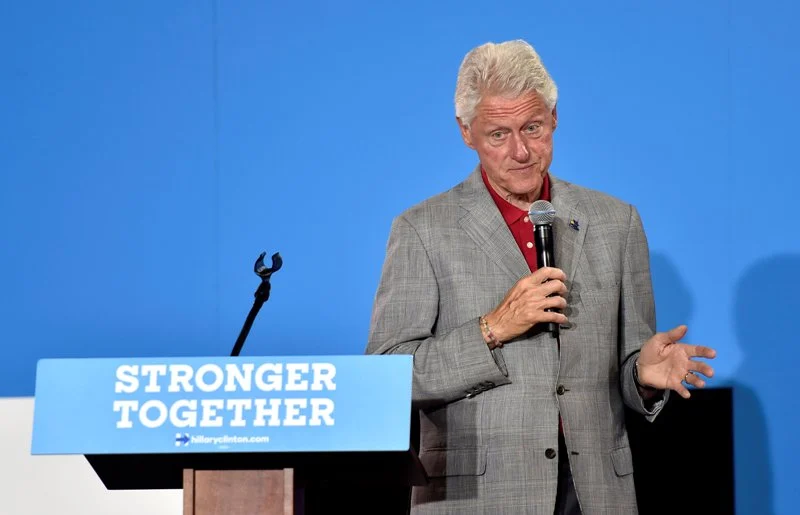
William Jefferson Clinton, who served as the 42nd President of the United States from 1993 to 2001, remains one of the most compelling and consequential figures in modern American political history. Born William Jefferson Blythe III on August 19, 1946, in the small town of Hope, Arkansas, Clinton’s journey to the highest office in the United States is a quintessential American narrative defined by early adversity, extraordinary academic achievement, relentless ambition, and profound political resilience.
Understanding Clinton’s legacy requires examining not only his two terms in the White House—a period marked by significant economic prosperity, technological expansion, and complex foreign policy challenges—but also the formative years that shaped his worldview. From a tragic childhood in the American South to the halls of elite universities, and ultimately to the global stage, Clinton’s life reflects the dynamic shifts in American society during the latter half of the twentieth century.
Early Life and Formative Influences in Arkansas
Bill Clinton’s entry into the world was marked by tragedy. He was born just three months after his biological father, William Jefferson Blythe Jr., a traveling heavy equipment salesman, died tragically in an automobile accident on May 17, 1946. Consequently, Clinton spent his earliest years under the care of his mother, Virginia Dell Cassidy, while she traveled to New Orleans to complete her training as a nurse anesthetist. During this period, young Bill lived with his maternal grandparents, Eldridge and Edith Cassidy, who instilled in him a strong sense of community and social awareness in segregated Arkansas.
In 1950, when Clinton was four years old, his mother married Roger Clinton Sr., an auto dealer from Hot Springs, Arkansas. The family relocated to Hot Springs, a bustling resort town known for its mineral springs, tourism, and a thriving underworld of gambling and organized crime. It was in Hot Springs that Clinton grew up, eventually taking his stepfather’s last name during his high school years, though he did not legally change his name until he was a teenager.
Despite a turbulent domestic environment—marked by his stepfather’s struggles with alcoholism and abusive behavior toward his mother—Clinton excelled academically and socially. He was an avid reader, a dedicated student at Hot Springs High School, and an exceptionally talented musician. Clinton played the tenor saxophone with distinction and briefly contemplated pursuing a professional career in music. However, a pivotal, life-altering moment in his youth redirected his ambitions entirely toward public service.
The Turning Point: Meeting John F. Kennedy
In the summer of 1963, Clinton was selected as a delegate from Arkansas to attend Boys Nation, a prestigious leadership program sponsored by the American Legion. As part of the program, participants traveled to Washington, D.C., where they were granted a visit to the Rose Garden of the White House.
There, a seventeen-year-old Bill Clinton had a brief but unforgettable encounter with President John F. Kennedy. A famous photograph capturing a starstruck Clinton gazing intently at the young, charismatic president became a symbol of his political awakening. Decades later, Clinton would frequently cite this moment as the catalyst for his lifelong dedication to politics and governance, noting how Kennedy’s vision of public service inspired a generation of young Americans to enter civic life.
Academic Excellence and the Making of a Statesman
Armed with a newfound sense of purpose, Clinton pursued higher education with relentless drive. He enrolled at Georgetown University in Washington, D.C., choosing to major in international affairs—a field that reflected his growing interest in global diplomacy. During his undergraduate years, he immersed himself in the capital’s political ecosystem, even working as an intern for Arkansas Senator J. William Fulbright, a prominent critic of the Vietnam War and a major influence on Clinton’s foreign policy outlook.
Clinton graduated from Georgetown with a Bachelor of Science in Foreign Service degree in 1968. That same year, he achieved a major academic milestone by winning a prestigious Rhodes Scholarship, which enabled him to study at University College, Oxford, in the United Kingdom. Although his time at Oxford was interrupted by his return to the United States and his involvement in anti-war politics, the international exposure deeply enriched his intellectual perspective.
Upon returning to the United States, Clinton entered Yale Law School in 1969. It was at Yale that he met Hillary Diane Rodham, a sharp, politically active law student from Park Ridge, Illinois, who would become his intellectual equal, political partner, and future wife. Clinton earned his Juris Doctor (J.D.) degree from Yale in 1973, ready to launch his professional career.
Early Political Career in Arkansas
Rather than remaining on the East Coast to pursue lucrative legal opportunities, Clinton chose to return to his home state of Arkansas to build a political base. He took a position as a law professor at the University of Arkansas School of Law in Fayetteville, but his true passion remained electoral politics.
In 1974, at the young age of 28, Clinton made his first major run for public office, challenging incumbent Republican Representative John Paul Hammerschmidt for Arkansas’s Third Congressional District seat. Running in a conservative district during the fallout of the Watergate scandal, Clinton waged a surprisingly competitive campaign but ultimately lost by a narrow margin of 52% to 48%. Despite the defeat, the race established him as a rising star in the Arkansas Democratic Party.
On October 11, 1975, Bill Clinton married Hillary Rodham in a modest ceremony in Fayetteville. The partnership proved to be both a personal anchor and a formidable political alliance.
Capitalizing on his growing reputation, Clinton ran for Attorney General of Arkansas in 1976 and won easily. He served in the role from 1977 to 1979, gaining a reputation as an active consumer advocate and a reformer within the state’s legal apparatus.
The Youngest Governor in the Nation
Clinton’s rapid ascent continued in 1978, when he successfully ran for Governor of Arkansas. At just 32 years old, he became the youngest governor in the history of the state and the youngest governor in the United States at that time.
His first term as governor (1979–1981 was characterized by ambitious reform efforts, particularly in education and infrastructure. However, his administration faced significant political headwinds. In an effort to finance road improvements, Clinton proposed an increase in automobile license fees, which proved deeply unpopular among rural voters. Furthermore, his administration faced intense criticism and public backlash regarding the federal government’s decision to house thousands of Cuban refugees (the Mariel boatlift) at Fort Chaffee in Arkansas.
These factors, combined with a surging conservative wave led nationally by Ronald Reagan, contributed to Clinton’s shocking defeat in his 1980 reelection bid against Republican challenger Frank White. At age 34, Clinton found himself out of office and politically vulnerable, an experience he later described as the lowest point of his life.
Political Resurrection and the Path to the Presidency
Demonstrating the resilience that would become a hallmark of his career, Clinton spent the next two years rebuilding his political standing. He practiced law at a prestigious Little Rock firm and engaged in extensive grassroots outreach across Arkansas.
In 1982, Clinton ran against Frank White in a bitter rematch and recaptured the governorship. This time, he approached governance with a more pragmatic, consensus-building strategy. Over the next decade, serving through successive terms until 1992, Governor Clinton focused heavily on overhauling Arkansas’s public education system, raising teacher standards, expanding economic development, and improving healthcare access.
During this period, Clinton also played a prominent role on the national stage. As chair of the National Governors Association from 1986 to 1987, he collaborated with governors from both parties to craft education reform policies that later influenced national legislation. By the early 1990s, Clinton had cultivated an image as a "New Democrat"—a centrist, market-oriented moderate who sought to bridge the ideological divide between traditional liberalism and the ascendant conservatism of the Reagan-Bush era.
The 1992 Presidential Campaign
In October 1991, Governor Clinton formally announced his candidacy for the presidency of the United States. The 1992 election took place against the backdrop of an economic recession and widespread voter dissatisfaction with Washington establishment politics.
Clinton secured the Democratic presidential nomination after a grueling primary season that tested his political agility against allegations regarding his personal life and draft status during the Vietnam War. Choosing Senator Al Gore Jr. of Tennessee as his vice-presidential running mate, Clinton formulated a strategic ticket that emphasized youth, southern appeal, and a forward-looking economic agenda.
The general election was a high-stakes three-way contest featuring the incumbent Republican President, George H.W. Bush, and billionaire Texas businessman Ross Perot, who ran as an independent on an anti-deficit platform. Clinton’s campaign famously maintained a laser focus on the economy, highlighted by a sign in his campaign headquarters that read: "The economy, stupid."
On November 3, 1992, Bill Clinton defeated George H.W. Bush, capturing 370 electoral votes to Bush’s 168, while securing 43% of the popular vote against Bush’s 37.4% and Perot’s 18.9%. At age 46, Clinton became the first member of the Baby Boomer generation to ascend to the presidency.
The Clinton Presidency: Economic Boom and Domestic Policy
Bill and Al Gore were inaugurated on January 20, 1993. The early years of the Clinton administration faced legislative hurdles, including the bruising political battle over lifting the ban on openly gay service members in the military (which resulted in the compromise "Don’t Ask, Don’t Tell" policy) and the ultimately unsuccessful attempt to pass comprehensive healthcare reform led by First Lady Hillary Clinton.
However, the administration achieved a major economic victory with the passage of the Omnibus Budget Reconciliation Act of 1993, which reduced the federal deficit through a combination of spending cuts and tax increases on upper-income earners. Despite intense Republican opposition, the economy responded with robust growth.
The 1990s under Clinton witnessed one of the longest periods of peacetime economic expansion in American history. The era was defined by the rapid growth of the digital technology sector, low inflation, plummeting unemployment rates down to 4 percent, and the creation of more than 22 million jobs. In 1998 and 1999, the federal budget recorded surpluses for the first time in decades.
In addition to economic success, Clinton signed several landmark pieces of legislation, including the Family and Medical Leave Act of 1993, the Brady Handgun Violence Prevention Act (establishing federal background checks on firearm purchasers), and the Violent Crime Control and Law Enforcement Act of 1994. In 1996, working with a Republican-controlled Congress, Clinton signed sweeping welfare reform legislation (the Personal Responsibility and Work Opportunity Reconciliation Act), fulfilling his 1992 campaign promise to "end welfare as we have known it."
Foreign Policy and Global Engagement
In foreign affairs, the Clinton administration navigated the post-Cold War geopolitical landscape, which was characterized by regional conflicts, ethnic cleansing, and the rise of globalization.
Early foreign policy missteps, such as the withdrawal of U.S. troops following the tragic "Black Hawk Down" incident in Somalia in 1993, shaped a more cautious approach to humanitarian intervention. Nevertheless, Clinton orchestrated successful diplomatic interventions to halt ethnic violence in the Balkans, deploying NATO airstrikes to end the Bosnian War and signing the Dayton Accords in 1995, and later leading the 1999 NATO bombing campaign to protect ethnic Albanians in Kosovo.
In the Middle East, Clinton positioned the United States as a primary mediator between Israel and its neighbors. He famously hosted Israeli Prime Minister Yitzhak Rabin and Palestine Liberation Organization Chairman Yasser Arafat at the White House for the historic signing of the Oslo Accords in 1993, and subsequently brokered the Israel-Jordan peace treaty in 1994.
Economically, Clinton championed global trade integration. Despite fierce opposition from labor unions and protectionist factions within his own party, he signed the North American Free Trade Agreement (NAFTA) in 1993, creating a trilateral trade bloc comprising the United States, Canada, and Mexico. He also supported the establishment of the World Trade Organization (WTO) and extended permanent normal trade relations to China.
Reelection and Impeachment
In 1996, Clinton and Al Gore easily secured reelection, defeating the Republican nominee, former Senate Majority Leader Bob Dole, and independent candidate Ross Perot. The Clinton-Gore ticket captured 379 electoral votes and 49.2% of the popular vote, solidifying their mandate.
However, Clinton’s second term was deeply overshadowed by personal scandals that culminated in a historic constitutional crisis. Following years of independent counsel investigations into real estate investments and personal conduct, revelations emerged regarding Clinton’s extramarital affair with White House intern Monica Lewinsky.
In December 1998, following televised grand jury testimony and the release of the Starr Report, the Republican-controlled House of Representatives voted to impeach President Clinton on two articles: perjury and obstruction of justice. Clinton became only the second president in U.S. history to be impeached, following Andrew Johnson in 1868.
The subsequent Senate trial in early 1999 failed to achieve the necessary two-thirds majority to convict him. The vote fell short on both charges—acquitting him of perjury (45-55) and obstruction of justice (50-50). Throughout the ordeal, Clinton maintained high public approval ratings, with many Americans separating their assessment of his personal conduct from their favorable view of his economic stewardship and governance.
Post-Presidency and Enduring Legacy
Clinton left office in January 2001, handing over the presidency to George W. Bush. In his post-presidency, Clinton has remained a towering and active figure on the global stage.
Through the establishment of the Clinton Foundation (originally the William J. Clinton Foundation), he has dedicated his post-White House years to addressing global challenges, including HIV/AIDS treatment and prevention, climate change, economic development, and public health initiatives in developing nations. He has also collaborated extensively with fellow former presidents, including George H.W. Bush and George W. Bush, to coordinate disaster relief efforts following major catastrophes such as the 2004 Indian Ocean tsunami, Hurricane Katrina, and the 2010 Haiti earthquake.
Historians and political analysts continue to debate the legacy of William Jefferson Clinton. To his supporters, he is remembered as a transformative leader who modernized the Democratic Party, ushered in an era of unprecedented economic abundance, and advanced pragmatic solutions to complex domestic and international challenges. To his critics, his presidency was marred by ethical controversies, policy compromises that exacerbated economic inequality, and personal indiscretions that diminished the dignity of the office.
Nevertheless, Bill Clinton’s trajectory—from a fatherless child in a small Arkansas town to the leader of the free world—remains an enduring testament to the complexities of American political life. His life’s work continues to serve as a vital reference point for understanding the political, economic, and social currents that shaped the United States at the close of the twentieth century.