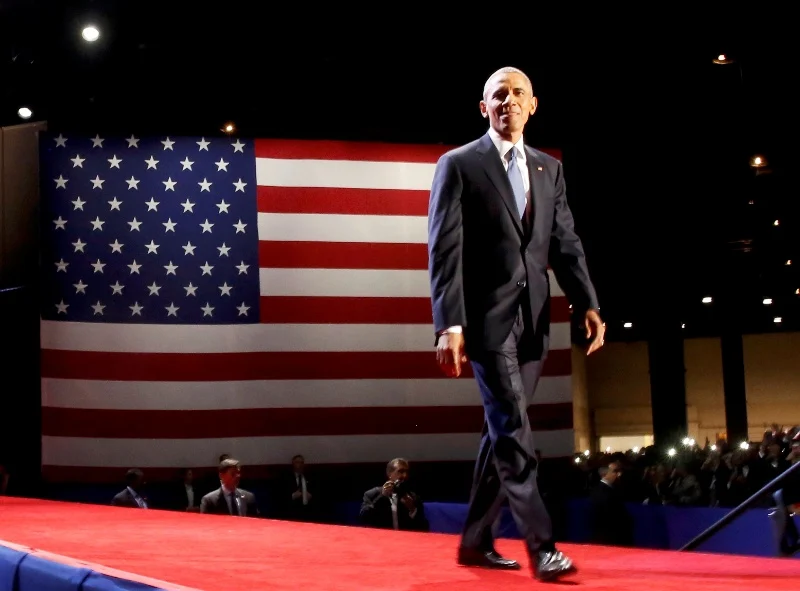
Barack Hussein Obama, the 44th President of the United States, was born on August 4, 1961, in Honolulu, Hawaii. His unique heritage, a blend of Kenyan and American roots, would become a defining characteristic of his personal and political journey. His father, Barack Obama Sr., hailed from Kenya, a scholar who came to the United States to pursue higher education. His mother, Ann Dunham, was an American anthropologist. This international upbringing fostered in young Barack an early understanding of diverse cultures and perspectives, experiences that would later shape his foreign policy and his approach to global relations.
Obama’s early childhood was marked by significant geographical and familial transitions. After his parents’ divorce, his mother married Lolo Soetoro, an Indonesian businessman. This union led Obama to relocate to Jakarta, Indonesia, where he spent several formative years. From the age of six to ten, he attended local schools, including Santo Fransiskus Asisi Catholic Elementary School for two years and SDN Menteng 01 for a year and a half. These years in Jakarta, a bustling metropolis, provided him with firsthand exposure to a different way of life, further broadening his worldview. His half-sister, Maya Soetoro-Ng, also born in Jakarta, shared these formative experiences with him. The influence of his Indonesian stepfather and the cultural immersion in Jakarta were significant factors in shaping his understanding of the developing world and its peoples.
In 1971, at the age of ten, Obama returned to Honolulu, Hawaii, to live with his maternal grandparents, Stanley and Madelyn Dunham. This period marked a return to his birthplace and a reconnection with his American roots. He enrolled at the Punahou School, a prestigious private preparatory school, where he received a scholarship. He attended Punahou from the fifth grade through his high school graduation in 1979. It was during these years that he began to develop his intellectual and leadership abilities, excelling in academics and extracurricular activities. The disciplined environment of Punahou, coupled with the guidance of his grandparents, provided him with a solid educational foundation.
Higher Education and Early Career
Following his graduation from Punahou, Obama pursued higher education, beginning at Occidental College in Los Angeles in 1979. After two years, he transferred to Columbia University in New York City, where he majored in political science. He graduated from Columbia in 1983 with a Bachelor of Arts degree. His time at Columbia was a period of intense intellectual engagement, where he began to grapple with complex political and social issues. He honed his analytical skills and developed a keen interest in public service.
After college, Obama spent two years working in the private sector. However, he soon felt a calling to public service and moved to Chicago in 1985. In Chicago, he embarked on a path of community organizing, working with a coalition of churches to revitalize neighborhoods affected by industrial decline, particularly the closure of a local steel plant. This hands-on experience in community development provided him with invaluable insights into the challenges faced by working-class communities and the importance of grassroots activism. He learned to build consensus, mobilize people, and advocate for change at the local level.
In 1988, Obama decided to pursue a law degree and enrolled at Harvard Law School. His time at Harvard was marked by significant academic achievement. In 1990, he was elected the first African-American president of the Harvard Law Review, a testament to his intellectual prowess and leadership capabilities. This prestigious position brought him national attention and further solidified his potential as a future leader. During his studies, he also returned to Chicago periodically to engage in voter registration drives and teach constitutional law at the University of Chicago Law School, maintaining his connection to the city and its people.
Building a Life in Chicago and Entering Politics
Chicago became more than just a professional stepping stone for Obama; it was where he built his personal life and found his life partner. In 1989, while working at the law firm Sidley Austin, he met Michelle LaVaughn Robinson, a fellow lawyer who was assigned to mentor him. Their professional acquaintance blossomed into a deep personal relationship. They married on October 3, 1992, and their family grew with the birth of their two daughters, Malia Ann in 1998 and Natasha (Sasha) in 2001. The establishment of his family in Chicago underscored his commitment to the city and its community.
Obama’s foray into electoral politics began in 1996 when he ran for a seat in the Illinois State Senate representing the 13th District. Running as a Democrat, he successfully secured the position, marking the start of his political career. During his tenure as a state senator, he championed legislation focused on improving healthcare access and expanding early childhood education programs for underprivileged residents of Illinois. His legislative efforts demonstrated a commitment to social justice and a focus on addressing the needs of vulnerable populations.
In 2000, Obama made his first bid for a seat in the U.S. House of Representatives. However, he faced a challenging race and was defeated by the incumbent, Bobby Rush. This electoral setback did not deter him. Instead, he used the experience to refine his political strategy. In 2002, he formed a campaign committee and began laying the groundwork for a run for the U.S. Senate. He strategically began fundraising and building a coalition of support, with the help of seasoned political consultant David Axelrod, who would become a key strategist throughout his national campaigns.
The Rise to National Prominence
Obama’s ambition culminated in his successful bid for the U.S. Senate in 2004. He won the Democratic primary and, in the general election, secured a decisive victory. His election to the Senate was a significant achievement, propelling him onto the national political stage. A pivotal moment in his ascent came later that year when he was invited to deliver the keynote address at the Democratic National Convention (DNC) in Boston. His speech, which emphasized themes of unity and hope, resonated deeply with a national audience. He articulated a vision of an America that could overcome its divisions and work together for a common future. The address, delivered with poise and eloquence, marked him as a rising star within the Democratic Party and a compelling voice for a new generation of leadership.
Early Political Accomplishments and a Vision for the Future
During his time in the Illinois State Senate, Obama was instrumental in passing legislation that aimed to increase access to healthcare and expand early childhood education. He focused on initiatives that would benefit low-income families and communities, reflecting his commitment to social equity. For instance, he helped pass a bill that expanded a state-run health insurance program for children and introduced legislation to provide tax credits for working families. These early legislative successes demonstrated his ability to craft policy and build bipartisan support for important social programs.
His campaign for the U.S. Senate in 2004 was characterized by a message of hope and change, a theme that would become central to his later presidential campaigns. He spoke about bridging divides and finding common ground, a message that resonated with voters tired of partisan gridlock. His victory in Illinois was seen as a significant upset and a testament to his growing political acumen.
The keynote address at the 2004 DNC was a watershed moment. Obama, then a relatively unknown senator, captivated the convention with his powerful oratory. He spoke of the shared values that unite Americans, transcending racial and political lines. His speech concluded with a call to action, urging Americans to embrace a common destiny. "There is not a liberal America and a conservative America – there is the United States of America," he declared, a line that encapsulated his message of unity. This speech propelled him into the national spotlight, making him a sought-after speaker and a figure of considerable interest within the Democratic Party.
Deeper Dive into Obama’s Policy Initiatives and Political Philosophy
Obama’s legislative record in the Illinois State Senate, though focused on state-level issues, provided a glimpse into his policy preferences and political philosophy. He was a strong advocate for children’s rights and welfare, supporting programs that aimed to improve educational outcomes and provide essential healthcare services. His work on the Illinois Children’s Health Insurance Program (SCHIP) expansion helped to cover thousands of uninsured children, showcasing his commitment to ensuring that all children have access to basic necessities. Furthermore, his focus on tax credits for working families aimed to alleviate economic burdens and provide a safety net for those struggling to make ends meet.
As a U.S. Senator, Obama continued to advocate for policies that addressed economic inequality and promoted social justice. He served on key Senate committees, including the Committee on Foreign Relations and the Committee on Health, Education, Labor, and Pensions. His work on these committees allowed him to delve into critical national and international issues. He was an early critic of the Iraq War, advocating for a diplomatic resolution and a responsible drawdown of troops. This stance, while controversial at the time, foreshadowed his later emphasis on multilateralism and a more cautious approach to military intervention.
His political philosophy can be characterized by a pragmatic approach to governance, often seeking to find common ground and build consensus. While rooted in progressive ideals, he demonstrated a willingness to engage with those holding different views, a trait that endeared him to some and drew criticism from others who felt he was not sufficiently ideological. His emphasis on hope and change was not merely rhetorical; it was tied to a belief in the power of individuals and communities to effect positive change. His community organizing background in Chicago deeply influenced his understanding of the importance of grassroots engagement and the need to empower ordinary citizens.
The Path to the Presidency
Following his successful 2004 Senate campaign and his impactful DNC speech, speculation about a presidential run began to grow. Obama, however, remained focused on his senatorial duties for several years. He continued to build his national profile through speeches and writings, including his autobiographical book "Dreams from My Father" and "The Audacity of Hope," which further articulated his political vision.
In February 2007, Obama officially announced his candidacy for the Democratic presidential nomination. His campaign was characterized by a grassroots movement, fueled by a surge of enthusiastic young voters and a significant online presence. He embraced new technologies for fundraising and organizing, setting a precedent for future political campaigns. The "hope and change" message, coupled with his compelling personal story and articulate delivery, captured the imagination of many Americans.
The 2008 Democratic primary race was a closely contested battle against former First Lady and Senator Hillary Clinton. Obama ultimately prevailed, securing the nomination at the Democratic National Convention in Denver. His acceptance speech, delivered to a massive crowd, reiterated his themes of unity and optimism, setting the stage for the general election against Republican nominee John McCain.
The general election campaign was intense, focusing on issues such as the economy, healthcare, and the ongoing wars in Iraq and Afghanistan. Obama’s message of change resonated with a populace seeking a new direction after eight years of the George W. Bush administration. On November 4, 2008, Barack Obama was elected the 44th President of the United States, becoming the first African-American to hold the nation’s highest office. His victory was a historic moment, symbolizing a significant shift in American society and politics.
The Obama Presidency and Lasting Legacy
As president, Obama faced a daunting array of challenges, including the Great Recession, ongoing wars, and a deeply divided political landscape. His administration enacted significant legislation, most notably the Affordable Care Act (ACA), which aimed to expand health insurance coverage to millions of uninsured Americans. The ACA, often referred to as "Obamacare," was a landmark achievement that reshaped the American healthcare system.
In economic policy, Obama inherited a nation in financial crisis. His administration implemented a stimulus package to boost the economy and oversaw the bailout of the auto industry, which many credit with saving American manufacturing jobs. He also enacted financial regulatory reforms through the Dodd-Frank Act to prevent a recurrence of the 2008 financial crisis.
On foreign policy, Obama ended the war in Iraq, authorized the raid that killed Osama bin Laden, and negotiated the Iran nuclear deal, a multilateral agreement aimed at preventing Iran from developing nuclear weapons. He also normalized relations with Cuba after decades of estrangement. His presidency was marked by a commitment to diplomacy and multilateralism, seeking to re-engage the United States on the global stage.
Obama’s two terms in office were characterized by both significant policy achievements and persistent political challenges. He inspired a generation of Americans and demonstrated the power of perseverance and hope. His election marked a symbolic triumph for civil rights and a testament to the evolving nature of American society. His legacy continues to be debated and analyzed, but his journey from a multi-ethnic background and early experiences in Indonesia to the presidency of the United States remains one of the most compelling narratives in modern American history. The enduring impact of his presidency on domestic policy, foreign relations, and the nation’s sense of identity is a subject of ongoing historical examination.