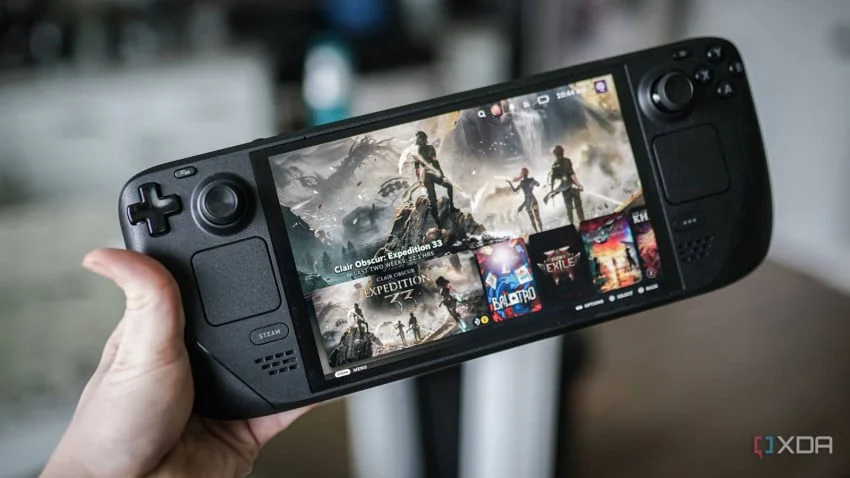
The gaming industry is currently tracking the progress of Valve Corporation as it navigates the complex landscape of hardware development for its next-generation handheld console, the Steam Deck 2. Despite persistent global fluctuations in the semiconductor and memory markets, Valve has confirmed that its internal development and design processes for the successor to its highly successful handheld platform remain on schedule. Industry projections currently point toward a tentative market debut around 2028, a timeline that allows the company to iterate on its hardware architecture while aligning with the evolution of mobile computing performance.
A Foundation Built on Success
The original Steam Deck, launched in February 2022, effectively redefined the handheld gaming market. By providing a Linux-based environment optimized for a vast library of PC titles, Valve bridged the gap between desktop gaming and portable convenience. The success of the initial device and its subsequent OLED iteration served as a proof-of-concept that validated the demand for high-performance mobile gaming PCs.
According to data from industry analytics firms, the handheld gaming PC market has grown significantly in the wake of the Steam Deck’s release. Competitors such as ASUS, Lenovo, and MSI have since entered the space with their own iterations, further cementing the "handheld PC" as a legitimate hardware category. Valve’s ability to maintain a development cadence for the Steam Deck 2 is therefore not merely a project milestone but a strategic necessity to maintain its position as the market leader in this burgeoning segment.
Navigating Supply Chain Volatility
One of the primary concerns for hardware manufacturers in the current economic climate is the volatility of the supply chain, specifically regarding dynamic random-access memory (DRAM) and high-bandwidth memory (HBM). As artificial intelligence (AI) and data center demand consume a significant portion of global memory production, smaller-scale consumer hardware manufacturers often face procurement hurdles.
However, recent statements from Valve’s engineering team have provided clarity on the matter. Pierre-Loup Griffais and Jeff Leinbaugh, two key software engineers at Valve, have indicated that the company is not currently experiencing supply chain disruptions that would impede the progress of the Steam Deck 2. This assurance is significant, as it suggests that Valve has likely secured strategic partnerships or established long-term procurement agreements that insulate its development timeline from short-term market volatility. For stakeholders and observers, this indicates a level of operational maturity that was perhaps not as robust during the initial launch phase of the first Steam Deck, which suffered from significant production delays due to global component shortages in 2021 and 2022.
Architectural Speculation and Technical Expectations
While Valve has remained tight-lipped regarding the specific silicon that will power the Steam Deck 2, the consensus among industry analysts is that the company will continue its partnership with AMD. The current Steam Deck utilizes a custom-designed AMD Accelerated Processing Unit (APU) that leverages the Zen 2 CPU architecture and RDNA 2 graphics.
The move toward a successor will likely focus on improving power efficiency and thermal management—two critical factors for any handheld device. A transition to newer manufacturing nodes, such as 4nm or 3nm processes, would be a logical step to increase performance-per-watt. By sticking with AMD, Valve ensures a seamless transition for its proprietary SteamOS. This software-hardware synergy is the cornerstone of the Steam Deck experience; developers are accustomed to the AMD-based instruction sets, and keeping the architecture consistent reduces the friction involved in software optimization and Proton compatibility.
Chronology of the Handheld Revolution
To understand the weight of the Steam Deck 2 development, one must review the timeline of Valve’s recent hardware efforts:
- July 2021: Valve officially announces the original Steam Deck, surprising the industry and setting a new expectation for portable PC gaming.
- February 2022: The Steam Deck begins shipping to customers, overcoming early manufacturing constraints.
- October 2022: Valve expands availability to new regions, including Japan, South Korea, Taiwan, and Hong Kong, signaling a massive scale-up in distribution.
- November 2023: Valve releases the Steam Deck OLED, an iterative improvement that addresses screen quality, battery life, and weight, proving that Valve is committed to refining the existing platform.
- Present (2024-2025): Development focus shifts heavily toward the Steam Deck 2, with engineering teams prioritizing architecture and long-term supply chain planning.
- 2028 (Projected): The anticipated launch window for the next generation of Valve’s handheld hardware.
Strategic Implications for the Gaming Ecosystem
The development of the Steam Deck 2 carries significant implications for the broader gaming ecosystem. Valve is not just a hardware manufacturer; it is the operator of Steam, the largest digital distribution platform for PC gaming globally. By controlling both the storefront and the hardware, Valve holds a unique advantage in influencing software development standards.
If the Steam Deck 2 offers significantly higher compute capabilities, it may force developers to reconsider the system requirements of modern PC games. Currently, developers often use the Steam Deck as a baseline for optimization. A more powerful successor would raise the "floor" of what constitutes a playable experience, potentially leading to better-optimized games across the entire PC ecosystem.
Furthermore, the stability of Valve’s supply chain indicates a long-term commitment to the Linux-based gaming environment. As Windows continues to be the dominant operating system for desktop PCs, Valve’s continued investment in SteamOS and the Proton compatibility layer ensures that the PC gaming market remains platform-agnostic. This is a strategic hedge against potential shifts in Microsoft’s software policies or licensing structures.
Analyst Perspectives and Industry Outlook
Market analysts observe that Valve’s approach to hardware is distinctly different from that of console manufacturers like Sony or Nintendo. Whereas Sony and Nintendo often sell hardware at a loss (or razor-thin margins) to capture users for their closed ecosystems, Valve treats the Steam Deck as an extension of its existing store. This business model allows Valve to remain flexible with its hardware roadmap.
"Valve does not need to rush the Steam Deck 2 to market to protect a market share that they already dominate through their storefront," says one industry consultant familiar with the matter. "By taking their time and ensuring the supply chain is resilient, they are prioritizing the sustainability of the device over the short-term pressure of quarterly hardware sales."
This measured pace also allows the technology to catch up to the ambitious goals Valve likely has for the device. Battery technology, in particular, remains the "Holy Grail" for handheld gaming. If the 2028 window allows for advancements in solid-state batteries or more efficient power management controllers, the Steam Deck 2 could offer a leap in performance that current lithium-ion technology cannot support without excessive heat output.
Conclusion
The confirmation that the Steam Deck 2 is moving forward as planned—undeterred by the broader economic challenges facing the semiconductor industry—is a testament to Valve’s strategic planning. By maintaining a clear focus on architectural consistency and supply chain security, the company is positioning itself to maintain its leadership in the handheld PC space well into the next decade.
As the industry looks toward 2028, the success of this project will depend on how effectively Valve can translate its vision of portable, high-performance gaming into a device that meets the expectations of an increasingly demanding consumer base. For now, the narrative remains one of steady, deliberate progress, providing a stable foundation for what promises to be one of the most anticipated hardware releases in the history of the gaming industry. As more technical details emerge, the focus will likely turn toward how the device utilizes AI upscaling technologies and advancements in display tech to redefine the limits of what a portable console can achieve. Valve’s commitment to this segment underscores a broader trend: the PC gaming experience is no longer tethered to the desk, and the future of the platform is increasingly mobile.