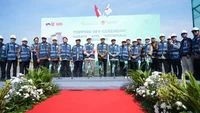
Jakarta, Indonesia – In a landmark event marking a pivotal moment for Indonesia’s healthcare infrastructure and regional medical advancement, the consortium led by PT Wijaya Karya (Persero) Tbk (WIKA) successfully held the topping-off ceremony for the Harapan Kita National Cardiovascular Centre – Tokushukai Building. This significant milestone, achieved recently in early April 2026, signifies the completion of the main structural work for what is projected to become Southeast Asia’s largest and most advanced cardiovascular service hub. The ceremony, graced by high-ranking officials including the Minister of Health of the Republic of Indonesia and the Japanese Ambassador to Indonesia, underscored the profound bilateral synergy and shared commitment between the two nations towards elevating global healthcare standards and accessibility within the archipelago and beyond. This ambitious 20-story facility is poised to revolutionize cardiac care, offering state-of-the-art medical technology and expanding operational capacity to address the growing burden of cardiovascular diseases in the region.
Deep Dive into the Project and its Ambition
The Harapan Kita National Cardiovascular Centre – Tokushukai Building is not merely an expansion but a strategic transformation of existing medical capabilities. As an integral part of the Rumah Sakit Jantung dan Pembuluh Darah (RSJPD) Harapan Kita, Indonesia’s premier cardiac hospital, the new structure will substantially augment the institution’s capacity, integrating cutting-edge diagnostics, advanced surgical theaters, and comprehensive patient care facilities. Upon its anticipated completion by the end of 2026, the building is expected to house an array of specialized units, including advanced catheterization laboratories, hybrid operating rooms capable of performing complex interventions, and dedicated intensive care units designed for optimal post-operative recovery. This expansion is critical for a nation grappling with a significant rise in cardiovascular ailments, aiming to provide world-class treatment options previously only accessible through medical tourism abroad.
The vision extends beyond just increased capacity; it encompasses fostering a center of excellence for cardiovascular research, medical education, and training, thereby nurturing a new generation of highly skilled Indonesian cardiologists, surgeons, and healthcare professionals. The integration of advanced medical imaging systems, robotic surgery capabilities, and sophisticated patient monitoring technologies will position this facility at the forefront of global cardiac care, enhancing diagnostic accuracy, treatment efficacy, and patient outcomes. The project’s scale is unprecedented in the region, promising to deliver a fully integrated cardiac care ecosystem from prevention and early diagnosis to complex treatment and rehabilitation. With its projected capacity to host the largest number of heart operations in ASEAN, the facility will significantly reduce patient waiting times and improve access to life-saving procedures for a vast population.
A Strategic Bilateral Partnership
The genesis of the Harapan Kita National Cardiovascular Centre – Tokushukai Building project lies in a robust collaboration between the Ministry of Health of the Republic of Indonesia and the Tokushukai Medical Corporation, a renowned Japanese healthcare group with extensive experience in managing a vast network of hospitals and medical facilities globally. This partnership embodies a shared vision for healthcare innovation and accessibility. Tokushukai Medical Corporation brings to the table decades of expertise in hospital management, medical technology integration, and a patient-centric approach that aligns with international best practices. Their global footprint, spanning various continents, underscores their capability to deliver high-quality healthcare solutions in diverse environments. For Japan, this collaboration represents a significant diplomatic and economic engagement, further cementing its role as a key development partner for Indonesia. The Japanese government, through its embassy and various aid agencies, has consistently supported initiatives that contribute to Indonesia’s socio-economic development, with healthcare being a priority sector for bilateral cooperation. This project facilitates not only infrastructure development but also invaluable knowledge transfer, medical training programs, and the adoption of Japanese precision and efficiency in healthcare delivery.
The involvement of PT Wijaya Karya (Persero) Tbk (WIKA), one of Indonesia’s leading state-owned construction firms, as part of the KSO PP-WIKA consortium, ensures local expertise in large-scale infrastructure development, adherence to national regulations, and efficient project execution. WIKA’s proven track record in constructing complex public facilities, including hospitals, airports, and major transportation hubs, positions them as a reliable partner in delivering this monumental healthcare project on schedule and to the highest quality standards. The consortium structure combines WIKA’s profound understanding of the local construction landscape and regulatory environment with the specialized expertise required for a facility of this magnitude, fostering a truly collaborative and synergistic approach. This blend of international medical expertise and robust local construction capabilities forms the bedrock of the project’s success.
The Unfolding Timeline of a Mega Project
The journey to this topping-off ceremony has been a meticulously planned and executed endeavor, demonstrating remarkable coordination between all parties involved. Initial discussions and comprehensive feasibility studies between the Indonesian Ministry of Health and Tokushukai Medical Corporation began in the early 2020s, identifying the critical need for enhanced cardiovascular care infrastructure in Indonesia. These preliminary stages involved extensive assessments of healthcare needs, technological requirements, and financial viability. A formal Memorandum of Understanding (MoU) was reportedly signed in late 2022, solidifying the framework for this ambitious collaboration and outlining the roles and responsibilities of each partner.
Following comprehensive planning and design phases that involved international architects and medical facility experts specializing in advanced hospital infrastructure, ground was officially broken for the Harapan Kita National Cardiovascular Centre – Tokushukai Building in early 2024. The initial phases focused on site preparation, excavation, and foundational work, laying the robust groundwork for the towering 20-story structure. Throughout 2024 and into 2025, the construction progressed steadily, with WIKA and its consortium partners employing advanced construction methodologies, including specialized formwork systems and high-strength concrete, alongside rigorous safety protocols to ensure efficiency and quality. This period saw the rapid vertical ascent of the building, transforming the Jakarta skyline.
The topping-off in early April 2026 marks a crucial transition from structural construction to the intensive fit-out and installation phases. The next 18-20 months will involve the intricate process of installing sophisticated medical equipment, establishing specialized clinical departments with state-of-the-art diagnostic and therapeutic tools, developing comprehensive IT infrastructure for seamless patient management and diagnostics, and completing interior finishes that prioritize patient comfort and clinical efficiency. Rigorous testing and commissioning of all building systems and medical technologies will follow, leading up to the grand opening and commencement of operations by the close of 2026. This phased approach ensures that when the facility finally opens its doors, it will be fully operational, compliant with international standards, and ready to serve patients from across the region without compromise.
Addressing Indonesia’s Cardiovascular Health Challenge
The expansion of RSJPD Harapan Kita through the Tokushukai Building comes at a critical juncture for public health in Indonesia and Southeast Asia. Cardiovascular diseases (CVDs) remain the leading cause of mortality globally, and Indonesia is no exception. According to data from the Ministry of Health and various national health surveys, CVDs, including ischemic heart disease, stroke, and heart failure, account for approximately 35% of all deaths in Indonesia, claiming hundreds of thousands of lives annually. This staggering figure underscores the urgent need for enhanced diagnostic capabilities, advanced treatment options, and widespread preventative measures.
Data from the World Health Organization (WHO) further highlights the escalating prevalence of CVDs across Southeast Asia, driven by changing lifestyles, rapid urbanization, and an aging population. Risk factors such as hypertension, diabetes, obesity, smoking, and physical inactivity are widespread across the Indonesian archipelago, contributing to a significant burden on the existing healthcare system. The current infrastructure, while commendable, often struggles to meet the overwhelming demand for advanced cardiovascular treatments, leading to prolonged waiting lists for critical procedures and a substantial outflow of patients seeking treatment abroad. This medical tourism, particularly to neighboring Singapore and Malaysia, and increasingly to more distant medical hubs, results in significant capital flight—estimated at billions of US dollars annually—and places immense emotional and financial strain on Indonesian families.
The new facility, with its projected increase in bed capacity, numerous state-of-the-art operating theaters, and advanced diagnostic suites, is expected to reduce this burden significantly. It aims to dramatically increase the number of complex heart surgeries and interventional cardiology procedures performed annually. While current figures for RSJPD Harapan Kita might hover around 2,000-3,000 complex cardiac surgeries per year, the new Tokushukai Building is designed to potentially double or even triple that capacity, solidifying its position as having the largest heart surgery capacity in ASEAN. This scaling up is vital for timely interventions, improved patient outcomes, and ensuring equitable access to advanced care across all socio-economic strata of the Indonesian population. The focus on preventive care and early detection within the new center will also play a crucial role in mitigating the long-term impact of CVDs.
Statements from Key Stakeholders
The topping-off ceremony provided a crucial platform for key stakeholders to reiterate their unwavering commitment and articulate their comprehensive vision for the project’s transformative impact.
Speaking eloquently at the event, the Minister of Health of the Republic of Indonesia emphasized the government’s unwavering dedication to a sweeping national health transformation agenda. "This Harapan Kita – Tokushukai Building is a profound beacon of our commitment to building a robust, resilient, and equitable healthcare system for all Indonesians," the Minister stated with conviction. "It aligns perfectly with our broader national agenda to enhance the quality of human resources and ensure that world-class medical services are not just an aspiration but an accessible reality within our own borders. We envision a future where no Indonesian needs to seek critical treatment overseas, and this facility will be instrumental in achieving that vision, setting an unprecedented benchmark for cardiovascular care not only in Indonesia but across the entire Southeast Asian region."
The Japanese Ambassador to Indonesia highlighted the project as a powerful testament to the enduring friendship, deep strategic partnership, and shared values between Japan and Indonesia. "Japan is profoundly proud to collaborate with Indonesia on such a vital initiative that directly impacts the health and well-being of millions of its citizens," the Ambassador remarked, underscoring the depth of bilateral ties. "This facility is far more than just a hospital; it represents a powerful convergence of Japanese medical excellence, technological innovation, and Indonesian ambition for a healthier future. It will not only deliver advanced medical care but also foster invaluable technological exchange, facilitate comprehensive medical training programs for Indonesian professionals, and further strengthen the already robust bonds between our nations, thereby contributing significantly to regional health security and prosperity."
A distinguished representative from Tokushukai Medical Corporation expressed profound optimism for the collaboration’s long-term future and its potential for regional impact. "Our partnership with the Indonesian Ministry of Health and RSJPD Harapan Kita is a cornerstone of our international strategy to share our extensive expertise and contribute meaningfully to global health improvement," the representative commented, highlighting the corporation’s global vision. "We are deeply committed to bringing our cutting-edge medical practices, advanced diagnostic and therapeutic technologies, and proven operational models to Indonesia, ensuring that this center becomes a leading institution for cardiovascular health and a regional hub for medical innovation in Southeast Asia. We firmly believe this state-of-the-art facility will significantly improve patient outcomes and contribute substantially to a healthier, more productive Indonesian society."
Mr. Agung Budi Waskito, President Director of PT Wijaya Karya (Persero) Tbk (WIKA), reiterated the consortium’s immense pride in reaching this significant construction milestone. "The successful topping-off of the Harapan Kita – Tokushukai Building is a powerful testament to WIKA’s unwavering commitment to supporting modern, international-standard health infrastructure development," Mr. Waskito affirmed, highlighting the company’s national contribution. "We are immensely proud to be entrusted with such a critical project that directly impacts the lives of millions of Indonesians. Our dedicated team, alongside our consortium partners, remains fully committed to delivering this world-class facility on schedule by the end of 2026, ensuring it stands as an enduring symbol of quality, efficiency, and engineering excellence. This project is a tangible manifestation of our support for the government’s Asta Cita (Eight Aspirations), particularly in enhancing human capital through accessible and high-quality healthcare. We are confident that this state-of-the-art center will significantly elevate Indonesia’s capacity to effectively handle the rising incidence of cardiovascular diseases and expand equitable access to world-class treatment, thereby substantially reducing the need for our citizens to seek essential medical care abroad."
Transformative Impact on Healthcare Landscape
The new Harapan Kita National Cardiovascular Centre – Tokushukai Building is set to dramatically reshape Indonesia’s healthcare landscape. Its designation as potentially the largest cardiovascular service center in Southeast Asia implies a significant shift in regional medical dominance. Patients from across Indonesia and potentially neighboring countries will have access to a comprehensive suite of services, ranging from early detection and prevention programs to the most complex surgical interventions and post-operative rehabilitation. This will include highly specialized clinics for various conditions such as heart failure, arrhythmias, congenital heart disease, vascular conditions, and cardiac rehabilitation, all conveniently housed under one roof. The facility’s emphasis on integrated care models, where multidisciplinary teams of cardiologists, cardiac surgeons, intensivists, and allied health professionals collaborate closely, is expected to significantly improve diagnostic accuracy, treatment planning, and overall patient management.
Furthermore, the introduction of advanced technologies and protocols, combined with Tokushukai’s operational expertise, will substantially elevate the standard of medical education and training within the country. Medical professionals, including doctors, nurses, and technicians, will gain invaluable hands-on experience and knowledge, fostering a culture of continuous learning, innovation, and adherence to international best practices. The center is also expected to become a vibrant hub for clinical trials and medical research, contributing significantly to global advancements in cardiology and vascular medicine, with unique data and insights generated from the diverse Indonesian patient population. This research capability will not only push the boundaries of medical science but also ensure that treatments are tailored and optimized for the specific needs of the local populace.
Economic and Social Ripple Effects
Beyond its direct medical impact, the Harapan Kita National Cardiovascular Centre – Tokushukai Building project carries significant and far-reaching economic and social implications. The construction phase alone has already generated thousands of direct and indirect employment opportunities, stimulating local economies through demand for skilled labor, construction materials, and various support services. Once fully operational, the hospital will create hundreds, if not thousands, of highly skilled jobs for medical professionals, administrative staff, and support personnel, representing a substantial long-term investment in human capital development and local employment.
Furthermore, by significantly reducing the necessity for Indonesians to travel abroad for critical cardiovascular care, the facility is projected to save billions of Rupiah annually in outbound medical tourism expenditure. These substantial savings can then be recirculated within the national economy, supporting domestic healthcare providers, pharmaceutical industries, and other related sectors, thereby fostering economic growth. The increased access to high-quality care will also lead to improved public health outcomes, a more productive and healthier workforce, and a higher quality of life for citizens, directly aligning with broader national development goals outlined in the "Asta Cita Pemerintah" (Eight Aspirations of the Government), particularly regarding human resource quality, equitable development, and national competitiveness. The presence of such a leading-edge medical facility can also attract further foreign investment in Indonesia’s burgeoning healthcare sector, positioning the country as an attractive destination for medical innovation, research, and specialized investment. It establishes Indonesia as a regional leader in specialized medical care, enhancing its global standing.
Looking Ahead: A New Era for Cardiac Care
As the Harapan Kita National Cardiovascular Centre – Tokushukai Building progresses steadily towards its grand opening in late 2026, anticipation within the medical community, among policymakers, and across the general public continues to build. The successful completion of its structural framework is a tangible promise of a future where advanced cardiac