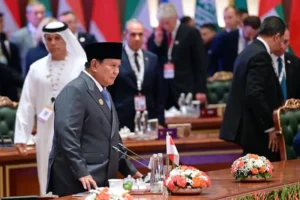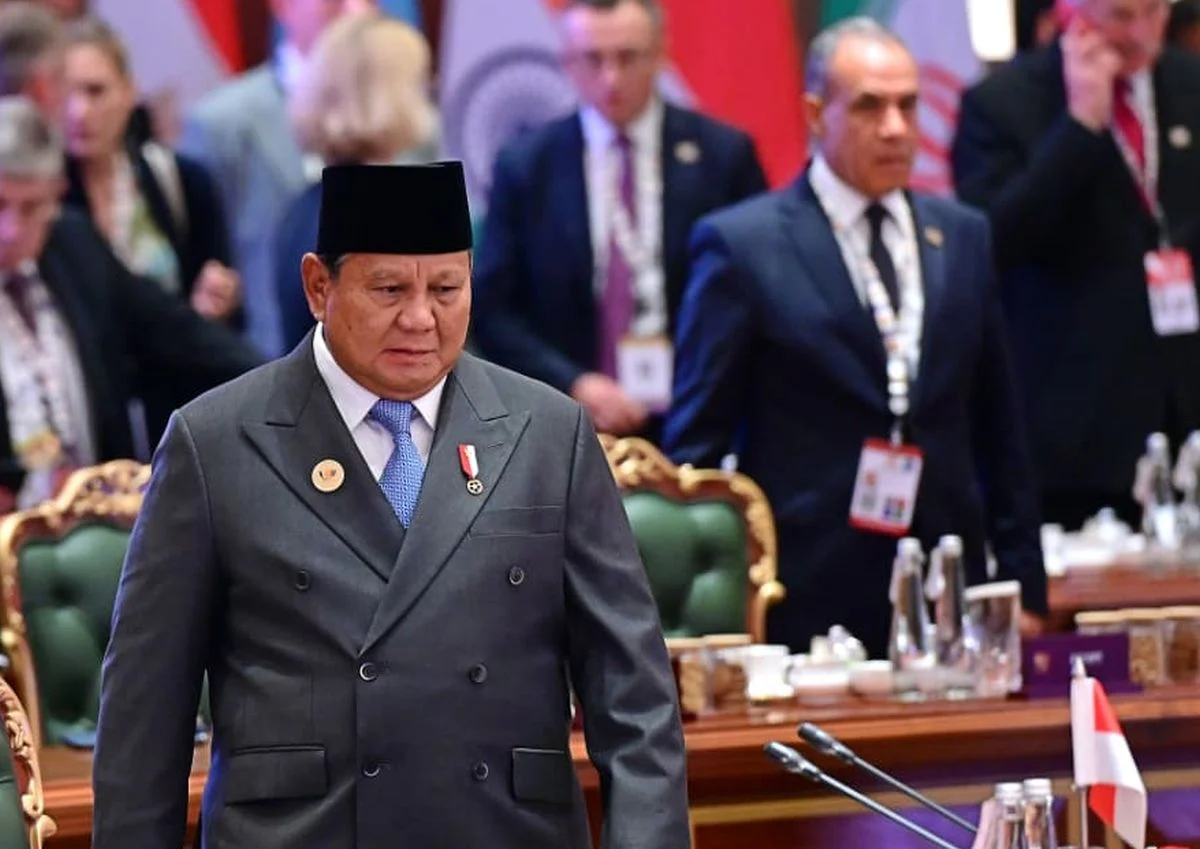
President Prabowo Subianto took a firm stance on the necessity of national resilience and strategic autonomy during his address at the 18th BRICS Summit held in New Delhi, India, on Saturday, September 12, 2026. Speaking during the exclusive session titled "Inclusive Global Governance and Strengthening Multilateralism," the Indonesian leader articulated a vision for a multipolar world order where developing nations prioritize domestic stability as the primary engine for sustainable sovereignty. His remarks underscore a pivotal shift in Indonesia’s foreign policy, signaling a move toward greater integration with the Global South while maintaining a steadfast commitment to the country’s independent and active diplomatic doctrine.
The summit, which gathered heads of state and government from the expanded BRICS bloc, served as a platform for President Prabowo to advocate for a more equitable global governance structure. By focusing on food security, energy transition, and human capital development, the President argued that a nation’s influence on the international stage is directly proportional to its ability to secure the welfare of its citizens.
The Foundation of Sovereignty: A Domestic-First Approach
At the heart of President Prabowo’s message was the conviction that external strength is merely a reflection of internal stability. Addressing the leaders of Brazil, Russia, India, China, South Africa, and other member nations, he emphasized that the bedrock of any sovereign state lies in its capacity to provide for its population.
"Strength always begins at home with our people—through our ability to meet their food requirements, ensure the energy supplies they need, educate our children, and provide them with the opportunity to live prosperous lives," President Prabowo stated. He argued that when a nation successfully manages these fundamental pillars, it insulates itself from the volatility of global markets and the coercive pressures of external geopolitical forces.
This perspective aligns with the current Indonesian administration’s focus on downstreaming industrial policies and agricultural modernization. By controlling the supply chain of critical commodities and investing heavily in domestic processing, Indonesia aims to transition from a raw material exporter to a sophisticated manufacturing hub, thereby reducing its reliance on foreign capital and technology imports.
Contextualizing the 18th BRICS Summit
The 18th BRICS Summit in New Delhi represents a significant milestone in the evolution of the bloc following its major expansion in 2024. As the group seeks to redefine global governance, the discussions in India focused heavily on the reform of international financial institutions, the promotion of local currency settlements to bypass dollar hegemony, and the establishment of a more inclusive framework for multilateral trade.
For Indonesia, participation in this summit is part of a broader strategy to diversify its economic partnerships. While Indonesia maintains strong ties with Western economies, the government has increasingly looked toward the BRICS framework as a vehicle to promote the interests of the Global South. The theme of "Inclusive Global Governance" resonated with the Indonesian delegation, which has long called for a reform of the United Nations Security Council and the International Monetary Fund (IMF) to better reflect the realities of the 21st century.
Geopolitical Implications and Strategic Autonomy
President Prabowo’s assertion that Indonesia does not wish to be "dictated" by any specific power bloc serves as a clear message to both traditional and emerging global powers. In an era of intensifying US-China competition, Indonesia is carving out a path that prioritizes national interest over bloc loyalty.
"We do not like being dictated to by one or two certain powers. We must be resilient and then we will be truly independent. We have strengthened our foundations to keep the peace and build trust," the President added during his session. This sentiment reflects a long-standing Indonesian policy of "non-alignment," modernized for an era where economic security is inseparable from national security.

Analysts note that Prabowo’s emphasis on "resilience" is a direct response to the global supply chain disruptions witnessed over the past few years. By building a robust domestic industrial base, Indonesia seeks to act as a stabilizer in Southeast Asia, ensuring that it remains an indispensable partner rather than a passive observer in global affairs.
Data-Driven Development: The Economic Underpinnings
To support the vision of a resilient nation, the Indonesian government has implemented a series of ambitious economic programs aimed at achieving self-sufficiency. Key sectors include:
- Food Security: Through large-scale irrigation projects and the optimization of paddy fields in regions like Merauke, the government aims to achieve total rice self-sufficiency by 2027.
- Energy Transition: Indonesia’s strategy involves a dual approach: maximizing domestic coal reserves for energy security while simultaneously scaling up geothermal and solar power infrastructure. By 2030, the government targets a significant reduction in oil import dependency.
- Human Capital: Increased budgetary allocations for education and vocational training are designed to equip the demographic dividend—a young, productive population—with the skills necessary for a digital and green economy.
These initiatives are not merely domestic projects; they are tools of statecraft. As the President noted, a state that can feed, power, and educate its own people is inherently more capable of resisting external pressures during diplomatic negotiations.
Reactions and International Perspectives
The response from fellow BRICS leaders and international observers has been largely positive, with many viewing Indonesia’s proactive role in the summit as a sign of its growing confidence as a middle power. Representatives from other developing nations in the "Global South" have echoed Prabowo’s concerns regarding the disproportionate influence of Western-led financial systems.
Financial analysts monitoring the summit have pointed out that while Indonesia’s push for autonomy is popular domestically, it requires a delicate balancing act. To maintain high growth rates, Indonesia still requires significant foreign direct investment (FDI). Therefore, the challenge for the administration lies in fostering domestic self-reliance without alienating global investors who are wary of protectionist trade policies.
However, the prevailing view in Jakarta is that by establishing a clear, predictable, and resilient domestic market, Indonesia will actually become a more attractive destination for "quality" investment—investments that focus on long-term value creation rather than short-term resource extraction.
Looking Ahead: The Path to 2030
As the summit concludes, the focus shifts to the implementation of the New Delhi Declaration. For Indonesia, the immediate goal is to leverage the BRICS network to facilitate technology transfer and access to new markets. The administration’s focus on "Inclusive Global Governance" suggests that Indonesia will continue to champion the causes of the developing world in upcoming forums, including the G20 and APEC.
President Prabowo’s rhetoric signals a departure from the reactive diplomacy of the past. By framing national resilience as the ultimate tool for peace, he is setting a tone for his administration that is both assertive and pragmatically focused. Whether this approach will lead to a fundamental shift in the global order remains to be seen, but it is clear that Indonesia intends to be a leading voice in that transition.
The 18th BRICS Summit has served as a crucible for these ideas. As the world faces mounting challenges—from climate change to fragmented trade regimes—the call for "resilience and independence" is one that is finding resonance far beyond the borders of Indonesia. For the Indonesian government, the next few years will be defined by its ability to translate these ambitious principles into concrete economic realities, proving that a country that stands on its own feet is best equipped to walk with others as an equal partner on the world stage.
In summary, President Prabowo’s participation in the New Delhi summit marks a defining moment in Indonesia’s modern foreign policy. By grounding his nation’s international posture in the tangible realities of domestic welfare, energy security, and industrial autonomy, he is redefining what it means to be an emerging power in a multipolar world. As Indonesia continues to navigate the complexities of the 21st century, its commitment to these principles will undoubtedly shape its trajectory as a key player in the global arena, ensuring that its voice remains both heard and respected in the halls of international power.