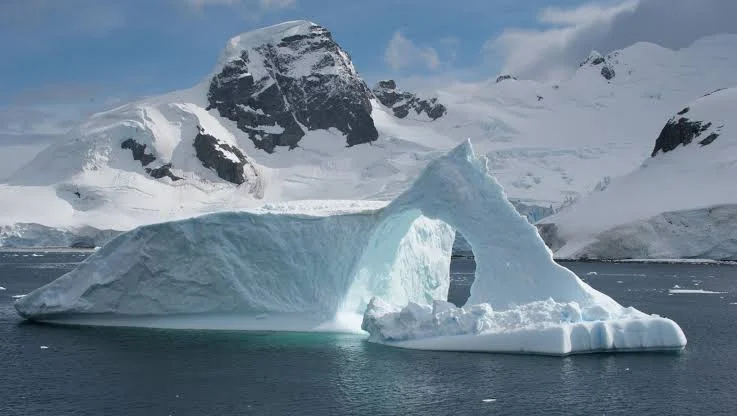
Recent scientific findings have confirmed a catastrophic acceleration in ice sheet depletion across the Earth’s two largest reservoirs of frozen water: Greenland and Antarctica. A comprehensive analysis, aggregating data from 27 distinct satellite missions spanning 44 years, reveals that the planet lost a staggering 11.3 trillion tons of ice between 1979 and 2023. This unprecedented rate of mass loss has directly contributed to a global sea-level rise of 3.14 centimeters, a figure that carries profound implications for coastal populations, international infrastructure, and the stability of global climate systems.
The study, spearheaded by the Ice Sheet Mass Balance Inter-comparison Exercise (IMBIE) and published in the journal Scientific Data, serves as a grim indictment of the human-driven activities that continue to alter the Earth’s cryosphere. The research highlights that the melting is not merely a localized geological phenomenon but a systematic shift in the planet’s thermal equilibrium, fueled by greenhouse gas emissions and rising atmospheric temperatures.
A Chronological Assessment of Cryospheric Decline
The data provided by the IMBIE team offers a granular look at how these massive ice sheets have behaved over the last four decades. Between 1979 and 2023, the trend line for ice loss has moved from a steady, manageable decline in the late 20th century to an exponential acceleration in the 21st century.
In the 1980s, the rate of mass loss was relatively modest, as the natural variability of the climate systems maintained a delicate balance between snowfall accumulation and glacial discharge. However, starting in the mid-1990s, satellite altimetry and gravimetry data began to detect a marked divergence. By the 2000s, the annual rate of ice loss had doubled compared to the previous two decades. The period between 2010 and 2023 has seen the most rapid depletion on record, coinciding with the hottest years in recorded human history.
Greenland, which accounts for approximately 60 percent of the total ice loss observed, has become the primary contributor to global sea-level rise. The warming of the North Atlantic, combined with warmer summer temperatures over the Greenland ice sheet, has led to both increased surface melt and the calving of glaciers into the ocean. Conversely, Antarctica accounts for the remaining 40 percent of the loss, with the West Antarctic Ice Sheet showing particular vulnerability to the warming of the Southern Ocean, which erodes the ice from beneath.
The Scale of the Crisis: Quantifying the Unimaginable
To contextualize the magnitude of 11.3 trillion tons of ice, lead author Ines Otosaka of Northumbria University provided a striking visual aid. If this volume of ice were condensed into a solid geometric form, it would constitute a cube standing 23 kilometers (approximately 14.3 miles) tall. This volume is not merely a statistical abstraction; it represents a fundamental removal of mass from the land and its subsequent deposition into the global ocean.
The satellite missions utilized in this study—including those from NASA, the European Space Agency (ESA), and various international partners—employed advanced radar and laser altimetry to measure changes in ice surface elevation. By combining this with gravimetric data from missions like GRACE (Gravity Recovery and Climate Experiment), scientists were able to calculate the mass change with unprecedented precision. The consistency across these 27 missions leaves little room for ambiguity: the ice sheets are in a state of sustained, long-term deficit.
Regional Dynamics and Geographical Vulnerability
The study underscores a critical distinction between the two polar regions. Greenland’s ice loss is largely driven by a combination of surface melting and the accelerated flow of glaciers toward the sea. The Arctic region is warming at nearly four times the global average—a phenomenon known as Arctic amplification—which creates a feedback loop where less ice reflects less solar radiation, leading to further warming and further melting.
Antarctica’s situation is more complex. While the interior of East Antarctica remains relatively stable, the West Antarctic Ice Sheet is undergoing significant thinning. The concern among glaciologists is the "marine ice sheet instability" hypothesis, which suggests that once the grounding line of a glacier retreats into deeper water, the process of melting becomes self-sustaining and irreversible, regardless of whether atmospheric temperatures stabilize. The loss of these ice shelves serves as a "plug" being pulled from a drain, allowing the glaciers behind them to accelerate toward the ocean.
The Human Toll: Sea-Level Rise and Coastal Risk
The immediate consequence of this mass loss is the 3.14-centimeter rise in global mean sea levels. While this number may appear incremental, its real-world impact is amplified by storm surges, high tides, and the erosion of coastal defenses.
"For every centimeter of sea-level rise, approximately two to three million people—particularly those living in low-lying coastal regions—are exposed to increased risks of annual coastal flooding," Dr. Otosaka noted. The implications for megacities such as Jakarta, Dhaka, New York, and London are severe. As sea levels rise, the "return period" for extreme flooding events shrinks. What was once a "100-year flood" could become a decadal occurrence by mid-century, necessitating trillions of dollars in adaptation and infrastructure investment.
Currently, the melting of Greenland and Antarctica contributes approximately 25 percent of total global sea-level rise. The remaining 75 percent is attributed to the thermal expansion of seawater as it warms and the melting of smaller mountain glaciers worldwide. However, as mountain glaciers diminish, the relative importance of the polar ice sheets as drivers of sea-level rise will continue to climb.
Scientific and Policy Implications
The IMBIE study is being utilized by policymakers and international climate bodies, including the Intergovernmental Panel on Climate Change (IPCC), to calibrate future projections. The consistency of the data confirms that the models predicting ice sheet behavior were, if anything, conservative in their estimates of how quickly these massive structures would respond to anthropogenic warming.
The scientific consensus is clear: the current trajectory of ice loss is unsustainable. International reactions to the study emphasize the need for urgent mitigation strategies. Experts suggest that while some degree of sea-level rise is now "locked in" due to the thermal inertia of the oceans and the delayed response of the ice sheets, the most catastrophic scenarios can still be avoided through rapid and sustained reductions in global carbon emissions.
"The satellite data provides a vital, objective baseline," says a spokesperson for a global climate research organization. "It removes the ability for policy-makers to dismiss the phenomenon as a temporary fluctuation. This is a sustained, long-term trend that requires a global, coordinated response."
Future Outlook and Scientific Monitoring
As the world moves forward, the scientific community is prioritizing the deployment of next-generation satellite technology to monitor the health of the cryosphere. Future missions are designed to provide even higher resolution data on the sub-glacial topography of Antarctica, which is essential for predicting the speed at which ice will flow toward the coast in the coming decades.
The study concludes with a sobering reminder of the interconnectedness of Earth’s systems. The melting of the polar regions is not an isolated event but a bellwether for the health of the planet’s life-support systems. As the ice sheets shrink, they alter the Earth’s albedo, influence oceanic circulation patterns, and permanently reshape the world’s coastlines.
The 11.3 trillion tons of ice lost between 1979 and 2023 stand as a monument to a changing climate. The study serves as a call to action, providing the empirical foundation required to understand the scale of the challenge ahead. Whether society can adapt to this new reality or mitigate the worst of the impending changes will depend on the policies enacted in the immediate future to stabilize the global climate. The evidence from the ice is unequivocal: the time for policy based on long-term goals is shifting toward a requirement for immediate, tangible action to preserve the stability of the global environment for the generations to follow.