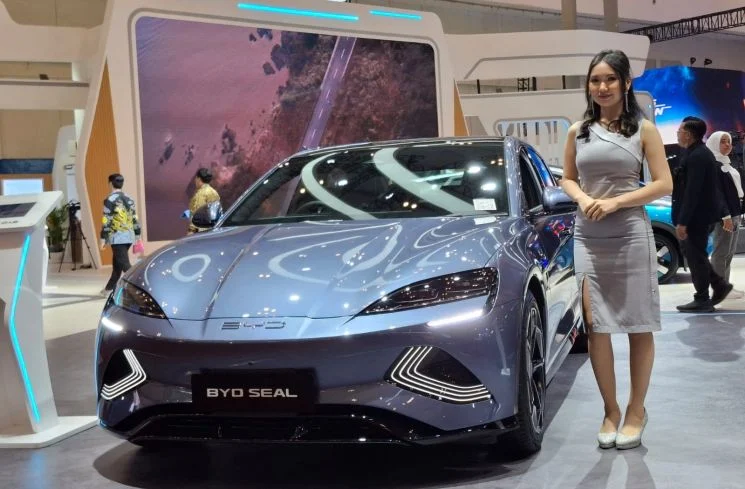
The Indonesian government has officially intensified its strategic roadmap for the automotive sector, setting an aggressive target to achieve an 80 percent Local Content Level (TKDN) for electric vehicles (EVs) by 2030. This policy shift represents a pivotal transformation for Southeast Asia’s largest economy, moving beyond mere vehicle assembly to the establishment of a comprehensive, integrated domestic supply chain. By mandating higher domestic participation in manufacturing, Jakarta aims to insulate the national automotive industry from global supply chain volatility while fostering a robust ecosystem for battery technology and component production.
The Strategic Roadmap: A Phased Approach to Localization
The Ministry of Industry has structured the transition toward the 80 percent TKDN target through a tiered, legally binding roadmap. This phased approach is designed to allow manufacturers sufficient time to localize their supply chains without disrupting market availability.
According to the official decree, the progression is as follows:
- Phase I (Present – 2026): Manufacturers are required to meet a minimum TKDN threshold of 40 percent. This period serves as the foundation for identifying and onboarding local suppliers for non-critical components.
- Phase II (2027 – 2029): The requirement escalates to 60 percent. During this stage, the government expects deeper integration of high-value components, including electric motor casings, power electronics, and potentially cell-to-pack battery assembly.
- Phase III (2030 and beyond): The mandate reaches its peak at 80 percent. At this stage, Indonesia expects to have localized the vast majority of the EV manufacturing value chain, including advanced software integration and complex battery management systems.
Minister of Industry Agus Gumiwang Kartasasmita, speaking at the inauguration of the BYD manufacturing facility in Subang, West Java, emphasized that this policy is an "affirmative action" strategy. "Our goal is to ensure that investment in Indonesia does not stagnate at the assembly level. We are pushing for the deepening of the industrial structure so that the value-added processes occur entirely within our borders," Kartasasmita stated.
Catalyzing Investment and Industrial Growth
The government’s proactive stance on localization has already yielded tangible results in terms of capital inflow. Currently, 14 major manufacturing companies have committed to the Indonesian electric vehicle market, representing a cumulative investment of approximately Rp24.13 trillion. These facilities have a combined annual production capacity of nearly 410,000 units, signaling a shift in the region’s automotive hub dynamics.
The impact of this industrial policy extends beyond the EV sector. The broader non-oil and gas processing industry has served as a primary engine for national economic recovery. In the second quarter of 2026, this sector grew by 5.32 percent year-on-year, outperforming the national economic growth rate of 5.29 percent. This robust performance underscores the manufacturing sector’s role as the backbone of Indonesia’s economic stability in a period characterized by global geopolitical uncertainty and fluctuating commodity prices.
Macroeconomic Significance of the Manufacturing Sector
The manufacturing sector remains the cornerstone of the Indonesian economy, contributing 16.83 percent to the national Gross Domestic Product (GDP), with a total valuation of approximately Rp1,102.88 trillion. As of the second quarter of 2026, the sector accounted for 38.98 percent of all national investment, totaling Rp199.48 trillion.
Beyond capital figures, the social impact of the manufacturing industry is profound. By early 2026, the sector successfully employed 19.99 million workers, providing a steady stream of middle-income jobs that are essential for the country’s demographic dividend. Furthermore, the export performance of non-oil and gas processed goods has been stellar. Between January and June 2026, these exports generated US$115.50 billion, accounting for 82.03 percent of Indonesia’s total export value. This reliance on processed goods rather than raw material exports marks a successful pivot toward higher-value industrialization.
Global Competitiveness: Rising in the Rankings
Indonesia’s commitment to industrialization is being recognized on the international stage. According to World Bank data, Indonesia’s Manufacturing Value Added (MVA) reached US$275.61 billion in 2025. This metric, which measures the net output of the manufacturing sector after adding up all outputs and subtracting intermediate inputs, highlights Indonesia’s efficiency and productive capacity.
As a result, Indonesia has ascended to the 12th position globally in terms of manufacturing power, surpassing several established economies. In the ASEAN region, Indonesia now stands unrivaled, with an MVA more than double that of its closest regional competitor, Thailand. On a continental scale, Indonesia holds the fifth position in Asia, trailing only the established industrial giants: China, Japan, India, and South Korea. This trajectory suggests that Indonesia is on track to become a global leader in the transition to sustainable mobility.
Analysis: Implications for the Automotive Industry
The transition to an 80 percent TKDN mandate is not without its challenges. Industry experts suggest that the primary hurdle lies in the "middle-tier" of the supply chain—the manufacturing of high-tech components like semiconductor chips and advanced battery cells. While Indonesia possesses the world’s largest nickel reserves, which are essential for lithium-ion battery production, the move toward higher TKDN levels necessitates an influx of specialized technology transfers.
"The government’s roadmap is ambitious, but it is supported by the availability of raw materials," says an independent industry analyst. "The challenge for manufacturers will be the pace of technology adoption. By setting these targets, the government is essentially forcing global manufacturers to choose between losing market access or investing in local research and development facilities."
The implications for the consumer are also significant. A higher percentage of local components is expected to stabilize vehicle prices in the long term, as manufacturers reduce their reliance on expensive, volatile imported logistics and currency fluctuations. Furthermore, the creation of a local supply chain ensures that after-sales services and spare part availability remain consistent, which is crucial for the mass adoption of electric vehicles among the Indonesian public.
Challenges and Future Outlook
While the progress is commendable, the success of the 80 percent TKDN target will depend on several key factors:
- Human Capital Development: The shift toward advanced EV manufacturing requires a highly skilled workforce. Indonesia’s educational institutions and vocational training centers must align their curricula with the needs of the modern automotive industry to ensure a steady pipeline of engineers and technicians.
- Infrastructure for Green Energy: For the transition to be truly sustainable, the energy used in the manufacturing process must also be decarbonized. The government’s push for a "Green Industrial Zone" in areas like Subang and other parts of Java and Sumatra will be vital in attracting eco-conscious international investors.
- Policy Continuity: Investors prioritize certainty. The clear, phased-in nature of the TKDN regulations provides a predictable environment for long-term capital commitment. Maintaining this consistency across political cycles will be essential to achieving the 2030 goals.
In conclusion, Indonesia’s strategy to mandate 80 percent local content for electric vehicles is a bold, forward-looking policy that seeks to transform the nation from a consumer market into a global manufacturing powerhouse. By leveraging its vast natural resources, growing industrial labor force, and clear regulatory roadmap, Indonesia is positioning itself to lead the electric vehicle revolution in Southeast Asia. The journey toward 2030 will undoubtedly involve technological and logistical hurdles, but the current momentum suggests that the foundation for a sustainable, localized automotive future is firmly in place. As the country continues to rise in global manufacturing rankings, its transition to a high-tech industrial economy appears increasingly inevitable, securing a competitive advantage in the global shift toward green energy.