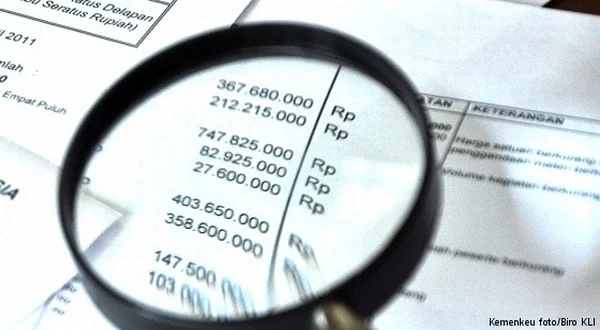
The Indonesian government formally presented the Draft Law on the Accountability for the Execution of the 2013 State Budget (RUU APBN) during a plenary session at the House of Representatives (DPR RI) in Jakarta. The presentation, delivered by then-Minister of Finance Muhammad Chatib Basri, laid bare the fiscal realities, macroeconomic pressures, and structural accounting complexities that characterized Indonesia’s public finance management during the 2013 fiscal year. Central to the legislative submission was the explanation behind the "Qualified Opinion"—locally known as Wajar Dengan Pengecualian (WDP)—awarded by the Supreme Audit Agency (BPK) to the Central Government Financial Report (LKPP) for that year.
The submission of the accountability bill marks a critical constitutional requirement under Indonesian law, serving as the primary mechanism through which the executive branch accounts for the utilization of public funds, the implementation of fiscal policies, and the achievement of macroeconomic targets set out in the state budget. However, the 2013 fiscal cycle was uniquely challenging, marked by a volatile external economic environment, domestic currency depreciation, structural fiscal adjustments, and persistent long-standing accounting hurdles that prompted BPK to issue a qualified audit opinion.
Background Context of the 2013 Fiscal Year and BPK Audit Opinion
To understand the weight of the 2013 APBN accountability report, it is essential to examine the governance framework surrounding Indonesia’s state budget audits. The BPK, as the independent supreme audit institution, is mandated to examine the management and responsibility of state finances. An unqualified opinion (Wajar Tanpa Pengecualian or WTP) represents the gold standard of financial reporting, indicating that the financial statements are presented fairly in all material respects. Conversely, a WDP opinion signifies that while the financial statements are generally reliable, certain areas or transactions fail to comply with standard accounting principles or lack complete documentation, preventing a clean bill of health.
For the 2013 LKPP, the BPK issued a WDP status, mirroring similar challenges faced by the government in preceding years. Addressing the plenary session at the Nusantara II Building in the parliamentary complex in Senayan, Jakarta, Minister Chatib Basri detailed the specific accounting anomalies that triggered the audit exceptions.
According to the Ministry of Finance, the exceptions were primarily driven by four complex, legacy, and operational accounting issues:
- Over-lifting Receivables: Discrepancies and valuation challenges related to oil and gas over-lifting, where contractors extract more volume than their allocated quota, creating complex financial receivables for the state.
- Oil and Gas Sales Receivables: Accounting hurdles in recording and verifying outstanding receivables from state-sanctioned petroleum sales.
- Ex-BPPN Credit Assets: The management, valuation, and transition of legacy credit assets originating from the Indonesian Bank Restructuring Agency (BPPN), an institution established in the wake of the 1997–1998 Asian financial crisis to clean up non-performing loans from distressed banks.
- Pension Expenditure Funds: Actuarial and administrative complexities surrounding the recording and disbursement of civil servant and military pension funds.
These structural hurdles highlight the ongoing difficulties the Indonesian government faced in harmonizing vast public sector assets, legacy portfolios from historical economic crises, and complex natural resource revenue-sharing mechanisms with modern, standardized public financial management (PFM) systems.
Macroeconomic Pressures: External Shocks and Internal Vulnerabilities
Beyond the technical accounting exceptions noted by the BPK, the execution of the 2013 state budget unfolded against a backdrop of severe macroeconomic turbulence, testing the resilience of Indonesia’s fiscal and monetary policy framework.
During his address to lawmakers, Finance Minister Chatib Basri elaborated on the dual pressures originating from both the global economy and domestic structural imbalances. From an external perspective, 2013 was characterized by a distinct deceleration in global economic growth, which depressed international commodity prices. Because Indonesia’s export revenue relied heavily on commodities such as coal, palm oil, and various minerals, the cooling global demand directly impacted the nation’s trade balance and government revenues.
Compounding these external headwinds was the looming threat of monetary policy normalization in the United States. The announcement by the U.S. Federal Reserve regarding the potential tapering of its quantitative easing program—widely referred to as the "tapering off" issue—triggered massive capital outflows from emerging markets, including Indonesia. Global investors reallocated capital back to advanced economies, causing severe liquidity tightening and volatility across domestic financial markets.
Internally, these external shocks exposed vulnerabilities within Indonesia’s domestic economy. The current account deficit widened significantly, placing immense pressure on the macroeconomic framework. As foreign capital fled domestic markets and export revenues contracted due to lower commodity prices, the Indonesian Rupiah experienced severe depreciation against the U.S. dollar, losing substantial ground and testing the foreign exchange reserves managed by Bank Indonesia.
"The dynamics, both internal and external, undoubtedly impacted changes in the macroeconomic baseline assumptions, which ultimately affected the implementation and achievement of the 2013 APBN targets," Chatib explained to the members of parliament.
Government Policy Responses and Fiscal Adjustments
Faced with mounting pressures on the balance of payments, currency stability, and the state budget, the government and relevant monetary authorities deployed a series of stabilization measures throughout 2013. These policy interventions were designed to restore market confidence, curb the widening current account deficit, and manage fiscal sustainability.
Key policy pillars implemented by the administration included:
- Current Account Deficit Mitigation: Measures aimed at curbing non-essential imports, promoting domestic value-added processing through the implementation of the Mineral and Coal Mining Law (which mandated domestic processing before export), and boosting export competitiveness.
- Rupiah Stabilization: Coordinated efforts between the Ministry of Finance and Bank Indonesia to stabilize the local currency through market interventions, adjustments to benchmark interest rates (the BI rate), and enhanced monitoring of foreign exchange transactions.
- Energy Subsidy Adjustments: One of the most politically sensitive yet fiscally crucial measures undertaken in 2013 was the upward adjustment of subsidized fuel (BBM) prices. Recognizing that subsidized fuel consumption was placing an unsustainable burden on the state budget amidst a weakening rupiah and rising global oil import costs, the government raised fuel prices in June 2013. This move, accompanied by temporary direct cash assistance (BLSM) for low-income households, aimed to create fiscal space and prevent the budget deficit from breaching the legal statutory limit of 3 percent of Gross Domestic Product (GDP).
Despite these interventions, the compounding effect of macro-financial volatility meant that the original targets laid out in the 2013 State Budget Law required significant navigation, leading to deviations in revenue collection, capital expenditure execution, and overall fiscal balance.
Chronology of the 2013 APBN Lifecycle
The submission of the accountability bill represents the culmination of a multi-step budgetary cycle governed by Law Number 17 Year 2003 on State Finances. The timeline of the 2013 fiscal year accountability process illustrates the rigorous oversight mechanism inherent in Indonesia’s democratic framework:
- Mid-2012 to Late 2012: Formulation and drafting of the 2013 State Budget (RUU APBN 2013) by the government in consultation with the DPR, culminating in its enactment into law in October 2012.
- January 1 – December 31, 2013: Execution of the state budget by ministries, non-ministerial government agencies, and regional governments, navigating the global commodity slump, Fed tapering announcements, and domestic fuel price adjustments.
- Early 2014: Closure of the 2013 fiscal books and submission of the un-audited LKPP by the government to the BPK for comprehensive financial examination.
- Spring 2014: Completion of the BPK audit, resulting in the issuance of the Audit Report (LHP) containing the Wajar Dengan Pengecualian (WDP) opinion due to specific asset and receivable valuation issues.
- June 24, 2014: Formal presentation of the RUU APBN 2013 Accountability Bill by Finance Minister Chatib Basri during the DPR plenary session, initiating formal legislative debates and factional reviews.
- Post-June 2014: Subsequent committee reviews (primarily by Budget Commission XI and Commission II of the DPR) leading to the final approval and enactment of the accountability bill into law, giving formal legislative discharge to the government’s execution of the 2013 budget.
Implications and Broader Impact on Public Financial Management
The parliamentary debates surrounding the 2013 APBN accountability bill underscored the ongoing evolution of Indonesia’s public financial management. While the receipt of a WDP opinion rather than a clean WTP audit indicated that systemic accounting improvements were still required, financial experts and legislative watchdogs noted that transparency in acknowledging legacy issues was a positive step forward.
The inclusion of long-standing anomalies—such as ex-BPPN credit assets and complex oil and gas over-lifting records—demonstrated the persistent structural legacies inherited from past decades of economic administration. Resolving these issues required inter-institutional cooperation between the Ministry of Finance, the BPK, SKK Migas (the upstream oil and gas regulatory special task force), and state-owned enterprises.
Furthermore, the 2013 fiscal experience served as a crucial stress test for Indonesia’s macroeconomic policy framework. The lessons learned from the "tapering tantrum" and currency depreciation reinforced the necessity of maintaining fiscal buffers, enhancing coordination between fiscal and monetary authorities, and pursuing structural reforms to reduce reliance on volatile commodity exports and subsidized energy imports.
As lawmakers deliberated the accountability bill, the overarching consensus in the House of Parliament focused on ensuring that the executive branch accelerated its bureaucratic and accounting reforms. The goal was clear: to transition the central government’s financial reports toward total transparency and compliance, ultimately securing a clean unqualified (WTP) audit opinion in future fiscal years and reinforcing public trust in the management of Indonesia’s national wealth.