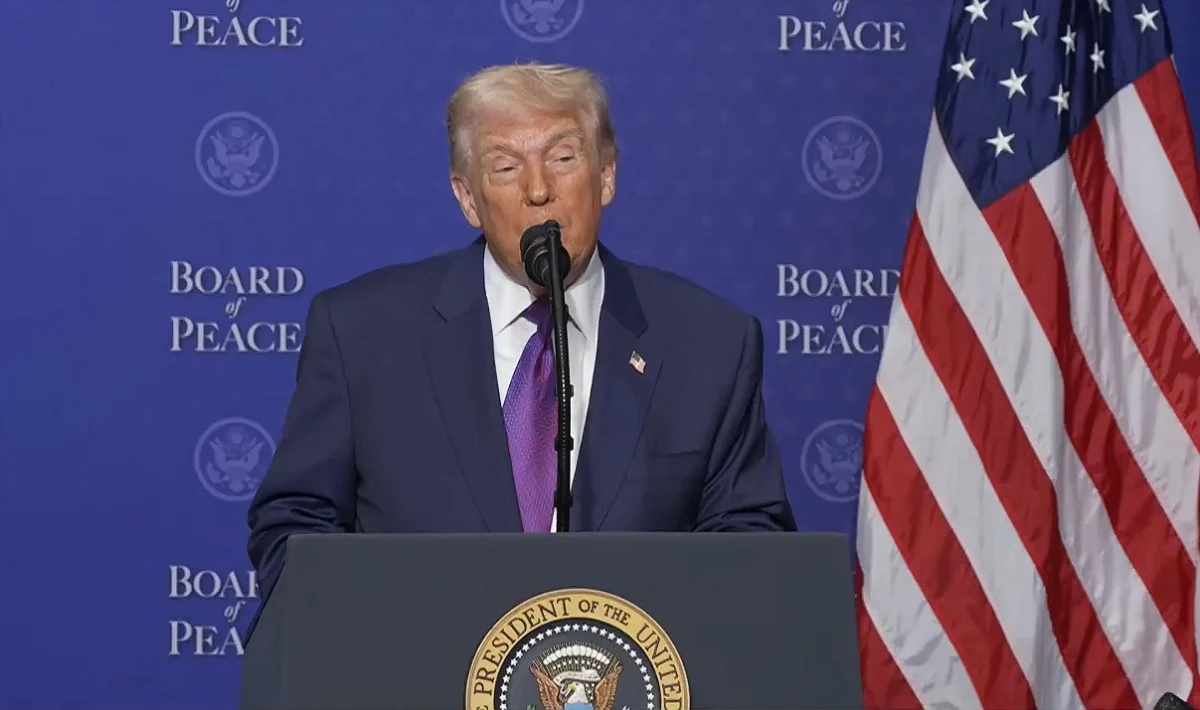
United States President Donald Trump has officially announced the creation of a dedicated "AI Force," an ambitious governmental initiative aimed at securing American dominance in the rapidly evolving landscape of artificial intelligence. In a series of declarations made via his official channels on Saturday, September 19, 2026, the President underscored his commitment to fostering technological supremacy, drawing direct parallels to the establishment of the United States Space Force during his initial term in office. Alongside this organizational restructure, the President has initiated a public call for rebranding the industry, inviting citizens to propose new nomenclature for what is currently known as artificial intelligence.
The announcement marks a pivotal shift in the United States’ domestic policy toward emerging technologies. By appointing a specialized "AI Czar" to oversee this mandate, the administration signals a departure from the cautious, regulatory-heavy approaches often debated in global policy forums. President Trump has explicitly characterized this new force as a cornerstone of national security and economic growth, emphasizing that the government will serve as a catalyst for innovation rather than a regulatory bottleneck.
The Strategic Vision Behind the AI Force
The conceptual framework for the AI Force is rooted in the success of the U.S. Space Force, which was established on December 20, 2019, as the sixth branch of the United States Armed Forces. By modeling the new initiative after this military branch, the administration suggests a focus on strategic competition, infrastructure protection, and long-term capability building.
"Just as we built the Space Force into a formidable pillar of national defense, we are now turning our focus to the digital frontier," the President stated. The mandate for the AI Force is expected to encompass three primary objectives: ensuring that the U.S. private sector remains the global leader in large language models and autonomous systems, protecting critical digital infrastructure from foreign cyber-adversaries, and integrating advanced machine learning capabilities into existing federal operations.
The search for an "AI Czar" has already begun, with the White House emphasizing that candidates must possess both high-level technical expertise and a deep understanding of the geopolitical stakes involved. While the specific administrative structure of this role remains under development, it is expected to hold cabinet-level influence, bridging the gap between the executive branch, Silicon Valley, and the Department of Defense.
Rebranding the Industry: A Linguistic Shift
One of the most unconventional aspects of the President’s announcement is the request for public input regarding the terminology used to describe AI. The term "artificial intelligence," coined in the 1950s, has become a ubiquitous descriptor for the field. However, the administration argues that the current term may be insufficient to capture the nuance and capabilities of modern, highly sophisticated neural networks and agentic systems.
By launching an online poll, the administration is seeking to gauge public sentiment on whether the term should be modernized to better reflect the current era of technological advancement. Critics and linguists have noted that the shift could have significant implications for how the public perceives the safety, utility, and ethics of these systems. Whether this rebranding effort will result in a formal legislative change or remain a stylistic adjustment remains to be seen.
Chronology of AI Policy in the United States
The move comes after years of mounting pressure regarding the governance of AI. Since the widespread adoption of generative models in the early 2020s, the U.S. government has grappled with the tension between innovation and safety.
- 2023-2024: The era of rapid generative AI proliferation led to numerous congressional hearings. Concerns regarding deepfakes, copyright infringement, and labor market displacement dominated the discourse.
- Early 2025: Initial discussions regarding the necessity of a federal "AI agency" gained traction among policy think tanks, with proponents suggesting a model similar to the Nuclear Regulatory Commission.
- Mid-2026: Significant breakthroughs in multi-modal systems and autonomous agentic AI prompted the White House to re-evaluate the status quo. The administration increasingly viewed existing bureaucratic frameworks as insufficient to maintain a competitive edge against global rivals.
- September 19, 2026: The formal announcement of the AI Force and the appointment of an AI Czar, marking a decisive shift toward an "innovation-first" policy.
Economic Implications and Regulatory Stance
President Trump’s stance on AI regulation is fundamentally different from the "precautionary principle" that has defined much of the international response, most notably the European Union’s AI Act. By dismissing concerns regarding the existential risks of AI as a "hoax," the President is positioning the United States as a sanctuary for AI developers who fear that over-regulation will stifle progress.
Economically, the administration’s strategy is clear: reduce the compliance burden for domestic firms while providing government support for research and development. This approach is intended to prevent the "brain drain" of talent to jurisdictions with more permissive environments. Financial analysts suggest that the AI Force may also facilitate public-private partnerships, where government grants and procurement contracts are used to incentivize specific breakthroughs in hardware, energy consumption, and model efficiency.
The Global Competitive Landscape
The establishment of the AI Force is not occurring in a vacuum. China, the European Union, and other global powers have been aggressively investing in their own AI capabilities. China, in particular, has utilized a state-directed model to integrate AI into its national security and surveillance apparatus.
By creating a centralized authority in the U.S., the administration aims to streamline the fragmented approach currently taken by various federal agencies. The AI Force will likely act as a coordinator for disparate efforts currently scattered across the Department of Commerce, the Department of Energy, and the Department of Defense.
Challenges and Skepticism
Despite the optimistic tone from the White House, the proposal faces significant hurdles. Industry experts have pointed out several areas of concern:
- Technical Complexity: Defining what constitutes "AI" for the purpose of a federal mandate is notoriously difficult. The technology evolves faster than most bureaucratic structures can adapt.
- Ethics and Oversight: Without a clear framework for safety, critics worry that the rush to prioritize development could lead to unintended consequences, particularly in the fields of automated decision-making and algorithmic bias.
- Human Capital: Attracting the world’s top AI researchers to work within a government framework is challenging, given the high salaries and research freedom offered by private tech giants. The "IQ test" requirement mentioned by the President has been met with both amusement and skepticism from the scientific community.
Analyzing the "Czar" Position
The appointment of a "Czar" is a common tool in American executive politics, used to bypass traditional bureaucratic gridlock. Historically, positions like the "Drug Czar" or "Climate Czar" have been effective at elevating a single issue to the top of the national agenda. However, these positions often struggle with jurisdictional disputes with existing departments.
The success of the AI Czar will largely depend on the level of authority granted by the President. If the Czar has the power to override regulatory decisions from other agencies, they could significantly accelerate the deployment of AI in the private sector. Conversely, if the role is primarily symbolic, it may serve only as a platform for public communication rather than substantive policy change.
The Future of AI Development
As the U.S. moves forward with this new initiative, the global community will be watching closely. The definition of "artificial intelligence" is evolving, and the decision to potentially rename the field suggests an acknowledgment that we are entering a new phase of the digital revolution—one characterized by autonomous agents capable of independent reasoning and execution.
Whether the AI Force succeeds in maintaining American leadership or encounters the same challenges as previous attempts at large-scale tech governance remains an open question. What is certain is that the administration has staked its reputation on the belief that the path to a prosperous future lies in the unrestrained pursuit of technological innovation. By framing AI as a strategic asset comparable to the military, the government has moved the technology from the realm of academic and private concern into the center of national security.
In the coming weeks, the unveiling of the AI Czar and the results of the rebranding poll will provide further clarity on how this initiative will take shape. For now, the signal from Washington is loud and clear: the United States is gearing up for a new era of technological competition, and it intends to lead the charge.