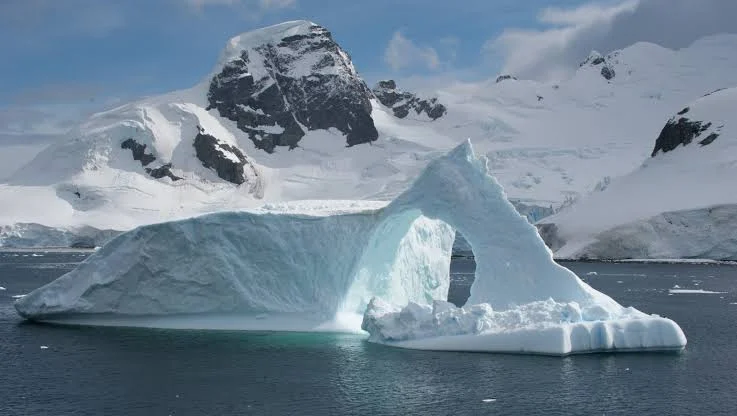
A comprehensive analysis of nearly half a century of satellite observations has revealed a staggering decline in the world’s two largest ice sheets, marking a critical inflection point in the global climate crisis. Between 1979 and 2023, Greenland and Antarctica lost a combined 11.3 trillion tons of ice, a figure so vast that it has directly contributed to a 3.14-centimeter rise in global mean sea levels. This exhaustive study, spearheaded by the Ice Sheet Mass Balance Inter-comparison Exercise (IMBIE) and published in the journal Scientific Data, provides the most definitive evidence to date regarding the acceleration of polar ice melt and its direct link to anthropogenic climate change.
The implications of this data extend far beyond the polar regions. As these massive reservoirs of freshwater transition into the global ocean, they reshape coastlines, threaten biodiversity, and impose an existential risk on low-lying human populations. The IMBIE study synthesized data from 27 distinct satellite missions, providing a high-fidelity look at the cryosphere that was previously impossible to attain through isolated research projects.
The Scale of the Crisis: Visualizing 11.3 Trillion Tons
To contextualize the sheer magnitude of this loss, lead author Ines Otosaka, a climate scientist at Northumbria University in the United Kingdom, provided a stark visual metaphor. If one were to consolidate the 11.3 trillion tons of lost ice into a singular solid form, it would constitute a massive cube standing 23 kilometers tall—nearly three times the height of Mount Everest.
The geographical distribution of this loss is disproportionate. Approximately 60 percent of the total melt originated from the Greenland Ice Sheet, which has been subjected to increasingly frequent and intense surface melting due to Arctic amplification—a phenomenon where the Arctic warms at a rate significantly faster than the global average. The remaining 40 percent of the loss occurred in Antarctica, where the mechanisms of ice loss are driven primarily by the intrusion of warm ocean currents beneath floating ice shelves, leading to structural destabilization.
A Chronology of Polar Recession
The period between 1979 and 2023 serves as a sobering timeline for climate scientists. During the late 20th century, ice sheet mass balance remained relatively stable compared to historical geological norms. However, as global carbon emissions escalated, the rate of ice loss accelerated exponentially.
- 1979–1990: The era of early satellite monitoring, where ice loss was identified but remained within predictable historical fluctuations.
- 1990s–2000s: The beginning of the observable acceleration phase. Satellite altimetry began to detect thinning at the margins of the Greenland Ice Sheet and the West Antarctic Ice Sheet.
- 2010–2020: A decade of record-breaking melt events. The Greenland Ice Sheet experienced several "mass shedding" events, particularly during the record-hot summers of 2012 and 2019, where surface melt reached unprecedented elevations.
- 2020–2023: Recent data confirms that the rate of loss has not plateaued. Even as researchers have integrated more sophisticated gravity-field sensing satellites, such as the GRACE and GRACE-FO missions, the downward trend in total ice mass has remained consistent and persistent.
Understanding the Mechanics of Melt
The scientific community identifies two primary pathways for ice loss: surface melt and dynamic discharge. In Greenland, the primary driver is surface melt, exacerbated by rising atmospheric temperatures that turn snow into slush and eventually runoff. In Antarctica, the situation is more complex. The continent is fringed by ice shelves—floating extensions of the land-based ice sheets—that act as "buttresses," holding back the flow of glaciers into the ocean.
When these shelves thin or collapse due to the warming Southern Ocean, the glaciers they hold back accelerate into the sea. This dynamic discharge accounts for a significant portion of Antarctica’s contribution to sea-level rise. The IMBIE report highlights that this process is largely irreversible on human timescales, as the underlying topography of West Antarctica, which slopes downward toward the continent’s interior, creates a condition known as Marine Ice Sheet Instability (MISI). Once a glacier retreats past a certain point, the physics of the terrain encourage further retreat regardless of subsequent temperature stabilization.
Global Impact: The Sea-Level Rise Equation
The contribution of these ice sheets to global sea-level rise is currently estimated at approximately 25 percent of the total observed increase. While thermal expansion—the physical swelling of seawater as it warms—has historically been a primary driver of sea-level rise, the melting of polar ice is rapidly becoming the dominant factor.
The human cost of this 3.14-centimeter rise is significant. According to models cited by the research team, every additional centimeter of sea-level rise exposes an estimated two to three million people to the threat of annual coastal flooding. This does not only apply to small island nations in the Pacific; it affects major urban centers from Miami and New York to Jakarta, Mumbai, and Shanghai.
"For every centimeter of sea-level rise, we are seeing a compounding effect on storm surges and high-tide flooding," Otosaka noted in the report. "The infrastructure built along the world’s coastlines was largely designed for a stable sea level that no longer exists."
Official Responses and Scientific Consensus
The findings have been met with grave concern from the broader scientific community. Organizations such as the Intergovernmental Panel on Climate Change (IPCC) have consistently cited ice sheet instability as one of the "known unknowns" that could lead to higher-than-expected sea-level rise scenarios.
"This study confirms what we have feared: that the polar ice sheets are not just reacting to climate change, they are driving it," said a spokesperson for the World Meteorological Organization (WMO). The consensus among climate researchers is that the 11.3 trillion tons lost is not merely a statistical anomaly but a reflection of a fundamental shift in the Earth’s energy balance.
The IMBIE study serves as a call to action for policymakers. The data provides a clear metric for the "cost of inaction." By quantifying the exact volume of ice lost, scientists hope to provide a more accurate baseline for coastal management and climate adaptation strategies.
Broader Implications: Beyond the Coastline
The loss of 11.3 trillion tons of ice carries consequences that extend beyond rising water levels. The infusion of vast quantities of freshwater into the North Atlantic, for instance, threatens to disrupt the Atlantic Meridional Overturning Circulation (AMOC), a system of ocean currents that regulates the climate of the Northern Hemisphere. A weakened AMOC could lead to more extreme weather patterns, colder winters in Europe, and altered monsoon cycles in the tropics.
Furthermore, the "albedo effect" creates a dangerous feedback loop. As white ice—which reflects up to 90 percent of incoming solar radiation—is replaced by dark, open ocean or exposed land, the Earth absorbs more heat, which in turn leads to further melting. This positive feedback loop is one of the primary reasons why the rate of ice loss has accelerated so dramatically over the past four decades.
Conclusion: The Path Forward
The data from the IMBIE study is a testament to the power of international scientific cooperation. By leveraging 27 satellite missions, the global community has achieved a level of transparency regarding the health of our planet that was previously unattainable. However, the report also serves as a stark reminder that knowledge alone is insufficient.
As we look toward the remainder of the 21st century, the stability of the Greenland and Antarctic ice sheets will remain the most critical variable in determining the future of global coastlines. The 11.3 trillion tons of ice already lost serves as a historical marker of the impact of the fossil fuel era. The question now facing global leaders is whether current climate mitigation efforts—including the transition to renewable energy and aggressive carbon capture—can slow this decline before the process of ice sheet collapse becomes self-sustaining and beyond human control. The satellite record has provided the evidence; the next few decades will provide the verdict.