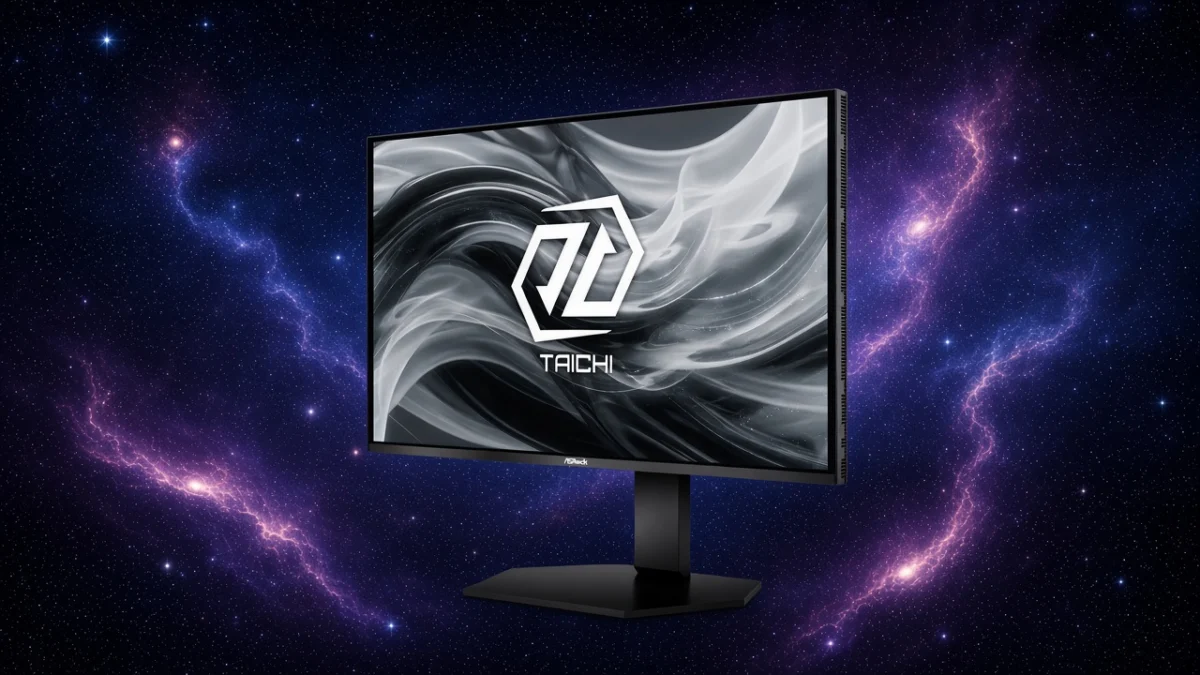
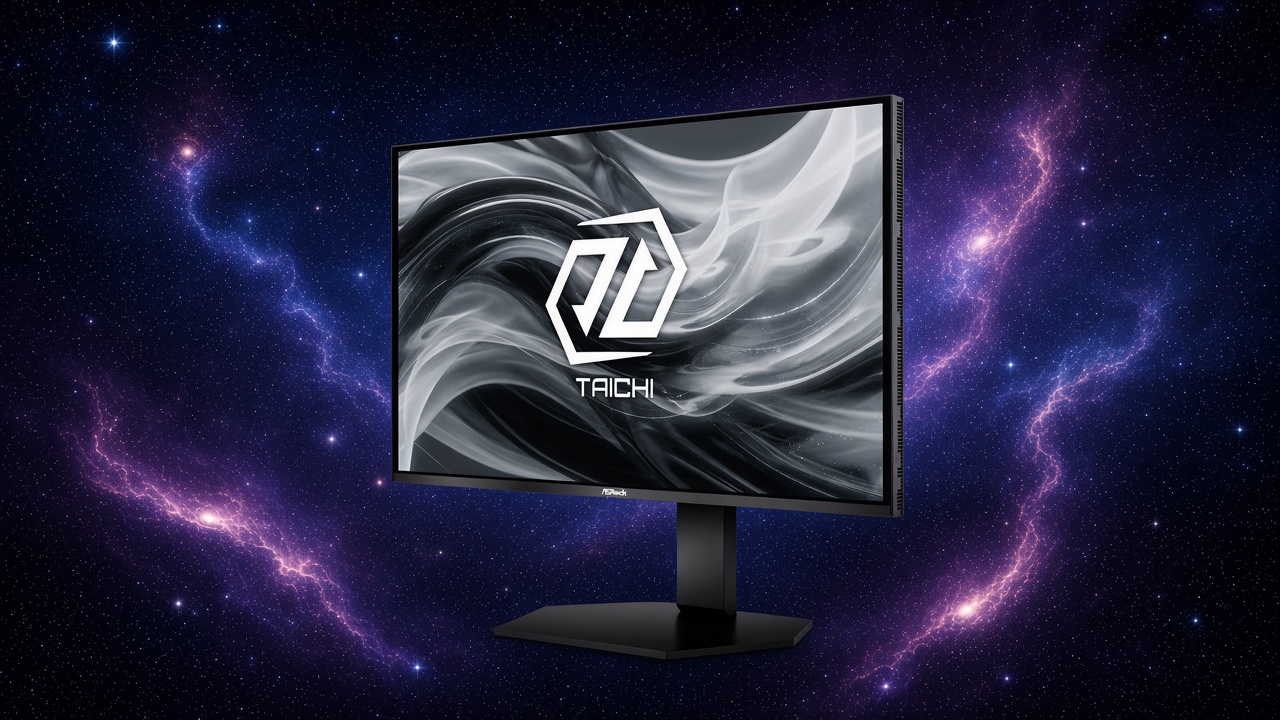
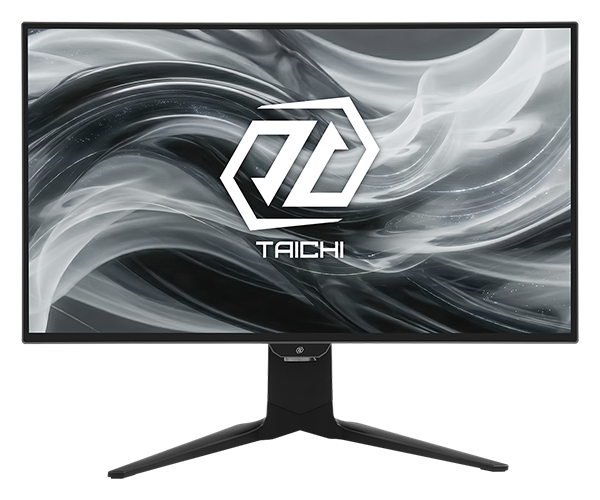
ASRock, traditionally recognized across the global PC hardware market as a reliable and innovative manufacturer of motherboards and graphics cards, has officially announced the expansion of its display portfolio with a new flagship lineup. Building upon its existing presence in the gaming monitor market through the Phantom Gaming and Challenger series, the company has introduced the Taichi monitor family. This newly unveiled lineup comprises three distinct 27-inch OLED models—the TCO27USA, the TCO27QXA, and the TCO27QXB—each engineered to target specific segments of the high-end gaming and professional creator markets using cutting-edge panel technology.
The introduction of the Taichi monitor series marks a strategic evolution for ASRock as it seeks to solidify its brand positioning within the luxury hardware sector. While the company first teased its ambitious OLED display concepts earlier in the year at the Consumer Electronics Show (CES), the September announcement solidifies these concepts into three production-ready models. Each monitor caters to a unique user demographic, ranging from visual content creators requiring uncompromising pixel accuracy to competitive esports athletes demanding ultra-high refresh rates and minimal input latency.
Detailed Breakdown of the Taichi Lineup
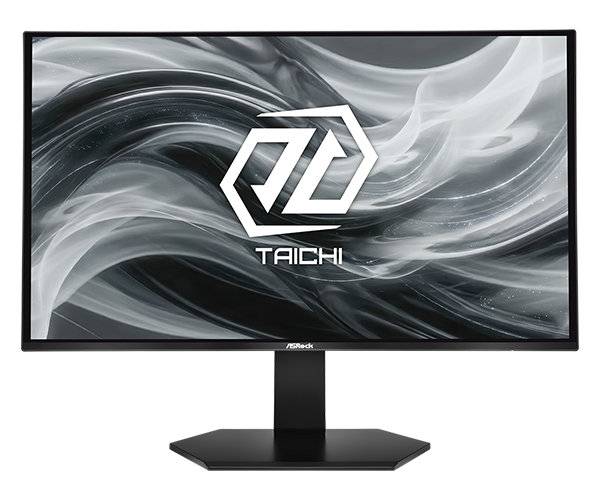
At the pinnacle of visual fidelity sits the ASRock Taichi TCO27USA. Designed primarily for users who prioritize resolution and color depth alongside gaming performance, this model utilizes a 4K UHD Penta Tandem OLED panel. Operating at a native 240Hz refresh rate, the TCO27USA is paired with a blazing-fast 0.03ms pixel response time, effectively eliminating motion blur in fast-paced scenarios. Color reproduction is another focal point of this model, boasting a 99% coverage of the DCI-P3 color gamut and a factory color accuracy rating of Delta E under 2. Furthermore, the monitor holds a VESA DisplayHDR True Black 400 certification and delivers a peak HDR brightness of 1,000 nits.
For connectivity, the TCO27USA is future-proofed with dual DisplayPort 2.1 UHBR20 ports alongside dual HDMI 2.1 ports capable of a full 48Gbps bandwidth. This robust interface selection ensures that users can harness uncompressed high-resolution streams from next-generation graphics cards without bandwidth bottlenecks.
Shifting the focus toward competitive gaming, the ASRock Taichi TCO27QXA scales down the resolution to QHD (2560 x 1440) to harness the capabilities of a high-performance QD-OLED panel. By reducing the pixel density compared to its 4K sibling, the TCO27QXA achieves a remarkable 500Hz refresh rate. This model elevates the HDR experience slightly further with a VESA DisplayHDR True Black 500 certification, maintaining the same 1,000-nit peak brightness while delivering the exceptional contrast ratios and vibrant color saturation characteristic of Quantum Dot OLED technology.
The most unconventional and technologically ambitious offering in the series is the ASRock Taichi TCO27QXB. Featuring an advanced Tandem WOLED panel, this display introduces a flexible dual-mode operational framework. Users can select between a high-resolution QHD mode operating at 540Hz for enhanced image clarity or switch to an HD resolution mode that unlocks an extreme 720Hz refresh rate. In addition to its unprecedented refresh rate capabilities, the TCO27QXB pushes luminance boundaries further, achieving an impressive peak HDR brightness of up to 1,500 nits.

Practical Ecosystem Integration and Ergonomics
Beyond raw display specifications, ASRock has integrated several functional enhancements into the Taichi series to streamline modern desktop setups. All three monitors include AMD FreeSync Premium Pro certification to eliminate screen tearing and stuttering during variable framerate gaming. Productivity features are also well-represented, with built-in KVM switch functionality allowing users to control multiple systems with a single keyboard and mouse setup.
Connectivity convenience is further amplified by the inclusion of a USB Type-C port supporting up to 65W Power Delivery. This enables single-cable connectivity for laptops, facilitating simultaneous video transmission, peripheral data transfer, and device charging.
Chronology and Development Timeline
The path to the Taichi monitor launch began earlier in the year at CES, where industry observers first caught a glimpse of ASRock’s intent to break into the ultra-premium OLED display market. While initial showcases focused on technical feasibility and prototype capabilities, the September reveal details the final specifications, distinct model tiering, and commercial readiness of the hardware. By categorizing the lineup into three specific use-case scenarios—the resolution-focused TCO27USA, the high-refresh-rate QD-OLED TCO27QXA, and the dual-mode extreme speed TCO27QXB—ASRock demonstrated a comprehensive approach to addressing divergent consumer demands rather than relying on a one-size-fits-all product.
Market Implications and Industry Analysis
The entry of ASRock into the high-end OLED monitor segment carries notable implications for the broader display market. Historically dominated by traditional display specialists and select tier-one motherboard manufacturers, the high-refresh-rate OLED category has experienced rapid technological iteration. The integration of cutting-edge interfaces such as DisplayPort 2.1 UHBR20 across these flagship models indicates that hardware manufacturers are proactively preparing for the bandwidth demands of upcoming GPU generations.
Furthermore, the implementation of dual-mode technology—exemplified by the TCO27QXB’s transition between QHD 540Hz and HD 720Hz—reflects a growing design philosophy in competitive hardware: providing users with hardware-level adaptability to switch fluidly between visual fidelity and absolute speed depending on the software application.
Pricing and Commercial Availability
Despite the official publication of product specifications and feature sets on ASRock’s corporate web pages, the company has yet to disclose official pricing details or regional release schedules. Industry analysts project that given the inclusion of advanced panel architectures—such as Penta Tandem OLED, QD-OLED, and Tandem WOLED—alongside high-end connectivity standards, the Taichi series will position itself firmly within the ultra-premium pricing bracket.
As the market awaits further announcements regarding distribution and regional launch dates, the ASRock Taichi lineup stands as a clear statement of intent from the manufacturer, signaling its ambition to compete directly with established display giants in the enthusiast PC ecosystem.