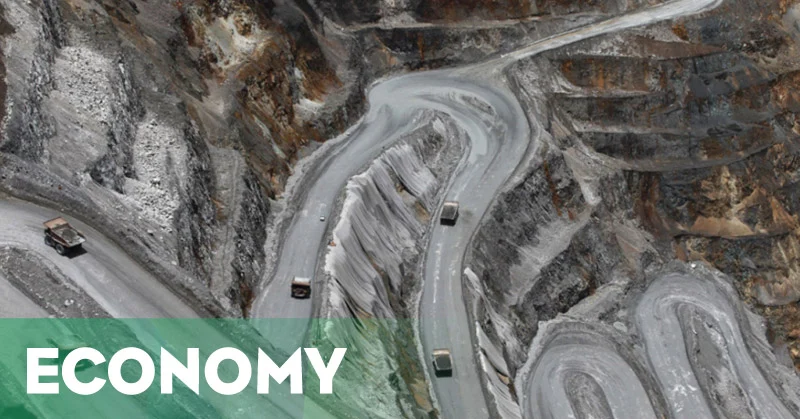
JAKARTA — The ongoing divestment process of PT Freeport Indonesia (PTFI) has reached a critical juncture, bringing the capability of Indonesian state-owned enterprises (SOEs) into the national spotlight. Amid complex negotiations concerning share acquisitions, senior government officials have strongly affirmed that domestic mining corporations possess the technical expertise, financial acumen, and operational capacity required to successfully manage the massive Grasberg mineral deposit in Papua.
The divestment discourse centers around two prominent Indonesian state-owned mining enterprises: PT Aneka Tambang (Persero) Tbk (ANTM), commonly known as Antam, and PT Inalum (Persero). As the Indonesian government continues to assert its sovereign rights over the nation’s natural resources under existing regulatory frameworks, the prospect of state-backed entities acquiring a substantial equity stake in the American-backed mining giant has shifted from a policy aspiration to a concrete strategic initiative.
Government officials, led by the Ministry of Finance, have sought to quell lingering skepticism from domestic and international market observers regarding whether Indonesian corporations can effectively oversee one of the world’s largest gold and copper mines. With decades of institutional experience accumulated by domestic mining veterans, the transition of majority or significant minority ownership to state control is framed not merely as a nationalist milestone, but as a commercially and operationally viable endeavor.
Main Facts and Current Stakeholders in the Divestment Process
The divestment of PT Freeport Indonesia is governed by Indonesian mining regulations and the overarching Contract of Work (CoW) or its subsequent legal transitions, such as the Special Mining Business License (IUPK). Under these regulatory provisions, foreign-owned mining companies operating in Indonesia are legally mandated to progressively divest their shares to domestic entities—prioritizing the central government, regional governments, and state-owned or private national enterprises.
At the core of the current phase are PT Aneka Tambang (Persero) Tbk and PT Inalum (Persero). Antam is a diversified mining and metals company with extensive experience in exploring, extracting, and processing gold, nickel, bauxite, and silver. Inalum, on the other hand, serves as Indonesia’s strategic aluminum producer and smelting powerhouse, holding substantial industrial capabilities and capital-raising potential.
The involvement of these two entities is designed to distribute the financial weight and operational oversight of the massive Freeport asset. While Freeport-McMoRan Inc., the US-based parent company, has historically maintained operational control, the Indonesian government’s push for increased equity participation represents a fundamental shift in the nation’s resource nationalism framework.
Financial analysts note that acquiring shares in a tier-one asset like PT Freeport Indonesia requires immense capital expenditure, sophisticated risk management, and strategic debt financing. Consequently, the collaboration between Antam and Inalum is viewed by policymakers as a synergistic approach capable of meeting these stringent financial and technical prerequisites.
Chronology and Background Context of the Freeport Divestment
The journey toward state ownership of PT Freeport Indonesia has deep historical roots, evolving through decades of shifting geopolitical landscapes, economic policies, and legal frameworks.
Early Operations and the 1967 Contract of Work
PT Freeport Indonesia’s presence in Papua dates back to the late 1960s. Following the enactment of Indonesia’s Foreign Investment Law in 1967, Freeport signed the first-generation Contract of Work with the Indonesian government. This agreement allowed the company to explore and exploit the remote, mineral-rich highlands of the Sudirman Mountain Range in Papua, leading to the discovery of the colossal Ertsberg and Grasberg deposits. For decades, the operation functioned under this initial framework, generating substantial revenues for both the company and the Indonesian state through taxes, royalties, and dividends, while operating largely under foreign managerial control.
Regulatory Shifts and the 2009 Mining Law
As Indonesia’s legal and economic systems matured, policymakers recognized the need to secure a greater share of economic benefits from the extraction of non-renewable natural resources. The turning point arrived with the passage of Law Number 4 of 2009 on Mineral and Coal Mining. This landmark legislation overhauled the mining sector by replacing the old Contract of Work system with a licensing regime (IUP and IUPK) and introducing mandatory downstream processing (smelting) requirements alongside progressive domestic divestment obligations.
The 2014–2015 Divestment Impasse
The years 2014 and 2015 marked a period of intense negotiation and regulatory friction. Under the 2009 Mining Law and its derivative regulations, Freeport was required to divest up to 30 percent of its shares to Indonesian participants. However, disagreements repeatedly arose regarding the valuation of the shares, the timing of the divestment schedule, and the legal certainty of Freeport’s long-term operating rights beyond the expiration of its initial CoW in 2021. During this volatile period, various state-owned enterprises were evaluated as potential vehicle buyers for the divested equity, laying the groundwork for the eventual designation of Antam and Inalum as the primary state consortium leads.
Official Responses and Government Stance
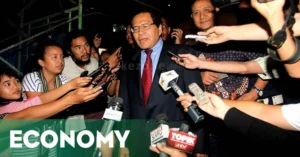
Addressing the lingering doubts concerning the operational readiness of Indonesian state enterprises, Sonny Loho, who served as the Director General of State Assets at the Ministry of Finance, offered a resolute defense of domestic corporate capabilities. Speaking at the Ministry of Finance in Jakarta, Loho dismissed concerns that state-owned enterprises lacked the sophistication required to manage a world-class mega-mine.
"Yes, they are capable. How could their competence be doubted? Our mining companies are already performing excellently," Loho stated emphatically.
His remarks directly addressed critics—both domestic and foreign—who argued that the high technical complexity, environmental challenges, and massive capital requirements of the Grasberg block cave mining system might overwhelm local management. Loho urged stakeholders to abandon excessive caution and exhibit confidence in the institutional growth of Indonesian enterprise.
"There is no need to worry. People in Indonesia worry too much; we must be bold. We have to be able to do it," Loho added, reinforcing the government’s official narrative that national self-reliance in strategic industrial sectors is both achievable and necessary.
Echoing this sentiment, officials from the Ministry of State-Owned Enterprises have repeatedly emphasized that Indonesian engineers and geologists have long formed the operational backbone of PT Freeport Indonesia’s workforce. Decades of knowledge transfer mean that domestic professionals already occupy critical technical and managerial roles within the company, reducing the operational risk of a leadership transition.
Supporting Data and Comparative Analysis of Indonesian SOEs
To evaluate the feasibility of state management over Freeport, financial analysts frequently examine the balance sheets, operational track records, and technical capacities of the designated state-owned enterprises.
- PT Aneka Tambang (Persero) Tbk (ANTM): As a publicly listed member of the state mining holding ecosystem, Antam boasts decades of operational history in precious metals refining and mineral extraction. The company operates the Pongkor underground gold mine in West Java and the Cebang gold mine, alongside vast nickel laterite mining operations in Southeast Sulawesi and North Maluku. Antam’s expertise in underground mining techniques and high-grade metal purification provides a solid technical foundation.
- PT Inalum (Persero): Serving as the focal point of Indonesia’s state mining holding company (subsequently formalized as MIND ID – Mining Industry Indonesia), Inalum possesses immense financial muscle and strategic vision. Inalum’s successful acquisition of a majority stake in PT Freeport Indonesia in subsequent years proved its capability to orchestrate complex multi-billion-dollar international corporate transactions and secure international syndicated financing.
Furthermore, Indonesia’s broader mining sector has matured significantly. Companies like PT Bukit Asam Tbk in coal mining and PT Timah Tbk in tin extraction demonstrate that state-controlled entities can maintain profitable, large-scale operations while complying with rigorous environmental, social, and governance (ESG) standards.
Broader Economic Impact and Strategic Implications
The successful integration of PT Freeport Indonesia into the state-owned enterprise portfolio carries profound economic, financial, and geopolitical implications for the Republic of Indonesia.
Enhanced State Revenue and Fiscal Contribution
By securing a majority or substantial equity stake in PTFI, the Indonesian government shifts its revenue model from relying solely on royalties, taxes, and minor dividends to capturing a direct share of corporate profits. These dividends flow directly back into the state budget, providing crucial fiscal space for infrastructure development, education, healthcare, and regional development programs, particularly in Papua.
Acceleration of Downstream Processing (Hilirisasi)
Resource nationalism in Indonesia is intrinsically linked to the policy of domestic value addition (hilirisasi). By aligning Freeport’s massive copper concentrate production with domestic processing facilities—such as the construction of copper smelters in Gresik, East Java—the state ensures that raw mineral wealth is transformed into higher-value industrial products within national borders. This strategy generates domestic manufacturing employment, fosters technology transfer, and strengthens the domestic industrial supply chain.
Geopolitical and Economic Sovereignty
Control over critical minerals—particularly copper and gold, which are essential for the global energy transition, electric vehicle manufacturing, and electronics—enhances Indonesia’s strategic leverage in global trade. Managing these assets through state-owned champions ensures that national energy and industrial policies remain aligned with domestic long-term interests rather than purely foreign corporate profit motives.
Challenges and Risk Management
Despite the optimistic outlook presented by government officials, independent analysts emphasize that managing a colossal operation like Freeport is not without significant challenges.
- Financing and Debt Servicing: Acquiring high-value mining assets often requires substantial debt financing. State-owned enterprises must carefully manage their debt-to-equity ratios to avoid placing undue fiscal strain on the corporate balance sheets or exposing the companies to commodity price volatility.
- Environmental and Social Responsibility: The Grasberg mine generates massive volumes of tailings and operates in a sensitive ecological and social environment in Papua. Sustained engagement with local indigenous communities, stringent environmental remediation, and adherence to international ESG benchmarks remain imperative for long-term operational success.
- Technological Adaptation: As the surface and shallow-depth reserves are fully depleted, PT Freeport Indonesia relies heavily on complex underground block-caving methods. Maintaining and advancing this sophisticated engineering infrastructure requires continuous capital reinvestment and uninterrupted access to specialized global technical expertise.
Conclusion
The assessment by senior financial officials that Indonesian state-owned enterprises are fully capable of managing PT Freeport Indonesia marks a defining chapter in the nation’s economic history. Backed by the operational competencies of companies like Antam and Inalum, the ongoing divestment process reflects a broader, irreversible trend toward resource sovereignty and strategic economic independence.
While financial and operational challenges inherent to mega-scale mining remain, the institutional maturation of Indonesia’s state-owned enterprise sector provides a robust foundation. As negotiations and structural transitions continue to unfold, the ultimate success of state management over Freeport will serve as a definitive benchmark for Indonesia’s capacity to harness its natural wealth for sustainable national prosperity.