The ongoing divestment process of PT Freeport Indonesia has remained a focal point of Indonesia’s national economic policy, sparking intense debate over resource nationalism, corporate governance, and the readiness of state-owned enterprises to manage world-class mining operations. As the government navigates the intricate legal and financial frameworks governing foreign mining concessions in Papua, the Ministry of Finance has firmly expressed confidence in the capabilities of domestic entities to absorb and operate the multi-billion-dollar mining asset. Amid lingering skepticism from market analysts and international observers regarding operational efficiency, capitalization, and technical expertise, high-ranking government officials continue to rally behind national champions as the logical custodians of the country’s strategic mineral wealth.
The divestment mandate stems from longstanding regulatory requirements aimed at increasing Indonesian ownership in foreign-contracted mining operations, shifting the balance of economic benefits back toward the state. In this context, two prominent state-owned enterprises—PT Aneka Tambang (Persero) Tbk (ANTM), widely known as Antam, and PT Inalum (Persero)—have emerged as the designated frontrunners tasked with acquiring the equity stakes offered by the US-based mining giant. This strategic move highlights a broader governmental push to consolidate control over vital natural resources, ensuring that the financial returns generated from the Grasberg minerals complex contribute directly to national development objectives and industrial downstreaming initiatives.
Background Context of the Freeport Divestment Saga
The relationship between the Indonesian government and PT Freeport Indonesia has a complex history spanning several decades, characterized by renegotiations of contracts of work, environmental disputes, community relations challenges, and evolving regulatory frameworks. Originally operating under a Contract of Work (CoW) granted during the New Order era, Freeport-McMoRan—the parent company of PTFI—extracted vast quantities of copper, gold, and silver from the remote highlands of Mimika Regency in Papua. The Grasberg mine stands as one of the largest copper and gold deposits in the entire world, making it a prized asset of immense strategic and geopolitical importance.
As Indonesia matured as a democratic republic and sought greater sovereignty over its natural endowments, successive administrations pushed for legislative reforms. The enactment of Law No. 4 of 2009 on Mineral and Coal Mining marked a paradigm shift, introducing strict mandates that required foreign mining companies to divest a significant percentage of their shares to Indonesian entities—including the central government, regional governments, and state- or privately-owned national enterprises—after years of commercial production. Furthermore, the law prohibited the raw export of unrefined minerals, compelling miners to construct domestic smelting facilities.
These regulatory transformations created a prolonged friction point between Jakarta and Freeport. While the multinational corporation argued for contractual stability and protection of its original investment terms, Indonesian policymakers insisted that national laws superseded legacy contracts. The prolonged negotiations over the divestment percentage, valuation methodologies, tax structures, and the extension of operating rights beyond 2021 created a climate of regulatory uncertainty that affected both local economic sentiment and Freeport’s global operations.
Chronology of Key Events Leading to State-Led Acquisition
The pathway toward state participation in PT Freeport Indonesia involved a series of critical milestones, policy shifts, and corporate maneuvers.
In the early phases following the implementation of the 2009 Mining Law, discussions regarding share divestment moved at a sluggish pace. Freeport was required under its amended frameworks to divest up to 51 percent of its shares to Indonesian participants over a designated timeline. However, valuation disputes hindered progress; the government and the mining corporation frequently disagreed on how to value future underground reserves and existing infrastructure.
By 2015, the divestment process gained renewed momentum as the Ministry of Energy and Mineral Resources, alongside the Ministry of State-Owned Enterprises (BUMN), began laying the groundwork for domestic corporate consolidation. The strategy involved positioning strong local players to absorb the equity blocks without placing an undue fiscal burden on the state budget. PT Aneka Tambang, with its extensive portfolio in gold, nickel, and bauxite mining, and PT Inalum, destined to become the mining holding entity, were identified as the logical corporate vehicles to spearhead the acquisition.
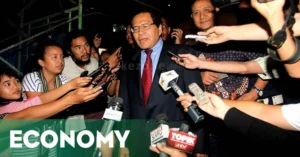
During a strategic intervention in late 2015, senior economic and financial officials addressed public and parliamentary concerns regarding the operational readiness of Indonesian enterprises. Directorate General of State Assets at the Ministry of Finance, Sonny Loho, publicly addressed these apprehensions, emphasizing that the domestic mining sector possessed sufficient technical proficiency and managerial competence to handle an asset as sophisticated as the Grasberg mine. This period served as a crucial bridge between initial policy declarations and the eventual complex financial transactions that would unfold in subsequent years, ultimately leading to Inalum’s acquisition of a majority stake through a landmark financial deal finalized in late 2018.
Official Responses and Government Stance
The official stance from the Indonesian government during the pivotal phases of the divestment talks was characterized by a resolute push for national self-reliance and confidence in local corporate governance. Addressing doubts raised by various economic commentators, Sonny Loho articulated the Ministry of Finance’s unwavering position on the matter.
"Yes, they are capable; there is no reason to doubt them. Our mining companies are already performing very well," Loho stated at the Ministry of Finance complex in Jakarta, dismissing narratives that suggested domestic enterprises lacked the requisite scale or technological know-how to manage block-caving underground mining operations.
Loho further urged domestic stakeholders and international market watchers to shed excessive caution, arguing that over-hesitation could impede Indonesia’s economic emancipation. "There is no need to worry. Indonesians worry too much; we must be bold. We have to be able to do it," he added, reinforcing the political narrative that national pride and technical capability must go hand in hand.
This sentiment was mirrored across multiple state agencies. The Ministry of State-Owned Enterprises maintained that combining the financial muscle of Inalum with the technical mining expertise of Antam would create a synergistic powerhouse capable of meeting international environmental, social, and governance (ESG) standards while optimizing mineral extraction efficiency.
Fact-Based Analysis of Operational and Financial Implications
The transition of ownership in a mega-mining project like PT Freeport Indonesia carries profound economic, financial, and operational implications for the Indonesian state and the participating BUMNs.
From a financial perspective, acquiring a majority stake requires substantial capital expenditure and complex debt financing arrangements. The initial transactions necessitated international bond issuances and syndicated loans coordinated by state-owned financial institutions. Consequently, the debt-to-equity ratios and balance sheet leverage of the participating BUMNs experienced noticeable shifts. Analysts pointed out that while the long-term cash flow generation from Grasberg’s rich ore reserves is exceptionally robust, managing debt service obligations during periods of commodity price volatility remains a critical operational risk.
Operationally, the Grasberg mine transitioned from an open-pit operation to a massive underground block-caving system. This shift required highly specialized engineering capabilities, advanced automation, and stringent safety protocols, given the subterranean environment’s geological complexities. While foreign contractors and expatriate engineers retained vital technical advisory roles during the handover period, the strategic objective remained clear: systematic knowledge transfer and capability building for Indonesian engineers and geologists.
Furthermore, the integration of PTFI into the state-owned holding ecosystem promises substantial macroeconomic benefits. Dividends generated from copper and gold sales flow directly into state coffers, supporting national development budgets, infrastructure projects, and social welfare programs. Additionally, domestic processing obligations ensure that refined copper feeds downstream manufacturing industries, fostering a more integrated national industrial supply chain.
Broader Economic Impact and Future Outlook
The successful orchestration of the Freeport divestment serves as a defining blueprint for how resource-rich emerging economies can renegotiate their relationships with multinational mining conglomerates. By utilizing state-owned enterprises as the primary vehicles for equity acquisition, Indonesia demonstrated a pragmatic approach to resource nationalism—balancing the necessity of foreign capital and advanced technology with the imperative of national sovereignty over natural assets.
As the corporate structures continue to mature, the focus has shifted toward sustainable mining practices, environmental remediation, and regional development in Papua. Ensuring that local communities benefit equitably from the extraction of their ancestral lands remains an ongoing priority for both the corporate management and the central government.
Ultimately, the confidence expressed by financial officials in 2015 laid the psychological and structural groundwork for a transformative economic milestone. The ability of Indonesian state-owned enterprises to successfully govern, finance, and operate the complex machinery of PT Freeport Indonesia stands as a testament to the maturation of the country’s corporate sector, signaling to global markets that domestic institutions are fully equipped to steward world-class strategic industries into the future.