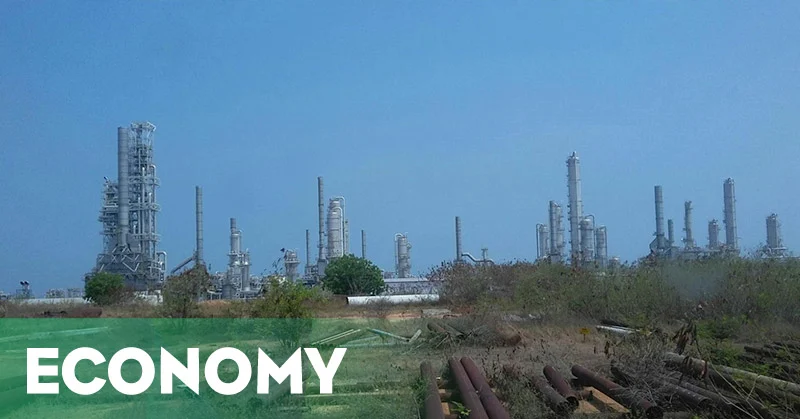
President Joko Widodo conducted a high-profile working visit to inspect the Trans Pacific Petrochemical Indotama (TPPI) refinery located in Tuban, East Java. The inspection marked a critical milestone for Indonesia’s energy sector, as the facility officially resumed operations under the management of state-owned energy giant PT Pertamina (Persero). The presidential entourage included State-Owned Enterprises (SOE) Minister Rini Soemarno, Pertamina President Director Dwi Soetijpto, and Director General of Oil and Gas IGN Wiratmaja Puja, highlighting the strategic importance of the facility to the highest levels of government.
The revitalization of the TPPI Tuban refinery represents a monumental achievement in Indonesia’s ongoing quest for energy independence. For years, the sprawling petrochemical complex had faced operational hurdles, financial restructuring complexities, and administrative bottlenecks that kept its immense processing capacity offline. By bringing the facility back into active service, the government aimed to curb the nation’s heavy reliance on imported refined petroleum products, secure domestic supply chains, and stabilize foreign exchange reserves that were continuously strained by costly fuel imports.
Strategic Importance and Production Capacity
The decision by President Joko Widodo to personally oversee the reopening underscores how vital the facility is to the national macroeconomic framework. According to Pertamina’s corporate communication division, the refinery’s return to operational status yields immediate, measurable benefits for the state budget and the national trade balance.
Wianda Pusponegoro, who served as Vice President of Corporate Communication for Pertamina at the time, elaborated on the operational scale of the revitalized facility during the presidential site visit. She emphasized that the refinery possesses the capability to significantly reduce the nation’s dependency on foreign fuel markets.
The operationalization of this facility is projected to cut Indonesia’s imports of Premium-grade gasoline, specifically RON 88, by approximately 20 percent. The refinery boasts a robust production capacity reaching 61,000 barrels per day of gasoline and other vital petrochemical products.
When evaluated against global oil market benchmarks, the financial implications are profound. Assuming an average international crude oil price of USD 60 per barrel for gasoline, the domestic production generated by the Tuban plant translates into direct foreign exchange savings of roughly USD 1.2 billion annually. In local currency terms, this savings amounts to approximately IDR 16 trillion per year, providing much-needed fiscal relief to the national economy amidst fluctuating global commodity prices.
Background Context and Chronology of the TPPI Revitalization
The journey toward restoring the TPPI Tuban refinery to operational readiness was neither simple nor swift. Commissioned years prior, the facility suffered from a complex web of corporate debt, ownership disputes, and operational suspensions that left its massive infrastructure underutilized. The plant, designed to produce both petrochemicals and refined fuels, became a focal point in discussions surrounding state assets and energy sovereignty.
The turnaround began to materialize when the Indonesian government, led by the Ministry of BAE and the Ministry of Energy and Mineral Resources, orchestrated a strategic intervention. Recognizing that leaving the facility idle inflicted continuous economic damage through sustained import dependency, authorities devised a rescue plan centered around PT Pertamina (Persero).
Pertamina assumed operational control through a series of mandated assignments and financial restructuring agreements designed to settle outstanding liabilities and rehabilitate technical systems. The integration of TPPI into Pertamina’s downstream and midstream portfolio allowed the national oil company to utilize its extensive supply chain networks, feedstock procurement capabilities, and technical expertise to jumpstart production units that had laid dormant.
By late 2015, technical teams successfully completed comprehensive safety checks, feedstock intake tests, and trial runs, paving the way for the official resumption of commercial operations. President Joko Widodo’s inspection served as both an official validation of these restoration efforts and a political signal that state assets must be actively utilized to serve the public interest and bolster national economic resilience.

Broader Economic Implications and Energy Security
The successful reactivation of the TPPI Tuban refinery extends far beyond immediate fiscal savings; it addresses fundamental structural vulnerabilities within Indonesia’s energy architecture. For decades, Southeast Asia’s largest economy grappled with a paradoxical reality: despite being a major producer of natural resources, the country imported a substantial portion of its finished gasoline due to lagging domestic refining capacity.
This structural deficit exposed the national economy to external shocks, including geopolitical tensions in oil-producing regions, currency depreciation against the US dollar, and volatile swings in international petroleum benchmarks. Every spike in global crude prices widened the current account deficit and strained government subsidies.
By reintegrating the Tuban facility into the national supply grid, Indonesia enhanced its buffer against such external shocks. The local production of 61,000 barrels per day of gasoline provides Pertamina with greater flexibility in blending and distributing fuels across the archipelago, reducing logistical bottlenecks and stabilizing regional supply chains. Furthermore, the availability of domestic petrochemical feedstock supports downstream manufacturing industries, fostering a more integrated industrial ecosystem centered around East Java.
Industry Stakeholder Responses and Governance
The collaborative effort between regulatory bodies, the Ministry of SOEs, and Pertamina management drew praise from energy analysts and industry observers. The intervention demonstrated a pragmatic approach to governance, where state intervention was deployed not to nationalize private enterprise arbitrarily, but to resolve systemic financial gridlock and reactivate productive industrial capital.
SOE Minister Rini Soemarno played a pivotal role in aligning corporate strategy with national policy objectives, ensuring that legal and financial obstacles were systematically cleared. Meanwhile, Pertamina’s executive leadership, spearheaded by figures such as Dwi Soetijpto, mobilized engineering teams to execute the technical overhaul safely and efficiently.
The presence of high-ranking government officials during the inspection signaled to domestic and international markets that Indonesia is committed to optimizing its existing infrastructure, enhancing transparency in state-owned enterprise management, and pursuing energy independence through pragmatic industrial policies.
Future Outlook for the Tuban Complex
While the resumption of operations in November 2015 marked a watershed moment, it also laid the groundwork for subsequent expansions and modernization phases. Energy planners recognized that to sustain long-term self-sufficiency, facilities like the TPPI Tuban refinery must continuously upgrade their technological capabilities to process heavier crude grades, improve energy efficiency, and minimize environmental footprints.
Subsequent strategic roadmaps for the Tuban complex included integration projects aimed at expanding petrochemical output, given that petrochemicals typically yield higher profit margins and serve as essential raw materials for domestic manufacturing sectors such as plastics, textiles, and packaging.
The visit by President Joko Widodo and Minister Rini Soemarno thus transcended a routine administrative inspection. It served as a powerful testament to the strategic recalibration of Indonesia’s energy sector—transforming a dormant financial liability into a vibrant engine of national economic savings, industrial integration, and enduring energy security.