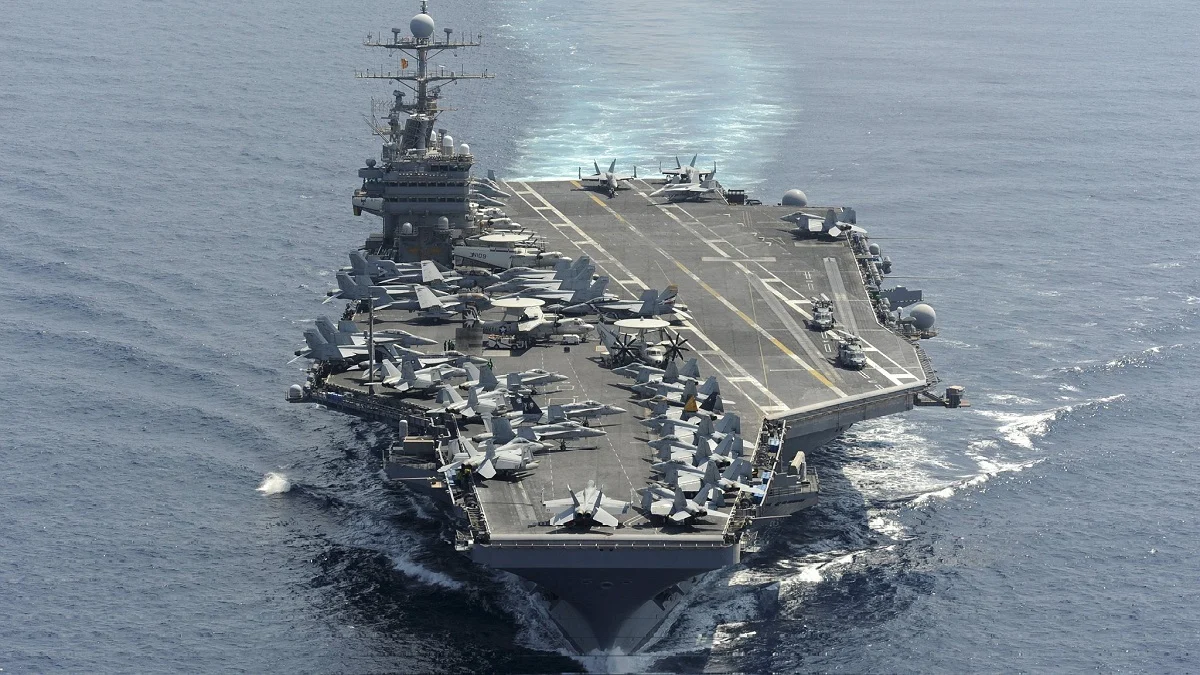
The United States Navy has officially confirmed that eight separate suicide attempts occurred among personnel serving within the carrier strike group led by the USS Abraham Lincoln during its extended deployment in the Middle East. This disclosure, made public on Wednesday, September 23, 2026, sheds light on the mounting psychological and operational pressures facing American sailors stationed in one of the world’s most volatile maritime regions. The confirmation came via a formal correspondence from Acting Secretary of the Navy Hung Cao, addressed to Senator Kirsten Gillibrand, a prominent Democratic voice on the Senate Armed Services Committee, who had previously raised pointed inquiries regarding the welfare and mental health standards aboard the vessel.
A Period of Prolonged Operational Strain
The USS Abraham Lincoln, a Nimitz-class nuclear-powered aircraft carrier, has been at the center of significant geopolitical tension since its deployment began in November 2025. Tasked with projecting American power and deterring potential escalation in the Middle East, the strike group has faced an unrelenting operational tempo. Military analysts have long noted that extended deployments—often exceeding the standard six-to-eight-month rotation—place disproportionate stress on the crew.
The deployment of the Abraham Lincoln was marked by frequent alerts, high-readiness requirements, and the psychological burden of operating within a theater where the risk of direct kinetic engagement with regional adversaries remains high. According to the internal report provided by Acting Secretary Cao, the eight suicide attempts took place throughout the duration of this extended mission across the entire strike group, which includes not only the carrier itself but also its accompanying destroyers, cruisers, and support vessels.
Chronology of Reported Incidents
The correspondence provided a sobering look at specific instances where the lives of service members hung in the balance. While the Navy clarified that there were no completed suicides recorded on board the ship during this specific deployment, the frequency of attempts highlights a systemic challenge.
One of the most concerning incidents detailed in the report occurred in early August 2026. A sailor assigned to the carrier’s air wing was observed falling or jumping from the deck of the USS Abraham Lincoln into the ocean. The quick reaction of the ship’s search-and-rescue (SAR) capabilities prevented a fatality. An emergency helicopter was dispatched immediately, retrieving the individual from the water. Following the rescue, the sailor was medevaced from the carrier to receive specialized psychiatric care and clinical stabilization.
A separate incident recorded in March 2026 involved a sailor who attempted to jump overboard but was intercepted by fellow crew members. The intervention of shipmates prevented the individual from entering the water, and the sailor was subsequently removed from the ship and returned to their home port to undergo long-term mental health evaluation and treatment. These two specific events serve as poignant illustrations of the intense, often invisible, struggles that have become a hallmark of this particular deployment.
Mental Health and the "Tempo of Operations"
The disclosure has reignited a fierce debate in Washington regarding the "tempo of operations" (OPTEMPO) and its direct correlation to the mental health crisis within the armed forces. For years, the Department of Defense has struggled to balance the demands of national security strategy with the human limitations of the men and women in uniform.
Critics argue that the extended presence of the Abraham Lincoln in the Middle East is a symptom of a broader strategic overreach. As the U.S. remains deeply involved in efforts to contain regional instabilities, the crew members are often the ones who absorb the cost of these policy decisions. Senator Gillibrand and other legislators have long pushed for increased transparency regarding "non-combat" casualties, which include suicide, accidents, and other mental health-related incidents.
The Navy’s admission that eight attempts occurred is seen by many advocacy groups as a call for a fundamental review of how the military monitors mental health during long-term maritime operations. Modern aircraft carriers are effectively floating cities, housing thousands of personnel in cramped, high-stress environments. When combined with months of isolation from family, disrupted sleep cycles, and the constant pressure of combat readiness, the cumulative effect on personnel can be profound.
Official Responses and Internal Policy Adjustments
In his letter to Senator Gillibrand, Acting Secretary Hung Cao emphasized that the Navy remains committed to the safety and well-being of its sailors. The correspondence highlighted that the Navy has increased the presence of mental health professionals—including psychologists, psychiatrists, and chaplains—across carrier strike groups to provide immediate support to those showing signs of distress.
However, the efficacy of these measures is often debated. Institutional hurdles, such as the perceived stigma associated with seeking mental health assistance in a military environment, remain a significant barrier. Sailors often fear that reporting suicidal ideation or severe depression will jeopardize their career advancement, security clearances, or professional standing within the tight-knit community of the fleet.
"The Navy is continuously evaluating our mental health support systems to ensure that we are not only reactive to crises but proactive in our prevention strategies," an unnamed Pentagon official noted in a follow-up briefing. "Every sailor is a critical asset, and the loss of any life to suicide is a failure that we must strive to prevent through better resources, better leadership, and a culture that prioritizes help-seeking behaviors."
Broader Implications for U.S. Defense Strategy
The revelation carries significant implications for the future of U.S. naval deployments. If the current model of rotating carrier strike groups is leading to unacceptable levels of mental health crises, the Department of Defense may be forced to shorten deployment cycles or increase the number of carrier strike groups in active rotation. Both options come with significant budgetary and logistical challenges.
Furthermore, the situation aboard the USS Abraham Lincoln is being viewed as a case study in the human cost of current geopolitical commitments. As the U.S. attempts to maintain a "pivot" toward the Indo-Pacific while simultaneously managing crises in the Middle East, the strain on the fleet is reaching a breaking point. Military planners are now facing questions about whether the current reliance on carrier-based deterrence is sustainable in the long term, or if it requires a shift toward more distributed, less labor-intensive maritime strategies.
Looking Toward Policy Reform
Moving forward, the Senate Armed Services Committee is expected to hold a series of closed-door hearings to examine the specific findings related to the Abraham Lincoln. These hearings will likely focus on:
- Staffing Levels: Whether the number of mental health professionals currently assigned to carrier strike groups is sufficient for the number of personnel on board.
- Deployment Length: Assessing whether the Department of Defense needs to impose stricter limits on the number of consecutive days a carrier strike group can remain at sea without a significant "recharge" period.
- Preventative Screening: Evaluating the screening protocols for sailors prior to deployment to ensure those who may be susceptible to psychological distress are properly supported or reassigned.
- Cultural Reform: Addressing the persistent stigma that prevents sailors from self-reporting mental health issues until they reach a crisis point.
As the USS Abraham Lincoln continues its duties, the eyes of both the public and the legislative branch remain fixed on the welfare of its crew. The eight documented attempts at self-harm are not merely statistics; they represent a serious challenge to the operational readiness of the U.S. Navy. The incident serves as a stark reminder that in the high-stakes world of modern naval warfare, the most important system on board any ship is not the radar, the reactor, or the weapons platform—it is the human being operating them.
Ultimately, the Navy’s admission provides a foundation for necessary change. By bringing these issues out of the shadows, the military and the government are forced to confront the reality that the endurance of the American fleet is finite. Whether these disclosures lead to a substantive shift in how the military manages its human capital remains the defining question for the remainder of the 2026 fiscal year and beyond. The priority for the coming months will be ensuring that the lessons learned from the Abraham Lincoln are not lost, but rather transformed into policies that prioritize the lives of those who serve at sea.