The Indonesian Communist Party (Partai Komunis Indonesia or PKI) remains one of the most polarizing and significant subjects in modern Indonesian history, representing a trajectory that spanned from colonial-era revolutionary aspirations to a catastrophic collapse that fundamentally reshaped the nation’s political architecture. Established in the early 20th century, the party evolved into a massive political force before being dismantled in 1966, an event that triggered a seismic shift in the country’s governance, societal structure, and human rights landscape. Understanding the trajectory of the PKI requires a nuanced examination of its growth, its role in the democratic experiment of the 1950s, the ideological fractures of the 1960s, and the enduring legacy of the 1965 crisis.
The Origins of Indonesian Communism: From ISDV to PKI
The roots of the communist movement in Indonesia can be traced back to 1914 with the formation of the Indische Sociaal-Democratische Vereeniging (ISDV) by Dutch socialist Henk Sneevliet. Operating within the context of the Dutch East Indies, the organization sought to bridge European Marxist theory with the anti-colonial struggles of the local population. By 1920, the ISDV reorganized into the Perserikatan Komunis di Hindia, which eventually adopted the name Partai Komunis Indonesia (PKI) in 1924.
The party’s early years were marked by militant resistance against colonial rule. In 1926, the PKI spearheaded an uprising against the Dutch authorities. The rebellion, though unsuccessful, provided the colonial administration with the pretext to crush the organization, leading to mass arrests, imprisonments, and the exile of key leaders to Boven Digoel. This period of suppression effectively pushed the communist movement into a period of dormancy and clandestine activity that lasted throughout the remainder of the colonial era and the subsequent Japanese occupation.
The Madiun Conflict: 1948 and the Quest for Legitimacy
Following Indonesia’s declaration of independence in 1945, the PKI re-emerged as a major political player. However, its path toward integration into the new republic was fraught with ideological friction. By 1948, the domestic political landscape was polarized between the nationalist government and the leftist opposition, coalesced under the Front Demokrasi Rakyat (FDR).
On September 18, 1948, the "Madiun Affair" erupted, during which local communist forces declared the formation of a Soviet-style republic in Madiun, East Java. The Republican government, led by President Sukarno and Vice President Mohammad Hatta, viewed this as a betrayal of the national revolution during its most vulnerable phase. The ensuing military campaign to suppress the rebellion was swift and decisive. Many PKI leaders were killed or imprisoned, and the party suffered a near-total organizational collapse. For the Indonesian government, Madiun solidified a deep-seated distrust of communist intentions, viewing them as a "state within a state."
The 1950s Resurgence: Parliamentary Success
Remarkably, the PKI managed to reinvent itself throughout the 1950s. Under the charismatic leadership of D.N. Aidit, Lukman, and Njoto, the party moved away from armed insurrection and embraced the parliamentary process. By emphasizing agrarian reform and labor rights, the PKI cultivated a massive base among peasants and workers.
The 1955 general elections served as the zenith of the party’s electoral power. According to the General Elections Commission (KPU), the PKI secured over 6.17 million votes, capturing 16.36 percent of the national vote for the DPR (House of Representatives). This result earned them 39 seats, placing them fourth behind the PNI, Masyumi, and Nahdlatul Ulama. Their success in the Constitutional Assembly elections, where they secured 80 seats with roughly 6.23 million votes, cemented their status as a legitimate and formidable mainstream political force.
The Era of Guided Democracy and the Nasakom Doctrine
The shift from liberal democracy to President Sukarno’s "Guided Democracy" in 1959 fundamentally altered the political chessboard. Sukarno, seeking to balance the competing interests of the nationalist, religious, and communist factions, introduced the Nasakom (Nasionalisme, Agama, Komunisme) doctrine. This framework gave the PKI a seat at the table of national governance, allowing them to exert significant influence over policy, mass organizations, and cultural institutions.
Throughout the early 1960s, the PKI’s growth became a source of intense anxiety for the military, particularly the Army leadership. Disputes over land reform—specifically the "sepihak" (unilateral) actions taken by the party to redistribute land—coupled with proposals for a "Fifth Force" (arming workers and peasants), created a powder keg of tension. The military viewed these moves not merely as political activism, but as a direct challenge to the state’s monopoly on force.
The 1965 Crisis and the Fall of the PKI
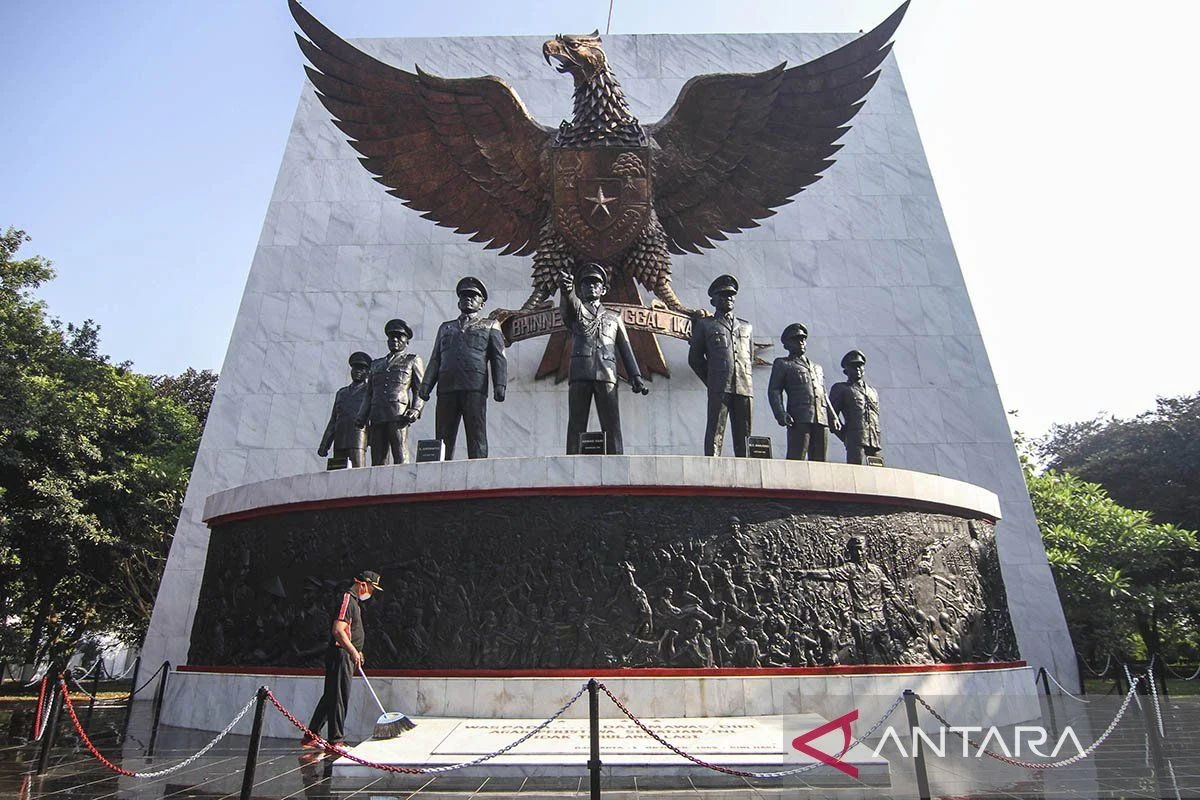
The events of the night of September 30, 1965, remain the most contested episode in Indonesian history. The kidnapping and murder of six Army generals and one lieutenant, whose bodies were discovered in the Lubang Buaya area of Jakarta, served as the catalyst for the regime’s collapse. While the official narrative promulgated by the subsequent New Order government identified the PKI as the sole architect of the "G30S" (30 September Movement), historical inquiry has expanded significantly.
Modern historiography, utilizing archives from Indonesia, the United States, and Japan, suggests a complex web of internal military factions, intelligence maneuverings, and local grievances. Regardless of the specific orchestration, the aftermath was unequivocal. The military, under the command of Major General Soeharto, initiated a systematic campaign to purge the country of communist influence.
The Human Cost and Systematic Purges
Between 1965 and 1966, Indonesia experienced one of the most violent periods of the 20th century. The National Commission on Human Rights (Komnas HAM) has documented extensive human rights abuses during this period, including mass killings, forced disappearances, torture, and arbitrary detention. These actions were not limited to high-ranking PKI officials; they extended to low-level members, suspected sympathizers, and their families. Estimates of the death toll vary widely, but most academic researchers place the figure between 500,000 and one million lives lost.
Legal Formalization and the New Order
The political dismantling of the PKI was codified on March 12, 1966, when Soeharto issued an executive order banning the party and its affiliated mass organizations. This was later reinforced by the MPRS Decree No. XXV/1966, which prohibited the spread of Marxist, Leninist, and Communist ideologies. This decree remains part of the legal framework of Indonesia today.
The banning of the PKI signaled the end of the Guided Democracy era and the birth of the New Order. With the communist threat neutralized, Soeharto solidified his position, eventually assuming the presidency in 1968. For the next three decades, the New Order utilized the memory of 1965 as a foundational pillar of its legitimacy, conducting annual commemorations of the "G30S/PKI" to reinforce its role as the nation’s savior from the "red menace."
Historical Legacy and Contemporary Research
More than six decades later, the events of 1965 remain a sensitive and evolving subject of study. The National Archives of the Republic of Indonesia (ANRI) continues to emphasize the importance of multi-source historical research, encouraging the use of international and domestic archives to provide a more holistic understanding of the period.
The legacy of the PKI is not merely one of political failure but a reflection of the profound ideological struggles that defined the mid-20th century. As the nation continues to navigate its history, the focus has shifted toward acknowledging the human rights violations of the 1965-1966 period while maintaining the legal prohibitions set forth in 1966. For historians, the PKI serves as a case study in the volatility of revolutionary politics and the enduring impact of political violence on national identity. The story of the party—from its rise in the colonial era to its total eradication in the mid-1960s—continues to inform contemporary discourse on democracy, state security, and the necessity of historical transparency.