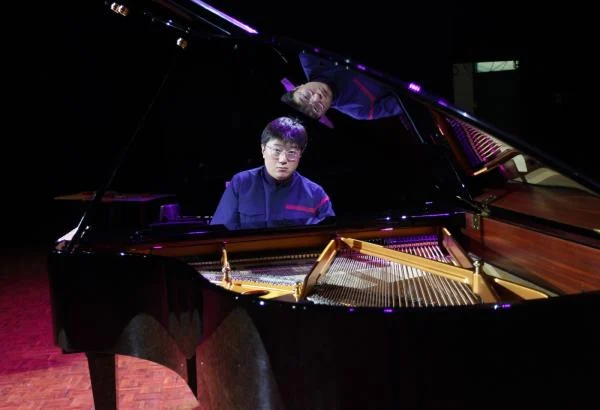
The landscape of classical music continues to bear the unmistakable imprint of international talent, with Indonesian virtuoso pianist Alfred Young Sugiri once again stepping onto one of the world’s most prestigious artistic stages. Hailing originally from Bandung, West Java, and boasting a rich educational background rooted in Germany, Sugiri has been officially invited as the principal soloist alongside the esteemed Hungarian State Symphony Orchestra of Szolnok. This milestone performance is scheduled to take place at the illustrious ORF Radiokulturhaus (Großer Sendesaal) in Vienna, Austria, on October 1, 2026.
The upcoming concert represents a monumental achievement not only for Sugiri personally but also for the representation of Southeast Asian classical musicians in Europe’s deeply traditional cultural hubs. Performing in Vienna, a city historically synonymous with musical titans such as Wolfgang Amadeus Mozart, Ludwig van Beethoven, and Franz Schubert, carries a unique psychological and professional weight. Sugiri’s return to the European concert circuit underscores a decade-long journey of artistic dedication, rigorous training, and international acclaim.
A Stellar Collaboration on an International Stage
The high-profile concert in Vienna will be conducted by the renowned American maestro Everett McCorvey, whose leadership is expected to bring a dynamic and expressive interpretation to the symphonic program. Adding further artistic depth to the evening is the participation of acclaimed violinist Maria Solozobova, whose technical brilliance and emotive playing style complement the rigorous demands of the orchestral repertoire. The convergence of such diverse international talents—an Indonesian soloist, an American conductor, a Swiss-Russian violinist, and a Hungarian state orchestra—highlights the universal language of classical music and its power to bridge cultural divides.
Organizers project that the Viennese performance at the ORF Radiokulturhaus will draw an audience of between 1,500 and 2,000 classical music enthusiasts, critics, and cultural diplomats. This particular venue is celebrated for its exceptional acoustic qualities and its history of broadcasting world-class musical events to international audiences, making it an ideal setting for Sugiri’s virtuosic showcase.
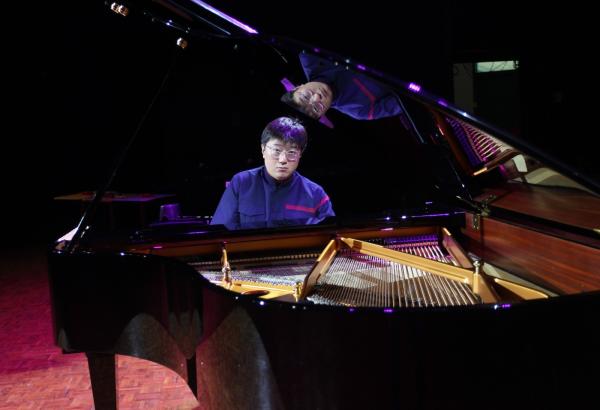
Reflecting on the magnitude of the invitation, Sugiri shared his profound emotions regarding his upcoming European tour, which encompasses both an exclusive private concert in Hungary and the grand public performance in Vienna.
"Being invited to perform in Europe once again brings a complex mix of emotions—excitement, nervous anticipation, and immense pride that I am still entrusted by God to perform before European audiences," Sugiri stated. "It is far from easy to earn trust within the European classical music scene, especially securing the opportunity to perform in an exclusive, closed-door concert in Hungary alongside such a grand stage in Vienna. This is a tremendous honor for me."
A Decade of European Excellence: The Chronology of an International Career
Sugiri’s resurgence on the European stage in 2026 is the culmination of a meticulously built career that spans more than a decade. His formal integration into the competitive European classical music ecosystem began in 2015, when he secured representation with a prominent German artist management firm. This strategic alliance opened doors to a series of high-profile engagements across Germany and neighboring European nations, establishing his reputation as a disciplined and deeply expressive interpreter of complex piano literature.
Throughout his career, Sugiri has graced numerous prestigious festivals and competitions, leaving a lasting impression on adjudicators and audiences alike. His notable appearances include standout performances at the Bach International Festival and the Brahms Festival, where his interpretations of German Romanticism and Baroque polyphony drew critical praise. Furthermore, his exceptional talent has been recognized by esteemed institutions such as the Yamaha Foundation of Europe, the prestigious C. Bechstein concert series, and the receipt of the competitive DAAD Preis (German Academic Exchange Service Prize), which honors international students who exhibit remarkable academic and artistic achievements.
These milestones trace a clear trajectory of a musician who transitioned from a promising regional talent in Indonesia to an internationally recognized soloist capable of holding his own alongside Europe’s finest orchestral ensembles.

The Anatomy of the 2026 European Tour
Sugiri’s 2026 European itinerary is structured around two distinct operational phases designed to cater to both elite institutional patrons and the broader public. The tour commences with an exclusive, invitation-only private concert in Hungary. Such intimate performances are historically significant within European musical traditions, often serving high-profile cultural patrons, diplomatic circles, and private patrons of the arts. These settings demand absolute technical precision and psychological resilience, as the proximity of the audience leaves no room for error.
Following the Hungarian engagement, Sugiri transitions to the public sphere in Vienna. The October 1 performance at the ORF Radiokulturhaus serves as the apex of the tour. Preparing for such a massive engagement involves months of exhaustive physical and mental conditioning. For a concert pianist, mastering a concerto requires not only memorizing thousands of notes but also developing a symbiotic relationship with the conductor and the orchestra—a challenge amplified when collaborating with a major ensemble like the Hungarian State Symphony Orchestra of Szolnok on short rehearsal timelines.
Cultural Implications and Soft Power
The prominence of Indonesian artists on European stages carries broader implications for the nation’s cultural diplomacy. While Indonesia is frequently celebrated globally for its rich traditional arts—such as gamelan, wayang, and regional dances—the emergence of world-class classical virtuosos like Alfred Young Sugiri expands the global perception of Indonesian artistic capabilities.
Cultural analysts note that individual artists functioning at this elite level act as informal cultural ambassadors. By successfully competing and earning critical acclaim in the heartlands of Western classical music, Sugiri challenges stereotypes and demonstrates the borderless nature of high-level artistic discipline. His ongoing success provides an inspirational blueprint for younger generations of Indonesian musicians aspiring to break into the intensely competitive Western classical music market.
Furthermore, collaborations involving institutions like the Hungarian State Symphony Orchestra and conductors of the caliber of Everett McCorvey foster enduring cross-cultural bridges. These musical exchanges often lead to future international partnerships, masterclasses, and educational initiatives that benefit conservatory students in both Europe and Southeast Asia.

Future Outlook and Legacy
As the date of the Vienna concert approaches, anticipation within the classical music community continues to build. For Alfred Young Sugiri, the performance on October 1, 2026, is not merely a return to a familiar continent, but a reaffirmation of his artistic identity and maturity. Having navigated the rigorous demands of European conservatories, artist management agencies, and high-stakes orchestral collaborations, Sugiri stands firmly among the notable contemporary pianists carrying the torch of classical tradition forward.
With the backing of the Hungarian State Symphony Orchestra of Szolnok, the leadership of Everett McCorvey, and the shared artistry of Maria Solozobova, the concert at the ORF Radiokulturhaus is poised to be a defining moment in the 2026 European classical music calendar. As Sugiri takes his place at the grand piano under the Viennese lights, he will once again demonstrate that dedication, heritage, and uncompromising artistic integrity can transcend geographical boundaries, resonating powerfully in the birthplace of classical mastery itself.