The rapid evolution of generative artificial intelligence has fundamentally transformed the digital creative landscape, extending far beyond static imagery and text generation into the complex realm of video production. Today, users across the globe can generate complete, dynamic video sequences simply by typing a descriptive text prompt into specialized AI tools. While the user experience mirrors the simplicity of requesting an AI-generated photograph—requiring only a descriptive sentence and a brief wait—the underlying computational engineering is vastly more intricate. Understanding how these models "stitch" pixels together to simulate motion requires a closer examination of machine learning, massive datasets, and the sophisticated mathematics of temporal consistency.
At its core, the technology driving AI video generators shares a conceptual lineage with its static image counterparts, yet it operates on a fundamentally higher level of complexity. Rather than employing human animators, directors, or camera crews, AI video models rely on neural networks trained on petabytes of video data. These training datasets do not consist merely of isolated visual snapshots, but rather sequences of frames coupled with temporal information—data that captures how environments, lighting, human anatomy, and inanimate objects evolve and interact over time.

The Genesis of Machine Perception in Motion
To comprehend how an algorithm generates fluid movement, one must examine the foundational training phase of video diffusion and transformer models. During the development stage, an AI model ingests millions of hours of video footage. Through this exhaustive ingestion process, the neural network learns more than just the static appearance of objects; it maps the physical rules governing motion.
For instance, when analyzing thousands of video clips depicting human locomotion, the model dissects the intricate biomechanics of walking. It observes the subtle shifts in posture, the coordinated swing of human arms, and the rhythmic impact of feet hitting the ground. By mapping these continuous transformations across successive frames, the AI internalizes the concept of movement itself. Consequently, when a user later commands the system to generate a person walking through a specific environment, the model does not randomly guess pixel placements. Instead, it applies learned kinematic patterns to construct a plausible simulation of human motion.

Because these models draw from vast probabilistic distributions learned during training, identical prompts can yield diverse outputs. The AI synthesizes unique variations in lighting, character design, and movement trajectories each time a query is executed, ensuring that the generated video is a unique synthesis rather than a direct playback of existing training data.
The Computational Workflow: From Prompt to Pixels
The production lifecycle of an AI-generated video initiates the moment a user submits a prompt—such as a request for a cat sprinting through a sunlit garden at twilight. This textual input undergoes rigorous natural language processing (NLP). The AI breaks down the prompt into discrete semantic components: identifying the primary subject (a cat), the action (sprinting), the setting (a garden), and the atmospheric conditions (sunset).

In advanced multimodal systems, users are no longer strictly limited to text. Many contemporary platforms accept reference images alongside written commands, allowing the AI to use a static photograph as an anchor point for style, composition, and subject matter before generating the subsequent frames.
Once the prompt is fully parsed, the system initiates the generation phase. Unlike text-to-image models that must only ensure coherence within a single canvas, text-to-video models face the daunting task of maintaining continuity across dozens or hundreds of sequential frames. This is frequently achieved through advanced diffusion processes, where the model starts with random noise and iteratively refines it, guided simultaneously by the text prompt and mathematical constraints designed to preserve object identity from one frame to the next. The objective is to produce a seamless illusion of motion rather than a disjointed slideshow of shifting, unrelated images.
Current Technical Limitations and Visual Anomalies
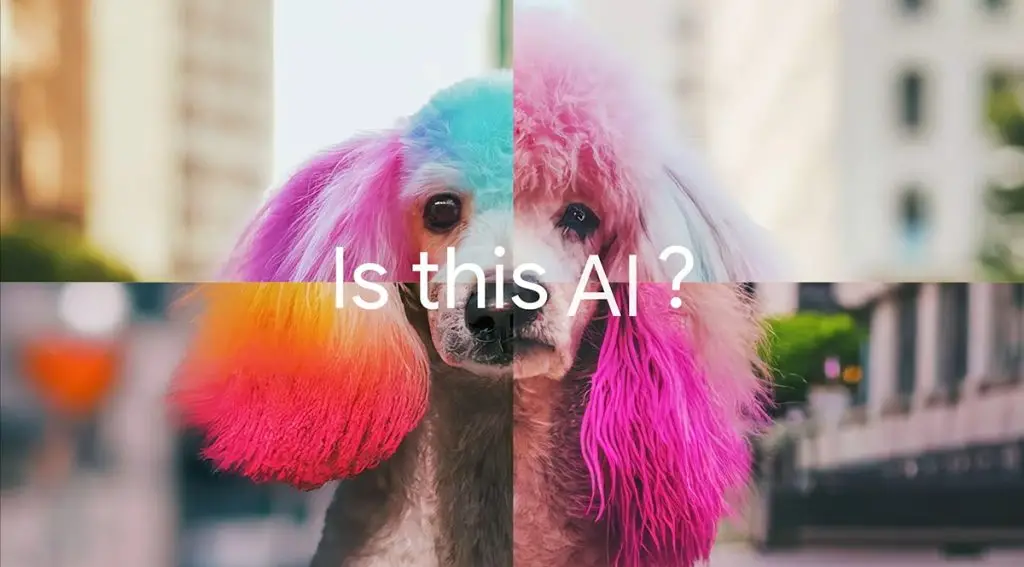
Despite remarkable advancements in generative video technology, users frequently encounter visual artifacts that reveal the current limitations of these systems. It is common to observe videos where a subject’s facial features morph subtly, clothing textures shift unexpectedly, or human anatomy—particularly hands and fingers—appears distorted as the sequence progresses.
These anomalies stem directly from the immense difficulty of maintaining spatial and temporal consistency. While a neural network can easily render a convincing human hand in a single frame, maintaining the precise geometry, lighting, and position of that hand across thirty or sixty consecutive frames requires staggering computational power. When the model loses track of these spatial coordinates between frames, visual glitches occur. These imperfections highlight the ongoing challenge developers face in bridging the gap between statistical probability and the physical laws of the real world.
Implications and the Future of Digital Content Creation

The maturation of AI video generation carries profound implications for the media, entertainment, and advertising industries. As these tools become more refined, the barrier to entry for video production continues to drop significantly. Independent creators, marketers, and filmmakers can prototype scenes, conceptualize storyboards, and even produce finished B-roll footage at a fraction of traditional costs and timeframes.
However, this technological leap also introduces complex regulatory, legal, and ethical questions. Issues surrounding copyright ownership of AI-generated works, the ethical sourcing of training data, and the potential proliferation of hyper-realistic synthetic media—commonly known as deepfakes—remain subjects of intense global debate. Regulatory bodies, particularly in regions like the European Union, are increasingly pressing for stringent transparency measures regarding how AI models are trained and deployed.
Ultimately, AI video generators represent a fascinating convergence of computer vision, deep learning, and creative expression. By translating textual concepts into dynamic visual narratives, these systems are redefining the boundaries of digital media production, even as engineers continue to refine the algorithms to achieve flawless visual continuity.