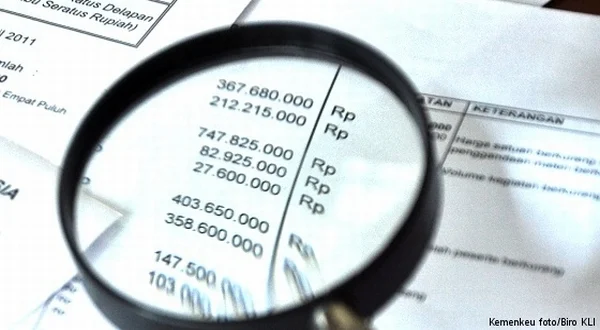
The Indonesian government officially presented the Draft Law on the Accountability for the Execution of the 2013 State Budget (RUU APBN) during a plenary session at the House of Representatives (DPR RI) in Jakarta. The presentation served as a critical constitutional mechanism for the executive branch to account for the utilization of public funds, transparency in fiscal management, and the overall health of Southeast Asia’s largest economy during a particularly volatile fiscal year.
During the parliamentary session held at the Nusantara II Building in Senayan, then-Minister of Finance Muhammad Chatib Basri delivered the government’s comprehensive report. The fiscal year 2013 was characterized by complex domestic and international headwinds that tested the resilience of Indonesia’s macroeconomic framework, forcing fiscal authorities to navigate both external market shocks and structural domestic challenges.
Understanding the Qualified Opinion: BPK Audit Results and LKPP Exclusions
A central point of discussion during the parliamentary proceedings was the audit outcome delivered by the Supreme Audit Agency (BPK) regarding the Central Government Financial Report (LKPP) for the 2013 fiscal year. BPK granted the LKPP a "Qualified Opinion"—known locally as Wajar Dengan Pengecualian (WDP).
Addressing the legislature, Finance Minister Chatib Basri elaborated on the specific accounting hurdles and systemic ledger complexities that prevented the government from securing an unqualified or "Wajar Tanpa Pengecualian" (WTP) opinion. According to the Ministry of Finance, the exceptions cited by auditors primarily stemmed from long-standing asset and liability management issues.
Specifically, the WDP status was triggered by unresolved accounting treatments surrounding:
- Over-lifting receivables in the oil and gas sector.
- Legacy receivables from petroleum sales.
- Credit assets originating from the former Indonesian Bank Restructuring Agency (BPPN), a legacy institution established following the 1997–1998 Asian financial crisis.
- Complex actuarial and administrative valuations tied to civil servant pension expenditure funds.
While these exceptions represented historical ledger items rather than deliberate fiscal mismanagement or embezzlement, they underscored the persistent difficulties the Indonesian government faced in consolidating legacy financial assets and aligning state accounting standards with modern international practices.
Macroeconomic Realities of 2013: External Shocks and Internal Pressures
The execution of the 2013 state budget did not occur in a vacuum. Minister Chatib Basri emphasized to lawmakers that macroeconomic targets set during the original budget planning phase were heavily disrupted by a combination of adverse external headwinds and pressing internal economic imbalances.
From an external perspective, the Indonesian economy had to contend with a broad-based slowdown in global economic growth, which directly dampened international commodity prices—a vital revenue driver for resource-dependent Indonesia. Furthermore, global financial markets experienced intense turbulence following signals from the United States Federal Reserve regarding the potential tapering of its quantitative easing program (famously referred to as "tapering off"). This monetary policy shift triggered capital flight from emerging markets, including Indonesia, putting severe downward pressure on local asset prices and currency valuations.
Internationally, developed economies were struggling to regain pre-crisis momentum, leading to suppressed demand for Indonesian exports. Domestically, these external pressures manifested as a widening current account deficit. The country’s balance of payments faced severe structural stress as import values outpaced export earnings, exacerbated by high domestic fuel consumption and global energy price volatility.
Inevitably, these macroeconomic forces exerted immense downward pressure on the Indonesian Rupiah. The local currency depreciated significantly against the US Dollar throughout 2013, complicating debt servicing obligations, inflating the cost of imported raw materials, and driving up domestic inflation expectations.
Government Policy Response and Fiscal Adjustments
Faced with mounting macroeconomic vulnerabilities, the administration implemented a series of stabilization measures designed to restore market confidence and protect the integrity of the state budget. The government’s policy intervention focused primarily on three critical pillars: reinforcing the current account balance, stabilizing the domestic currency, and implementing painful yet necessary fiscal reforms.
Among the most politically sensitive policies executed during this period was the adjustment of subsidized fuel prices. By cutting fuel subsidies, the government aimed to reduce the heavy fiscal burden weighing on the state budget and curb excessive energy consumption, which was a major contributor to the widening current account deficit.
Additionally, Bank Indonesia—operating in close coordination with fiscal authorities—tightened monetary policy by raising benchmark interest rates to cool domestic demand, anchor inflation expectations, and defend the Rupiah against speculative attacks. The Ministry of Finance also focused on reprioritizing state expenditures, delaying non-essential infrastructure projects, and enhancing tax collection efficiency to offset declining non-tax revenues from the mining and energy sectors.
"The internal and external dynamics experienced throughout the year undoubtedly impacted our underlying macroeconomic assumptions, which in turn influenced the execution and ultimate achievement of the 2013 state budget targets," Chatib Basri explained to the plenary session.
Chronology of the 2013 APBN Cycle
To fully comprehend the gravity of the RUU APBN 2013 submission, it is essential to examine the chronological progression of the fiscal year from planning to legislative accountability:
- Mid-2012 to Late 2012: The government and the DPR formulate the macroeconomic framework and revenue-spending targets for the 2013 State Budget, heavily relying on optimistic commodity price forecasts and stable global liquidity conditions.
- October 2012: The DPR officially passes the 2013 State Budget (UU APBN 2013) into law, setting total state expenditures and revenue targets against a backdrop of emerging global uncertainties.
- January – December 2013: The executive branch executes the budget while continuously battling severe external shocks, including Federal Reserve tapering announcements, capital outflows, a depreciating Rupiah, and widening current account deficits. Mid-year adjustments, including a revised state budget (APBN-P 2013), are introduced to accommodate soaring energy subsidy costs and macroeconomic shifts.
- Early 2014: Following the conclusion of the fiscal year, the BPK conducts a comprehensive financial audit of the Central Government Financial Report (LKPP) for 2013, culminating in the issuance of a Qualified Opinion (WDP) due to specific accounting exceptions involving legacy assets and receivables.
- June 24, 2014: The Ministry of Finance formally submits the RUU APBN 2013 to the DPR plenary session in Senayan, initiating the formal legislative debate regarding budget accountability, policy execution, and audit findings.
Parliamentary Reception and Broader Implications
The submission of the 2013 budget accountability bill triggered intense debate among members of the House of Representatives. While opposition factions and budget oversight committees scrutinized the government over the WDP audit status and the management of energy subsidies, ruling coalition members defended the administration’s pragmatic response to unprecedented global financial turbulence.
Economists and fiscal policy analysts reviewing the 2013 budget cycle point out that the year served as an enduring stress test for Indonesia’s post-reform financial architecture. The challenges faced in 2013 highlighted the critical need for improved asset management, particularly regarding legacy items such as BPPN-era credits and state-owned enterprise receivables that continually complicate BPK audits.
Furthermore, the events of 2013 reinforced the understanding that emerging economies remain highly vulnerable to shifts in monetary policy by major central banks, particularly the U.S. Federal Reserve. The episode accelerated domestic policy discussions surrounding structural economic reforms, manufacturing value-addition, and the reduction of reliance on raw commodity exports.
Ultimately, the parliamentary review of the RUU APBN 2013 was not merely an administrative formality, but a vital exercise in democratic accountability. It provided lawmakers, financial regulators, and the public with a transparent assessment of how public funds were managed during a period of acute economic stress, laying the groundwork for more resilient fiscal policymaking in subsequent years.