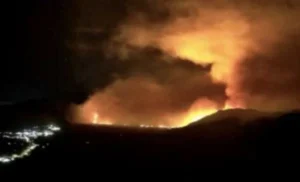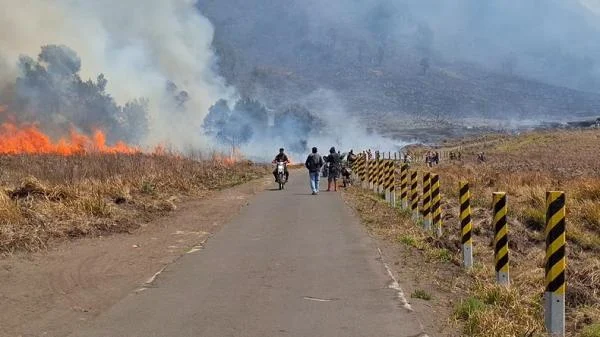
The iconic Mount Bromo landscape, a cornerstone of East Java’s tourism sector and a site of profound cultural significance, has been plunged into a state of emergency as raging wildfires continue to expand across the Tengger Semeru massif. On Saturday, September 12, 2026, authorities from the Balai Besar Taman Nasional Bromo Tengger Semeru (BB-TNBTS) issued an urgent directive for a total closure of all tourist access points to the national park. The decision follows a rapid escalation in fire activity that has encroached upon the Jemplang Gate, a vital artery connecting the Malang and Lumajang regions, effectively severing one of the primary transit corridors for visitors and local traffic alike.
The situation remains fluid and highly volatile, with fire suppression efforts hampered by adverse meteorological conditions and the rugged topography of the caldera. As of late Saturday, the fire front has breached the perimeter near the Jemplang Post, pushing into vegetation zones that are currently bone-dry due to a prolonged dry season. The ecological integrity of this protected area, renowned for its lunar-like landscapes and endemic flora, is currently under severe threat as the blaze shows no signs of immediate containment.
Chronology and Escalation of the Crisis
The current wildfire event did not occur in a vacuum; it follows a period of heightened fire risk across East Java. While initial reports of smoke and small-scale hotspots were noted earlier in the week, the situation reached a critical inflection point late Friday night. By Saturday morning, shifting winds and localized gusts began to fan small pockets of flame into a larger, more aggressive fire front.
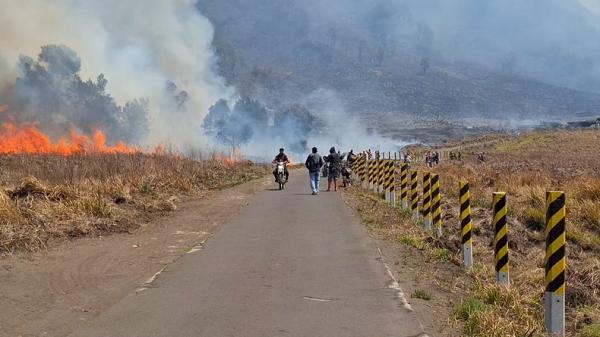
By midday Saturday, park rangers and emergency response teams observed that the fire had consumed significant swathes of grass and shrubs—the primary fuel source in the savanna areas surrounding the mountain. The reach of the fire extended toward the Jemplang access point, which serves as a major gateway for tourists traveling from the Malang direction. Recognizing that the fire had compromised both public safety and the logistical integrity of the park’s entrance, BB-TNBTS officials confirmed the total cessation of tourism activities.
Official Response and Administrative Measures
Rudijanta Tjahja Nugraha, the Head of the BB-TNBTS, emphasized that the decision to shutter the park was non-negotiable. "Kunjungan wisata Gunung Bromo dari seluruh pintu masuk ditutup total untuk kunjungan wisata, demi efektivitas upaya pemadaman dan menjamin keselamatan pengunjung," Nugraha stated in a press release. He noted that the primary concern is not merely the destruction of property, but the danger posed by smoke inhalation, unpredictable fire behavior, and the potential for falling debris in affected areas.
The administrative fallout of this closure is significant. Thousands of tourists, both domestic and international, who had pre-booked visits to witness the famed Bromo sunrise or traverse the Sea of Sand, have had their plans abruptly canceled. In response, the park management has activated a contingency protocol. Tourists holding valid entry permits are being offered two primary avenues for resolution: a full refund of the entrance fee or the option to reschedule their visit to a future date, pending the stabilization of the region.
Ecological and Economic Context
Mount Bromo is part of the Bromo Tengger Semeru National Park, a UNESCO-recognized biosphere reserve. The ecosystem here is characterized by high-altitude grasslands and unique volcanic vegetation that is highly sensitive to fire. When wildfires sweep through these areas, the damage extends beyond the visual landscape; the loss of vegetation leads to soil instability, which can increase the risk of landslides during the upcoming rainy season.
The economic implications for the local communities in the villages of Ngadas, Wonokitri, and Cemoro Lawang are profound. Tourism is the lifeblood of these highland settlements, supporting local jeep drivers, guesthouse owners, horsemen, and food vendors. A total closure, even for a short duration, triggers an immediate cessation of income for thousands of residents. Historically, previous fire-related closures have demonstrated that the recovery period for local tourism businesses often extends well beyond the date the park officially reopens, as traveler confidence takes time to stabilize.
Factors Contributing to the Blaze
Meteorological data from the region indicates that the 2026 dry season has been particularly severe. The combination of high daytime temperatures, low humidity, and consistent, high-velocity winds creates a "perfect storm" for wildfire propagation. The vegetation—primarily Imperata cylindrica (alang-alang) and other dried shrubs—acts as a high-density fuel load. Once ignited, these fires can travel with alarming speed across the open plains of the caldera.

While investigations into the origin of the fire are ongoing, authorities are reminding the public that human activity remains the most common catalyst for fires in the national park. Activities such as the improper disposal of cigarette butts, the use of open campfires, or the setting off of flares for photography—a recurring issue in social media-driven tourism—are strictly prohibited. The current incident serves as a grim reminder of how a single oversight can lead to a catastrophe of this magnitude.
Broader Implications and Future Mitigation
This event highlights the urgent need for a more robust fire management strategy within the national park. While the current focus is entirely on containment and safety, future discussions will inevitably center on the need for better surveillance technology, such as thermal imaging drones, and the establishment of firebreaks in high-risk zones.
Furthermore, the closure highlights the interdependence between the park and the surrounding regencies of Malang, Probolinggo, Pasuruan, and Lumajang. The Jemplang-Ngadas road, which is currently affected, is not just a tourist route but an essential link for local logistics and trade. The disruption of this route, even if localized, has a ripple effect on the local supply chain.
As of Sunday, emergency crews, including members of the military, local police, and disaster mitigation agencies (BPBD), are working in tandem with park rangers to establish perimeter lines. They are focusing their efforts on creating firebreaks to prevent the blaze from encroaching further into protected forests and residential areas.
Public Advisory and Safety Protocols
The BB-TNBTS has issued a strict advisory for the public to avoid all areas surrounding the national park until further notice. This includes not just the main caldera, but also the surrounding hiking trails and viewpoints that might be downwind of the smoke. Air quality in the immediate vicinity has been reported as hazardous, and residents in the neighboring villages have been urged to wear masks and keep windows closed to mitigate the effects of smoke exposure.

For those who had planned to visit, the official website and social media channels of the BB-TNBTS serve as the primary sources for updates. The park management has requested patience from the public as they navigate the logistical challenges of processing thousands of cancellations while simultaneously battling the fire.
Concluding Remarks
The closure of Mount Bromo is a somber development for one of Indonesia’s most prized natural assets. While the immediate priority is the safety of the public and the preservation of the landscape, the event underscores the broader challenges of managing high-traffic natural wonders in an era of climatic volatility. As the firefighting teams continue their arduous work on the slopes of the mountain, the hope remains that the fire can be brought under control before the damage to the caldera’s unique ecosystem becomes irreversible. The resilience of the Tengger people and the swift response of the authorities will be tested in the coming days, as the nation watches to see if one of its most iconic landmarks can emerge from this crisis intact. The recovery of the region will require not only the physical suppression of the flames but also a concerted effort to rebuild the tourism infrastructure and restore the fragile environmental balance that defines this historic region.