Bali has long held its position as Indonesia’s premier tourism crown jewel, renowned globally for its vibrant coastal culture, world-class surf breaks, and spiritual sanctuaries. While international and domestic travelers traditionally flock to the southern shores of Seminyak, Kuta, and Uluwatu for golden beaches and ocean sunsets, a significant shift in tourism trends has redirected attention toward the island’s interior highlands. Away from the tropical humidity of the coast, the mountainous region of Kintamani offers a completely contrasting atmospheric experience. Characterized by crisp highland air, dramatic volcanic topography, and sweeping caldera vistas, this district has rapidly evolved into Bali’s premier epicenter for specialty coffee culture and aesthetic scenic dining.
The transformation of Kintamani from a remote agricultural and sightseeing destination into a bustling hub of modern architectural cafes began in earnest around the late 2010s. Local entrepreneurs and visionary architects recognized the untapped potential of the dramatic cliff edges overlooking the Batur caldera. By merging sustainable, contemporary architectural designs with the raw majesty of the surrounding landscape, these venues have redefined how visitors interact with Bali’s natural geography. Today, spending an afternoon or catching a sunrise at a highland cafe has become an essential itinerary item for travelers seeking both relaxation and visual inspiration. Below is a comprehensive guide to five of the most exceptional coffee and social hubs in Kintamani, detailing their unique offerings, environmental contexts, and what visitors can expect when navigating Bali’s misty peaks.
The Geographic and Climatic Shift of Kintamani Tourism
Situated within the Bangli Regency, the Kintamani district sits perched along the rim of the ancient Batur caldera, an immense volcanic depression that houses both an active volcano and a crescent-shaped crater lake. Unlike the tropical warmth found at sea level, elevations in this region range significantly, often bringing ambient temperatures down to a brisk 17 to 18 degrees Celsius (62 to 64 degrees Fahrenheit). This microclimate provides a refreshing escape for travelers and locals alike, fostering an environment where warm beverages, hearty comfort foods, and cozy architectural settings are naturally prioritized.
The economic implications of this café boom are substantial. Historically, Kintamani’s economy relied heavily on citrus farming, vegetable agriculture, and the cultivation of the famous Kintamani Arabica coffee beans. The rapid development of specialty cafes has created a symbiotic relationship between tourism and local agriculture. Cafes increasingly source their coffee beans directly from neighboring plantations, boosting local farmers’ incomes and elevating the global profile of Balinese specialty coffee. Furthermore, the construction and operation of these establishments have generated widespread employment opportunities for regional residents, ranging from hospitality management to culinary arts.
1. Tegu Kopi: Pioneering Scenic Highland Hospitality
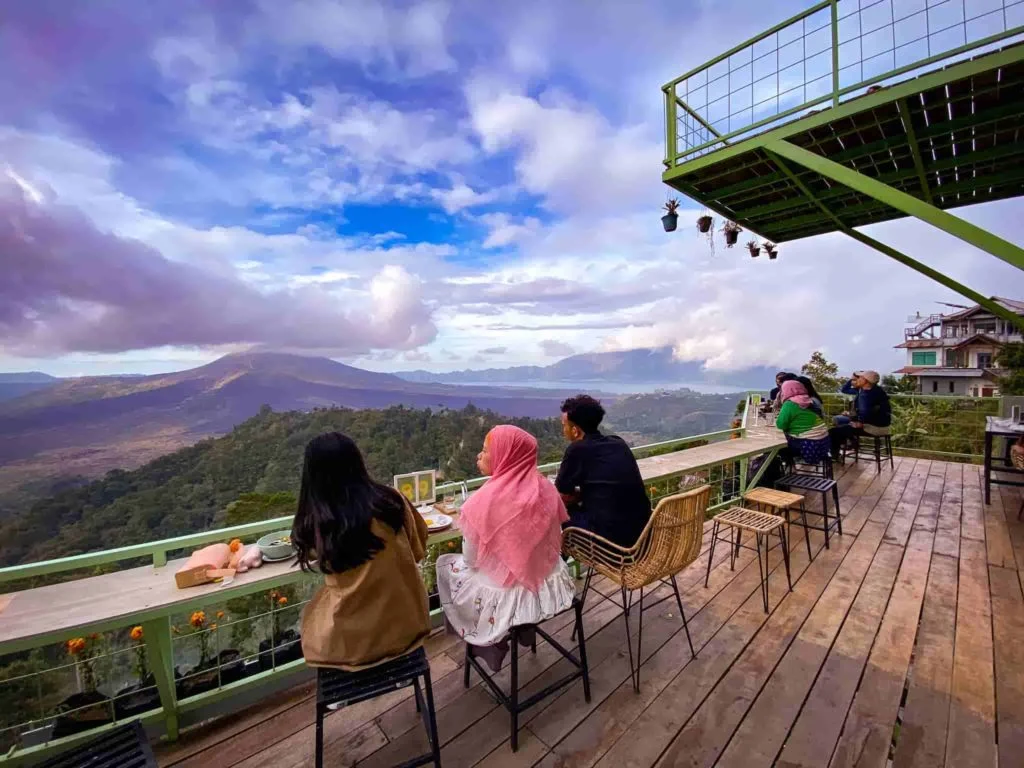
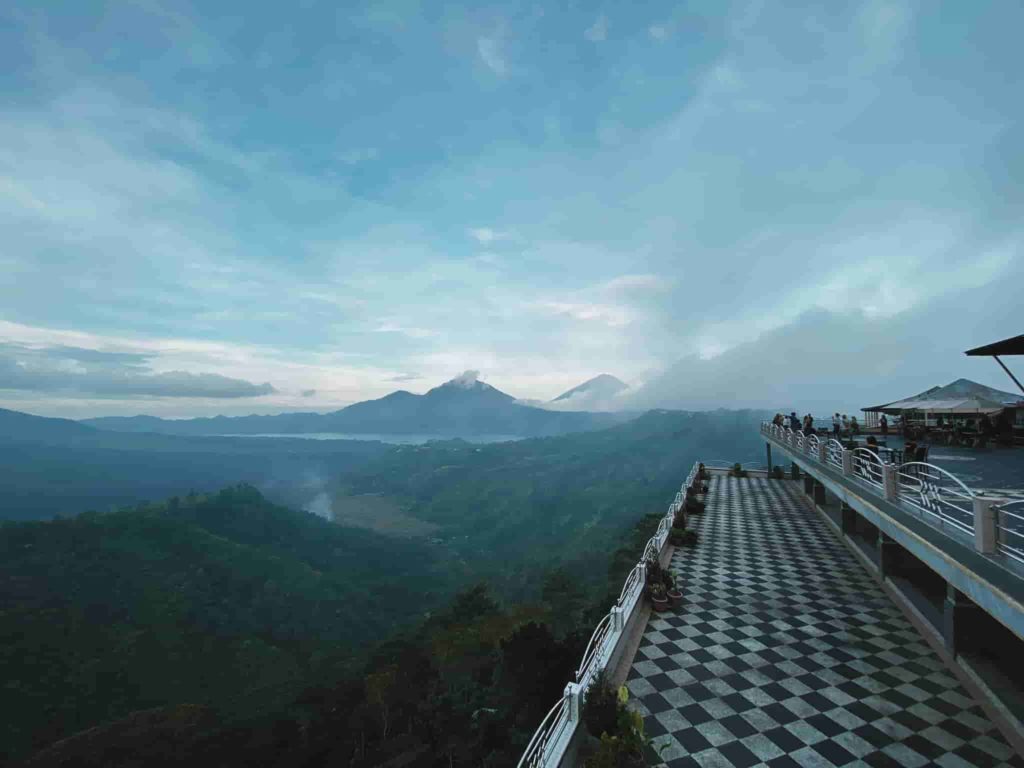
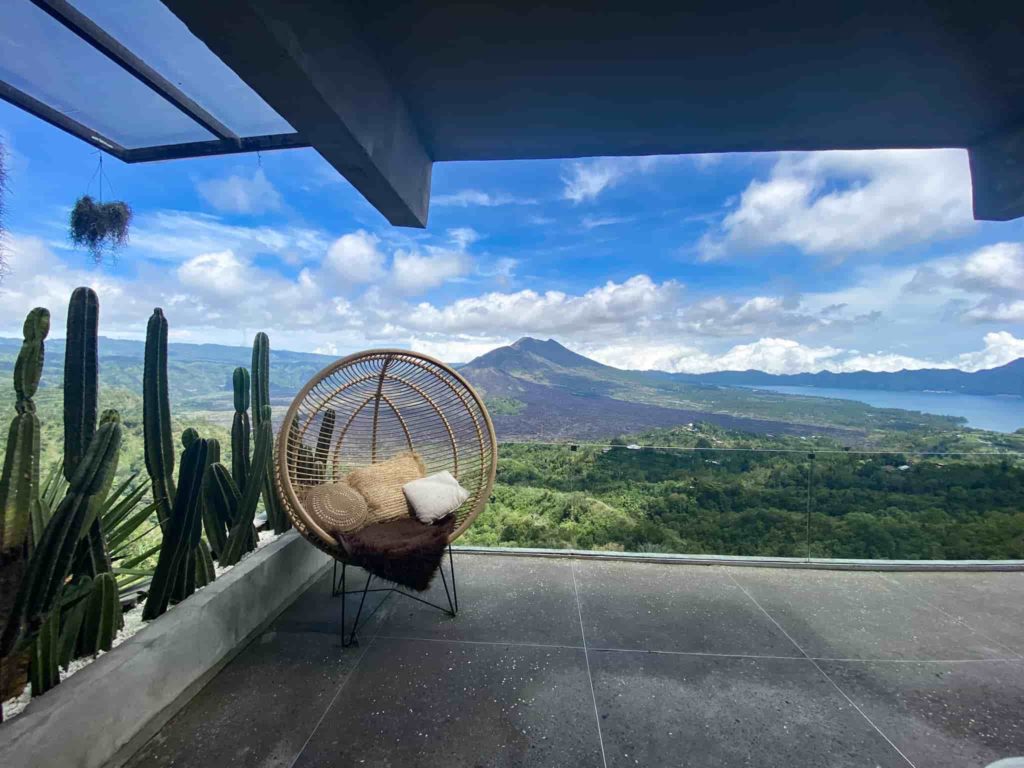
Operating since December 2019, Tegu Kopi stands as one of the pioneering establishments that helped establish the Jalan Raya Penelokan strip as a premier culinary destination. Strategically positioned directly on the edge of the upper ridge in the Bangli Regency, the cafe offers an unobstructed, panoramic vantage point encompassing four major geographical landmarks: Mount Batur, Mount Abang, Mount Agung, and the expansive expanse of Lake Batur.
The architectural layout of Tegu Kopi emphasizes large glass panels and open-air wooden decking, ensuring that natural light and sweeping vistas remain the primary focal points for patrons. Because of its high-altitude location, temperatures frequently hover in the high teens, prompting visitors to don jackets and sweaters—a rare wardrobe requirement for a tropical island like Bali. As daylight fades, the cafe serves as an optimal observation deck for witnessing dramatic sunsets that cast amber and violet hues across the volcanic peaks. Industry analysts note that venues like Tegu Kopi successfully diversified Bali’s tourism appeal, proving that the island’s economic viability extends far beyond coastal marine activities.
2. Eco Bike Coffee: Integrating Agriculture, Accommodation, and Altitude
Rising across three expansive levels, Eco Bike Coffee distinguishes itself as one of the largest architectural complexes along the Kintamani cliffside. The establishment’s multi-tiered structural design serves distinct functional purposes, reflecting a holistic approach to hospitality and land utilization.
The ground floor serves an agricultural and residential function, housing a working coffee plantation where visitors can observe the lifecycle of local beans, alongside integrated boutique accommodation facilities. Moving upward, the intermediate floors offer comfortable seating arrangements designed for lingering conversations and remote work, while the crown jewel of the establishment is its sprawling third-floor rooftop terrace.
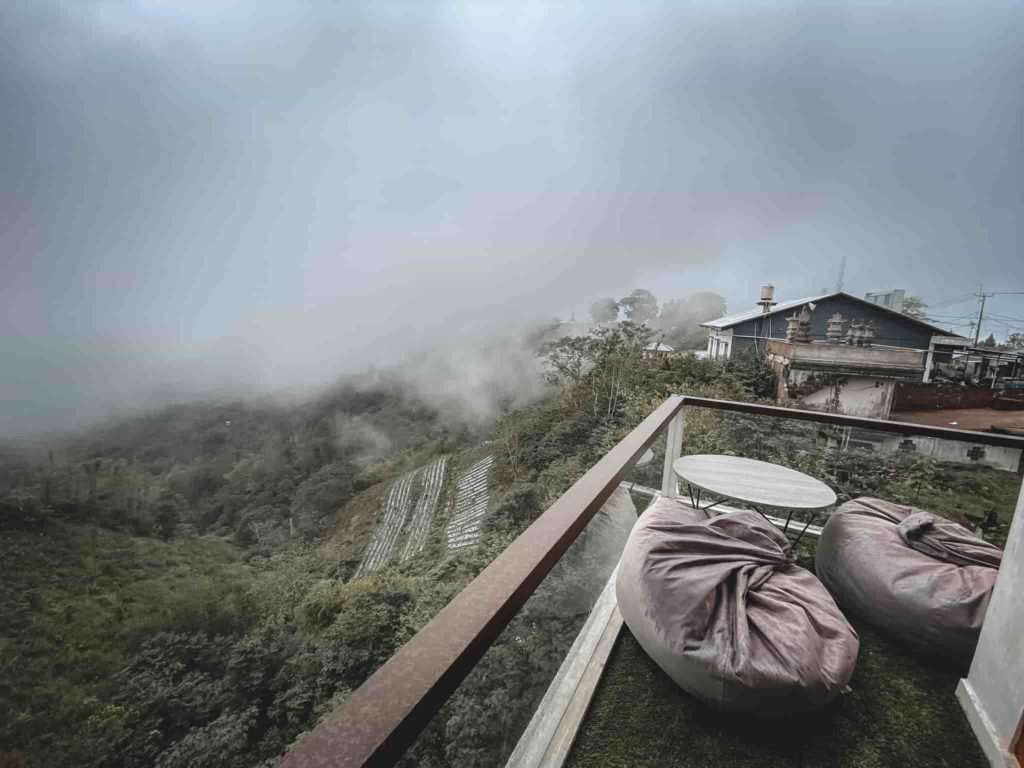
However, visiting Eco Bike Coffee requires strategic planning regarding weather conditions. Due to its extreme altitude and exposure, the venue is frequently enveloped in thick mountain mists. During these periods, the expansive view of Mount Batur can be entirely obscured, leaving a minimalist white void that transforms the rooftop into an ethereal, cloud-skimming experience. Local tourism boards routinely advise travelers to check local meteorological forecasts before ascending to the highlands to ensure optimal visibility.
3. Akasa Coffee: Premium Elevation and Cloud-Level Dining
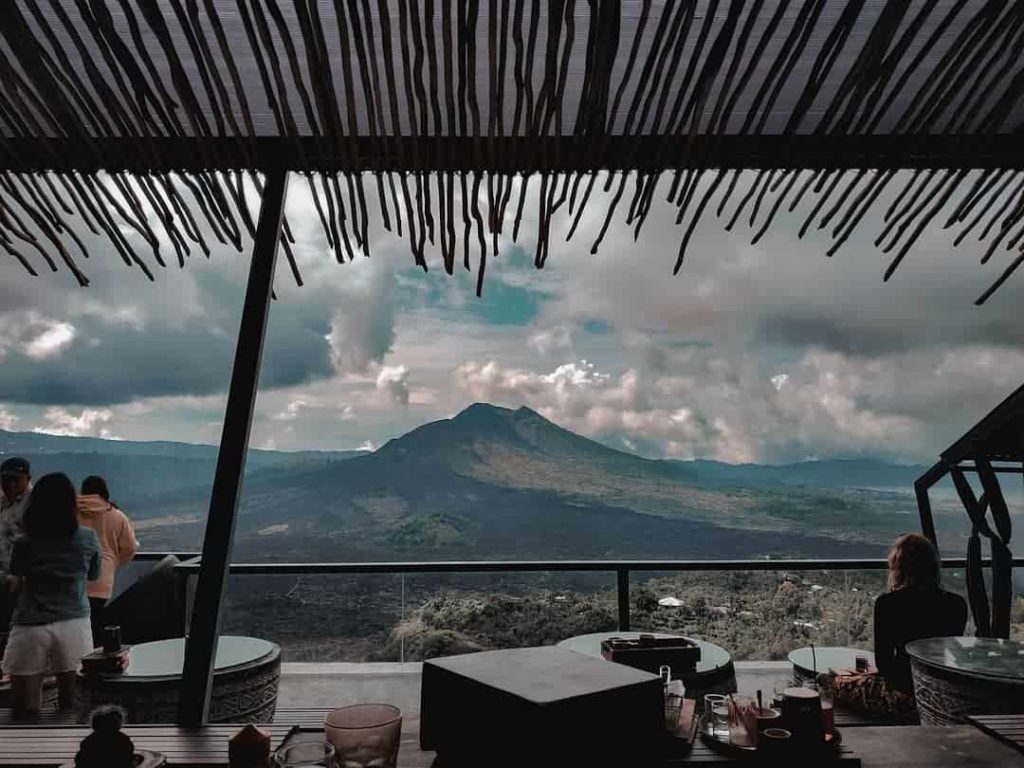
For travelers seeking a refined culinary experience paired with a genuinely crisp atmospheric chill, Akasa Coffee offers a sophisticated sanctuary. Located deep within the mountainous core of Kintamani, the venue places heavy emphasis on premium comfort, both in its menu curation and its interior ergonomics.
Akasa Coffee features an extensive menu that bridges international brunch culture with regional flavors, offering everything from artisanal pour-over coffees and specialized teas to hearty breakfast platters and select alcoholic beverages. Given the upscale positioning of the venue, average spending per person typically reaches around IDR 150,000, aligning with the rising standard of boutique hospitality in the region.
The management strongly advises visitors to prepare for cold drafts, particularly during the early morning and late evening hours. The terrace seating, cantilevered over the steep volcanic drop, provides a sensation of floating above the landscape. When skies are clear, the visual payoff is unrivaled, offering a sharp, high-definition panorama of Mount Batur’s black lava fields juxtaposed against the deep blue of the caldera lake below.
4. Batur 1926: Architectural Heritage and Sunrise Spectacles
Shifting focus toward dawn rather than dusk, Batur 1926 has carved out a distinct market niche for early-rising shutterbugs and nature enthusiasts. Opening its doors as early as 05:30 local time, the cafe caters to visitors arriving specifically to witness the sunrise over the eastern horizon.
The architectural language of Batur 1926 sets it apart from its more modern, minimalist contemporaries. The venue incorporates traditional Balinese architectural elements, most notably a meticulously carved stone split gateway (candi bentar) positioned dramatically at the edge of the rooftop terrace. This traditional motif provides a culturally rich frame for photography enthusiasts looking to enrich their digital portfolios while capturing the early morning sun breaking over the silhouette of the three sacred mountains: Batur, Abang, and Agung.
Sociological observations of highland tourism indicate a growing consumer preference for venues that blend modern lifestyle amenities with localized cultural heritage. Batur 1926 successfully capitalizes on this trend, offering a contemplative space where visitors can find mental clarity amid the serene, cool morning air of the Balinese highlands.
5. Kava Coffee: Lakeside Proximity and Semi-Outdoor Integration
Positioned lower along the slope toward the base of the caldera, near the legendary shoreline of Lake Batur, Kava Coffee offers a different perspective compared to the high-ridge cliffside cafes. Rather than looking down from an immense height, visitors at Kava Coffee experience a closer, more intimate relationship with the water body and the surrounding agricultural terraces.
The interior design of Kava Coffee relies heavily on semi-outdoor spatial configurations, featuring long communal wooden tables that encourage group gatherings and social interaction. Floor-to-ceiling glass doors line the perimeter of the main building, ensuring that even patrons seated indoors remain visually connected to the dynamic weather patterns and dramatic topography outside.
The venue’s strategic placement allows visitors to appreciate the scale of the stratovolcanoes from a unique angle, where the sheer vertical rise of the caldera walls becomes strikingly apparent. Local hospitality experts note that Kava Coffee’s layout makes it an ideal venue for larger social circles and romantic couples alike, balancing spacious comfort with secluded seating nooks.
Broader Implications and Future Outlook of Kintamani’s Cafe Culture
The rapid expansion of cafes in Kintamani represents a broader evolutionary phase in Bali’s tourism sector. As global travelers increasingly seek authentic, nature-centric experiences away from congested urban centers, highland destinations provide a vital ecological and economic balance.
However, rapid commercial development in fragile volcanic ecosystems brings distinct challenges that require careful governance. Environmental stakeholders and regional authorities have increasingly emphasized the importance of sustainable waste management, strict adherence to spatial planning regulations, and the protection of water tables surrounding Lake Batur. Ensuring that commercial growth does not compromise the natural integrity of the UNESCO Global Geopark in which Kintamani sits remains a critical priority for both local government officials and business owners.
Ultimately, whether seeking the architectural charm of Batur 1926, the high-altitude serenity of Akasa Coffee, or the panoramic expanse of Tegu Kopi, visitors to Bali’s highlands are met with a sophisticated blend of modern hospitality and ancient volcanic grandeur. As this mountain cafe culture continues to mature, it solidifies Kintamani’s status not merely as a roadside stopover, but as a world-class destination in its own right.