• Home
  • About Us
  • Contact Us
  • Cookies Policy
  • Disclaimer
  • DMCA
  • Privacy Policy
  • Terms and Conditions
Dara News Media
keep your memories alive
Travel & Tourism

The Long Road to Autonomy: Why Banten Separated from West Java and Became Indonesia’s 30th Province

by Azzam Bilal Chamdy September 13, 2026
written by Azzam Bilal Chamdy

On October 4, 2000, Banten officially inaugurated its status as an autonomous province, separating itself from the vast administrative jurisdiction of West Java. The birth of Indonesia’s 30th province was not a sudden political maneuver, but rather the culmination of a decades-long struggle rooted in historical grievances, economic disparities, and a fervent desire for self-determination. To understand why Banten broke away from West Java, one must examine the socio-economic conditions of the late 20th century, the historical legacy of the region, and the political momentum created by the fall of the New Order regime.

Historical Significance and Early Roots of the Separatist Movement

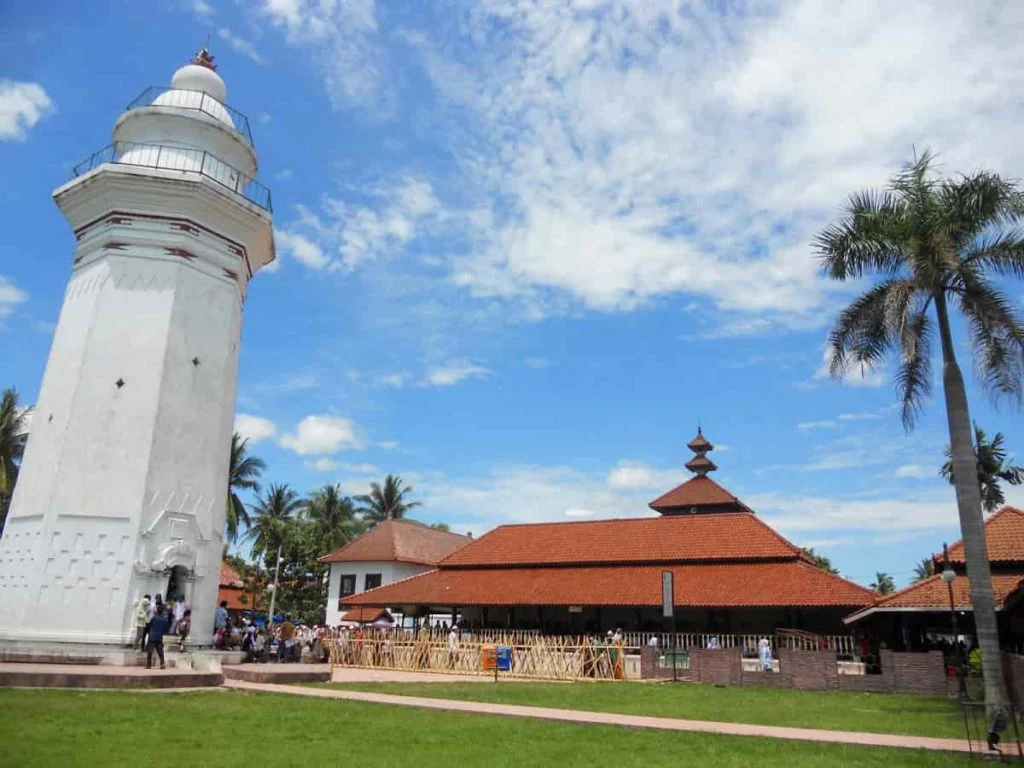
Long before the birth of the modern Republic of Indonesia, Banten was a thriving, globally connected hub of trade and diplomacy. Around 1330, and later during the height of the Banten Sultanate in the 16th and 17th centuries, the region stood as a powerful Islamic kingdom and a bustling port city that attracted merchants from Europe, Asia, and the Middle East. Its people played a pivotal role in resisting Dutch colonial rule. Notably, in 1949, the region demonstrated profound resilience by standing independently against Dutch economic blockades, even issuing its own currency.

However, following the integration into the modern Indonesian state, Banten’s status was reduced to a mere collection of regencies and municipalities under the provincial government of West Java. The collective memory of past sovereignty, combined with a distinct cultural identity, fueled a deep-seated sentiment among the local population that Banten deserved a higher level of administrative autonomy, akin to the special status granted to Yogyakarta and Aceh. Leaders of the movement frequently argued that Banten’s monumental sacrifices during the war of independence warranted distinct recognition.

Socio-Economic Disparities: Poverty, Education, and Underdevelopment

At the core of the push for separation were pressing socio-economic grievances. Throughout the decades following Indonesian independence, the regions comprising modern Banten—particularly Pandeglang, Lebak, Serang, and the surrounding rural zones—suffered from severe developmental neglect. While parts of West Java experienced rapid modernization and economic growth, Banten remained mired in systemic underdevelopment.

Statistical indicators from the pre-split era highlighted a stark developmental gap between Banten and the capital region of West Java. The region grappled with critically high poverty rates, inadequate infrastructure, and widespread educational backwardness. Access to higher education was severely limited, and healthcare facilities failed to meet the basic needs of the populace.

Kenapa Banten Pisah dari Jawa Barat? Ternyata Inilah Alasannya

Local communities felt alienated by the provincial government in Bandung, which they perceived as prioritizing central and eastern parts of West Java while treating Banten as a peripheral, economically stagnant zone. The primary impetus for the creation of the province was thus a desperate demand for distributive justice: local leaders and citizens believed that by managing their own fiscal budgets and administrative policies, they could accelerate regional welfare, build essential infrastructure, and uplift marginalized populations.

Chronology of the Struggle: From the 1950s to the Fall of Suharto

The political campaign for Banten’s autonomy dates back to the 1950s, manifesting in various grassroots movements and local petitions. However, these early efforts faced insurmountable political obstacles. During the authoritarian New Order regime led by President Suharto, any movement advocating for regional separatism or administrative restructuring was viewed with intense suspicion by the central government.

The situation deteriorated further in the aftermath of the 1965 political upheaval and the suppression of the Indonesian Communist Party (PKI). The New Order administration systematically delegitimized regional political agitation, associating Banten’s autonomy movement with subversion. Consequently, the push for a separate province went underground or remained subdued for decades.

The turning point arrived with the monumental political reforms of 1998, which culminated in the resignation of President Suharto and the ushering in of the Reformasi era. This period of democratic transition unlocked unprecedented opportunities for regional decentralization and the redrawing of administrative boundaries across Indonesia.

Embay Mulya Syarif, a prominent figure and one of the principal founding fathers of Banten province, seized this historic opening. Syarif and a coalition of Bantenese leaders had cultivated significant influence by participating in the Special Session of the People’s Consultative Assembly (MPR) in November 1998. Their contributions to the legislative proceedings earned them an invitation to the State Palace by then-President B.J. Habibie.

Leveraging this newfound political access, Syarif and his delegation lobbied President Habibie directly. They formally requested the establishment of the Province of Banten, the creation of new higher education institutions, the elevation of Cilegon to municipal status, and the eventual division of South Banten. President Habibie responded favorably to the initiative, advising the delegation to process the formal administrative requirements through the House of Representatives (DPR RI).

Despite resistance from some regional bureaucrats—most notably the Bupati of Pandeglang, who opposed the division—the momentum was unstoppable. The national media heavily covered the sweeping political mobilization under the headline "Banten Menggeliat" (Banten Stirs). To institutionalize the campaign, activists and community leaders established the Committee for the Formation of Banten Province (KPPB). Through a series of regional congresses, known as the Banten Congresses, civil society and political factions consolidated their support. This intense advocacy ultimately culminated in the passing of Law Number 23 of 2000, officially establishing Banten as the 30th province of the Republic of Indonesia on October 4, 2000.
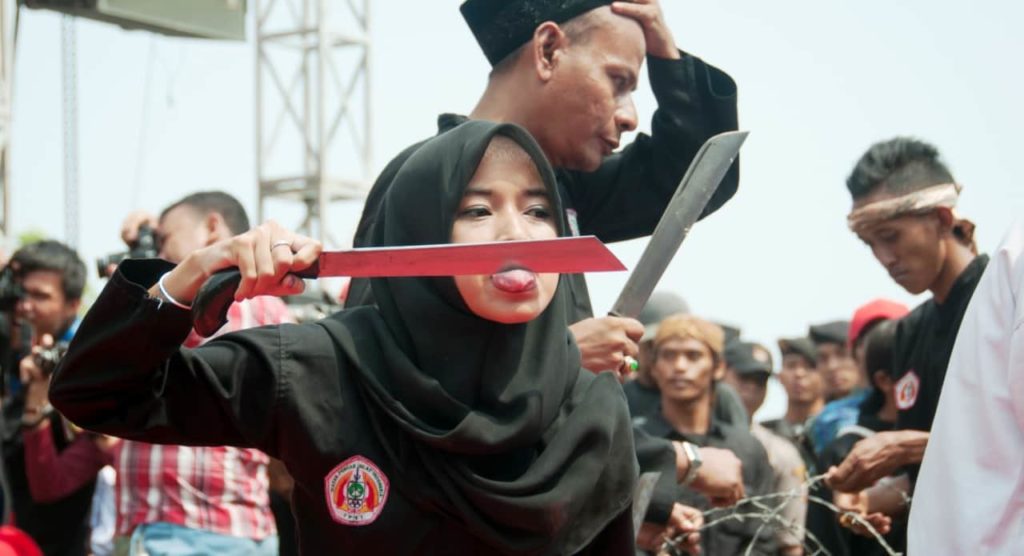
Kenapa Banten Pisah dari Jawa Barat? Ternyata Inilah Alasannya

Implications, Challenges, and Modern Realities

The formal establishment of Banten province was heralded as a historic triumph for regional autonomy, promising localized governance, accelerated infrastructural development, and improved public services. Proponents argued that a localized government would be inherently more responsive to the unique cultural and economic needs of its constituents compared to a distant provincial capital in Bandung.

However, the structural transition did not instantly translate into a utopian society. More than two decades after its formation, Banten continues to grapple with complex governance challenges. While urban centers like Tangerang and South Tangerang experienced explosive economic growth due to their proximity to Jakarta, peripheral areas such as Pandeglang and Lebak have continued to face persistent developmental hurdles.

Furthermore, the concentration of political power in the newly formed autonomous region occasionally gave rise to systemic governance issues. A stark reminder of the complexities of regional decentralization occurred in 2014, when the province was rocked by high-profile corruption scandals involving regional leadership, notably implicating former Governor Ratu Atut Chosiyah. These events underscored the reality that administrative separation, while a vital tool for empowerment, does not automatically eliminate systemic political corruption or guarantee equitable wealth distribution.

Conclusion

The separation of Banten from West Java remains a landmark case study in Indonesia’s post-Soeharto decentralization movement. Driven by centuries of distinct cultural identity, historical pride, and urgent demands to eradicate poverty, educational backwardness, and infrastructural neglect, the people of Banten successfully leveraged the democratic opening of 1998 to reclaim administrative self-rule. While the journey from a marginalized regency to an autonomous province has been marked by both significant developmental progress and severe institutional challenges, October 4, 2000, remains etched in history as the day Banten took its destiny into its own hands.
September 13, 2026 0 comment
0 FacebookTwitterPinterestEmail
National News

Ministry of Environment Seals 50 Corporate Concessions Across Indonesia Under Strict New Presidential Directives Against Forest and Land Fires

by Iffa Jayyana September 13, 2026
written by Iffa Jayyana

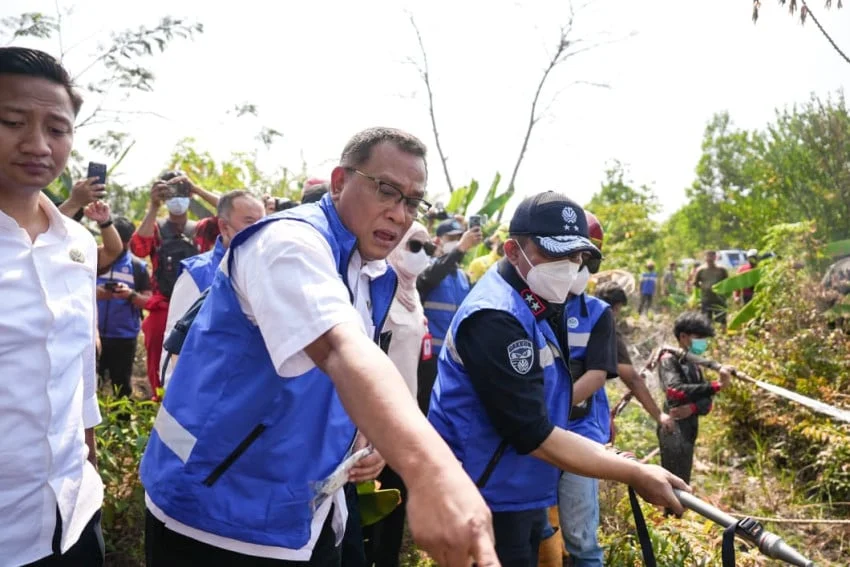
JAKARTA — In a sweeping and uncompromising enforcement operation, the Ministry of Environment (KLH) has officially sealed 50 business entities across eight provinces following extensive forest and land fires (karhutla) that have devastated a combined concession area of 27,333.79 hectares. This massive crackdown represents a foundational step in operationalizing Presidential Instruction (Inpres) Number 11 of 2026, which mandates the absolute strengthening of the prohibition against land clearing through burning and elevates the national response to ecological emergencies.

Minister of Environment Moh. Jumhur Hidayat stated that the directives outlined by President Prabowo Subianto in Inpres No. 11/2026 leave no room for ambiguity or administrative leniency. The policy establishes a zero-tolerance framework for any individual or corporate entity utilizing fire as a cost-effective agricultural or plantation land-clearing method. Operating against the backdrop of compounding climate vulnerabilities, unpredictable extreme weather events, and prolonged dry spells, the government’s intervention aims to safeguard national biodiversity, prevent carbon-heavy environmental degradation, and protect millions of citizens from the debilitating and hazardous health impacts of toxic regional smoke haze.

The aggressive legal posture signals a distinct departure from historical regulatory enforcement, introducing severe accountability measures for corporate actors whose land management failures or active complicity contribute to widespread environmental destruction. As regional authorities grapple with the recurring threat of dry-season combustibility, the ministry’s recent actions underscore a rigid federal commitment to prioritizing ecological sustainability over short-term commercial productivity.

Geographical Concentration and Regional Breakdown of Corporate Seals

A granular analysis of the enforcement actions reveals a heavy concentration of corporate violations in the carbon-dense ecosystems of Kalimantan. As the primary geographical theater of this enforcement wave, the island accounts for the lion’s share of the sealed corporate landmass, registering 36 distinct business entities with a staggering total burned concession area of 23,634.72 hectares.

Western Borneo, or West Kalimantan, emerged as the most severely affected and heavily penalized zone. Environmental investigators and law enforcement personnel deployed across the province have sealed 18 corporate entities encompassing a massive 12,920.88 hectares of charred concession land. The sheer volume of destruction in this single province highlights persistent systemic failures in corporate fire prevention infrastructure and localized monitoring protocols.

Adjacent provinces in the region also faced intensive scrutiny. In South Kalimantan, authorities placed official seals on 6 corporate entities spanning 6,476.94 hectares of damaged land. Meanwhile, Central Kalimantan recorded 6 penalized businesses covering 2,684.02 hectares. East Kalimantan saw 4 corporate entities restricted across a combined footprint of 1,244.81 hectares, and North Kalimantan rounded out the island’s totals with 2 businesses penalized across 308.07 hectares.

Beyond the borders of Kalimantan, the remaining 14 sealed business entities are distributed across key agricultural and forestry provinces in Sumatra and parts of eastern Indonesia, though the regional epicenter remains firmly anchored in the Bornean tropical landscape. The ministry has clarified that these 50 entities are currently undergoing intensive forensic auditing, administrative penalization, and criminal dossier preparation, with further expansions of the suspect list anticipated as field investigations progress.

Legislative and Executive Context: The Genesis of Inpres Number 11 of 2026

The promulgation of Presidential Instruction Number 11 of 2026 marks a watershed moment in Indonesia’s environmental governance architecture. For decades, the Southeast Asian archipelago has battled cyclical episodes of transboundary haze pollution, a recurring crisis that peaks during prolonged dry phases exacerbated by climate phenomena such as El Niño. Historically, enforcement efforts often bogged down in bureaucratic friction, jurisdictional overlapping between local and central governments, and protracted civil litigations that rarely deterred corporate recidivism.

Recognizing the escalating urgency of the global climate crisis and the direct domestic health toll of seasonal fires—which regularly disrupt educational systems, paralyze regional transportation hubs, and burden healthcare infrastructure—the administration of President Prabowo Subianto fast-tracked the formulation of Inpres 11/2026. The executive order was crafted to bypass traditional administrative bottlenecks, granting unified, cross-ministerial authority to the Ministry of Environment, the Indonesian National Police (Polri), the Indonesian National Armed Forces (TNI), and regional disaster management agencies (BPBD) to act decisively upon the first detection of unauthorized land burning.

The instruction mandates immediate preventative patrols, mandatory establishment of corporate fire-suppression infrastructure, realtime satellite monitoring integration through the Ministry’s Geographic Information System, and swift revocation of operational permits for corporations found to be systematically utilizing slash-and-burn methodologies. By elevating land-clearing violations from mere regulatory infractions to critical threats against national security and public health, the legal framework provides enforcement agencies with the unambiguous mandate required to execute large-scale seals and asset freezes without prior political clearance.

Chronology of the Crisis and Operational Deployment

The current crackdown is the culmination of months of coordinated intelligence gathering, satellite anomaly tracking, and on-the-ground verification by environmental task forces. The chronology of the unfolding enforcement operation began to accelerate early in the year as meteorological forecasts predicted an intensifying dry season across the equatorial belt.

Phase One: Early Warning and Satellite Monitoring
In the weeks preceding the peak dry period, the Ministry of Environment activated its high-resolution satellite surveillance network, tracking thermal hotspots and detecting sudden spikes in carbon emissions indicative of large-scale land clearing. Automated alert systems flagged abnormal fire signatures overlapping with known industrial concession boundaries, particularly within pulpwood, oil palm, and timber estates.

Phase Two: Inter-Agency Task Force Deployment
Armed with preemptive intelligence derived from Inpres 11/2026, joint task forces comprising environmental investigators, civil servant investigators (PPNS), and national police units were dispatched directly to high-risk provinces. Unlike previous years, where responses were largely reactive and focused solely on extinguishing active blazes after extensive damage had occurred, this year’s operational doctrine prioritized forensic attribution—tracing the fires directly to the corporate beneficiaries of the cleared land.

Phase Three: The Sealing Operation
Between late Q1 and the current enforcement window, specialized teams executed administrative sanctions by erecting official "Under Supervision" and "Sealed" physical barriers across access points of the 50 identified business entities. This drastic measure legally freezes all commercial operations, heavy machinery utilization, and land preparation activities within the affected perimeters pending the culmination of full judicial and administrative proceedings.

Stakeholder Reactions and Inter-Institutional Synergy

The decisive stance adopted by the Ministry of Environment has drawn broad support from civil society organizations, environmental watchdogs, and public health advocates who have long decried the devastating ecological and human costs of unchecked corporate fires. Conservation groups have commended Minister Jumhur Hidayat for transforming high-level policy mandates into tangible field actions, noting that sealing commercial land assets directly strikes at the economic incentives driving illegal land clearance.

Conversely, representatives from agricultural and plantation trade associations have expressed cautious concern over the sweeping nature of the enforcement actions. Industry stakeholders have argued that while the eradication of illegal burning is a shared objective, unexpected climatic anomalies, accidental fires originating outside concession boundaries, and complex property rights disputes can sometimes complicate corporate liability. In response to these concerns, the Ministry of Environment has maintained that due process will be rigorously observed, emphasizing that compliant enterprises maintaining robust fire-prevention systems have nothing to fear, whereas habitual offenders will face the full force of administrative revocation and criminal prosecution.

Furthermore, regional governors and local government heads across Kalimantan and Sumatra have pledged their administrative cooperation, aligning local disaster mitigation units with federal directives to ensure that municipal oversight is not compromised by local economic pressures. This unified front represents a rare and vital synergy between central environmental policy enforcement and regional governance execution.

Fact-Based Analysis of Broader Implications and Long-Term Outlook

The rigorous implementation of Inpres 11/2026 carries profound implications for Indonesia’s domestic economy, international climate commitments, and public health landscape.

From an environmental standpoint, the preservation of 27,333.79 hectares of land from fire prevents the immediate release of millions of tons of sequestered carbon dioxide into the atmosphere, directly supporting Indonesia’s Enhanced Nationally Determined Contribution (NDC) targets and its broader Forestry and Other Land Use (FOLU) Net Sink 2030 aspirations. Peatland conservation, in particular, remains paramount, as sub-surface peat fires are notoriously difficult to extinguish and release exponential amounts of greenhouse gases compared to surface vegetation fires.

Economically, the strict penalization of 50 business entities sends a powerful market signal. International buyers and global supply chain auditors are increasingly demanding stringent ESG (Environmental, Social, and Governance) compliance. By actively purging rogue, non-compliant actors from the industrial landscape, Indonesia enhances the overall credibility and market competitiveness of its sustainable commodity exports, such as certified sustainable palm oil and timber products, mitigating the risk of international trade boycotts or eco-tariffs.

Public health outcomes are expected to improve significantly as a result of these preemptive measures. Preventing large-scale regional haze curtails the incidence of acute respiratory infections (ISPA), cardiovascular distress, and childhood developmental complications historically associated with prolonged smoke exposure. By safeguarding regional airsheds, the government also avoids the massive economic losses tied to school closures, flight cancellations, and lost productivity during peak haze episodes.

As the Ministry of Environment deepens its investigations and prepares formal legal files for the 50 sealed corporate entities, the overarching message remains unequivocal. The era of permissive oversight and tolerated environmental degradation has formally ended. Through the unwavering application of Inpres 11/2026, Indonesia is charting a rigorous, law-bound path toward climate resilience, ecological preservation, and sustainable national development.

September 13, 2026 0 comment
0 FacebookTwitterPinterestEmail
National News

Mahaguru Intelijen hingga Bertempur di Berbagai Palagan, Jenderal Kopassus Ini Ternyata Romantis

by Ammar Sabilarrohman September 13, 2026
written by Ammar Sabilarrohman

Jenderal TNI (Purn) Abdullah Mahmud Hendropriyono, seorang tokoh yang dikenal luas sebagai "The Grandmaster of Indonesian Intelligence" dan mantan komandan elite Kopassus, memegang rekam jejak militer yang sangat keras. Sepanjang kariernya, ia terjun langsung dalam berbagai palagan pertempuran, dari operasi di Kalimantan hingga memimpin komando intelijen strategis. Namun, di balik sosok yang tegas dan sering kali dikaitkan dengan dunia operasi klandestin yang sunyi, Hendropriyono memiliki sisi humanis yang jarang tersorot: sebuah kisah cinta yang gigih, yang membutuhkan waktu satu tahun perjuangan untuk menaklukkan hati sang istri, Tati Mulya.

Kisah cinta ini bukan sekadar romansa kasual di masa muda, melainkan sebuah narasi tentang keteguhan hati seorang prajurit yang terbiasa menghadapi rintangan medan perang, namun harus berhadapan dengan tembok keraguan dari wanita yang ia cintai.

Pertemuan di Dojo: Sebuah Awal yang Tidak Biasa

Jauh sebelum Hendropriyono menjadi sosok kunci dalam intelijen nasional, ia adalah seorang perwira muda yang berdinas di lingkungan Komando Pasukan Sandi Yudha (Kopassandha), yang kini dikenal sebagai Kopassus. Pada masa itu, kedisiplinan dan latihan fisik adalah napas sehari-hari bagi para prajurit elite.

Titik awal pertemuan keduanya terjadi di sebuah dojo karate yang dipimpin oleh Sensei Latif. Pada masa itu, Hendropriyono tinggal di asrama yang sama dengan sang instruktur bela diri tersebut. Suatu ketika, secara tidak sengaja, Hendropriyono mendengar percakapan telepon antara Sensei Latif dengan seorang wanita bernama Tati Mulya mengenai jadwal latihan. Rasa penasaran muncul seketika di benak sang prajurit. Ia mulai membayangkan sosok wanita di balik suara tersebut.

Pertemuan fisik akhirnya terjadi di dojo. Begitu melihat Tati, Hendropriyono langsung jatuh hati. Bagi sang jenderal, itu adalah momen "cinta pada pandangan pertama". Namun, realitasnya tidak semudah skenario film. Tati Mulya, yang saat itu tidak memiliki impresi mendalam, mengaku tidak merasakan percikan asmara apa pun saat pertama kali bertemu dengan pria yang nantinya akan menjadi pemimpin besar di jajaran intelijen Indonesia tersebut.

Chronology of Courtship: Strategi di Balik Layar

Perjuangan Hendropriyono untuk mendapatkan hati Tati Mulya berlangsung selama setahun penuh. Dalam dunia militer, keberhasilan sebuah misi bergantung pada perencanaan yang matang, kesabaran, dan kemampuan membaca situasi. Prinsip yang sama diterapkan Hendropriyono dalam kehidupan pribadinya.

Tati, yang saat itu masih memegang sabuk kuning dalam tingkatan karate, harus menghadapi ujian kenaikan tingkat. Ujian tersebut bukan sekadar ujian teknik, melainkan sebuah tantangan fisik yang berat: long march atau lintas alam sejauh 57 kilometer, yang membentang dari wilayah Ambarawa hingga Magelang, Jawa Tengah.

Hendropriyono, yang sudah memegang sabuk cokelat, bertugas sebagai pengawas atau pendamping dalam ujian berat tersebut. Melihat kesempatan ini, ia tidak menyia-nyiakan momen untuk menunjukkan perhatiannya. Namun, ia melakukannya dengan cara yang unik dan cenderung pemalu. Ia tidak mendekati Tati secara langsung untuk memberikan bantuan.

Gebrakan pertamanya adalah tindakan yang sederhana namun bermakna bagi Tati: meminjamkan topi untuk melindungi wajah dari terik matahari yang menyengat selama perjalanan panjang tersebut. Yang menarik, ia tidak berani memberikan topi itu secara langsung kepada Tati, melainkan menitipkannya melalui Sensei Latif. Tindakan yang tampak kecil ini justru memberikan dampak emosional yang besar. Bagi Tati, perhatian tersebut adalah tanda ketulusan yang akhirnya menumbuhkan benih-benih cinta. Dalam buku Love Story: Kisah Cinta Tokoh-Tokoh Terkemuka (2009), Tati mengenang momen tersebut dengan manis, mengakui bahwa perhatian sekecil dititipkan topi saja sudah membuatnya merasa sangat berharga.

Profil dan Karier: Dari Medan Tempur ke Intelijen

Memahami sosok AM Hendropriyono tidak bisa dilepaskan dari konteks karier militernya yang cemerlang. Lahir pada 7 Mei 1945, ia merupakan lulusan Akademi Militer Nasional tahun 1967. Karier militernya identik dengan Kopassus, unit yang menuntut ketangguhan fisik dan mental di atas rata-rata.

Mahaguru Intelijen hingga Bertempur di Berbagai Palagan, Jenderal Kopassus Ini Ternyata Romantis : Okezone News

Ia tercatat pernah memimpin berbagai operasi, mulai dari Operasi Penumpasan PGRS/Paraku di Kalimantan Barat, hingga perannya yang sangat signifikan dalam pengembangan Badan Intelijen Negara (BIN). Sebagai Kepala BIN pertama di era reformasi, Hendropriyono dikenal sebagai arsitek modernisasi intelijen Indonesia.

Kombinasi antara sifat "prajurit lapangan" yang tangguh dan karakter romantis yang ditunjukkan kepada sang istri memberikan dimensi baru dalam memahami kepemimpinan militer. Banyak ahli perilaku organisasi mencatat bahwa kemampuan untuk menyeimbangkan sisi keras (hard power) dalam pekerjaan dengan sisi lembut (soft power) dalam hubungan personal adalah kunci stabilitas mental bagi tokoh-tokoh besar.

Analisis Sosiologis: Cinta dalam Lingkungan Militer

Kisah cinta antara Hendropriyono dan Tati Mulya mencerminkan dinamika hubungan asmara di kalangan perwira militer Indonesia pada era 1970-an. Lingkungan militer yang sangat hierarkis dan kental dengan nilai-nilai maskulinitas sering kali menciptakan tantangan komunikasi bagi pasangan.

Tindakan Hendropriyono yang menggunakan perantara untuk memberikan perhatian menunjukkan adanya etika dan rasa hormat yang tinggi. Dalam konteks budaya Indonesia, pendekatan "tidak langsung" ini sering dianggap sebagai bentuk kesopanan yang mendalam, terutama jika sang pria ingin menjaga kehormatan wanita yang didekatinya.

Keberhasilan hubungan ini yang berlanjut hingga jenjang pernikahan dan membangun keluarga, menunjukkan bahwa fondasi yang dibangun di atas kesabaran selama satu tahun masa pendekatan memiliki daya tahan yang kuat. Ini sejalan dengan prinsip militer mengenai "ketahanan" (resilience) yang tidak hanya berlaku di medan perang, tetapi juga dalam mempertahankan komitmen jangka panjang.

Implikasi dan Warisan Nilai

Kisah ini memberikan pesan moral bahwa di balik setiap sosok yang terlihat kaku dan penuh dengan tanggung jawab berat bagi negara, terdapat sisi manusiawi yang universal. Bagi generasi muda, cerita ini menawarkan perspektif bahwa keberhasilan dalam hubungan personal—seperti halnya dalam karier—memerlukan strategi, kesabaran, dan keberanian untuk melakukan langkah-langkah kecil yang konsisten.

Selain itu, keterlibatan Tati Mulya dalam perjalanan hidup Hendropriyono menunjukkan peran krusial pendamping dalam kesuksesan seorang pemimpin. Dalam banyak biografi tokoh-tokoh nasional, peran istri sering kali menjadi "jangkar" yang menjaga stabilitas emosional sang pemimpin di tengah tekanan tugas negara yang sangat tinggi.

Kesimpulan

Perjalanan cinta Jenderal TNI (Purn) AM Hendropriyono dan Tati Mulya adalah pengingat bahwa romansa tidak selalu tentang kemewahan atau pernyataan cinta yang bombastis. Seringkali, ketulusan justru terpancar dari tindakan sederhana yang didasari oleh perhatian tulus.

Seiring berjalannya waktu, sosok Hendropriyono akan terus dikenang sebagai salah satu tokoh paling berpengaruh dalam sejarah intelijen dan militer Indonesia. Namun, bagi keluarga dan orang-orang terdekatnya, kisah tentang bagaimana ia berjuang selama setahun demi memenangkan hati sang istri akan selalu menjadi babak yang menarik, menunjukkan bahwa bahkan seorang jenderal yang disegani pun tetaplah seorang manusia yang tunduk pada kekuatan cinta.

Dunia mungkin mengenal Hendropriyono melalui keputusan-keputusan strategis dan analisis tajamnya di meja intelijen, namun kisah ini membuka jendela ke sisi lain dari pribadinya: seorang pria yang memahami bahwa kemenangan sejati dalam hidup bukan hanya tentang menguasai medan pertempuran, melainkan tentang memenangkan hati seseorang yang paling berharga dalam hidupnya. Kisah ini adalah sebuah narasi tentang pengabdian, baik kepada bangsa maupun kepada orang yang dicintai, yang disatukan dalam sebuah perjalanan panjang yang dimulai dari sebuah dojo karate puluhan tahun silam.

September 13, 2026 0 comment
0 FacebookTwitterPinterestEmail
Politics

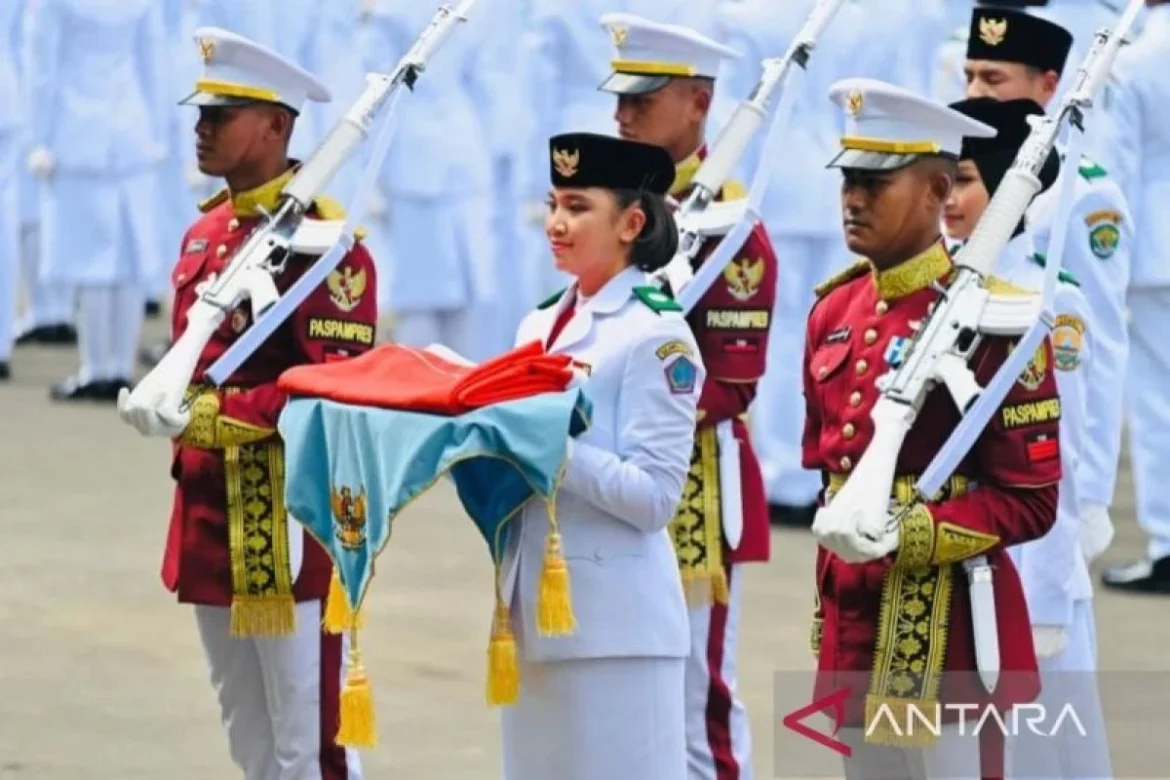
Menelusuri Makna Filosofis dan Sejarah di Balik Formasi 17-8-45 dalam Upacara Pengibaran Bendera Pusaka

by Asep Darmawan September 13, 2026
written by Asep Darmawan

Dalam setiap peringatan Hari Ulang Tahun Kemerdekaan Republik Indonesia, perhatian jutaan pasang mata tertuju pada barisan rapi yang bergerak dengan presisi tinggi di lapangan upacara. Pasukan Pengibar Bendera Pusaka (Paskibraka) bukan sekadar menjalankan tugas protokoler; mereka adalah representasi hidup dari memori kolektif bangsa. Inti dari penampilan mereka terletak pada formasi 17-8-45, sebuah konfigurasi barisan yang secara matematis dan simbolis memahat angka-angka keramat sejarah Proklamasi Kemerdekaan Indonesia ke dalam gerak langkah yang disiplin.

Struktur dan Komposisi Formasi 17-8-45

Formasi 17-8-45 bukanlah sebuah kebetulan artistik, melainkan sebuah manifestasi terstruktur yang terdiri dari tiga unit utama dengan peran yang telah didefinisikan secara ketat dalam pedoman tata upacara. Pemisahan kelompok ini mencerminkan kompleksitas koordinasi yang dibutuhkan dalam sebuah operasi kenegaraan yang sakral.

Pasukan 17, yang menempati posisi terdepan, berfungsi sebagai pengiring dan pemandu. Angka 17 di sini bertindak sebagai pengingat akan tanggal 17, hari di mana teks Proklamasi dikumandangkan oleh Soekarno dan Mohammad Hatta pada tahun 1945. Tugas mereka adalah menjaga irama langkah dan memastikan keselarasan gerakan pasukan di belakangnya.

Di tengah formasi terdapat Pasukan 8, yang secara luas dianggap sebagai "pasukan inti." Kelompok inilah yang memikul tanggung jawab paling berat dan prestisius: membawa serta mengibarkan duplikat Bendera Pusaka Merah Putih. Angka 8 merujuk pada bulan Agustus, bulan kemerdekaan Indonesia. Anggota yang terpilih dalam kelompok ini biasanya merupakan putra-putri terbaik yang telah melalui seleksi fisik dan mental yang sangat ketat, mencerminkan kedewasaan karakter yang dibutuhkan untuk membawa simbol kedaulatan negara.

Terakhir, Pasukan 45 menutup barisan dengan berperan sebagai pengawal kehormatan. Angka 45 merepresentasikan tahun 1945. Posisi mereka di belakang Pasukan 8 memberikan kesan perlindungan dan pengokohan, melambangkan kekuatan rakyat Indonesia yang bersatu untuk mempertahankan kemerdekaan yang baru saja diproklamasikan. Secara kolektif, formasi ini adalah sebuah narasi visual yang bercerita tentang tanggal, bulan, dan tahun lahirnya sebuah bangsa.

Akar Historis: Warisan Husein Mutahar

Untuk memahami mengapa formasi ini begitu krusial, kita harus menengok kembali ke sosok Habib Husein Mutahar, seorang tokoh perintis Paskibraka sekaligus komponis lagu kebangsaan. Sejarah pembentukan formasi ini berakar pada kondisi darurat tahun 1946. Ketika Ibu Kota Indonesia harus pindah ke Yogyakarta akibat agresi Belanda, Presiden Soekarno memerintahkan Mutahar untuk menyiapkan upacara pengibaran bendera di halaman Istana Gedung Agung.

Pada saat itu, Mutahar memilih lima orang pemuda-pemudi yang melambangkan lima kelompok suku di Indonesia sebagai bentuk perwujudan persatuan nasional. Gagasan dasar ini kemudian berevolusi. Ketika Presiden Soeharto kembali menugaskan Mutahar untuk menangani pengibaran bendera pada tahun 1967, ia mengembangkan konsep tersebut menjadi struktur 17-8-45 yang kita kenal hari ini. Transformasi ini dilakukan untuk memberikan bobot sejarah yang lebih mendalam pada setiap elemen upacara, memastikan bahwa setiap generasi baru Paskibraka memahami nilai di balik setiap langkah yang mereka ambil.

Kedisiplinan dan Analisis Teknis Pelaksanaan

Secara teknis, pelaksanaan formasi 17-8-45 menuntut tingkat sinkronisasi yang luar biasa. Koordinasi antar-kelompok tidak hanya bergantung pada kemampuan fisik, tetapi juga pada komunikasi non-verbal yang intens selama masa pemusatan latihan. Setiap anggota Paskibraka harus memiliki tingkat fokus yang tinggi; kesalahan sekecil apa pun dalam formasi dapat merusak estetika dan makna filosofis yang terkandung di dalamnya.

Data dari berbagai pelatihan Paskibraka menunjukkan bahwa masa persiapan, yang sering kali berlangsung selama berminggu-minggu, difokuskan pada tiga pilar utama: ketahanan fisik, penguasaan formasi, dan kedisiplinan mental. Keberhasilan dalam melakukan transisi dari formasi awal menuju formasi pengibaran sering kali menjadi indikator kesiapan pasukan secara keseluruhan. Analisis menunjukkan bahwa kedisiplinan yang ditempa dalam latihan Paskibraka bukan hanya untuk tujuan seremonial, tetapi merupakan bentuk pendidikan karakter yang bertujuan membentuk generasi muda yang tangguh, patuh pada aturan, dan memiliki loyalitas tinggi terhadap negara.

Adaptabilitas dalam Dinamika Upacara Modern

Meskipun formasi 17-8-45 telah menjadi pakem selama beberapa dekade, penting untuk dicatat bahwa tradisi ini tetap memiliki ruang untuk adaptasi sesuai dengan konteks upacara. Sebagai contoh, dalam beberapa peringatan penting lainnya, seperti Hari Lahir Pancasila, otoritas terkait—seperti Badan Pembinaan Ideologi Pancasila (BPIP)—terkadang menyesuaikan formasi untuk mencerminkan nilai-nilai lain. Misalnya, penggunaan formasi lima kelompok untuk melambangkan lima sila dalam Pancasila.

Adaptasi ini menunjukkan bahwa Paskibraka bukan entitas yang statis. Mereka mampu berevolusi mengikuti kebutuhan zaman tanpa kehilangan esensi sejarahnya. Namun, di tengah berbagai inovasi formasi tersebut, konfigurasi 17-8-45 tetap menjadi "standar emas" yang paling relevan dengan identitas nasional Indonesia. Hal ini menegaskan bahwa simbolisme 17-8-45 adalah fondasi yang tidak tergantikan dalam memori kolektif masyarakat Indonesia mengenai perjuangan meraih kemerdekaan.

Implikasi Budaya dan Edukasi Bangsa

Dampak dari keberadaan Paskibraka dengan formasi 17-8-45 melampaui batas-batas lapangan upacara. Bagi masyarakat umum, menyaksikan barisan ini adalah pengingat tahunan tentang harga sebuah kemerdekaan. Setiap derap langkah yang serempak adalah bentuk penghormatan kepada para pahlawan yang telah berjuang pada tahun 1945.

Lebih jauh lagi, bagi para anggota Paskibraka itu sendiri, pengalaman ini sering kali menjadi titik balik dalam kehidupan pribadi mereka. Banyak mantan anggota Paskibraka yang kemudian tumbuh menjadi pemimpin di berbagai sektor, membawa nilai-nilai disiplin dan nasionalisme yang mereka pelajari selama masa tugas. Hal ini membuktikan bahwa Paskibraka berfungsi sebagai kawah candradimuka bagi calon pemimpin bangsa di masa depan.

Secara sosiologis, formasi ini memperkuat rasa persatuan. Anggota Paskibraka yang terpilih biasanya berasal dari berbagai latar belakang suku, agama, dan daerah yang berbeda di seluruh pelosok Indonesia. Ketika mereka berdiri dalam satu formasi 17-8-45, perbedaan-perbedaan tersebut melebur menjadi satu kesatuan yang utuh, sejalan dengan semboyan Bhinneka Tunggal Ika.

Kesimpulan: Menjaga Api Semangat 1945

Menjelang peringatan-peringatan besar kenegaraan, proses pemusatan latihan Paskibraka selalu menjadi sorotan media nasional. Fokus pada detail formasi, ketegasan sikap, dan kesiapan fisik para anggota sering kali menjadi berita utama yang membangkitkan kebanggaan nasional. Hal ini menegaskan kembali bahwa terlepas dari kemajuan teknologi dan perubahan zaman, simbol-simbol sejarah tetap memegang peranan vital dalam menjaga integritas bangsa.

Formasi 17-8-45 adalah bukti nyata bahwa sejarah tidak hanya tertulis dalam buku teks, tetapi juga hidup dalam gerak dan langkah generasi penerus. Selama bendera Merah Putih masih dikibarkan, formasi ini akan terus menjadi pengingat abadi bagi seluruh rakyat Indonesia akan tanggal 17 Agustus 1945—titik awal perjalanan Indonesia sebagai negara yang berdaulat dan merdeka. Melalui dedikasi para anggota Paskibraka, warisan Husein Mutahar tetap terjaga, memastikan bahwa pesan perjuangan tetap tersampaikan kepada setiap generasi dengan martabat dan kehormatan yang setinggi-tingginya.

September 13, 2026 0 comment
0 FacebookTwitterPinterestEmail
Regional News

Dua Alutsista TNI AL Fokus Pengisian Logistik pada Hari Keenam Pencarian Lima Jurnalis dan Tiga Kru Kapal di Selat Sunda

by Evan Lee Salim September 13, 2026
written by Evan Lee Salim

JAKARTA — The search and rescue operation for five journalists and three vessel crew members who went missing while covering the volcanic eruption of Mount Anak Krakatau in the Sunda Strait experienced a brief tactical adjustment on its sixth day, Sunday, September 13, 2026. Two prominent Indonesian Navy (TNI AL) assets, KRI Leuser and KAL Pohawang, were temporarily withdrawn from active surface searching to conduct essential logistical replenishment, including refueling and provisioning, at a nearby naval facility.

The temporary suspension of active grid patrols by these specific vessels sparked initial concerns among families and observers regarding the continuity of the search efforts. However, military authorities quickly clarified that the move was a routine logistical necessity rather than a reduction in operational scope. Both vessels are scheduled to redeploy to the search zone by Monday morning, September 14, 2026, to resume their designated sectors in the ongoing multi-agency search operation.

Operational Adjustment on Day Six

Addressing the press at the Carita Search and Rescue (SAR) Command Post on Sunday, the Commander of the Banten Naval Base (Danlanal), Lieutenant Colonel (Navy) Wawan Subagyo Mardani, provided a detailed explanation regarding the deployment status of the naval assets. He emphasized that KRI Leuser and KAL Pohawang remain fully committed to the ongoing SAR mission, despite their brief absence from the operational waters of the Sunda Strait.

"Just like any ongoing maritime operation, our assets require periodic maintenance, refueling, and logistical restocking to maintain operational readiness," Lieutenant Colonel Wawan stated during the press conference. "Today, KRI Leuser and KAL Pohawang are executing refueling procedures and replenishing their food supplies and logistical needs. They are currently anchored for these essential tasks and will rejoin the active search grid at first light tomorrow morning."

The clarification aims to maintain transparency with the families of the missing journalists and crew members, as well as the broader public, who have closely monitored the daily developments of the emergency response. The operational pause highlights the logistical challenges inherent in extended maritime SAR missions, where support vessels must routinely cycle back to supply ports to sustain prolonged deployments in rough sea conditions.

Background and Context of the Incident

The missing persons incident stems from a high-stakes journalistic assignment that turned into a maritime emergency. The five journalists, representing various media outlets, alongside three ship crew members, went missing while navigating the volatile waters surrounding Mount Anak Krakatau in the Sunda Strait, located off the coast of Pandeglang Regency, Banten Province.

Mount Anak Krakatau, infamous for its catastrophic historical eruptions and continuous seismic activity, has remained a focal point for both vulcanologists and media organizations seeking to document its geological transformations. In mid-September 2026, the volcano exhibited heightened eruptive phases, casting massive columns of ash, incandescent material, and volcanic debris into the atmosphere. The group had deployed via vessel to capture the unfolding natural phenomenon up close, operating within a maritime zone already flagged for elevated hazards due to potential sudden pyroclastic flows, localized tsunamis triggered by underwater landslides, and extreme weather patterns characteristic of the Sunda Strait.

As communications with the vessel abruptly ceased, local authorities were alerted, triggering an immediate emergency response. The waters between the western coast of Java and the southern tip of Sumatra present complex navigational challenges, including strong undercurrents, unpredictable wind patterns, and deep trenches, which significantly complicate search and rescue operations.

Chronology of the Search and Rescue Operation

Since the initial distress signal and subsequent classification of the vessel as missing, a coordinated SAR operation has been underway, mobilizing assets from the National Search and Rescue Agency (Basarnas), the Indonesian Navy, the Indonesian National Police (Polri), regional disaster management agencies (BPBD), and volunteer maritime communities.

  • Day 1 (September 8, 2026): Initial reports emerged regarding the failure of the vessel carrying the five journalists and three crew members to return from the Mount Anak Krakatau monitoring zone. Basarnas established the initial emergency response center in Carita, Banten.
  • Day 2-3 (September 9–10, 2026): Full-scale mobilization of surface assets and aerial reconnaissance teams. KRI Leuser and KAL Pohawang, alongside coastal patrol boats, were deployed to comb the predicted drift trajectories based on oceanographic models of the Sunda Strait currents.
  • Day 4-5 (September 11–12, 2026): Search grids were expanded further outward into the open waters of the strait. Divers were deployed in select shallow zones near the volcanic cone, though volcanic tremors and poor underwater visibility hampered deep-sea exploration.
  • Day 6 (September 13, 2026): Tactical adjustment implemented as KRI Leuser and KAL Pohawang returned to port for mandatory refueling and logistical replenishment, while other maritime assets continued localized sector sweeps.
  • Day 7 and Beyond (Scheduled for September 14, 2026, onward): Anticipated full fleet reintegration, with intensified aerial sweeps and expanded surface vessel formations coordinated by the unified command post.

Official Support and Psychological Assistance for Families

Recognizing the immense emotional toll that the prolonged uncertainty places on the families of the missing individuals, the Regional Government of Banten Province has stepped up to provide comprehensive support services. Recognizing that waiting for news during a disaster response requires specialized care, the provincial administration has deployed a dedicated team of medical personnel, professional counselors, and trauma psychologists.

The psychosocial support units are stationed near the Carita SAR Post to assist family members who have gathered to await updates from the search teams. This initiative ensures that loved ones receive immediate medical evaluations for stress-related conditions alongside psychological first aid to help them cope with the psychological strain of the ongoing ordeal. Local authorities have pledged to maintain these support services for the duration of the search operation.

Fact-Based Analysis of Implications

The incident involving the missing journalists near Mount Anak Krakatau underscores broader implications regarding safety protocols for media personnel covering high-risk natural disasters.

  1. Journalistic Safety and Risk Mitigation: The event has reignited discussions across Indonesian media associations regarding mandatory safety briefings, standardized communication protocols, and adherence to exclusion zones established by the Center for Volcanology and Geological Hazard Mitigation (PVMBG). Covering active volcanic eruptions from the sea involves exposure to secondary hazards, including ballistic projectiles, toxic gas plumes, and sudden wave surges.
  2. Logistical Demands on Maritime SAR: The temporary withdrawal of KRI Leuser and KAL Pohawang illustrates the logistical friction points in extended maritime operations. Effective coordination requires a rotating deployment schedule to ensure continuous coverage without exhausting naval assets or compromising vessel safety due to deferred maintenance.
  3. Inter-Agency Coordination: The disaster response highlights the efficacy of Indonesia’s unified incident command system, which brings together military, civilian, and regional agencies. Despite inherent natural obstacles such as adverse weather and volcanic activity, the joint task force continues to systematically narrow search sectors based on scientific drift modeling.

As the operation enters its seventh day with the anticipated return of the naval logistical vessels to the search grid, rescue coordinators remain focused on maximizing all available technological and human resources to locate the missing journalists and crew members.

September 13, 2026 0 comment
0 FacebookTwitterPinterestEmail
Politics

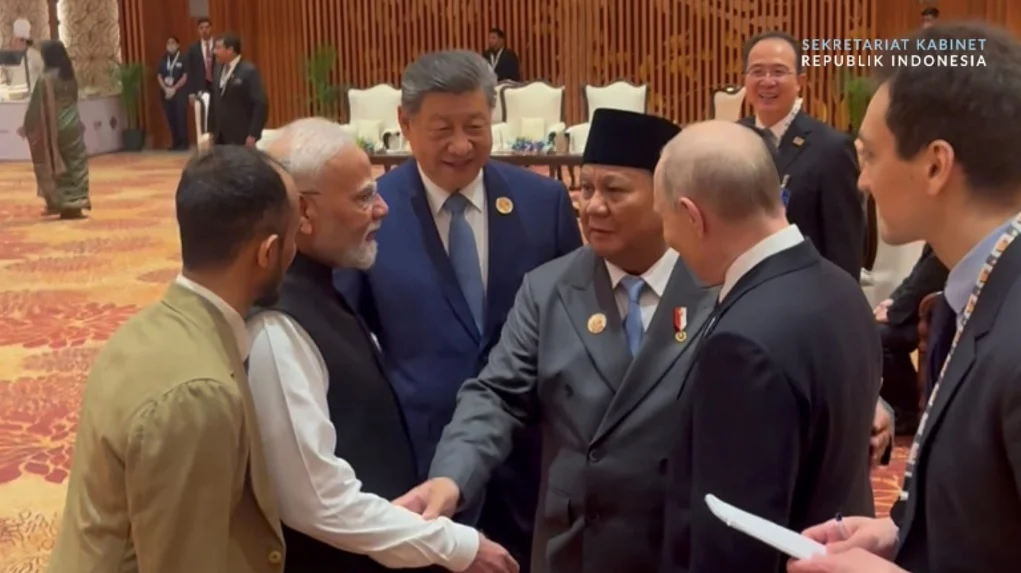
Momen Akrab Prabowo, Modi, Putin dan Xi Jinping di KTT BRICS India

by Raul Delapena Setiawan September 13, 2026
written by Raul Delapena Setiawan

President Prabowo Subianto engaged in a series of warm, informal discussions with Indian Prime Minister Narendra Modi, Russian President Vladimir Putin, and Chinese President Xi Jinping on the sidelines of the 18th BRICS Summit held at the Bharat Mandapam in New Delhi, India, on Saturday, September 12, 2026. This interaction, which took place just moments before the official opening ceremony, served as a significant display of personal diplomacy, highlighting the evolving nature of Indonesia’s international engagements under the current administration.

The images of the four leaders—representing some of the world’s most influential economies—conversing in a relaxed setting have drawn considerable attention from geopolitical analysts and global media. According to a statement issued by Cabinet Secretary Teddy Indra Wijaya, the encounter was characterized by a spirit of camaraderie and mutual respect, reflecting the diplomatic rapport that often bridges the gap between formal policy negotiations.

The Significance of the 18th BRICS Summit

The 2026 BRICS Summit in New Delhi represents a critical juncture for the bloc, which has expanded its reach and influence significantly over the past few years. Originally founded as a grouping of emerging economies—Brazil, Russia, India, China, and South Africa—the organization has sought to redefine the global economic architecture, challenging the dominance of Western-led financial institutions.

For Indonesia, participation in the BRICS framework is an extension of its long-standing "free and active" (bebas dan aktif) foreign policy. By engaging with these powerhouses, Jakarta aims to diversify its economic partnerships and secure a stronger foothold in the Global South. The presence of President Prabowo at the Bharat Mandapam underscores Indonesia’s desire to ensure its national interests are represented in discussions concerning global trade, energy security, and the reform of international financial systems.

A Chronology of Diplomatic Engagement

The events in New Delhi followed months of meticulous preparation by Indonesia’s Ministry of Foreign Affairs. Following his inauguration and subsequent regional tours, President Prabowo prioritized the strengthening of bilateral ties with the BRICS member states.

  1. Early 2026: Indonesia signaled an increased interest in deepening cooperation with BRICS nations, particularly in the sectors of infrastructure development, digital technology, and food security.
  2. August 2026: Diplomatic channels were finalized to ensure a high-level delegation from Jakarta would participate in the New Delhi summit.
  3. September 11, 2026: Arrival of President Prabowo in India, marked by initial meetings with representatives from various participating delegations.
  4. September 12, 2026: The morning of the opening session at Bharat Mandapam. It was here, in the moments preceding the formal plenary, that the informal dialogue between the four leaders occurred.
  5. September 12, 2026 (Afternoon): Official participation in the plenary sessions, focusing on economic cooperation and the challenges of the multipolar world order.

Analyzing the Informal Interaction

While official communiqués from summits are often heavily scripted, informal interactions—often referred to as "corridor diplomacy"—frequently provide the most accurate insight into the state of international relations. The sight of President Prabowo conversing with President Putin, Prime Minister Modi, and President Xi is highly symbolic.

From a strategic perspective, these interactions serve several purposes:

  • Building Personal Trust: In the world of high-stakes diplomacy, personal chemistry between heads of state can facilitate smoother negotiations when complex issues arise.
  • Signaling Alignment: For the international community, the presence of an Indonesian leader in such an intimate discussion with the BRICS core leadership suggests a move toward closer alignment on issues like trade connectivity and non-Western financial mechanisms.
  • Conflict Mitigation: By maintaining open and friendly channels with leaders from both sides of the current global geopolitical divide, Indonesia reinforces its role as a bridge-builder, capable of maintaining constructive relations with nations that may have strained ties with one another.

Economic and Strategic Implications for Indonesia

Indonesia’s participation in the BRICS summit is not merely symbolic; it carries heavy economic weight. As an emerging middle-power economy, Indonesia is looking for investment opportunities that do not come with the political conditionalities often attached to traditional developmental loans.

India and China are already among Indonesia’s largest trading partners. Engaging with them within the BRICS framework allows Jakarta to harmonize its trade policies, push for better commodity pricing, and seek support for its "downstreaming" (hilirisasi) agenda, which seeks to turn raw materials into high-value finished products before export.

Momen Akrab Prabowo, Modi, Putin dan Xi Jinping di KTT BRICS India : Okezone News

Furthermore, the discussion with President Putin likely touched upon energy security. Given Russia’s position as a major energy producer and Indonesia’s growing domestic energy demand, the potential for diversified energy cooperation remains a topic of high interest. Similarly, the conversation with Prime Minister Modi highlighted the growing "Look East" alignment, with India increasingly viewing Indonesia as a key partner in maritime security and the digital economy in the Indo-Pacific region.

Official Responses and Media Reception

The Indonesian government’s official stance, as communicated by Cabinet Secretary Teddy Indra Wijaya, emphasized that the interaction was a natural byproduct of the summit’s environment. "The leaders took the opportunity to engage in a friendly manner before the opening session," the Seskab stated, noting that such exchanges are standard practice for fostering positive international relations.

International media outlets covering the event have noted that President Prabowo’s ability to navigate the complex social dynamics of the BRICS summit suggests a sophisticated approach to foreign policy. Analysts from various think tanks have observed that Indonesia is carefully balancing its relations with the West while aggressively pursuing its interests within non-Western blocs.

Contextualizing the BRICS Expansion

It is essential to understand that the 2026 BRICS summit is occurring in a world that is vastly different from the one that existed when the group was formed. The rise of the "Global South" as a coherent political and economic bloc has changed the way international summits are conducted.

For the average citizen, the significance of these meetings may seem abstract. However, the outcomes of these discussions—ranging from the stability of currency exchange rates to the accessibility of global supply chains—have a direct impact on the domestic economy. President Prabowo’s presence in New Delhi is intended to ensure that Indonesia’s voice is heard during these pivotal discussions on the future of the global financial system.

The Role of Personal Diplomacy

President Prabowo’s background as a former Defense Minister and his extensive experience in international relations have clearly influenced his diplomatic style. He is known for a pragmatic approach, favoring direct communication with his counterparts. This style was on full display in New Delhi. By opting to engage in informal dialogue, the President bypasses the rigidity of formal bureaucratic channels, allowing for more candid and efficient exchanges.

This method is particularly effective in a summit setting where dozens of heads of state are competing for attention. The ability to secure a moment of genuine connection with the leaders of India, Russia, and China is a testament to the respect Indonesia currently commands on the world stage.

Looking Ahead

As the 18th BRICS Summit concludes, the focus will shift to the implementation of the agreements reached in New Delhi. Indonesia will be expected to follow up on the initial discussions held between the leaders. For President Prabowo, the challenge will be to translate the warm, friendly atmosphere of the Bharat Mandapam into concrete policies that benefit the Indonesian people—specifically through increased foreign direct investment (FDI), technology transfer, and expanded market access for Indonesian goods.

The informal meeting serves as a harbinger of a more assertive and engaged Indonesian foreign policy. As the nation continues to navigate the complexities of the 21st century, the ability to build and maintain relationships with diverse global powers will remain a cornerstone of its national interest. The "warm and friendly" interaction in New Delhi is, in many ways, just the beginning of a broader strategic realignment that aims to position Indonesia as a central player in the emerging global order.

In summary, the images shared by the Cabinet Secretariat are more than just a media moment; they represent a deliberate diplomatic strategy. By positioning himself among the architects of the BRICS bloc, President Prabowo has reinforced Indonesia’s commitment to multilateralism, ensuring that the country remains a key voice in the dialogue that will shape the international landscape for years to come. Whether these interactions lead to substantial shifts in regional policy remains to be seen, but the initial signs indicate a proactive and highly focused administration in Jakarta.

September 13, 2026 0 comment
0 FacebookTwitterPinterestEmail
Business & Economy

Pemerintah Mulai Terapkan Ketentuan Khusus DHE SDA per 1 September 2026 untuk Sektor Pertambangan Tertentu

by Nana September 13, 2026
written by Nana

The Indonesian government is set to officially implement a specialized regulatory framework governing Export Proceeds from Natural Resources (Devisa Hasil Ekspor Sumber Daya Alam, or DHE SDA) starting September 1, 2026. This landmark policy introduces critical structural flexibility, specifically targeted at eligible mining sector exporters, allowing them to retain a portion of their foreign exchange earnings domestically under shortened placement periods.

This regulatory adjustment forms the core implementation mechanism of Article 18A under Government Regulation (Peraturan Pemerintah or PP) Number 21 of 2026, which represents the third amendment to PP Number 36 of 2023 regarding DHE SDA. The implementation parameters apply strictly to Customs Export Declarations (Pemberitahuan Pabean Ekspor or PPE) officially submitted from September 1, 2026, onward. While the framework offers operational easements for select market players, it maintains overarching state objectives aimed at securing national monetary resilience, bolstering foreign exchange liquidity within the domestic financial architecture, and catalyzing sustainable downstream industrial development.

Understanding DHE SDA: Core Concepts and State Objectives

To comprehend the magnitude of the upcoming September framework, it is vital to examine the foundational architecture of DHE SDA. Devisa Hasil Ekspor Sumber Daya Alam refers to foreign exchange revenues generated by corporate exporters through the exploitation, management, and primary or secondary processing of natural resources originating from export activities.

Under overarching national regulations, the Indonesian government mandates that exporters of natural resources repatriate 100 percent of their DHE SDA back into the domestic financial system of Indonesia. This mandatory repatriation policy serves a macro-financial purpose: maintaining an adequate and robust pool of foreign currency liquidity within the local market, anchoring macroeconomic stability against global volatilities, and providing a dependable funding stream for large-scale national infrastructure and developmental projects.

However, the introduction of Article 18A introduces a calibrated, optional tier of flexibility for specific corporate entities, carefully balancing the state’s macroeconomic stabilization goals with the commercial realities of multinational investments and bilateral trade agreements.

Chronology and Regulatory Evolution: From PP 36/2023 to PP 21/2026

The trajectory of Indonesia’s DHE SDA governance has evolved through systematic policy refinements over recent years. The foundation was initially laid down through Government Regulation No. 36 of 2023, which established strict mandates requiring resource-based exporters to park their foreign earnings domestically to support the national economy.

As market conditions shifted and feedback from key industrial stakeholders accumulated, the administration of President Prabowo Subianto initiated deeper structural reviews regarding natural resource export governance. This led to the drafting and eventual promulgation of PP Number 21 of 2026. This third amendment specifically introduced Article 18A to accommodate strategic mining exporters who maintain deep-rooted economic ties with Indonesia through substantial capital investments and established bilateral trade frameworks.

Following the preliminary data harmonization and matching processes conducted over export transactions spanning from March 2025 through July 2026, regulatory bodies scrutinized a total of 537 Taxpayer Identification Numbers (Nomor Pokok Wajib Pajak or NPWP). From this comprehensive review, the government identified precisely 64 corporate exporters who successfully met the rigorous cumulative compliance criteria stipulated under Article 18A.

The Five Strategic Partner Nations

A critical cornerstone of the specialized Article 18A facility is its alignment with international diplomatic and economic relations. The government has explicitly designated five specific foreign nations whose corporate entities operating within Indonesia’s mining sector are eligible to apply for this specialized facility.

These five nations were selected based on two primary, non-negotiable thresholds: they represent the source of exceptionally large-scale foreign direct investments (FDI) within Indonesia’s critical mining and processing sectors, and they maintain formal bilateral trade agreements, comprehensive economic partnerships, or established memoranda of understanding with the Republic of Indonesia.

By tying the regulatory relief of Article 18A to these specific jurisdictions, Jakarta aims to honor international economic commitments while securing continued capital inflows and technological transfers essential for the nation’s ambitious resource-downstreaming agenda (hilirisasi).

Detailed Criteria and Compliance Mechanics for Exporters

The implementation starting September 1, 2026, does not mean a blanket reduction of regulatory burdens for all resource exporters. The relaxed placement rules are strictly optional and function as a targeted facility. Exporters wishing to utilize this pathway must satisfy three cumulative statutory requirements established by the state.

For companies that qualify and deliberately choose to utilize the Article 18A pathway, the regulatory mechanics diverge significantly from standard operating procedures. Under general rules, non-oil-and-gas mining exporters who do not utilize this specific facility are legally bound to place 100 percent of their DHE SDA within state-owned foreign exchange banks (Bank Devisa BUMN) for a minimum duration of 12 months. In contrast, the specialized facility allows qualifying entities to adhere to distinct, shortened placement periods and fractional retention thresholds as authorized by the updated regulatory guidelines.

Crucially, the utilization of Article 18A is not automatically forced upon eligible companies. Exporters who meet the criteria retain the autonomy to opt out and follow the general DHE SDA provisions instead. To formally reject the facility, an eligible exporter must submit a formal statement letter (surat pernyataan) to Bank Indonesia in accordance with prescribed administrative mechanisms and strict deadlines. Failure to submit this formal declaration within the stipulated timeframe results in a regulatory assumption that the exporter has opted to utilize the Article 18A facility by default.

For the oil and gas sector, standard baseline provisions remain entirely distinct, requiring the placement of at least 30 percent of export proceeds for a minimum duration of three months, independent of the specialized Article 18A mining pathways.

Analytical Implications: Balancing Liquidity and Investment Climate

Financial analysts and macroeconomic observers have weighed in extensively on the rollout of the September 2026 policy, viewing it as a sophisticated balancing act between strict monetary nationalism and pragmatic investor relations.

On one hand, the government remains fiercely committed to safeguarding the domestic foreign exchange reserve baseline. By ensuring that the vast majority of natural resource revenues continue to flow through domestic financial institutions, Indonesia shields its exchange rate against external shocks, stabilizes the rupiah, and secures capital for long-term domestic financing. Economists note that strong foreign exchange liquidity is paramount as Indonesia accelerates its capital-intensive industrial transformation programs.

On the other hand, the introduction of Article 18A demonstrates regulatory agility. Forcing multinational mining giants—particularly those from the five designated strategic partner countries—into rigid, one-size-fits-all holding periods could inadvertently dampen foreign investment sentiment or complicate cross-border treasury management. By offering targeted flexibility, Jakarta maintains its appeal as a premier destination for global mining capital while still retaining regulatory oversight over export proceeds.

Furthermore, domestic lawmakers and parliamentary officials have emphasized that the broader architecture of resource export governance—including single-door export policies—must continuously serve as a functional instrument for national industrial downstreaming. Members of the legislature have consistently highlighted that every regulatory adjustment, including the DHE SDA frameworks, should ultimately drive value-addition within domestic borders rather than merely serving as a short-term monetary tool.

Conclusion and Outlook Toward September 2026

As the effective date of September 1, 2026, approaches, corporate legal teams, tax advisors, and compliance departments across Indonesia’s mining sector are actively reviewing their export declarations, tax profiles, and corporate structures to determine their eligibility under Article 18A of PP 21/2026.

With 64 identified corporate taxpayers currently positioned to leverage the specialized facility, the coming months will test the operational readiness of both Bank Indonesia and commercial foreign exchange banks in processing administrative opt-ins and formal statements. Ultimately, the successful execution of this policy will serve as a definitive litmus test for Indonesia’s ability to harmonize rigorous state-led macroeconomic controls with the complex commercial realities of global mining investment.

September 13, 2026 0 comment
0 FacebookTwitterPinterestEmail
Business & Economy

Otoritas Jasa Keuangan mendorong pelaku industri perbankan digital memperkuat diversifikasi produk dan layanan agar digitalisasi bukan sekadar gimik.

by Reynand Wu September 13, 2026
written by Reynand Wu

The rapid evolution of the Indonesian financial landscape has reached a pivotal juncture where the novelty of digital banking is being tested against the necessity of long-term sustainability and meaningful economic contribution. Otoritas Jasa Keuangan (OJK), the nation’s financial services authority, has issued a stern directive to digital banking players: move beyond superficial technological gimmicks and focus on substantive product diversification and service innovation that addresses the actual needs of the underserved population.

This strategic pivot is not merely a suggestion but a requirement for the maturation of the digital banking sector, which has seen explosive growth in the post-pandemic era. As of the current fiscal period, the regulator emphasizes that the transition from traditional to digital-first banking must provide tangible value propositions that extend financial inclusion rather than simply replicating existing conventional banking services through a smartphone application.

The Evolution of Digital Banking in Indonesia

The emergence of "pure-play" digital banks in Indonesia—institutions that operate without a physical branch network—began in earnest around 2020-2021 as the OJK finalized its regulatory framework for digital-only banking. This regulatory clarity spurred a flurry of activity, with major conglomerates and tech-savvy investors rushing to acquire smaller banks and transform them into digital platforms.

However, as the market becomes increasingly saturated, the initial allure of high-interest savings accounts and seamless user interfaces is no longer sufficient to guarantee customer loyalty or long-term profitability. The OJK has observed that many institutions have fallen into a trap of "me-too" services, offering identical features that do not necessarily solve the credit gap or the financial literacy issues prevalent among the nation’s unbanked and underbanked segments.

Core Principles for Future Growth

During a recent briefing, Dian Ediana Rae, the Chief Executive for Banking Supervision at OJK, underscored that the digital banking business model must be grounded in three fundamental pillars: sustainability, inclusivity, and trust.

Sustainability, in this context, refers to the ability of digital banks to adapt to the breakneck pace of technological advancement while maintaining a healthy balance sheet. Inclusivity demands that these banks move beyond the urban elite and design products specifically tailored for the informal sector, small and medium enterprises (SMEs), and agricultural communities. Trust, meanwhile, is the non-negotiable bedrock of the financial industry. As digital banks rely entirely on cloud infrastructure and digital interfaces, the stakes for cybersecurity and data privacy are significantly higher than for traditional banks.

The Imperative of Differentiation

The OJK’s push for "competitive advantage" is rooted in the belief that digital banks must provide a distinct value proposition that justifies their existence beyond the convenience of digital transactions. If a digital bank only offers the same services as a traditional bank—transfers, bill payments, and basic savings—it fails to leverage the unique data-driven capabilities that digital transformation affords.

Analysts note that the next phase of development for these banks should involve advanced credit scoring models based on alternative data, such as e-commerce transaction history, mobile phone usage patterns, and utility payment behavior. By utilizing these datasets, digital banks can extend credit to segments of the population that lack traditional credit histories, thereby directly fulfilling the goal of financial inclusion.

Addressing the Cybersecurity Frontier

With the digitalization of finance comes an inevitable escalation in cyber threats. As Indonesia moves toward a cashless society, the security of digital banking platforms has become a national economic security issue. Recent reports from the Financial Services Authority indicate that while digital adoption is soaring, the frequency of phishing, account takeovers, and social engineering attacks is rising proportionally.

The OJK has mandated that digital banks allocate significant portions of their capital expenditure toward robust cybersecurity infrastructure. This includes real-time fraud detection systems powered by artificial intelligence and the implementation of multi-factor authentication protocols. Furthermore, the regulator is placing increased pressure on banks to maintain transparency in how they handle consumer data, ensuring that the convenience of digital onboarding does not come at the expense of privacy.

Market Context and Supporting Data

According to recent financial industry reports, the growth of digital banks in Indonesia has been characterized by a high volume of transactions but a mixed performance in terms of profitability. While transaction volume in the digital banking sector has consistently grown by double digits annually, many institutions are still in the customer acquisition phase, characterized by heavy marketing spend and low-margin services.

Data from the OJK suggests that the penetration rate of banking services in Indonesia has reached approximately 76%, yet the gap in access to credit remains wide. Digital banks are uniquely positioned to bridge this gap. If these institutions can successfully integrate their services into the daily lives of users—moving from "transactional" to "lifestyle" banking—the economic impact could be substantial.

A study by the World Bank indicates that increasing financial inclusion in emerging markets can raise GDP growth by up to 1% annually. By providing access to micro-loans and digital savings products, digital banks are not just expanding their own market share; they are acting as catalysts for broader economic participation.

Implications for the Banking Industry

The OJK’s latest directive signals a shift in the regulatory stance from "facilitation" to "optimization." In the early years of digital banking, the regulator’s primary concern was ensuring that these entities met the capital requirements and operational standards to function safely. Now, the regulator is demanding that these banks prove their worth as essential components of the financial ecosystem.

For the incumbents, this means the pressure to innovate is intensifying. Traditional banks are being forced to adopt "digital-first" strategies themselves, often by launching their own digital spin-offs or undergoing massive internal transformations. The market is effectively entering a period of consolidation. Experts predict that in the coming years, only those digital banks that can achieve scale and maintain high levels of consumer trust will survive. Those that fail to offer meaningful, differentiated services may find themselves struggling to maintain liquidity as the cost of customer acquisition continues to climb.

Chronology of the Digital Shift

  • 2020: The OJK begins drafting the framework for digital banking, signaling the end of the traditional banking monopoly on digital services.
  • 2021: A wave of acquisitions occurs as major tech firms and conglomerates convert local banks into digital-only platforms.
  • 2022: The focus shifts to customer acquisition, with fierce competition over deposit interest rates and transaction fee waivers.
  • 2023: Rising cybersecurity threats bring data protection to the forefront of the national agenda, leading to stricter OJK oversight.
  • 2024-2025: Regulatory focus moves to "value creation," with the OJK mandating that banks prove their impact on financial inclusion.
  • 2026: The OJK formalizes the mandate for product diversification, warning against gimmick-based business models.

Future Outlook and Conclusion

The path forward for Indonesia’s digital banks is clear: they must transition from being platforms for convenience to becoming engines of economic empowerment. This requires a shift in mindset from executives and shareholders alike, prioritizing long-term stability over short-term growth metrics.

As Dian Ediana Rae emphasized, the ultimate measure of success for a digital bank is not its valuation or its number of downloads, but the depth of trust it earns from its users and the extent to which it enables financial participation for the underserved. In a landscape defined by rapid technological change, those who fail to innovate substantively risk irrelevance. Conversely, those who manage to balance technological agility with prudent risk management and authentic inclusivity will likely emerge as the pillars of Indonesia’s future financial economy.

The OJK’s stance serves as a reminder to the entire industry that while technology is the medium, the message—and the ultimate mission—remains the fundamental mandate of banking: the secure, efficient, and inclusive mobilization of capital. As the sector matures, the coming years will be defined by how well these institutions translate their digital capabilities into real-world economic progress.

September 13, 2026 0 comment
0 FacebookTwitterPinterestEmail
Business & Economy

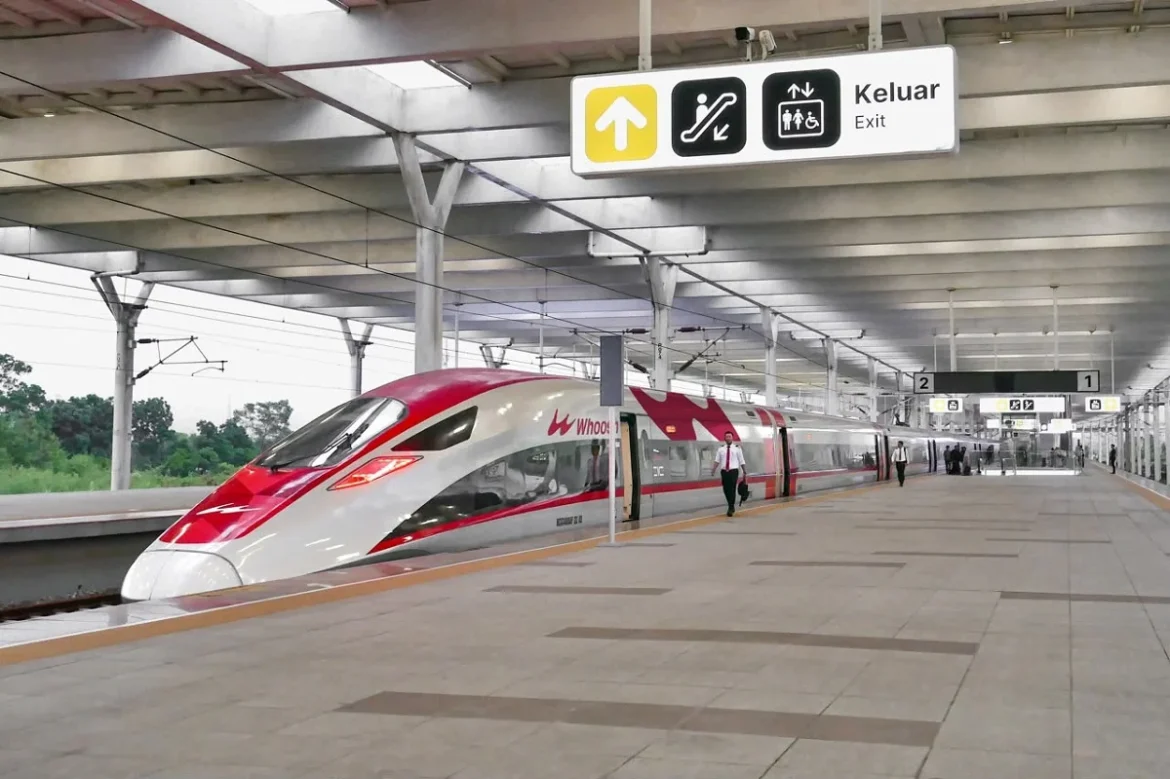
7 Fakta Utang Whoosh: Cicilan Rp1 Triliun per Tahun, Tenor 80 Tahun

by Reynand Wu September 13, 2026
written by Reynand Wu

The Indonesian government has officially unveiled a restructured financial framework for the Jakarta-Bandung High-Speed Railway project, known as Whoosh. This strategic recalibration, announced by Minister of Finance Purbaya Yudhi Sadewa, marks a significant shift in the nation’s infrastructure financing approach. By extending the debt maturity period to 80 years, the administration aims to mitigate the immediate fiscal pressure of the project while ensuring long-term operational sustainability. The revised scheme effectively lowers the annual debt servicing burden to approximately Rp1 trillion, a move designed to stabilize the project’s cash flow amidst its ongoing integration into the national transportation network.

The Genesis of the Whoosh Financial Restructuring

The Jakarta-Bandung High-Speed Railway, a flagship project under the Belt and Road Initiative and a cornerstone of Indonesia’s modernization efforts, has faced complex financial scrutiny since its inception. Initially funded through a combination of equity from local and Chinese partners and significant loan facilities from the China Development Bank (CDB), the project encountered cost overruns due to land acquisition challenges, technical complexities, and the global economic disruptions caused by the COVID-19 pandemic.

As the project transitioned from the construction phase to full commercial operations, the pressure to service the mounting debt became a primary concern for the Ministry of Finance and the Ministry of State-Owned Enterprises (BUMN). The recent decision to restructure the debt reflects a pragmatic acknowledgment of the project’s long-term revenue generation timeline. Rather than forcing a high-intensity repayment schedule that could jeopardize the railway’s operational budget, the government has opted for a "long-tail" approach, effectively deferring the bulk of the principal repayment to future generations while maintaining interest obligations.

Understanding the 80-Year Tenor and Annual Obligations

The core of the new financial architecture lies in the extension of the tenor. Spanning eight decades, this timeline is highly unusual for conventional corporate loans but aligns more closely with the lifecycles of major sovereign-backed infrastructure assets. Minister Purbaya Yudhi Sadewa emphasized that this extended duration is not merely an act of necessity but a calculated risk management strategy.

By capping the annual debt service obligations at approximately Rp1 trillion, the government intends to provide PT Kereta Cepat Indonesia China (KCIC)—the joint venture operating the line—with sufficient financial breathing room. This annual figure is subject to fluctuations based on interest rate adjustments and specific loan agreement clauses, but the structural ceiling provides a predictable framework for the state budget. Minister Purbaya’s remark—that the government now views the debt as a manageable, long-term obligation—signals a shift from "crisis mode" to a "steady-state" management phase.

Chronology of the Whoosh Development

To understand the current fiscal situation, one must look at the timeline of the project’s financial evolution:

  • 2015: Indonesia and China sign the formal agreement to develop the Jakarta-Bandung high-speed rail, with construction initially slated for completion by 2019.
  • 2016: Groundbreaking ceremony takes place, signaling the start of the massive engineering undertaking.
  • 2019-2021: The project faces significant delays due to the global pandemic and unforeseen geological hurdles in the tunnel construction segments. Costs begin to climb above the initial estimates.
  • 2022: The Indonesian government authorizes state capital injections (PMN) to cover the cost overruns, sparking public debate over the financial viability of the project.
  • 2023: Whoosh begins commercial operations, successfully reducing travel time between Jakarta and Bandung to approximately 45 minutes.
  • 2026 (Present): The Ministry of Finance finalizes the restructuring of debt obligations, securing the 80-year tenor to ensure the project’s fiscal sustainability.

Implications for the State Budget and Infrastructure Financing

The decision to stretch the debt over 80 years carries profound implications for Indonesia’s fiscal policy. While it alleviates the immediate burden on the State Revenue and Expenditure Budget (APBN), critics and financial analysts often point to the total interest cost over such an extended period. Over 80 years, the cumulative interest paid will be significantly higher than the principal amount, making the project arguably more expensive in the long run.

7 Fakta Utang Whoosh: Cicilan Rp1 Triliun per Tahun, Tenor 80 Tahun : Okezone Economy

However, the government’s counter-argument remains rooted in the concept of "social and economic multiplier effects." Proponents argue that the high-speed railway acts as a catalyst for regional economic growth, urbanization, and the integration of the Greater Jakarta and Bandung metropolitan areas. The economic activity generated by the transit-oriented development (TOD) around the stations is expected to eventually offset the long-term debt servicing costs.

Operational Efficiency and Revenue Management

Beyond the debt structure, the government is focusing on operational efficiency to ensure that KCIC can maximize its internal revenue. This includes optimizing ticket pricing, increasing passenger occupancy rates, and diversifying revenue streams through commercial spaces at the Halim, Karawang, Padalarang, and Tegalluar stations.

Minister Purbaya noted that the government is actively refining the structure of asset management. This involves ensuring that the railway’s operational costs do not balloon, maintaining high standards of maintenance, and leveraging technology to reduce labor-intensive manual processes. If the railway can maintain high demand, the Rp1 trillion annual payment will become an increasingly smaller percentage of the project’s total turnover.

Comparative Perspective: Global High-Speed Rail Financing

Globally, high-speed rail projects rarely turn a profit in their early years. Countries such as Japan (Shinkansen) and France (TGV) have historically relied on government subsidies or long-term public debt to sustain their rail networks for decades before achieving full self-sufficiency. Indonesia’s 80-year tenor places the Whoosh project in a similar category of "long-term infrastructure investment."

The challenge for the Indonesian government will be maintaining political and fiscal discipline over the next several decades. As administrations change, the commitment to servicing this long-term debt must remain a priority to maintain international investor confidence and sovereign credit ratings. The restructuring is, in essence, a promise that the state will honor its commitments, albeit on a timeline that recognizes the realities of large-scale infrastructure capital recovery.

Looking Ahead: The Future of High-Speed Connectivity

As the Whoosh enters its next phase of maturity, the focus will likely shift from construction and debt restructuring to service expansion and interconnectivity. Plans for extending the high-speed network to Surabaya remain a subject of discussion, and the success of the Jakarta-Bandung segment will serve as the primary litmus test for future projects.

For the public, the news of the 80-year debt structure is a reminder of the sheer scale of the project. While the figures associated with the debt are substantial, the government’s messaging remains clear: the project is now stable. By distributing the financial burden over eight decades, the administration is betting that the long-term benefits of enhanced mobility and connectivity will outweigh the costs of the initial capital investment.

The coming years will provide the data necessary to see if these financial projections hold true. As traffic numbers grow and the economic integration of the West Java corridor deepens, the Rp1 trillion annual installment is expected to become a manageable component of the broader national infrastructure strategy, proving that the gamble on high-speed rail was a calculated step toward Indonesia’s vision of a modernized, interconnected economy.

September 13, 2026 0 comment
0 FacebookTwitterPinterestEmail
Business & Economy

IHSG Hari Ini Dibuka di Zona Hijau, Mayoritas Sektor Dorong Penguatan ke Level 6.696

by Rifan Muazin September 13, 2026
written by Rifan Muazin

The Indeks Harga Saham Gabungan (IHSG), or the Jakarta Composite Index, demonstrated a resilient start to the trading session on Thursday, September 10, 2026. Opening in positive territory, the benchmark index signaled a cautious yet optimistic sentiment prevailing among investors on the Indonesia Stock Exchange (IDX). Market analysts attribute this early momentum to a combination of selective bargain hunting, favorable sectoral rotations, and a stabilizing macroeconomic outlook both domestically and regionally.

As the opening bell rang at 9:00 AM Western Indonesia Time (WIB), the IHSG registered an immediate gain of 0.15 percent, or 10 points, moving up to the 6,888 threshold. This early upward trajectory quickly gathered pace. Within the first minute of trading, the index extended its gains by 0.27 percent, climbing further to touch the 6,696 mark. This robust initial participation underscored a healthy appetite for risk among retail and institutional players alike, setting a constructive tone for the remainder of the morning session.

Market Breadth and Initial Transaction Activity

Market breadth during the opening minutes tilted significantly in favor of the bulls. Out of the hundreds of equities actively traded on the floor, 297 stocks advanced into the green zone, reflecting widespread buying interest across various capitalizations. Meanwhile, 121 stocks experienced downward pressure and retreated into negative territory, while a substantial cohort of 545 stocks remained stagnant, showing no price change as investors awaited clearer directional cues.

IHSG Dibuka Menguat ke Level 6.688, Ini Deretan Saham Top Gainersnya

The early transaction velocity was brisk, characterized by an initial transaction value touching Rp552 million within the opening seconds. Trading volume surged to approximately 885 million shares changing hands. This active participation highlights the continuous liquidity flowing into the domestic capital market, even as market participants remain vigilant regarding global monetary policy shifts, commodity price fluctuations, and currency volatility.

Performance of Major Indices

The positive momentum on Thursday morning was not restricted to the main headline index alone; rather, it was broadly reflected across several key sub-indices on the Indonesia Stock Exchange. The LQ45 index, which tracks the 45 most liquid and highly capitalized stocks on the exchange, posted a solid gain of 0.43 percent to reach 667. This performance indicates that blue-chip companies—frequently serving as the primary barometer for institutional portfolios—are attracting steady inflows.

Simultaneously, the Jakarta Islamic Index (JII), focusing on Sharia-compliant securities, outperformed several of its peers with a notable increase of 0.90 percent, settling at 409. The MNC36 index rose by 0.50 percent to 289, and the IDX30 index advanced by 0.39 percent to stand at 370. These synchronized gains across multiple indices point toward a coordinated market recovery rather than isolated spikes in specific speculative counters.

Sectoral Performance: Energy and Cyclicals Lead the Charge

IHSG Dibuka Menguat ke Level 6.688, Ini Deretan Saham Top Gainersnya

A deeper dive into the sectoral breakdown reveals that the vast majority of economic sectors commenced the trading day in positive territory. Energy, consumer cyclical, basic materials, infrastructure, property, financials, non-cyclical consumer goods, technology, and healthcare sectors all managed to secure green badges during the opening phase.

The energy sector continued to benefit from steady global energy demand and resilient commodity prices, while financials—historically acting as the heavyweights of the IHSG—provided essential structural support to the broader index. The robust performance of the consumer cyclical and non-cyclical sectors suggests that domestic consumption remains a resilient pillar of the Indonesian economy, providing a reliable cushion against external headwinds.

Conversely, not all sectors shared in the morning’s optimism. The transportation and industrial sectors faced early selling pressure, opening the session in the red. Analysts note that profit-taking activities or specific sector-related cost pressures might be weighing on these particular segments, although their minor underperformance was successfully offset by heavyweights in the financial and energy domains.

Top Gainers and Top Losers Dynamics

Individual stock movements provided a vivid picture of the day’s speculative and fundamental plays. Leading the pack in the top gainers category were Reksa Dana Indeks Bahana ETF Bisnis – 27, PT Victoria Investama Tbk (VICO), and PT Jembo Cable Company Tbk (JECC). These equities attracted aggressive buying volume, driving their prices significantly higher within the first few minutes of transaction execution.

IHSG Dibuka Menguat ke Level 6.688, Ini Deretan Saham Top Gainersnya

On the flip side, the top losers list featured Reksa Dana Indeks Majoris Pefindo I-Grade ETF Indonesia, alongside PT Pool Advista Finance Tbk (POLA) and PT Argo Bahari Nusantara Tbk (UDNG). The inclusion of these counters in the list of decliners reflects typical market adjustments, where short-term traders lock in profits or reposition their portfolios following recent volatility.

Broader Economic Context and Historical Market Trends

Thursday’s positive opening arrives against the backdrop of a dynamic September trading calendar. Earlier in the week, the IHSG experienced typical mid-week fluctuations. For instance, on Tuesday, September 8, 2026, the market closed on a positive note at the 6,686 level with 388 stocks advancing, demonstrating underlying resilience. However, the subsequent session on Wednesday, September 9, saw the index retreat slightly to close at 6,678, with specific counters like MEDS and LUCY sliding into the top losers category, even as the market managed an optimistic open earlier that same day at 318 advancing stocks.

This pattern of alternating sessions highlights a market searching for a definitive trend. Investors are carefully weighing domestic economic indicators, such as retail sales data, inflation rates, and Bank Indonesia’s monetary stance, against global macroeconomic factors, including US Federal Reserve policy expectations and geopolitical developments affecting supply chains.

Analyst Perspectives and Market Implications

IHSG Dibuka Menguat ke Level 6.688, Ini Deretan Saham Top Gainersnya

Financial market analysts observing Thursday’s trade emphasize that while the opening gain of 0.27 percent to 6,696 is encouraging, sustained momentum will depend heavily on afternoon institutional fund flows and foreign investor participation. The ability of the IHSG to hold above the psychological support levels established earlier in the week indicates that downside risks are currently being well-managed by market participants.

Furthermore, the broad-based participation—with nearly 300 stocks advancing in the opening minutes—suggests that market breadth is healthier than what a headline index movement alone might indicate. Retail investors remain active, leveraging dips in cyclical and financial stocks, while institutional players maintain strategic positions in blue-chip entities.

Outlook for the Remainder of the Week

As the trading day progresses, market watchers will keep a close eye on currency movements, particularly the exchange rate of the Indonesian Rupiah against the US Dollar, as foreign exchange stability remains a critical variable for foreign capital inflows. Additionally, developments in regional Asian bourses will likely dictate afternoon sentiment.

For investors, the current market environment calls for a balanced strategy. While short-term trading opportunities abound among top gainers and volatile mid-cap stocks, long-term investors are advised to focus on fundamentally sound companies possessing strong balance sheets, robust earnings visibility, and exposure to resilient domestic consumption sectors. As the IHSG navigates the complexities of the September 2026 trading period, today’s green opening serves as a welcome reminder of the domestic market’s underlying depth and adaptability.

September 13, 2026 0 comment
0 FacebookTwitterPinterestEmail
Newer Posts
Older Posts

Recent Posts

  • Darmin: Urusan Perpanjangan Freeport Belum Selesai
  • Rizal Ramli Silent on Petral Dissolution Following Ministry Announcement to Disband Controversial Trading Arm Amid Governance Reforms
  • Jokowi and Rini Soemarno Inspect TPPI Tuban Refinery to Mark Strategic Revival for National Energy Security
  • Indonesia Harus Cari Alternatif Energi Selain Batu Bara
  • Sebelum Tinjau Kilang TPPI, Rini Soemarno Cicipi Semangka Tuban

Recent Comments

No comments to show.
  • Facebook
  • Twitter

@2021 - All Right Reserved. Designed and Developed by PenciDesign


Back To Top
Dara News Media
  • Home
  • About Us
  • Contact Us
  • Cookies Policy
  • Disclaimer
  • DMCA
  • Privacy Policy
  • Terms and Conditions

We are using cookies to give you the best experience on our website.

You can find out more about which cookies we are using or switch them off in .

Dara News Media
Powered by  GDPR Cookie Compliance
Privacy Overview

This website uses cookies so that we can provide you with the best user experience possible. Cookie information is stored in your browser and performs functions such as recognising you when you return to our website and helping our team to understand which sections of the website you find most interesting and useful.

Strictly Necessary Cookies

Strictly Necessary Cookie should be enabled at all times so that we can save your preferences for cookie settings.