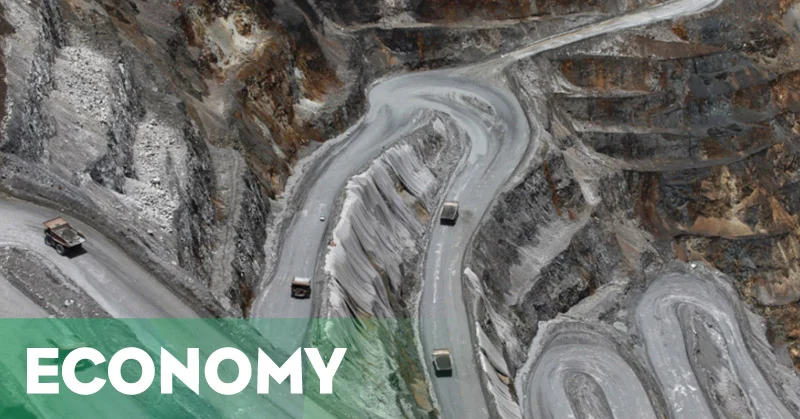
The ongoing discussions surrounding the divestment of shares in mining giant PT Freeport Indonesia have entered a critical phase, highlighting the strategic ambition of the Indonesian government to increase national ownership in major natural resource concessions. Within this framework, two prominent Indonesian State-Owned Enterprises (SOEs)—PT Aneka Tambang (Persero) Tbk (ANTM) and PT Inalum (Persero)—have been designated to spearhead the acquisition process for the divested shares. Despite external skepticism and complex commercial negotiations, high-ranking government officials have expressed unwavering confidence in the operational and financial readiness of these state entities to assume control and successfully manage the massive copper and gold mining operations in Papua.
The conviction within the Ministry of Finance underscores a broader policy shift aimed at ensuring that strategic national assets deliver direct and substantial benefits to the domestic economy. As the divestment process moves forward, policymakers, industry analysts, and market observers are closely scrutinizing the capacity of Indonesian enterprises to absorb, operate, and sustain a world-class mining venture previously dominated by foreign multinational investment.
Context and Background of the Divestment Mandate
The push for state participation in PT Freeport Indonesia is rooted in the regulatory frameworks governing mineral and coal mining in the country, particularly the 2009 Mining Law and its subsequent amendments, alongside specific provisions within Freeport’s Contract of Work. Under these regulations, foreign-owned mining companies operating within Indonesian jurisdiction are legally obligated to progressively divest their shares to local entities—prioritizing the central government, regional governments, and state- or privately-owned national companies.
For decades, the Grasberg mine in Mimika, Papua—operated by PT Freeport Indonesia, a subsidiary of the United States-based Freeport-McMoRan Inc.—has stood as one of the largest gold and copper deposits in the world. However, the ownership structure has historically favored foreign stakeholders, generating continuous public debate regarding national sovereignty, the distribution of economic rents, environmental stewardship, and local community development in Papua.
The decision to position PT Aneka Tambang (Persero) Tbk, widely known as Antam, and PT Inalum (Persero) at the forefront of the acquisition reflects a calculated strategy to pool state mining expertise and capital strength. Antam brings decades of experience in mineral exploration, processing, and commercialization across various commodities such as nickel, gold, and bauxite. Meanwhile, Inalum—which later evolved into the mining holding company MIND ID—possesses substantial financial leverage and strategic oversight capabilities necessary for executing large-scale capital acquisitions.
Chronology of the Divestment Process and Government Stance
The timeline leading up to the designation of Antam and Inalum as prospective buyers was marked by protracted negotiations regarding share valuations, environmental liabilities, the transition from a Contract of Work (CoW) to a Special Mining Business License (IUPK), and the construction of domestic smelting facilities.
In the years preceding late 2015, the Indonesian government intensified pressure on Freeport-McMoRan to comply with statutory divestment obligations that had faced repeated delays. As regulatory deadlines approached, the Ministry of Finance, alongside the Ministry of Energy and Mineral Resources and the Ministry of State-Owned Enterprises, coordinated efforts to formulate a unified national acquisition strategy.
By November 2015, the structural plan crystallized around the involvement of a consortium or specific state-owned enterprises capable of meeting the financial requirements mandated by the fair-market value of the shares. Addressing the public and financial markets regarding these developments, Sonny Loho, who served as the Director General of State Assets at the Ministry of Finance, firmly asserted the capability of Indonesian SOEs to manage the complex mining operations. Speaking in Jakarta, Loho dismissed doubts regarding the technical competence and managerial readiness of state firms.
"Yes, they are capable; there is no reason to doubt them. Our mining companies are already performing well," Loho stated at the Ministry of Finance. He further emphasized that domestic stakeholders should shed any lingering apprehension concerning the technical management of the world-class mining asset. "There is no need to worry. People in Indonesia worry too much; we must be bold. They must be able to manage it."
Financial and Technical Preparedness of Indonesian SOEs
The assertion made by the Ministry of Finance touches upon a central debate among macroeconomic analysts and mining experts: whether Indonesian SOEs possess sufficient capital and operational expertise to run a high-altitude, high-tonnage block-cave mining operation like Grasberg without disrupting global supply chains or operational productivity.
PT Aneka Tambang (Persero) Tbk has a long-standing history as a publicly listed mining entity with extensive expertise in exploration, mining, and metal purification. Its technical workforce has successfully managed underground and surface mining operations, albeit on a different scale compared to the massive output of Freeport Indonesia. On the other hand, PT Inalum (Persero), which was transitioning into a strategic investment holding entity for the mining sector, offered substantial financial consolidation capabilities.
Financial analysts note that acquiring a significant stake in PT Freeport Indonesia required multi-billion-dollar funding arrangements. Consequently, the involvement of state enterprises necessitated coordinated syndication with international banking institutions, the issuance of global bonds, and structured financial planning to ensure that the acquisitions did not adversely affect the fiscal health of the parent companies or the national budget.
Industry Stakeholder Reactions and Diverse Perspectives
The trajectory of the Freeport divestment has consistently attracted varied responses from political circles, labor unions, environmental organizations, and economic analysts.
Proponents of the state acquisition argue that majority ownership by the Indonesian government is a constitutional imperative, aligning with Article 33 of the 1945 Constitution, which stipulates that the earth, water, and natural riches contained therein are controlled by the state and used for the greatest prosperity of the people. From this perspective, channeling shares through state-owned enterprises ensures that dividends, tax revenues, and royalties flow directly back into state coffers, thereby expanding fiscal space for national development, infrastructure expansion, and social welfare programs.
Conversely, cautious voices within the financial sector initially raised concerns over potential governance challenges, bureaucratic interference in corporate decision-making, and the risk of political appointments overshadowing professional management standards within the state-owned enterprises. Critics emphasized that maintaining the high productivity and safety standards of the Grasberg complex requires continuity in cutting-edge mining technology, particularly as the operation transitioned fully from open-pit mining to deep underground block-caving methods—a technically demanding and capital-intensive engineering feat.
To mitigate these risks, government officials repeatedly stressed that the management transition would prioritize operational continuity. Experienced foreign engineers and technical personnel were expected to be retained during and after the ownership transition to ensure that output levels remained stable and safety protocols were strictly observed.
Broader Economic Implications and Strategic Impact
The strategic decision to vest Freeport shares in Indonesian state-owned enterprises carries profound implications for the national economy and the mining sector’s industrial ecosystem.
First, it marks a definitive turning point in resource nationalism in Indonesia, signaling to the international investor community that while foreign capital and technology remain welcome, strategic control over critical non-renewable resources must ultimately reside with national entities. This policy trajectory subsequently influenced regulatory frameworks across other mineral sectors, reinforcing mandates for domestic processing and refining (smelting) within the country rather than exporting raw ores.
Second, the consolidation of mining assets under state-owned holding structures enhances Indonesia’s bargaining power in global commodity markets. By integrating entities like Antam, Inalum (MIND ID), PT Bukit Asam Tbk, and PT Timah Tbk, the government established a unified mining conglomerate capable of strategic long-term planning, coordinated capital allocation, and joint ventures with global technology partners.
Third, the financial yields generated from the acquired shares provide a direct revenue stream to the state budget, reducing reliance on conventional taxation and debt financing. A significant portion of these economic rents has been earmarked for regional development in Papua, addressing historical economic disparities and fostering local infrastructure growth through special autonomy funds and regional government share ownership schemes.
Conclusion
The journey toward securing national ownership in PT Freeport Indonesia through state-owned enterprises represents one of the most complex corporate and geopolitical maneuvers in the nation’s modern economic history. The foundational statements articulated by financial authorities in late 2015—affirming the competence and readiness of entities such as Antam and Inalum—reflected a deliberate strategic resolve to reshape the landscape of Indonesia’s extractive industries.
As the historical divestment process matured into full majority state ownership in subsequent years, the initial confidence expressed by policymakers set the benchmark for institutional accountability. The ongoing challenge for Indonesian state-owned enterprises remains the sustained, professional, and transparent management of these vital assets, ensuring that the wealth extracted from the earth translates into enduring prosperity, technological advancement, and sustainable development for the entire nation.