Jakarta, Indonesia’s vibrant capital, stands at the forefront of a significant shift in urban transportation, as electric motorcycles continue to capture the interest of the nation’s vast commuter base. By 2026, the allure of modern design, significantly lower operational costs, and compelling environmental benefits has firmly established electric two-wheelers as a mainstream choice for Indonesian consumers. This year, manufacturers are pushing the boundaries, unveiling models that seamlessly blend aesthetic appeal with cutting-edge technology and sophisticated features, catering to an increasingly discerning market that prioritizes both form and function. The transition towards electric mobility is not merely a trend but a strategic national imperative, supported by robust government policies and a growing awareness among the populace regarding sustainable living.
The burgeoning demand reflects a confluence of factors, including rising fuel prices, a national commitment to reducing carbon emissions, and the rapid advancement of battery and motor technologies. Indonesia, with its immense population and daily reliance on two-wheeled transportation, presents a unique and fertile ground for the electric motorcycle revolution. The sheer volume of daily commutes across sprawling urban centers makes the shift to electric particularly impactful, promising cleaner air, reduced noise pollution, and a step towards energy independence. As the market matures, the competitive landscape has intensified, prompting manufacturers to innovate rapidly, offering a diverse array of models that cater to various segments, from performance enthusiasts to eco-conscious daily commuters.
The Evolving Landscape of Electric Mobility in Indonesia
Indonesia’s journey towards electric vehicle (EV) adoption has been a progressive one, marked by several key policy interventions and strategic investments. Recognizing its vast nickel reserves—a critical component for EV batteries—the Indonesian government has proactively positioned the nation as a global hub for EV manufacturing and battery production. This vision began to crystalize with Presidential Regulation No. 55/2019 concerning the Acceleration of the Battery-Based Electric Motor Vehicle Program for Road Transportation, which laid the foundational framework for EV ecosystem development. Subsequent regulations and incentive schemes, including tax breaks, import duty exemptions for EV components, and subsidies for local EV purchases, have significantly lowered the entry barrier for both manufacturers and consumers.
By 2026, these policies have yielded tangible results. The market has witnessed an average annual growth rate exceeding 35% in electric motorcycle sales over the past three years, driven by a combination of affordability (post-subsidy), improved range, and enhanced charging infrastructure. Public charging stations, though still expanding, are becoming more prevalent in urban and semi-urban areas, complementing the ease of home charging. Furthermore, battery swapping networks, particularly for last-mile delivery and high-frequency users, have emerged as a practical solution, addressing range anxiety and quick turnaround times. Industry associations, such as the Indonesian Motorcycle Industry Association (AISI) and the Indonesian Employers Association (APINDO), have consistently highlighted the electric two-wheeler sector as a critical driver for national economic growth, fostering local innovation and job creation.
Key Considerations for Prospective Buyers
While the allure of stylish designs and advanced features is undeniable, potential buyers in 2026 are also keenly aware of practical considerations. Beyond aesthetics, a comprehensive evaluation of an electric motorcycle involves several critical aspects:
- Performance: This encompasses not only top speed but also acceleration, handling, and suitability for varied urban terrains.
- Range (Jarak Tempuh): Crucial for daily commuting, buyers assess the practical distance a motor can cover on a single charge, factoring in riding style and payload.
- Battery Capacity and Technology: The type of battery (e.g., Lithium-ion, LFP), its capacity (in kWh), charging time, and expected lifespan are paramount. Many models now offer advanced battery management systems (BMS) for optimized performance and longevity.
- Safety Features: Modern electric motorcycles incorporate ABS (Anti-lock Braking System), traction control, LED lighting for enhanced visibility, and robust chassis designs.
- After-Sales Service and Warranty: The availability of authorized service centers, spare parts, and comprehensive warranty packages for both the vehicle and its battery remains a significant factor influencing purchasing decisions.
- Connectivity Features: Integration with smartphone apps for vehicle monitoring, navigation, anti-theft systems, and over-the-air (OTA) software updates is increasingly becoming a standard expectation.
- Total Cost of Ownership (TCO): Beyond the initial purchase price, consumers consider electricity costs, maintenance (which is generally lower for EVs), insurance, and potential resale value. Government incentives and subsidies continue to play a crucial role in reducing the TCO, making electric motorcycles a more attractive long-term investment.
With a burgeoning array of choices in the Indonesian market, consumers are empowered to select an electric motorcycle that perfectly aligns with their daily mobility needs, personal style, and budget.
Spotlight on 2026’s Stylish Electric Motorcycle Recommendations
The year 2026 presents a compelling lineup of electric motorcycles that excel in both design and functionality. Here are six standout models that deserve strong consideration for their blend of style, performance, and advanced features:
1. ALVA Cervo
The ALVA Cervo continues to set a benchmark in the premium electric motorcycle segment, captivating riders with its distinctly sporty and futuristic design. Positioned as a high-performance urban commuter, the Cervo is engineered for riders who demand both exhilarating performance and sophisticated aesthetics. Its advanced digital instrument cluster provides real-time data, while multiple riding modes (e.g., Eco, Normal, Sport) allow riders to tailor power delivery to their preferences and conditions. A standout feature is its comprehensive connectivity suite, integrated through a dedicated smartphone application. This app offers remote vehicle monitoring, GPS tracking, battery status checks, and even diagnostic alerts, providing an unparalleled level of user convenience and security. The Cervo’s robust motor delivers instant torque, making it exceptionally agile and responsive in city traffic, while its aerodynamic profile hints at its performance capabilities. It embodies the aspiration for a modern, high-tech urban ride.
2. Honda CUV e:
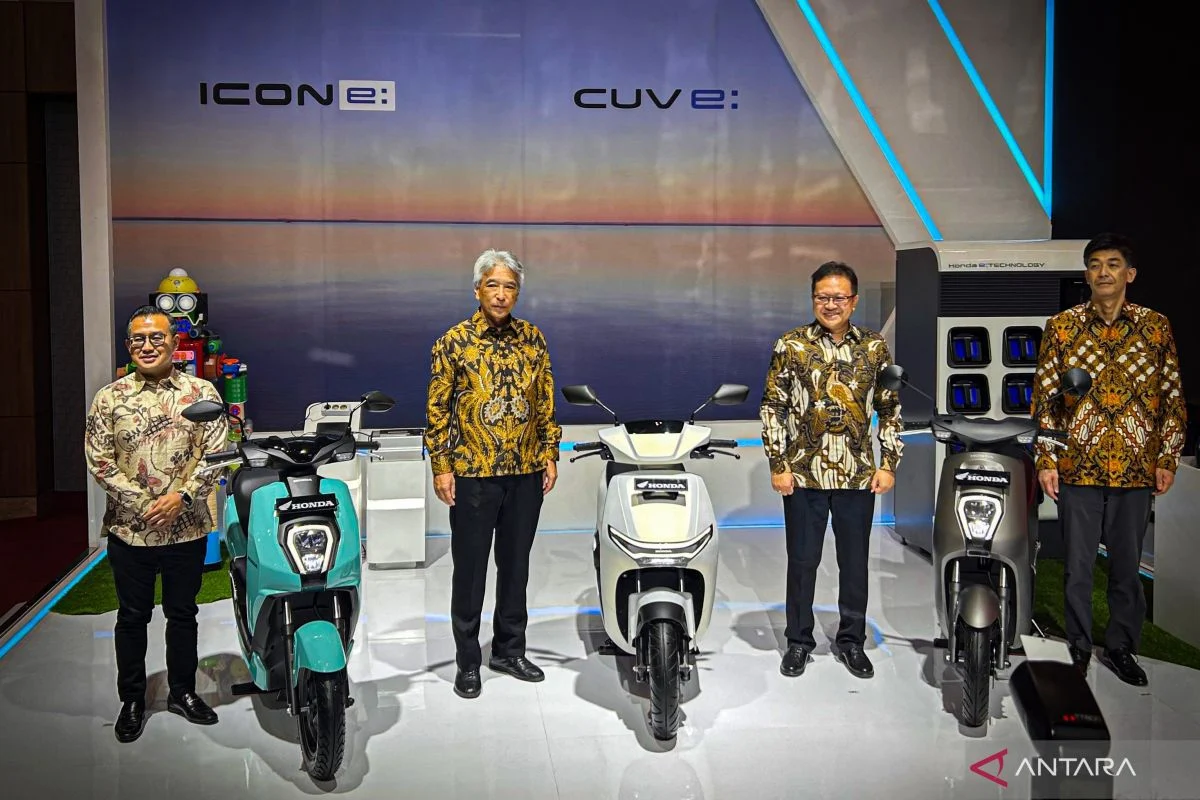
Honda, a dominant force in the Indonesian two-wheeler market, makes a significant statement with the CUV e:. This electric scooter blends Honda’s renowned reliability with a contemporary design that closely resembles its popular gasoline-powered automatic scooter counterparts. The CUV e: exudes an understated elegance, featuring clean lines and a practical, user-friendly layout. Engineered with Honda’s proprietary battery technology, it promises reliable performance and sufficient range for typical daily commutes. Safety, a hallmark of Honda products, is paramount in the CUV e:, incorporating advanced braking systems and robust chassis construction to ensure rider confidence. Its compact dimensions and nimble handling make it an ideal choice for navigating the often-congested streets of Indonesian cities, offering a smooth and quiet ride without compromising on the familiar comfort and dependability associated with the Honda brand.
3. Polytron Fox-R
The Polytron Fox-R distinguishes itself with an aggressive yet futuristic design, reflecting a bold approach to electric mobility. This model has garnered considerable popularity for its ability to combine striking aesthetics with practical, energy-efficient performance. The Fox-R boasts a fully digital display, offering crisp and clear information to the rider, and features a sophisticated LED lighting system that not only enhances visibility but also contributes to its modern appeal. Its ergonomic design ensures a comfortable riding posture, making it suitable for extended daily use. The blend of a powerful electric motor, an efficient battery system, and a captivating design positions the Fox-R as a compelling option for those seeking an electric motorcycle that stands out from the crowd while delivering on its promise of sustainable and economical transportation.
4. Yadea Velax
Yadea Velax enters the market with a contemporary design characterized by sharp body lines and a sleek profile, appealing to riders who prioritize a modern and distinctive look. Beyond its visual appeal, the Velax is equipped with a suite of features designed to enhance rider comfort and convenience, making every journey more enjoyable. Its performance is finely tuned for urban environments, offering a balanced combination of acceleration and efficiency that is perfectly suited for city commuting and daily errands. A significant advantage of the Yadea Velax is its wide array of color options, allowing consumers to personalize their ride and express their individual style. This customization, coupled with its reliable performance and comfortable ride, positions the Velax as a strong contender for the fashion-conscious urban rider seeking both substance and style.
5. United TX1800
The United TX1800 offers a refreshing take on electric motorcycle design, presenting a simple yet undeniably modern aesthetic. This model is meticulously engineered for daily utility, emphasizing an ergonomic riding position that minimizes fatigue during prolonged commutes. Its intuitive controls and practical features underscore its design philosophy of straightforward, reliable operation. The TX1800 serves as an excellent alternative for consumers who appreciate an elegant, understated vehicle that prioritizes functionality and comfort without sacrificing contemporary appeal. It embodies efficiency and ease of use, making it a reliable workhorse for everyday mobility while maintaining a refined presence on the road.
6. Smoot Zuzu
The Smoot Zuzu embraces a compact design ethos with a minimalist aesthetic, making it an exceptionally agile and practical choice for navigating dense urban environments. Its diminutive size and light weight afford riders unparalleled maneuverability, allowing for effortless weaving through traffic and easy parking in tight spaces. Despite its compact footprint, the Zuzu maintains an attractive and youthful appeal, resonating particularly well with younger demographics and those seeking a nimble city companion. Beyond its practical design, the Smoot Zuzu is renowned for its remarkably economical operational costs, further enhancing its appeal as an ideal daily commuter. Its focus on efficiency and convenience, often integrated with a battery swapping system in key urban hubs, makes it a highly attractive and sustainable option for budget-conscious riders.
The Broader Impact and Future Outlook
The rapid expansion of the electric motorcycle market in Indonesia carries profound implications across economic, environmental, and technological spheres. Economically, it stimulates domestic manufacturing, attracts foreign investment, and creates new jobs in battery production, assembly, and related service industries. This aligns with Indonesia’s aspiration to move up the global value chain, leveraging its natural resources for sustainable industrial growth. Environmentally, the widespread adoption of electric motorcycles is a critical step towards achieving Indonesia’s ambitious climate targets, significantly reducing urban air pollution and mitigating carbon emissions from the transportation sector. The shift away from fossil fuels also enhances national energy security.
Technologically, the competition among manufacturers is driving continuous innovation in battery chemistry, motor efficiency, and smart connectivity features. This push for advanced solutions not only benefits consumers with better products but also positions Indonesia as a key player in the global EV technology landscape. However, challenges remain, primarily concerning the density and standardization of charging infrastructure, particularly in rural areas, and the establishment of robust battery recycling ecosystems. Addressing these aspects will be crucial for sustaining long-term growth and ensuring a truly circular economy for EVs.
As Indonesia progresses towards a greener and more technologically advanced future, the electric motorcycle stands as a symbol of this transformation. Consumers in 2026 are no longer just acquiring a mode of transport; they are investing in a lifestyle that champions energy efficiency, stylish design, and cutting-edge technology, all while contributing to a healthier and more sustainable urban environment. The journey of electrification in Indonesia’s two-wheeled sector is not merely a passing phase but a foundational shift, promising a quieter, cleaner, and more connected tomorrow.