JAKARTA – Pertamina Foundation seized the opportune moment of National Children’s Day (HAN) 2026 to instill vital eco-friendly habits in young children. Through a series of engaging and educational activities, the foundation actively involved both children and their parents at two of its fostered kindergartens, TK Bumi Patra I Pondok Ranji and TK Bumi Patra II Cempaka Putih. This proactive initiative aims not only to cultivate a deep sense of environmental responsibility from an early age but also to significantly contribute to strengthening human resources, a critical step towards fostering a sustainable green economy for Indonesia. The program underscores the belief that foundational values established in early childhood are instrumental in shaping future generations capable of addressing complex environmental challenges and driving sustainable development.
Nurturing Eco-Consciousness on National Children’s Day
National Children’s Day, observed annually in Indonesia, serves as a poignant reminder of the nation’s commitment to protecting children’s rights, ensuring their well-being, and empowering them to become active contributors to society. It is a day dedicated to celebrating the potential of every child and emphasizing the collective responsibility to create a supportive environment for their growth and development. By aligning its environmental education program with this significant national observance, Pertamina Foundation amplifies the message that a child’s holistic development must include an understanding and appreciation of their natural surroundings. The choice of National Children’s Day for this launch in 2026 was a strategic one, designed to maximize public awareness and reinforce the intergenerational importance of environmental care. It frames environmental education not as an isolated subject, but as an integral component of nurturing well-rounded, responsible citizens.
The initiative by Pertamina Foundation represents a crucial investment in the nation’s future, recognizing that the habits and values formed during these formative years can have a lasting impact. The foundation, as the social arm of the state-owned energy company Pertamina, has a long-standing commitment to various corporate social responsibility (CSR) programs, with education and environmental sustainability being core pillars. This particular program at the kindergarten level is a testament to their integrated approach, where academic excellence is complemented by character building and a strong sense of civic duty towards the planet.
Thematic Focus and Program Objectives
"National Children’s Day is the perfect moment for us to instill environmental awareness from an early age. Through the theme ‘My Parents and I Care for the Earth,’ we want children and parents alike to learn and directly practice eco-friendly habits, not just theorize about them," stated Gusman Adiwardhana, Operation Director of Pertamina Foundation, in a press statement released on Friday, July 24, 2026. His remarks highlighted the program’s dual focus: engaging both children and their primary caregivers to ensure that the lessons learned in school are reinforced and consistently applied at home. This collaborative model is a cornerstone of effective early childhood education, where the home environment plays a critical role in solidifying positive behaviors.
The "My Parents and I Care for the Earth" theme was meticulously chosen to emphasize shared responsibility and collective action. It acknowledges that while children are highly receptive to new ideas, the sustained adoption of eco-friendly practices often requires the active participation and guidance of adults. By involving parents directly in the learning process, Pertamina Foundation aims to create a ripple effect, transforming households into hubs of sustainable living. The program’s objectives extend beyond mere knowledge acquisition; they seek to foster a genuine emotional connection to nature, encouraging empathy for the environment and a proactive stance in its preservation. This approach is aligned with contemporary pedagogical theories that advocate for experiential learning, where children learn best by doing and through meaningful interactions with their environment.
A Day of Interactive Learning and Engagement
The activities under the "My Parents and I Care for the Earth" theme unfolded across two key locations: TK Bumi Patra I Pondok Ranji and TK Bumi Patra II Cempaka Putih. A total of 75 eager students, accompanied by 77 equally enthusiastic parents, participated in a comprehensive series of interactive learning sessions. These sessions were meticulously designed to introduce and embed various eco-friendly behaviors into daily routines. The curriculum covered a broad spectrum of practices, including the fundamental principles of waste sorting, efficient electricity and water conservation, the adoption of reusable tumblers and shopping bags, and the encouragement of public transportation use. Each activity was crafted to be age-appropriate, engaging, and directly applicable to the children’s lives, making the abstract concept of environmental care tangible and relatable.
The day’s events were carefully structured to maintain a high level of engagement and excitement, transforming environmental education into an adventure. The overarching concept, "Little Heroes Saving the Earth," resonated deeply with the children, empowering them with a sense of purpose and agency. The program commenced with an energetic environmental-themed exercise routine, setting a lively tone for the day. This was followed by an educational segment on the crucial practice of waste sorting, differentiating between organic, inorganic, and hazardous waste (B3). To reinforce this learning, children participated in a thrilling waste sorting relay game, turning a potentially mundane task into a fun, competitive activity. A captivating puppet show, titled "Guardians of the Earth Heroes," further enriched the experience, delivering powerful messages about environmental preservation in an engaging and easily digestible format suitable for young minds.
Hands-On Learning: From Waste Sorting to Creative Arts
The interactive nature of the program was its defining characteristic. The "Little Heroes Saving the Earth" concept was brought to life through various hands-on experiences. The waste sorting relay game, for instance, not only taught children the correct categories for different types of waste but also developed their motor skills and teamwork. The puppet show, a beloved medium for children, effectively conveyed complex environmental issues such as deforestation, pollution, and the importance of biodiversity through simple narratives and relatable characters. This multi-sensory approach ensures that the environmental messages are deeply imprinted in the children’s memories.
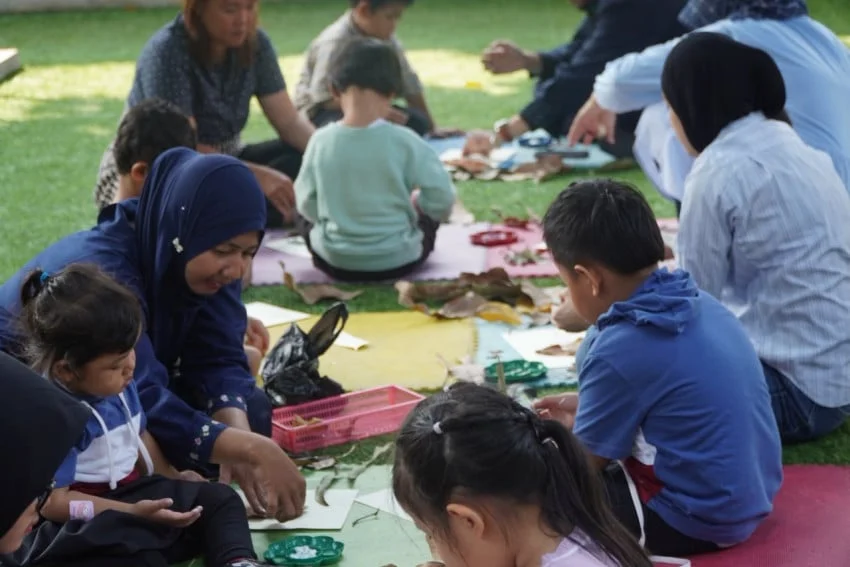
Beyond the core environmental lessons, the program also fostered creativity. Participants were invited to a special creative session where they transformed dried leaves into various works of art, including butterflies, boats, and trains. This activity served multiple purposes: it encouraged children to appreciate natural materials, stimulated their imagination, and demonstrated that beauty can be found and created from resources often overlooked as waste. This artistic endeavor reinforced the concept of resourcefulness and the cyclical nature of materials, aligning with principles of a circular economy. It also offered a calm, reflective counterpoint to the more energetic activities, allowing children to express their understanding of nature through art.
Sustaining Green Habits: The SAMUSAPO Initiative
The culmination of the day’s activities focused on practical, long-term environmental stewardship. As a closing act, children and parents together engaged in plant care, watering plants they had brought from home. This simple yet profound activity taught responsibility and the direct impact of their actions on living organisms. The program extended its reach into a sustainable initiative known as SAMUSAPO (Satu Murid Satu Pohon), meaning "One Student One Tree." Under this program, children were involved in the maintenance of watermelon plants, which they would continue to care for over time. SAMUSAPO exemplifies Pertamina Foundation’s commitment to fostering a sustained connection between children and nature, transforming a single-day event into an ongoing journey of environmental care.
The SAMUSAPO program is particularly significant as it offers a tangible, long-term project for the children. By nurturing a watermelon plant, they learn about plant growth, the importance of water and sunlight, and the patience required for cultivation. This personal connection to a living plant helps children develop empathy for nature and understand the fundamental principles of ecology. Moreover, it instills a sense of ownership and responsibility, as they are directly accountable for the well-being of their plant. This initiative is a practical manifestation of the program’s goal to move beyond theoretical knowledge to practical application and sustained engagement.
The Broader Vision: Pertamina Foundation’s Commitment to Sustainable Education
Gusman Adiwardhana reiterated that this activity is an integral part of Pertamina Foundation’s long-term commitment to managing its fostered schools. This commitment transcends mere academic achievement, extending to the holistic development of children, specifically in shaping their character to be environmentally conscious. Pertamina Foundation recognizes that schools are not just places for intellectual growth but also crucial environments for character formation and the inculcation of values that will guide children throughout their lives. By integrating environmental education into the core curriculum and school ethos, they aim to cultivate a generation that is not only academically proficient but also ethically responsible and environmentally literate.
This broader vision aligns with global trends in education, which increasingly emphasize sustainability education as a critical component of preparing students for the future. Pertamina Foundation’s approach involves creating a ‘green school’ environment where sustainable practices are normalized and integrated into daily operations, from waste management to energy use. This comprehensive strategy ensures that environmental lessons are not confined to specific classes but are part of the entire school culture, providing a consistent and immersive learning experience for students. The foundation’s investment in these schools goes beyond infrastructure, focusing on curriculum development, teacher training, and community engagement to build truly sustainable educational ecosystems.
The Critical Role of Parental Involvement
According to Gusman, the collaboration between schools and families is a pivotal factor in ensuring that positive habits, once introduced, are consistently applied in daily life. This sentiment is widely supported by educational research, which consistently demonstrates that parental engagement significantly boosts a child’s learning outcomes and character development. When parents are actively involved, they reinforce school lessons at home, provide a consistent message, and serve as role models for their children. In the context of environmental education, parental involvement is particularly crucial because many eco-friendly practices, such as waste sorting, energy conservation, and responsible consumption, are primarily practiced within the home.
The "My Parents and I Care for the Earth" theme directly addresses this need for synergy. By bringing parents into the classroom and involving them in the hands-on activities, Pertamina Foundation facilitates a shared learning experience. This not only educates parents on best practices but also empowers them to become co-educators in their children’s environmental journey. Parents who participated in the program expressed enthusiasm for the initiative, noting that it provided them with practical tips and inspired them to adopt more sustainable practices in their own homes. "It was wonderful to learn alongside my child. We now have a shared understanding of why it’s important to sort our trash, and we even have a family plan for saving electricity," commented Mrs. Sari, a parent from TK Bumi Patra I. Such testimonials underscore the effectiveness of the collaborative model in fostering a culture of sustainability that extends beyond the classroom walls.
Driving a Green Economy Through Early Education
The program’s ambitious goal of supporting human resource strengthening towards a sustainable green economy highlights a forward-thinking perspective. A green economy is one that aims for sustainable development without degrading the environment, focusing on resource efficiency, low-carbon development, and social inclusion. For Indonesia, a nation rich in biodiversity but also facing significant environmental challenges such as deforestation, plastic pollution, and climate change vulnerability, fostering a green economy is paramount. By instilling environmental consciousness and practical skills in its youngest citizens, Pertamina Foundation is effectively building the foundational human capital necessary to navigate and lead this transition.
Supporting data underscores the urgency of this endeavor. Indonesia, as an archipelago nation, is highly susceptible to the impacts of climate change, including rising sea levels and extreme weather events. The country also faces immense challenges in waste management, with millions of tons of waste generated annually, much of which ends up in landfills or pollutes oceans. Initiatives that promote waste sorting, recycling, and responsible consumption are therefore critical. Early environmental education, as demonstrated by studies from institutions like UNESCO and UNICEF, has been shown to be highly effective in cultivating lifelong habits and attitudes that contribute to environmental protection. Children who receive early environmental education are more likely to become environmentally responsible adults, making informed decisions about consumption, advocating for sustainable policies, and pursuing green careers.
Indonesia’s Environmental Landscape and the Urgency of Action
Indonesia’s unique geography and rapid economic development present both opportunities and challenges for environmental sustainability. As the world’s largest archipelagic state, its marine ecosystems are incredibly diverse but also highly vulnerable to pollution and climate change. On land, the country’s vast rainforests are critical for global biodiversity and carbon sequestration, yet they face threats from deforestation and land degradation. The urgency for comprehensive environmental action, therefore, cannot be overstated.
Pertamina Foundation’s program, by focusing on behavior change at the grassroots level, tackles these broader challenges through a bottom-up approach. For example, teaching children to sort waste addresses a significant national problem, given that only a small percentage of Indonesia’s waste is currently recycled. Encouraging the use of reusable items like tumblers and shopping bags directly combats plastic pollution, a crisis that affects Indonesia’s coastal communities and marine life. By raising a generation that inherently understands and practices these principles, the foundation is laying the groundwork for a society that naturally gravitates towards sustainable solutions. This early intervention is far more effective than trying to reverse deeply ingrained unsustainable habits later in life.
Aligning with Sustainable Development Goals
This initiative by Pertamina Foundation directly contributes to several United Nations Sustainable Development Goals (SDGs), demonstrating a holistic approach to sustainability. Specifically, it aligns with:
- SDG 4: Quality Education: By providing inclusive and equitable quality education that includes environmental literacy, the program ensures that children are equipped with the knowledge and skills for sustainable living.
- SDG 12: Responsible Consumption and Production: Teaching waste sorting, resource conservation, and the use of reusable items directly promotes sustainable consumption and production patterns.
- SDG 13: Climate Action: By fostering an understanding of environmental issues and promoting eco-friendly behaviors, the program contributes to building resilience and adaptive capacity to climate-related hazards and natural disasters.
- SDG 15: Life on Land: Activities like plant care and the SAMUSAPO program directly support the protection, restoration, and promotion of sustainable use of terrestrial ecosystems.
By framing its educational efforts within the context of these global goals, Pertamina Foundation underscores its commitment not only to local communities but also to broader international efforts for a sustainable planet. This strategic alignment enhances the program’s impact and relevance on a global scale.
Voices from the Ground: Participant Reactions
The true measure of the program’s success lies in the reactions and feedback from its participants. Teachers at both TK Bumi Patra I and TK Bumi Patra II expressed profound appreciation for the initiative, noting a visible increase in children’s enthusiasm for environmental topics. "The children are now much more conscious about throwing trash in the right bins, and they even remind each other," observed Mrs. Dewi, a teacher at TK Bumi Patra II. She added that the interactive format made learning enjoyable and memorable, proving far more effective than traditional classroom lectures.
Parents, too, lauded the program for its practical approach. Mr. Budi, whose daughter participated, remarked, "I’ve noticed my daughter telling us to turn off lights when we leave a room. It’s amazing how quickly they pick up these habits when taught in such a fun way." The involvement of parents was particularly impactful, as it fostered a sense of community and collective purpose. Many parents reported that the program sparked conversations about environmental issues at home, turning it into a family affair. This ripple effect beyond the school gate is a testament to the program’s thoughtful design and execution.
A Model for Corporate Social Responsibility and Scalability
Pertamina Foundation’s "My Parents and I Care for the Earth" initiative serves as an exemplary model for corporate social responsibility (CSR). It demonstrates how a large corporation can leverage its resources and influence to address pressing societal needs, going beyond mere philanthropy to create sustainable impact. By focusing on early childhood education, the foundation is making a long-term investment in future generations, an approach that yields exponential returns for society. This initiative also highlights the potential for scalability and replicability. The structured nature of the activities, the clear objectives, and the positive feedback suggest that this program could be adapted and expanded to other schools across Indonesia, or even adopted by other organizations seeking to make a difference in environmental education.
The success of the program can inspire other corporations to adopt similar initiatives, fostering a broader culture of corporate responsibility towards environmental stewardship. The collaborative model involving schools, parents, and a corporate foundation provides a robust framework that can be easily customized to different contexts and demographic groups. By sharing its methodologies and outcomes, Pertamina Foundation can contribute to a growing body of best practices in CSR and sustainability education.
Conclusion: Investing in a Sustainable Future
In conclusion, Pertamina Foundation’s "My Parents and I Care for the Earth" program, launched on National Children’s Day 2026, represents a significant stride towards nurturing a generation of environmentally conscious citizens. By combining interactive learning, parental involvement, and a long-term commitment to sustainable education, the initiative effectively instills vital eco-friendly habits in young children. This foundational work is crucial for building resilient communities, fostering a sustainable green economy, and addressing Indonesia’s unique environmental challenges.
The program’s alignment with national priorities and global Sustainable Development Goals underscores its profound impact and strategic importance. By empowering "Little Heroes Saving the Earth" today, Pertamina Foundation is not just teaching about the environment; it is actively investing in a healthier, more sustainable future for Indonesia and the world. This proactive and integrated approach to environmental education sets a powerful precedent, demonstrating that collective action, starting from the youngest members of society, is the most effective path towards true sustainability. The ripple effect from these two kindergartens holds the promise of a more environmentally aware and responsible society for years to come.