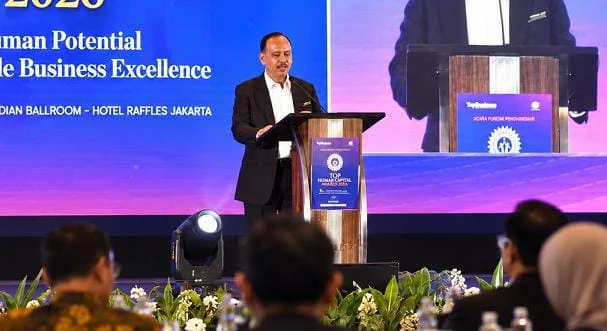
In the rapidly evolving landscape of the global economy, the traditional levers of corporate success—namely capital, industrial machinery, and proprietary technology—are increasingly viewed as commodities rather than unique competitive advantages. As businesses navigate the complexities of the mid-2020s, a paradigm shift has firmly taken root: the realization that human competence is the most critical asset for driving organizational productivity and long-term viability. This transition was the central theme of the TOP Human Capital Awards 2026, held in Jakarta on Thursday, October 29, 2026, where industry leaders and government officials converged to redefine the role of the workforce in a digital-first economy.
The Shift from Tangible Assets to Human Potential
For decades, business growth was measured largely by capital expenditure and the sophistication of operational infrastructure. However, the current industrial climate, characterized by rapid technological disruption and fluctuating market demands, has rendered these metrics insufficient. Experts now argue that an organization’s ability to innovate, adapt, and sustain its market position is inextricably linked to the depth of its talent pool and the strength of its organizational culture.
Teguh Djatmiko, Director of Infrastructure and Training at the Indonesian Ministry of Manpower, delivered a keynote address at the awards ceremony, asserting that human resource development (HRD) can no longer be treated as a peripheral administrative function. Instead, it must be integrated into the core of corporate strategy. "Companies that invest in their people are, by definition, investing in their future," Djatmiko remarked, emphasizing that the modern competitive edge is defined by a combination of individual skill sets and the consistency with which an organization fosters an environment of excellence.
Evolution of Training Metrics: Beyond the Numbers
A significant portion of the discourse at the TOP Human Capital Awards 2026 focused on the measurement of success. Historically, many corporations gauged the efficacy of their HR initiatives through quantitative data: hours of training provided, the number of modules completed, or the total headcount of employees who participated in workshops. According to the Ministry of Manpower, this approach is fundamentally outdated.
Djatmiko stressed that the true value of professional development lies not in participation rates, but in the measurable impact on organizational performance. For a training program to be considered successful, it must correlate directly with improvements in key performance indicators (KPIs), such as increased operational efficiency, reduced error rates, improved customer satisfaction, or accelerated product development cycles. This transition from "input-based" metrics to "outcome-based" assessment requires a fundamental restructuring of how Human Capital (HC) departments operate. It necessitates a data-driven culture where training programs are designed with specific business objectives in mind and evaluated against the bottom line.
The Impact of Artificial Intelligence on Workforce Dynamics
The conversation regarding human capital was further enriched by Dudi Arisandi, Chairman of the Indonesian Human Resource Management Association (PMSM). Arisandi brought the discussion into the realm of the Fourth Industrial Revolution, specifically addressing the role of Artificial Intelligence (AI) in reshaping the workplace.
The integration of AI into corporate functions is no longer a speculative future scenario; it is an active reality that is redefining the nature of work. Arisandi noted that as AI automates routine tasks, the role of the human employee is shifting toward higher-value activities that require emotional intelligence, complex problem-solving, and ethical judgment—areas where machines currently fall short. However, this shift places a heavy burden on human capital departments to manage the transition. Companies must not only reskill their workforce to work alongside AI but also maintain a human-centric organizational culture in an increasingly automated environment.
Chronology and Context of the TOP Human Capital Awards
The TOP Human Capital Awards 2026 serves as a barometer for the state of human resource management in the region. Since its inception, the awards have sought to recognize companies that demonstrate excellence in managing talent, promoting diversity, and implementing innovative HR practices.
- 2023-2024 Phase: Initial observation of the post-pandemic "Great Reshuffle," where companies began prioritizing employee retention and wellness as competitive differentiators.
- 2025 Phase: Widespread adoption of generative AI tools across Indonesian industries, leading to initial anxiety regarding job displacement and a surge in demand for digital literacy training.
- October 2026 (The Event): The awards ceremony showcased the maturation of these trends. The consensus among the 2026 honorees was that those who successfully navigated the past three years did so by investing heavily in upskilling programs that bridged the gap between traditional professional skills and AI proficiency.
Supporting Data and Market Analysis
Current economic indicators support the arguments put forth by the speakers. Research from various international labor organizations suggests that by 2030, the demand for "soft skills"—communication, leadership, and adaptability—will grow significantly faster than the demand for pure technical skills, which are subject to rapid obsolescence.
In the Indonesian context, the "demographic bonus" presents both an opportunity and a challenge. With a massive, young, and tech-savvy population entering the workforce, the potential for high productivity is enormous. However, if the mismatch between the skills taught in academic institutions and the requirements of the private sector persists, this bonus could turn into a liability. The government’s recent focus on vocational training, as echoed by the Ministry of Manpower, is a direct response to this. Reports indicate that organizations investing at least 5% of their annual revenue into employee development see a return on investment (ROI) that is approximately 2.5 times higher than their peers who treat training as an optional expense.
Broader Implications for Corporate Strategy
The implications of the insights shared in Jakarta are far-reaching. For executive leadership teams, the message is clear: the Chief Human Resources Officer (CHRO) must have a seat at the table during all major strategic discussions. HR is no longer just about payroll and recruitment; it is about organizational agility.
- Talent Mobility: Companies that create internal pathways for growth are seeing significantly lower turnover rates. In an era where top talent is mobile, culture and development are the strongest retention tools.
- Strategic Alignment: Every dollar spent on training must be tied to a specific business goal. If a company is moving toward a digital-first sales model, its human capital strategy must prioritize digital sales training, not generic customer service modules.
- Ethical AI Implementation: As AI becomes more prevalent, the human element—oversight, accountability, and the "human touch"—becomes a premium. Companies that prioritize this balance will find themselves with a more resilient and loyal workforce.
Conclusion: The Future of Competitive Advantage
As the business landscape continues to shift, the definition of a "competitive company" will continue to evolve. However, the foundational elements identified at the TOP Human Capital Awards 2026 are likely to remain constant for the foreseeable future. The winners of the next decade will be those who recognize that while technology provides the tools for competition, it is the people who provide the strategy, the creativity, and the execution required to win.
The transition from a focus on hardware and capital to a focus on human potential is more than a trend; it is a fundamental correction in the philosophy of modern business. By fostering continuous learning, embracing technological integration without losing the human essence, and measuring success through the lens of organizational impact rather than headcount, companies can secure their place in a rapidly changing world. The challenge for leaders now is to move beyond the rhetoric of "valuing people" and to embed that value into the very infrastructure of their operations, ensuring that every employee is equipped, empowered, and aligned with the long-term vision of the organization. As Teguh Djatmiko aptly summarized, in the race for the future, the human factor is the only sustainable fuel for the journey.