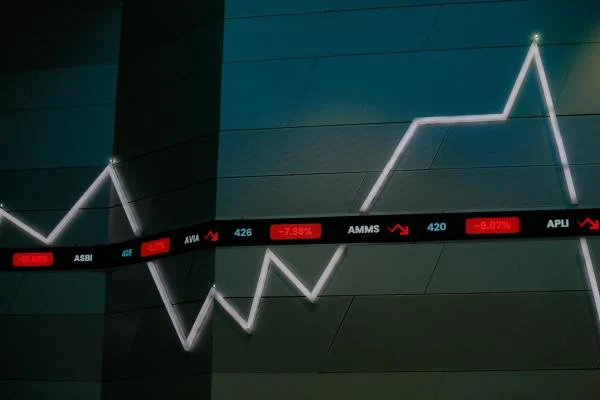
The Jakarta Composite Index (Indeks Harga Saham Gabungan – IHSG) closed its final trading session of the week in negative territory, extending a volatile period for the Indonesian capital market. On Friday, October 30, 2026, the benchmark index retreated by 41.01 points, or 0.80 percent, settling at the 5,057 level. This latest correction reflects persistent caution among institutional and retail investors alike, as domestic market participants navigate a complex interplay of macroeconomic headwinds, shifting monetary policy expectations, and sector-specific pressures.
Market breadth during the session heavily favored sellers. Out of the total equities traded, 552 stocks suffered losses, while only 194 issues managed to secure gains, and 217 remained unchanged. Trading activity remained robust despite the downward trajectory, with total transaction value reaching Rp11.2 trillion. Market liquidity was sustained by an exchange volume of approximately 36.3 billion shares changing hands across the board.
Sectoral Performance and Index Movements
The downward pressure was broad-based, pulling the majority of sectoral indices down into the red. Major sectors bore the brunt of the selling pressure, led notably by energy, non-cyclical consumer goods, infrastructure, properties, raw materials, industrial goods, transportation, cyclical consumer goods, and technology. The contraction across these vital segments underscores a generalized risk-off sentiment prevailing among investors, who appear to be rebalancing portfolios defensively heading into the weekend.
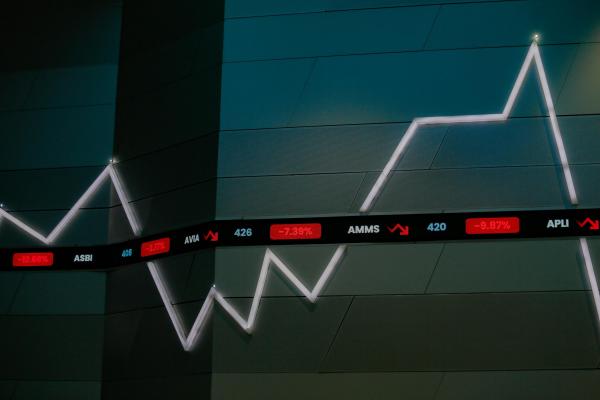
Conversely, defensive pockets of the market provided minor cushions against a steeper collapse. Only two sectoral indices managed to defy the broader market trend and close in positive territory: the financial sector and the healthcare sector. Analysts note that resilient performance in select banking giants and pharmaceutical counters helped prevent a more catastrophic slide in the main index.
Benchmark sub-indices mirrored the mixed-to-negative sentiment. The LQ45 index, which tracks the 45 most liquid stocks on the Indonesia Stock Exchange (IDX), edged down by 0.02 percent to close at 515. Similarly, the Jakarta Islamic Index (JII) dropped 0.77 percent to finish at 289, and the MNC36 index slipped 0.06 percent to 228. In contrast, the IDX30 index managed a slight gain, rising 0.16 percent to close at 289, demonstrating that a handful of blue-chip constituents maintained selective buying interest from bargain hunters.
Top Gainers and Top Losers of the Session
Despite the overarching bearish tone, specific equities experienced aggressive price action, delivering substantial gains for short-term traders. Leading the top gainers list was the Reksa Dana Indeks Simas ETF IDX30, which surged 34.62 percent to reach Rp105 per unit. It was followed by PT Alakasa Industrindo Tbk (ALKA), which climbed 25 percent to close at Rp5,525, and PT Pollux Hotel Group Tbk (POLI), which appreciated by 24.81 percent to settle at Rp830.
On the flip side, speculative issues and select small-cap stocks faced intense liquidation pressure, populating the top losers board. PT Lima Dua Lima Tiga Tbk (LUCY) recorded a sharp decline of 10 percent, dropping to Rp108. PT Cashlez Worldwide Indonesia Tbk (CASH) matched this decline, plunging 10 percent to Rp162. Meanwhile, PT Harta Djaya Karya Tbk (MEJA) retreated by 9.89 percent, closing the session at Rp82.

Background Context and Recent Market Volatility
The closing session on October 30, 2026, caps off a particularly grueling week for the Indonesian bourse. Market observers point out that the recent downward momentum builds upon severe corrections witnessed earlier in the week and month. For instance, in trading sessions immediately preceding this close, the IHSG had experienced drastic sell-offs, including a notable plunge of 3.49 percent down to the 5,098 mark where broad-based sectoral bloodbath was observed across all market pillars.
This persistent volatility is largely attributed to a combination of external and domestic factors. Externally, emerging market assets continue to grapple with shifting global liquidity conditions, fluctuating commodity prices, and uncertainty surrounding the trajectory of global central bank interest rates. Domestically, investors are closely monitoring corporate earnings reports for the third quarter of 2026, alongside domestic inflation data, currency fluctuations against the US dollar, and regulatory shifts impacting key economic sectors.
Market strategists emphasize that the breach of critical psychological thresholds has forced portfolio managers to adopt defensive strategies. The continuous rotation out of growth-oriented and cyclical sectors into defensive havens indicates a prevailing sentiment of capital preservation over aggressive expansion.
Implications and Outlook for Investors
The sustained pressure on the IHSG carries several implications for the broader Indonesian financial landscape. From a macroeconomic perspective, a prolonged downturn in equity valuations can influence consumer confidence and corporate fundraising activities through Initial Public Offerings (IPOs) and rights issues. Companies looking to expand via capital markets may find valuations unfavorable, prompting a temporary freeze in corporate expansion plans.
For retail investors, the current market climate serves as a crucial reminder of the importance of portfolio diversification and risk management. Financial advisors recommend focusing on fundamentally sound companies possessing strong balance sheets, manageable debt levels, and consistent cash generation capabilities, particularly within the resilient financial and healthcare sectors that demonstrated relative strength during Friday’s session.
As the market looks ahead to the subsequent trading week, technical analysts will be monitoring whether the IHSG can successfully establish a support base around the 5,000 to 5,050 range or if further consolidation is warranted. Much will depend on incoming macroeconomic data releases, corporate earnings announcements, and any sudden shifts in regional or global geopolitical landscapes. Market participants are advised to remain vigilant, maintain adequate liquidity, and base their investment decisions on rigorous fundamental analysis rather than short-term speculative noise.