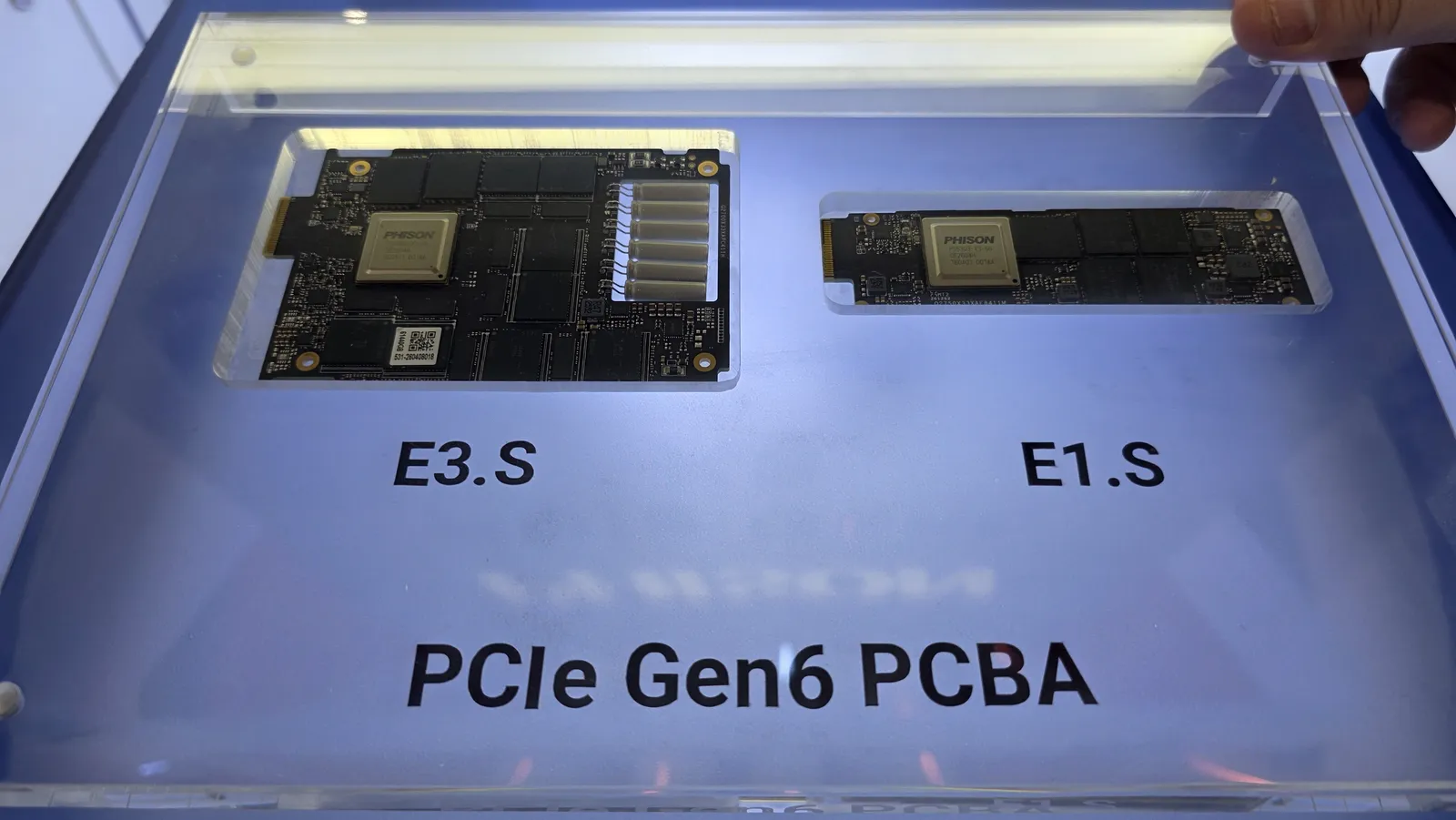
In a significant leap forward for enterprise data architecture and high-performance computing, storage controller giant Phison has unveiled two groundbreaking enterprise solid-state drive (SSD) designs tailored specifically for modern data centers and artificial intelligence workloads. Among the most notable innovations is an intelligent enterprise SSD equipped with an integrated Neural Processing Unit (NPU) and a massive 64 GB of dedicated memory. This configuration achieves an astonishing internal bandwidth of up to 130 GB/s, fundamentally altering how localized computation and data retrieval intersect. By shifting heavy AI inference tasks directly to the storage device, Phison’s new technology promises to alleviate server bottlenecks, reduce network latency, and redefine the operational limits of cloud infrastructure and edge computing nodes.
The unveiling took place during a period of intense global demand for high-density, low-latency AI acceleration hardware. As generative artificial intelligence models, Large Language Models (LLMs), and complex neural networks continue to expand in scale, enterprise data centers face unprecedented strain. Traditional data center models rely on moving colossal volumes of data from persistent storage across the PCIe bus into system RAM, where the CPU or GPU handles the processing load. This constant data transit creates severe input/output (I/O) bottlenecks, drains power, and consumes valuable compute cycles. Phison’s revolutionary approach bypasses this traditional bottleneck entirely by executing AI workloads locally within the storage tier.
At the heart of Phison’s first new architecture is an onboard NPU paired with 64 GB of high-speed memory, working in tandem with the drive’s controller to process machine learning frameworks natively. According to preliminary technical disclosures, the hardware is engineered to support a wide array of industry-standard AI software ecosystems and frameworks, including PyTorch, vLLM, OpenVINO, and llama.cpp. By processing data directly at the storage layer, enterprise servers are relieved of the burden of continuously streaming entire datasets to the central processing unit for routine analytical tasks. Instead, the SSD can independently execute specific model layers or localized queries, returning only the final, processed output to the host system. Phison claims this localized processing model can reduce data movement between storage and server infrastructure by up to 100-fold for specific, highly repetitive enterprise workloads.
Technical evaluations of the NPU integration reveal nuanced performance metrics. Phison has specified that the integrated NPU support infrastructure is rated at 36,800 DMIPS (Dhrystone Million Instructions Per Second). Industry analysts note, however, that DMIPS serves primarily as a measure of integer computing performance for the auxiliary CPU cores managing the NPU rather than a direct translation of modern AI tensor performance typically measured in TOPS (Tera Operations Per Second). Furthermore, Phison has kept certain hardware specifications under wraps, withholding precise details regarding the exact silicon architecture of the NPU and the specific generation of memory utilized alongside the 64 GB pool. Despite these pending details, the architectural intent is clear: to pioneer computational storage devices capable of offloading heavy server duties directly onto intelligent drives.
In tandem with the AI-focused drive, Phison introduced a second innovative enterprise storage architecture known as the Mixed Media design. This configuration addresses a persistent challenge in data center optimization: balancing the ultra-fast performance and high endurance of Single-Level Cell (SLC) or pseudo-SLC (pSLC) flash memory with the exceptional density and cost-efficiency of Quad-Level Cell (QLC) NAND flash. Historically, data centers have had to deploy separate tiers or dedicated drives to serve as fast write caches alongside massive capacity pools. Phison’s Mixed Media design cleverly merges both pSLC cache and QLC high-capacity storage onto a single physical SSD, governed by a unified 16-channel enterprise storage controller.
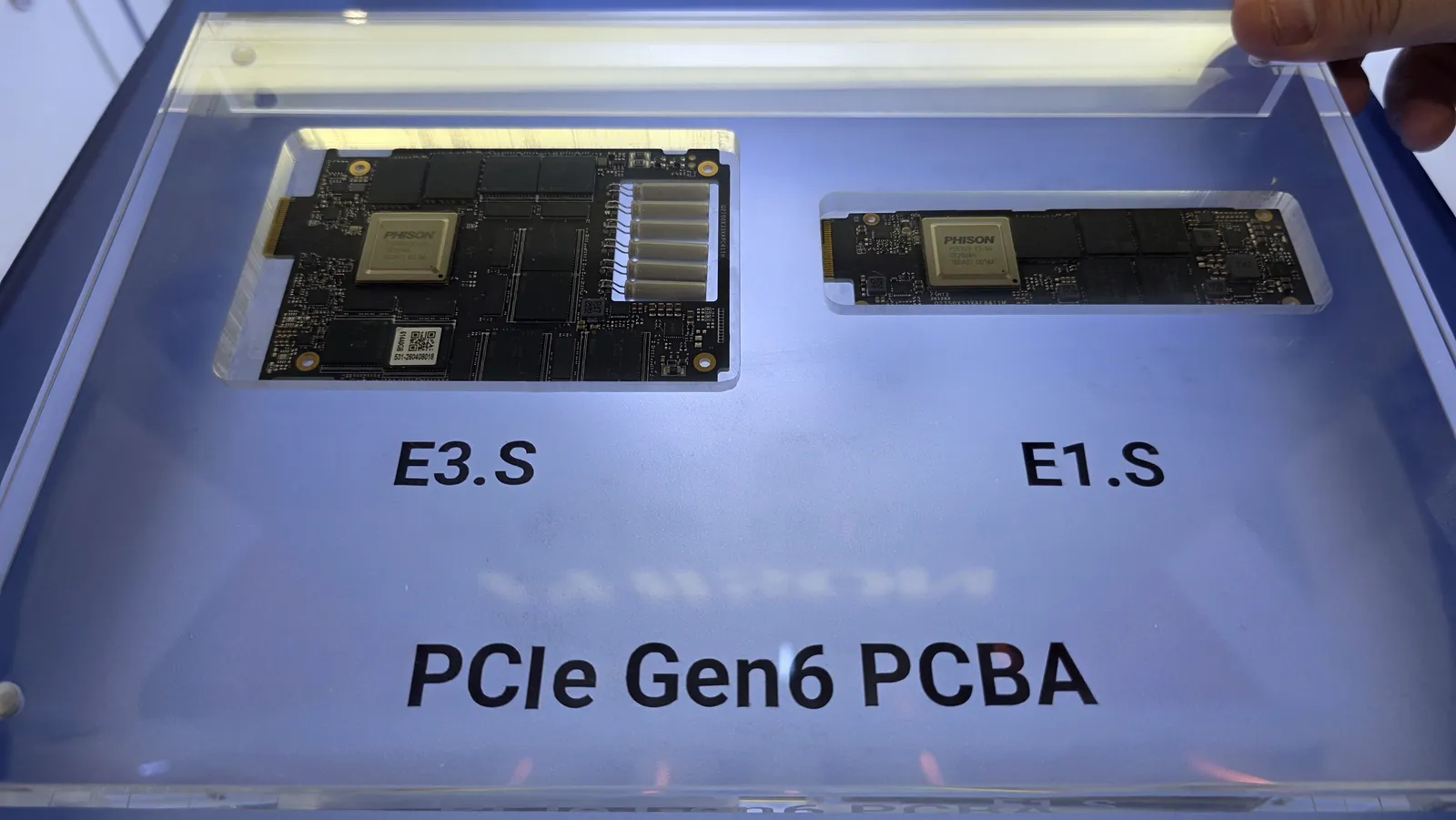
The Mixed Media architecture manages pSLC and QLC sectors as distinct, logically separated storage pools within the same drive. This allows the enterprise system’s file management layer to intelligently route incoming data streams based on their immediate performance and durability requirements. Frequently modified data, write-intensive logs, and temporary transactional data are directed to the pSLC tier, while archival data, static files, and long-term storage repositories are relegated to the dense QLC tier.
This dual-media approach yields profound implications for server rack design and capital expenditure. By consolidating caching and bulk storage into a single hardware footprint, the Mixed Media design effectively reduces the physical number of SSDs required within an enterprise server chassis, thereby freeing up precious PCIe slots and lowering overall power consumption. Crucially, Phison has designed this architecture to operate over standard, ubiquitous NVMe interfaces. This means enterprise IT administrators can deploy the drives without requiring proprietary software drivers or custom modifications on the host operating system, drastically lowering the barrier to adoption in existing server environments.
The announcement of these two enterprise SSD designs arrives against a backdrop of rapid evolution in memory and storage standards. Only recently, standards bodies such as JEDEC previewed specifications for DDR6 memory, promising a 50 percent boost in bandwidth to support next-generation computing platforms. The timing underscores a synchronized industry-wide push to eliminate performance bottlenecks across every tier of the computing stack—from system memory and processor interconnects down to persistent storage arrays. As data centers grapple with the insatiable resource demands of generative AI, the convergence of storage and processing has transformed from a theoretical computer science concept into an urgent commercial necessity.
Industry analysts tracking the enterprise hardware sector point out that computational storage—often referred to as In-Storage Computing—represents a paradigm shift comparable to the transition from mechanical hard disk drives to solid-state drives. By embedding processing capabilities directly where data resides, manufacturers can circumvent the physical limitations of bus bandwidth. If Phison’s claims of a 100-fold reduction in data transit are validated in real-world enterprise deployments, the architecture could dramatically lower the total cost of ownership (TCO) for AI data centers by cutting power usage, reducing cooling requirements, and extending the operational lifespan of host servers.
Despite the excitement surrounding these technological breakthroughs, both of Phison’s newly detailed designs remain firmly in the developmental pipeline. The company has not yet announced a definitive commercial release schedule, pricing tiers, or OEM partnership agreements. Market observers anticipate that initial engineering samples will likely be distributed to select hyperscalers, cloud service providers, and server original equipment manufacturers (OEMs) for rigorous validation testing before any mass-market commercialization occurs.
As the artificial intelligence landscape matures from initial model training toward widespread, real-world inference and deployment, the demand for specialized, highly efficient hardware will only intensify. Phison’s strategic pivot toward integrating intelligent processing and hybrid media management into standard storage form factors signals a transformative direction for the enterprise storage industry. By turning passive storage repositories into active computational partners, manufacturers are laying the foundational plumbing required to sustain the next generation of artificial intelligence and data-intensive enterprise computing.