The landscape of suburban residential development in West Java has undergone a significant transformation since the emergence of Kota Podomoro Tenjo. As a flagship project spearheaded by the Agung Podomoro Group, this integrated city has transitioned from a master-planned vision into a high-growth property hub. Recent developments, underscored by the continued commitment of international institutional investors, signal a maturation of the project that reflects broader trends in the Indonesian real estate market. The entry of the Fukuoka Consortium into the development cycle marks a pivotal moment for the township, highlighting the attractiveness of transit-oriented developments (TOD) in the Greater Jakarta area.
A Chronology of Strategic Growth
Since its inception in 2020, Kota Podomoro Tenjo has maintained a trajectory of rapid development, defying the broader economic uncertainties that have periodically impacted the national property sector. The project was launched during a challenging period for the global economy, yet it managed to capture significant market share by addressing the critical demand for affordable yet premium housing among young professionals and first-time homebuyers.
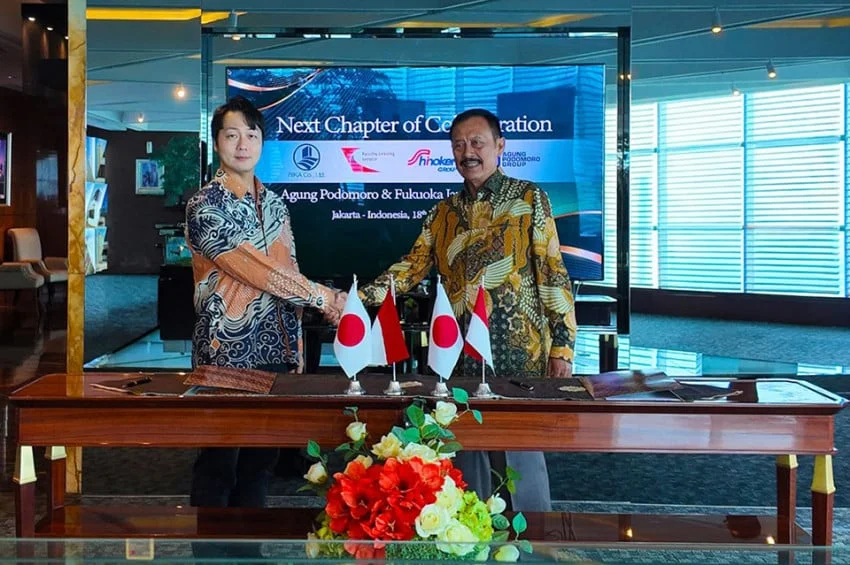
By 2023, the township had established a critical mass of residents, with thousands of families relocating to the area. This influx of population served as the primary catalyst for the development of supporting infrastructure. In 2024, the focus shifted toward enhancing the lifestyle proposition of the city, with the initiation of modern retail hubs and recreational facilities. The arrival of the Fukuoka Consortium in September 2025 signaled a new phase of international collaboration, marking the beginning of the Edelweiss cluster project. As of late 2026, the success of this initial international collaboration has led to the announcement of the Mahogany cluster, representing the next stage of the project’s evolution.
The Fukuoka Consortium and International Trust
The decision by the Fukuoka Consortium—a collective of Japanese investors—to double down on their investment in Kota Podomoro Tenjo serves as a robust endorsement of the project’s governance and growth potential. According to Yenti Lokat, Marketing Director of Region 1 at Agung Podomoro, the consortium’s decision was informed by the high absorption rate of the Edelweiss cluster. Within just one year of its launch, the cluster achieved a sales milestone of over 70%, a figure that significantly outperformed market averages for regional residential projects in the Bogor area.
This partnership is not merely a financial transaction but a transfer of design and planning philosophy. The upcoming Mahogany cluster, which features the "Midori" type units, incorporates the "Japandi" design aesthetic. This architectural style, which synthesizes the minimalist precision of Japanese design with the functional warmth of Scandinavian interiors, caters to an evolving consumer base that prioritizes mental well-being, efficiency, and natural light within the domestic sphere. By integrating thematic Japanese gardens and sustainable building materials, the developers are targeting a demographic that values global design trends while remaining rooted in local accessibility.
Infrastructure as the Backbone of Valuation
A property’s value is fundamentally tethered to its connectivity. Kota Podomoro Tenjo was conceived with a heavy emphasis on Transit-Oriented Development (TOD). The centerpiece of this strategy is the Grand TOD Kota Podomoro Tenjo station, which serves as a critical link for commuters heading toward the Jakarta central business district.
The importance of this infrastructure cannot be overstated. With the government’s continued push for public transportation integration, the station provides a hedge against the rising costs of fuel and the congestion typically associated with urban commuting in the Greater Jakarta periphery. Beyond the station, the development includes the Magnolia Premium Clubhouse and the construction of a modern market facility. The latter is particularly vital, as it supports the local micro, small, and medium enterprise (MSME) ecosystem, ensuring that the township is self-sustaining rather than a mere dormitory suburb.
Economic Implications for the Bogor-West Java Corridor
The rapid expansion of Kota Podomoro Tenjo has significant implications for the economic landscape of Bogor and the wider West Java province. Firstly, the project has stimulated job creation, both in the construction phase and in the operational management of the township’s facilities. Secondly, it has forced a re-evaluation of land value in the Tenjo area. Once considered a remote fringe of the capital region, the area is now being recognized as a strategic growth corridor.
From an analytical perspective, the project demonstrates a successful mitigation of "ghost town" risks that often plague large-scale developments. By ensuring that amenities like the modern market and clubhouse are operational alongside the residential units, Agung Podomoro has fostered a sense of community that encourages long-term residency rather than speculative holding. The fact that the project continues to attract international capital suggests that foreign investors perceive stability and transparency in the management of these assets, which is a crucial factor for the health of Indonesia’s real estate sector.
Analyzing the Future Outlook
Looking forward, the success of Kota Podomoro Tenjo provides a template for future integrated townships in Indonesia. The integration of international design standards with localized infrastructure needs has proven to be a winning combination. However, the project also faces the ongoing challenge of maintaining high occupancy levels and ensuring that the quality of life keeps pace with the increasing population density.
The upcoming Mahogany cluster will be a litmus test for whether the market can sustain a premium pricing model in the current economic climate. If the sales velocity of the Mahogany cluster matches or exceeds that of the Edelweiss cluster, it will likely trigger further interest from other international investment groups looking for stable entry points into the Southeast Asian property market.
Official Perspectives and Market Sentiment
Market observers note that the collaboration between Agung Podomoro and the Fukuoka Consortium is indicative of a broader trend: the "premiumization" of the suburban residential market. As urban centers become increasingly expensive, the "middle-class-plus" segment is shifting its attention to outskirts that offer high-speed connectivity and high-quality amenities.
Yenti Lokat, in her official correspondence, emphasized that the ongoing commitment from Japanese partners is a testament to the resilience of the local market. "The interest from international entities is not just about the numbers; it is about the long-term vision of building a city that functions on a global standard," Lokat stated. This sentiment is echoed by property analysts who suggest that the integration of Japandi design is a strategic move to differentiate the project in a crowded market where standard architectural designs have become monotonous.
Conclusion
Kota Podomoro Tenjo stands as a reflection of the evolving nature of property development in Indonesia. Through the strategic utilization of transit-oriented planning, the integration of international design aesthetics, and the deliberate creation of a community-focused ecosystem, the project has established itself as a benchmark for modern residential living. The continued investment from the Fukuoka Consortium is more than just a vote of confidence; it is an acknowledgement that the project is successfully bridging the gap between local market needs and international standards of urban living.
As the township continues to scale, its ability to maintain its growth trajectory will rely on its capacity to balance rapid expansion with the maintenance of its premium value proposition. With the upcoming introduction of the Mahogany cluster and the continued expansion of public infrastructure, Kota Podomoro Tenjo is well-positioned to remain a cornerstone of real estate development in the Bogor region for the foreseeable future. The development serves as a compelling case study on how strategic infrastructure and global partnerships can turn a suburban plot into a thriving, high-value urban hub.