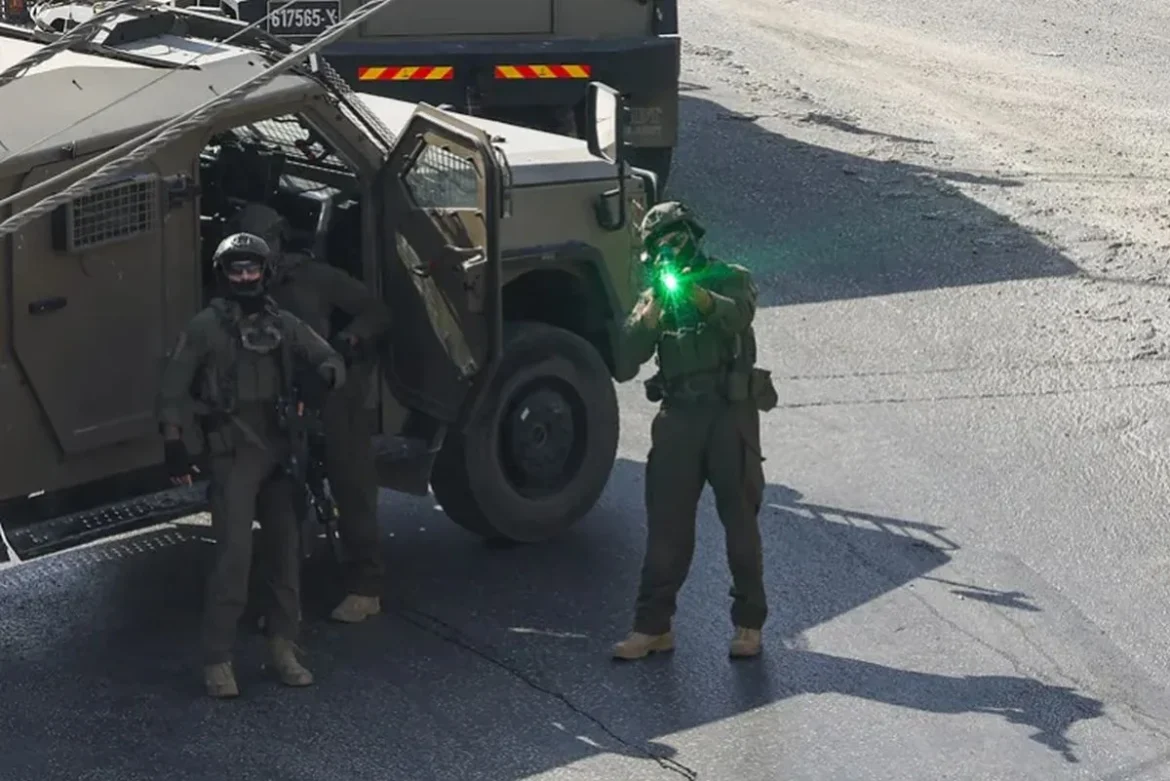
The geopolitical landscape of the occupied West Bank has deteriorated sharply following a coordinated series of military raids conducted by Israeli forces across at least 15 Palestinian cities and towns. This massive security operation, which took place in the early hours of Saturday, October 24, 2026, marks a significant escalation in tensions following a deadly attack in the city of Hebron that resulted in the deaths of two Israeli soldiers. The subsequent imposition of a total lockdown across the West Bank by Prime Minister Benjamin Netanyahu’s administration has effectively paralyzed civilian movement, shuttered local economies, and intensified the already volatile atmosphere in the region.
The Scope of the Military Operations
According to reports from Al Jazeera and the Palestinian news agency Wafa, the Israeli military campaign was far-reaching, targeting major urban centers and rural villages throughout the northern West Bank. The primary areas affected included Nablus, Jenin, Tubas, and Qalqilya. In Nablus, a city frequently at the epicenter of recent security frictions, military units executed pre-dawn raids on the villages of Jalud and Qaryut, systematically searching private residences and detaining inhabitants.
The intensity of these raids was reflected in the tactical deployment of forces. In Nablus alone, Wafa reported that 15 residents were taken into custody during the initial sweep. Sources within local security apparatuses described a pattern of behavior in which soldiers entered homes, conducted exhaustive searches, and seized personal belongings before taking individuals into detention. Furthermore, in the village of Burin, located south of Nablus, six additional individuals were apprehended, bringing the total count of detainees in the northern sector to a significant double-digit figure within just a few hours.
In the Hebron region—the site of the initial catalyst for these operations—the situation took a humanitarian turn as military forces forced dozens of families to vacate their homes. In the neighborhoods of al-Jalda and Ein Deir Bahha, the Israeli military established a tight perimeter, effectively trapping residents and creating a volatile standoff that lasted throughout the early morning hours.
Contextualizing the Escalation: The Hebron Incident
To understand the severity of the current crackdown, one must look at the event that preceded the military response. The death of two Israeli soldiers in Hebron serves as the primary justification for the current total lockdown policy. Historically, the Israeli security establishment has utilized "closure" and "total lockdown" as standard responses to attacks on personnel or settlers.
However, the scale of this specific operation suggests a shift toward a more aggressive "mowing the lawn" strategy—a term often used in military circles to describe repetitive, large-scale operations designed to degrade the operational capacity of militant cells before they can launch coordinated attacks. The lockdown, which prohibits the movement of Palestinian civilians between cities and restricts access to main thoroughfares, has created a humanitarian strain, preventing many from reaching medical facilities or workplaces.
Chronology of the 2026 Security Deterioration
The current surge in violence is not an isolated event but rather the latest chapter in a year characterized by record-high levels of friction. Since the beginning of 2026, the West Bank has seen an increase in "lone-wolf" attacks, retaliatory settler violence, and nightly IDF (Israel Defense Forces) incursions.

- Early 2026: Increased frequency of IDF raids in Jenin and Nablus, targeting emerging armed factions.
- Mid-2026: A rise in international criticism regarding the expansion of settlement outposts, which has correlated with increased friction on the ground.
- Late October 2026: The fatal attack on Israeli soldiers in Hebron acts as a trigger point.
- October 24, 2026: Prime Minister Netanyahu announces a "total lockdown" of the West Bank. Simultaneously, the military executes the multi-city raid across the northern West Bank, resulting in the mass detention of Palestinians.
Official Responses and Humanitarian Concerns
The Israeli government has maintained that these operations are essential for the maintenance of national security and the prevention of further attacks. In official statements following the Hebron incident, government spokespersons emphasized that the military retains the right to operate in any area of the West Bank to "neutralize threats at their source."
Conversely, Palestinian officials and human rights organizations have condemned the raids as a form of "collective punishment." The Palestinian Ministry of Foreign Affairs issued a statement characterizing the mass detentions as a flagrant violation of international law. Human rights advocates have pointed out that the seizure of private property and the forced evacuation of residents from their homes during the Hebron operation violate the Fourth Geneva Convention, which prohibits collective penalties and intimidation.
Analysis: Broader Implications for the Region
The implementation of a total lockdown on the West Bank has profound implications for both the immediate and long-term stability of the region. Economically, the West Bank is heavily reliant on movement between its major cities. A total lockdown disrupts supply chains, halts the movement of labor, and exacerbates the economic hardship already felt by the Palestinian population.
Politically, the move by the Netanyahu administration may satisfy segments of the domestic electorate that demand a "strong-hand" approach, but it risks further delegitimizing the Palestinian Authority (PA). As the PA remains largely sidelined during these large-scale military operations, its influence among the Palestinian youth, who are increasingly drawn to more militant factions, continues to wane.
Furthermore, the scale of the detentions—dozens of individuals in a single night—often leads to a surge in recruitment for armed groups. Historically, the arrest of high numbers of Palestinians without clear due process has served as a catalyst for future cycles of violence rather than a solution to the underlying security concerns.
Looking Ahead
As the sun rose over the northern West Bank on Saturday, the military presence remained high. The psychological impact on the residents of Nablus, Jenin, and Hebron is expected to be significant. With the military lockdown in place, there is little expectation of a return to normalcy in the immediate future.
The international community, particularly the United Nations and regional mediators, faces the difficult task of de-escalating a situation that is currently driven by a cycle of violence. If the Israeli government continues to prioritize large-scale security sweeps and total lockdowns, the likelihood of a sustained period of stability remains low. The international focus will likely shift to the humanitarian conditions of the detainees and the potential for these military actions to ignite wider civil unrest across the occupied territories.
For now, the West Bank remains under a state of heightened military alert. The events of October 24 have firmly entrenched the region in a security-focused paradigm, leaving little room for diplomatic engagement and raising urgent questions about the sustainability of the current status quo in the occupied territories. The situation remains fluid, and international observers are closely monitoring the potential for further military maneuvers or retaliatory actions in the coming days.