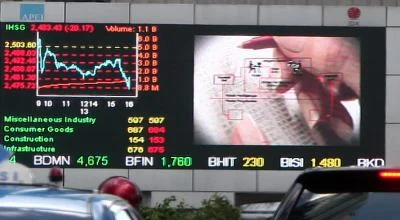
The Indonesia Stock Exchange (IDX), known locally as PT Bursa Efek Indonesia (BEI), and its subsidiaries officially reported a significant financial contraction for the 2011 fiscal year, marked by a 19.4 percent decline in net profit. According to the consolidated comprehensive income statement released in Jakarta, the exchange’s net profit dropped to Rp299.825 billion for the year ending December 31, 2011. This represents a notable decrease compared to the previous fiscal year, during which the exchange recorded a net profit of Rp358.041 billion.
The financial report, which was published on Saturday, March 31, 2012, shed light on the complex interplay between rising operational revenues and escalating business expenses that ultimately compressed profit margins for the country’s primary capital market operator. Despite generating a higher volume of top-line revenue, the exchange faced mounting cost pressures that outpaced revenue growth, resulting in an overall lower net income retained by the institution and its consolidated entities.
Main Financial Findings and Revenue Growth
A detailed examination of the financial statements reveals that the decline in net profit was not driven by a lack of commercial activity or top-line contraction. On the contrary, PT Bursa Efek Indonesia demonstrated robust revenue generation capabilities throughout the 2011 financial year. Total revenues climbed from Rp667.16 billion in the 2010 fiscal year to Rp699.32 billion in 2011. This growth was largely supported by transactional activities, listing fees, and various capital market services provided by the exchange to listed companies, brokerage firms, and retail and institutional investors.
However, the positive momentum generated by increased revenues was heavily offset by a substantial surge in operational expenditures. The exchange reported that its total business expenses spiked significantly, jumping from Rp371.30 billion in 2010 to Rp445.21 billion in 2011. This sharp rise in operational costs—encompassing technological infrastructure upgrades, human resources, regulatory compliance enforcement, and market education initiatives—eroded the financial gains made on the revenue side and directly precipitated the 19.4 percent drop in bottom-line profitability.
Balance Sheet Expansion and Asset Growth
While profitability experienced a temporary contraction, the overall financial foundation and asset base of the Indonesia Stock Exchange continued to exhibit steady expansion. The consolidated balance sheet figures indicated that total assets managed by the exchange and its subsidiaries grew to Rp3.763 trillion by the close of 2011. This reflected a healthy increase from the previous year’s total assets, which stood at Rp3.555 trillion at the end of December 2010.
The expansion in total assets underscored the continuous capital accumulation and infrastructural investments undertaken by the exchange management. Throughout 2011, PT Bursa Efek Indonesia heavily prioritized the enhancement of its trading engines, risk management systems, and surveillance capabilities to accommodate higher trading volumes and protect market integrity. These long-term capital investments, while expanding the asset base, also contributed to the higher depreciation and operational maintenance costs reflected in the income statement.
Background Context: The 2011 Macroeconomic and Capital Market Landscape
To fully understand the financial performance of the Indonesia Stock Exchange in 2011, it is essential to examine the broader macroeconomic and geopolitical environment in which the exchange operated. The year 2011 was characterized by high volatility in global financial markets, largely driven by the European sovereign debt crisis, lingering concerns over the United States economic recovery, and fluctuating commodity prices that heavily influenced emerging markets, including Indonesia.
Despite these global headwinds, Indonesia’s domestic economy remained relatively resilient, supported by strong domestic consumption, robust foreign

direct investment, and a stable banking sector. The Jakarta Composite Index (IHSG) experienced periods of both stellar growth and sharp corrections during 2011, reflecting shifting investor sentiment toward risk assets. For the stock exchange as a corporate entity, navigating this volatile environment required heavy investments in market surveillance, technology infrastructure, and investor protection frameworks to maintain market confidence.
Chronology of Financial Reporting and Disclosure
The publication of the 2011 financial statements followed standard regulatory timelines mandated for corporate entities and self-regulatory organizations (SROs) operating under the oversight of Indonesia’s Financial Services Authority (OJK), which at the time worked alongside the Capital Market and Financial Institution Supervisory Agency (Bapepam-LK).
- Early January to February 2012: The internal audit and consolidation of accounts for PT Bursa Efek Indonesia and its subsidiaries were conducted, compiling financial data from various operational units.
- Mid-March 2012: External auditors finalized the independent audit of the consolidated financial statements for the period ending December 31, 2011, ensuring compliance with Indonesian Financial Accounting Standards (SAK).
- March 31, 2012: The official financial results, including the income statement, balance sheet, and comprehensive profit disclosures, were formally published and made available to the public and market stakeholders.
Official Perspectives and Strategic Rationales
Although exchange executives and official representatives did not issue a panic-driven response to the profit contraction, market analysts and industry observers closely evaluated the underlying drivers of the financial report. Management’s strategic focus during 2011 was predominantly centered on long-term capacity building rather than short-term profit maximization.
As a frontline regulator and market operator, PT Bursa Efek Indonesia operates under a mandate that balances commercial viability with public service obligations. Expenditures related to the modernization of the Automated Trading System (JATS-NextG), expansion of regional branch offices across the archipelago, and intensive investor education campaigns under the "Yuk Nabung Saham" precursor initiatives required substantial financial outlays. Consequently, the rise in business expenses was widely interpreted by financial analysts as a necessary reinvestment into the future scalability of the Indonesian capital market.
Implications for the Indonesian Capital Market
The 19.4 percent reduction in net profit, while notable on paper, carried limited systemic risk for the broader operation of the Indonesian capital market. Because the exchange is structured to maintain robust capital reserves—evidenced by its growing asset base of Rp3.763 trillion—its financial capacity to absorb shocks and invest in future infrastructure remained entirely intact.
However, the financial results served as a critical talking point regarding cost management and efficiency within Indonesia’s financial market infrastructure. Analysts pointed out that as trading volumes were projected to grow in subsequent years, achieving economies of scale would be vital for the exchange to convert top-line revenue growth into healthier net margins. Furthermore, maintaining a balance between aggressive technological upgrades and prudent cost control emerged as a key priority for the exchange’s board of directors moving forward.
Broader Economic Impact and Future Outlook
The performance of the Indonesia Stock Exchange in 2011 mirrored the transitional phase of the country’s financial sector as it sought to elevate its status among regional peers in Southeast Asia. With foreign portfolio inflows playing a dominant role in domestic liquidity, the reliability, speed, and transparency of the exchange’s trading systems were paramount.
Looking beyond the 2011 financial figures, the investments made during this period laid the operational groundwork for subsequent years of record-breaking initial public offerings (IPOs) and surging retail investor participation. While the immediate aftermath of the 2011 fiscal year highlighted the friction of rising costs, the long-term trajectory suggested that the capital expenditure cycle was a foundational prerequisite for the structural growth of the Indonesian stock market in the decade that followed.