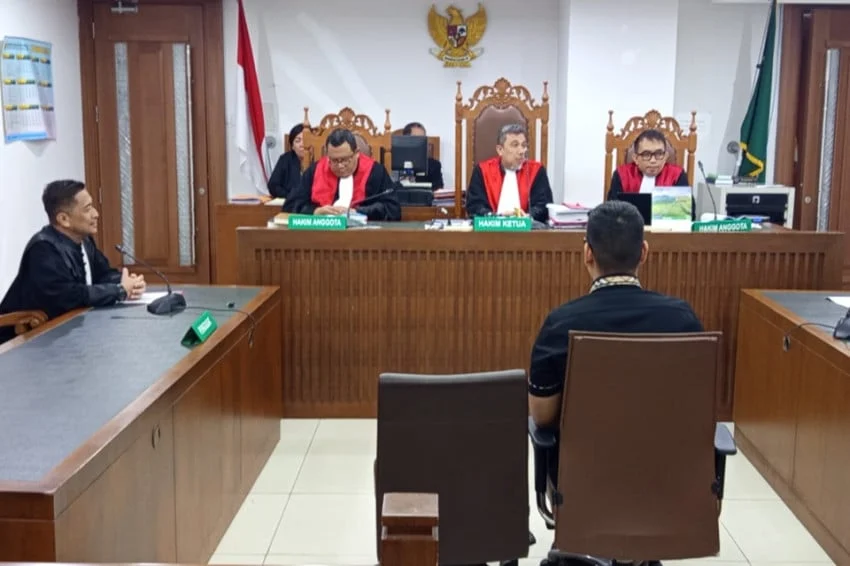
The legal proceedings surrounding the high-profile criminal case involving defendant Bangun Paulus Tudungta reached a critical juncture at the Central Jakarta District Court. In a decisive courtroom development, the Public Prosecutor’s Office officially rejected all points contained within the defense memorandum, commonly known as the pleidoi, presented by both the defendant and his legal counsel. The rejection was formally articulated during a scheduled court session dedicated to the reading of the public prosecutor’s official response, known as the replik, presided over by the panel of judges overseeing the complex litigation.
Prosecuting attorney Andri Saputra, representing the state, stood before the bench to dismantle the arguments previously raised by the defense team. According to the prosecution, the defense’s written and oral submissions failed to align with the substantive facts, witness testimonies, and physical evidence established throughout the extensive series of trial hearings. The state maintained its unwavering stance that the legal parameters and factual basis for the criminal charges remain entirely intact, leaving no room for the acquittal or leniency requested by the defense.
Core Arguments and Prosecution Rebuttal in the Replik Session
During the afternoon hearing held at the Central Jakarta District Court, JPU Andri Saputra formally outlined the state’s primary conclusions regarding the defense’s final arguments. The prosecution’s response centered on three core demands submitted to the presiding panel of judges. First, the state requested that the panel accept the entirety of the primary indictment presented at the outset of the trial. Second, the prosecution formally rejected the defense memorandum that had been read during the preceding court session. Third, the state urged the court to declare the defendant legally and convincingly guilty of committing a criminal act, subsequently handing down a custodial sentence matching the exact terms outlined in the initial sentencing demand.
The legal foundation of the prosecution’s case relies heavily on the fulfillment of specific statutory elements. During the proceedings, the prosecutor reiterated that the elements of the crime of intimidation and threats, as explicitly regulated under Article 483 paragraph (1) letter a of the Criminal Code (KUHP), have been fully satisfied. The state argued that the evidence gathered by investigators, corroborated by testimonies from victims and independent witnesses, clearly establishes the malicious intent and actionable nature of the threats made by Bangun Paulus Tudungta.
Consequently, the public prosecutor confirmed that the state remains steadfast in its original sentencing demand. The prosecution previously called for the court to sentence the defendant to one year and six months of imprisonment, a position that remains unchanged despite the exhaustive mitigation arguments put forward by the defense team in their pleidoi.
Chronology and Timeline of the Legal Proceedings
To fully understand the gravity of the recent developments in the Central Jakarta District Court, it is essential to examine the chronological timeline of the judicial process that led to the rejection of the defense memorandum. Criminal litigation within the Indonesian judicial system follows a structured path designed to ensure due process and a fair trial for all participating parties.
The trajectory of the Bangun Paulus Tudungta case progressed through several critical milestones:
- Initial Investigation and Case File Submission: Law enforcement authorities completed their preliminary investigations following formal complaints regarding alleged threats made by the defendant. Case files were subsequently transferred to the prosecution office, where public prosecutors reviewed the dossier and declared it complete (P-21) to proceed to trial.
- Arraignment and Reading of Indictment: The case officially commenced at the Central Jakarta District Court, where prosecutors formally read the indictment detailing the specific criminal charges under the Indonesian Criminal Code (KUHP).
- Evidentiary Phase and Witness Testimonies: Over the course of multiple weeks, the court conducted evidentiary hearings. Both the prosecution and the defense presented witnesses, expert testimonies, and documentary evidence to substantiate their respective positions regarding the alleged intimidation.
- The Sentencing Demand (Tuntutan) – November 18, 2026: In a pivotal session, the Public Prosecutor’s Office delivered its official sentencing demand. The state formally requested the panel of judges to sentence Bangun Paulus Tudungta to one year and six months behind bars, citing verified statutory violations.
- The Defense Memorandum (Pleidoi) – November 25, 2026: Responding to the state’s demands, the defendant and his legal counsel presented their defense memorandum. The pleidoi sought to challenge the validity of the charges, question the interpretation of the evidence, and appeal for a full acquittal or a significantly reduced penalty.
- The Prosecution’s Replik – November 26, 2026: The public prosecutor delivered the official replik during the afternoon session, formally rejecting all defense arguments and reaffirming the state’s original 18-month imprisonment demand.
This meticulous timeline highlights the adversarial nature of the proceedings, where each party has been afforded ample opportunity to test the veracity of the evidence within the framework of criminal procedural law.
Background Context of the Alleged Threats
The criminal case against Bangun Paulus Tudungta stems from an escalating dispute that eventually crossed legal boundaries, prompting intervention by law enforcement and the judicial system. While specific personal details surrounding the genesis of the conflict remain a matter of evidentiary record, cases categorized under Article 483 of the Criminal Code typically involve actions or statements intended to instill fear, coerce individuals, or unlawfully pressure victims under circumstances that compromise their safety and peace of mind.
In the Indonesian legal landscape, offenses involving threats and intimidation are treated with strict seriousness because they undermine public order and personal security. The state’s insistence on pursuing a custodial sentence reflects broader judicial policy aimed at deterring behavior that relies on coercion rather than legal or peaceful conflict resolution. Throughout the trial, the prosecution sought to demonstrate that the actions attributed to Tudungta extended far beyond mere verbal disputes, crossing into the territory of actionable criminal threats that caused genuine distress to the complainant.
Legal Implications and Subsequent Trial Stages
The outright rejection of the pleidoi by the Public Prosecutor’s Office marks a crucial turning point as the trial approaches its ultimate conclusion. With the replik session concluded, the procedural roadmap moves closer to the final judgment phase.
The next logical step in the trial schedule will involve the presentation of the duplik—the defense’s final opportunity to orally or formally respond to the prosecutor’s replik. Following the duplik, the panel of judges, led by the presiding magistrate, will deliberate behind closed doors to weigh the totality of the evidence, the testimonies, the legal arguments, and the statutory provisions before scheduling the verdict hearing (putusan).
Legal analysts observing the Central Jakarta District Court proceedings note that while prosecutors consistently maintain their demands during the replik stage, the ultimate authority rests with the panel of judges. The judges retain the constitutional independence to evaluate whether the prosecution has proven every element of the offense beyond a reasonable doubt, or whether the defense has successfully raised reasonable doubts that could warrant a different judicial outcome.
Broader Socio-Legal Impact of Intimidation Cases
The progression of this trial offers broader insights into how the Indonesian judicial system handles allegations of coercion and threats. As urban centers like Jakarta experience complex social and economic interactions, disputes frequently threaten to spill over into unlawful behavior. The strict enforcement of laws pertaining to intimidation serves as a vital legal safeguard, signaling to the public that personal grievances must be resolved through established civil or legal channels rather than through intimidation or fear-inducing tactics.
Furthermore, the rigorous debate between the Public Prosecutor’s Office and the defense team underscores the robustness of the adversarial system in Indonesia. Both sides have systematically exercised their procedural rights—from the initial presentation of evidence to the meticulous exchange of sentencing demands, defense pleidois, and state repliks.
As the trial of Bangun Paulus Tudungta prepares to enter its final deliberations, legal observers, the parties involved, and the broader public await the final verdict from the Central Jakarta District Court. The upcoming decision will not only determine the immediate legal fate of the defendant but will also reinforce judicial standards regarding the enforcement of laws against criminal threats within the jurisdiction.