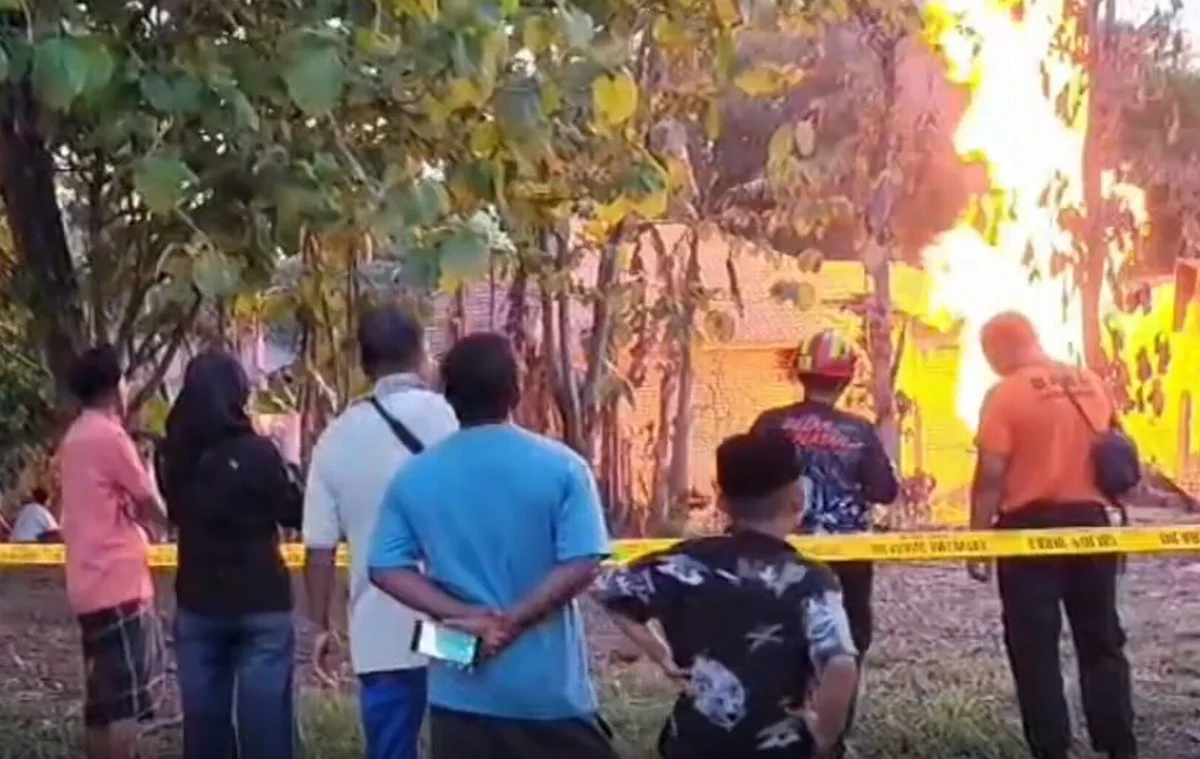
Residents of Dusun Mor Leke, located in the village of Sendeng Dejeh, Labang District, Bangkalan Regency, East Java, are currently grappling with an alarming geological event. A routine residential water well drilling project has escalated into a hazardous situation, transitioning from an initial high-pressure expulsion of mud and water to a persistent, uncontrolled flare of fire. The incident has drawn significant attention from local authorities, geological experts, and emergency response teams, as the community faces the potential risks associated with subsurface gas pockets.
Chronology of the Incident
The sequence of events began on the afternoon of Wednesday, November 25, 2026. A local resident had commissioned a professional drilling team to construct a private water well on their property, a standard practice for many households in the region seeking reliable water access. The drilling process proceeded according to standard technical protocols until it reached a depth of approximately 130 meters.
At roughly 16:00 WIB (Western Indonesian Time), the drilling team initiated the final phase of the operation, which involves flushing the borehole to clear out drilling mud and debris. Shortly after this process commenced, the borehole exhibited an unexpected and violent reaction. A high-pressure geyser erupted from the shaft, propelling a mixture of water and drilling mud into the air. Eyewitness accounts and initial reports from the scene confirmed that the vertical thrust of the mixture reached a height of approximately 15 meters, saturating the immediate vicinity and causing significant alarm among the local population.
Recognizing the potential danger, the drilling crew and nearby residents evacuated the area immediately. Local village officials were notified, and the news of the uncontrolled eruption quickly reached the Bangkalan Regency Regional Disaster Management Agency (BPBD).
Initial Response and Site Containment
Upon receiving reports of the incident, BPBD Bangkalan dispatched an emergency response team to the site in Sendeng Dejeh. According to Rahman Surya Atmaja, a representative from the BPBD, the primary objective of the initial response was to establish a secure perimeter and prevent unauthorized access to the site, given the unpredictability of the pressure release.
The transition from a water and mud eruption to a sustained fire is a phenomenon that typically indicates the penetration of a shallow natural gas reservoir. When drillers reach these depths, they may inadvertently tap into geological formations containing trapped hydrocarbons. When these gases reach the surface and find an ignition source—such as friction from drilling equipment or static discharge—a flare occurs.
As of the latest reports, the site remains under close surveillance. Authorities are currently coordinating with the Ministry of Energy and Mineral Resources and local geological survey teams to determine the composition of the gas and the stability of the borehole. The immediate concern for the authorities is the prevention of a larger-scale cratering event, which can occur if the pressure is not managed or if the surrounding soil becomes unstable due to the subterranean release.
Geological Context and Similar Phenomena
The phenomenon observed in Bangkalan is not unprecedented in the context of Indonesia’s complex geological landscape. The region of East Java, in particular, sits atop various sedimentary basins that occasionally contain pockets of methane or other natural gases.
Historically, incidents involving unauthorized or small-scale well drilling hitting gas pockets have been documented in various parts of the Indonesian archipelago. These events range from minor "blowouts" that dissipate quickly to more persistent gas seepages. The depth of 130 meters is considered relatively shallow in the context of commercial oil and gas exploration, but it is sufficient to encounter localized, pressurized gas trapped in sandstone or coal bed formations.
Geologists often classify such events as "shallow gas blowouts." Unlike deep-well blowouts, which require heavy industrial intervention to kill the well, shallow gas incidents are often characterized by their sudden onset and the rapid dissipation of pressure once the trapped volume is exhausted. However, the presence of fire indicates that the flow is consistent enough to sustain combustion, suggesting that the borehole has connected to a larger pressurized reservoir or a continuous migration path.
Technical Implications and Public Safety
The situation in Sendeng Dejeh necessitates a multidisciplinary approach. From a safety perspective, the immediate risks include thermal injury from the fire, the potential for suffocation if the gas displaces oxygen in low-lying areas, and the risk of ground subsidence.
- Air Quality and Gas Monitoring: Environmental and health officials are expected to conduct air quality assessments to ensure that the gas being released—likely methane—does not pose an immediate toxicity or explosion risk to the surrounding village homes. Methane is colorless and odorless, making detection difficult without specialized equipment.
- Structural Stability: The sustained ejection of fluids from deep underground can lead to "piping," where soil is washed away from around the well casing. This can cause the ground to collapse, potentially endangering the integrity of nearby structures.
- Regulatory Oversight: The incident highlights the critical need for strict adherence to drilling permits and geological survey requirements, even for private residential wells. While small-scale water wells are often seen as low-risk, the occurrence of this event underscores the hidden risks of subsurface drilling in areas with unknown geological characteristics.
Official Responses and Next Steps
The local government, in coordination with the police and fire departments, has restricted access to the immediate radius of the well. The BPBD has emphasized that the situation is being treated with the highest priority to prevent the fire from spreading to residential dwellings.
Expert consultation is currently underway to determine the appropriate method for "killing" the well. This typically involves pumping specialized drilling mud—which is denser than water—into the borehole to create hydrostatic pressure that counters the upward flow of gas. Once the flow is stopped, the well must be permanently sealed with concrete or cement to prevent future leakage.
Residents in the vicinity of Dusun Mor Leke have been advised to remain calm but vigilant. The authorities have explicitly requested that onlookers stay away from the site to allow emergency teams to operate without interference and to ensure the safety of the public.
Broader Impact on the Community
For the residents of Sendeng Dejeh, the event has been a significant disruption to daily life. Beyond the immediate danger, the event raises questions about groundwater safety in the area. Often, when a borehole taps into a gas-bearing zone, it can cross-contaminate local aquifers. Local environmental agencies are expected to monitor the water quality of neighboring wells to ensure that the chemical profile of the water has not been altered by the subsurface activity.
The incident also serves as a stark reminder of the complexities of Indonesia’s subsurface geology. As infrastructure development continues to expand into rural areas, the demand for water resources often leads to increased drilling activity. This case serves as a benchmark for local governments to enforce stricter monitoring of private drilling operations, ensuring that contractors are aware of the geological risks in their specific operational zones.
Conclusion
The situation in Bangkalan is a developing story that captures the intersection of residential development and the volatile nature of the Earth’s crust. While the fire at the Sendeng Dejeh well is a localized incident, it represents a significant challenge for local emergency services and technical experts. The primary focus remains the containment of the gas source and the protection of the local populace.
As investigations continue, the findings will likely influence future protocols for residential well drilling in the region. The ability of authorities to safely neutralize the well will be the ultimate test of the current emergency response framework in Bangkalan Regency. For now, the flickering light of the fire serves as a constant reminder of the unpredictable natural forces that lie just beneath the surface, waiting for a path to the light. The community, the government, and technical specialists remain locked in a race to restore normalcy to the village of Sendeng Dejeh.