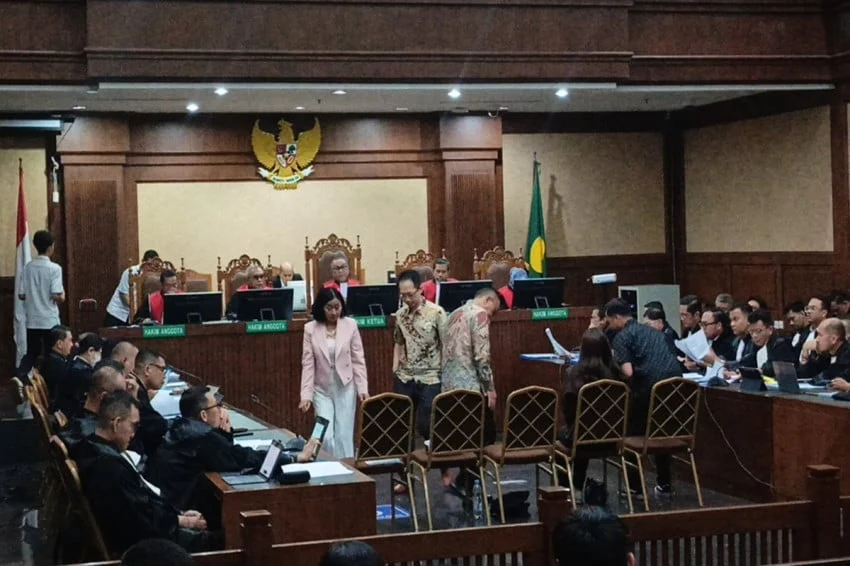
The ongoing legal proceedings involving former high-ranking Indonesian law enforcement officials took a detailed turn at the Jakarta Corruption Court, where judicial scrutiny focused on social interactions, venue specifics, and alleged associations. Bayu Amarta, who formerly served as the manager of the establishment known as Cafe de’Clan—previously operating under the name Gontran Cherrier—took the witness stand to deliver testimony in the ongoing trial concerning alleged money laundering, known locally as Tindak Pidana Pencucian Uang (TPPU), and extortion. The defendant in these proceedings is Febrie Adriansyah, the former Junior Attorney General for Special Crimes (Jampidsus) at the Office of the Attorney General of Indonesia. The hearing, presided over by a panel of judges specializing in corruption and financial crimes, attracted significant public attention due to the high-profile nature of the accused and the broader implications for institutional integrity within the country’s judicial and prosecutorial frameworks.
According to testimonies presented during the Monday session, the focal point of the inquiry centered on the routine patronage of the upscale cafe situated in a strategic district of Jakarta. Prosecutors meticulously questioned the witness regarding specific gatherings that allegedly took place between 2022 and 2024. The prosecution’s line of questioning sought to establish a timeline of familiarity and interaction between the defendant and other figures connected to ongoing investigations, notably Ferry Yanto Hongkirowang, widely recognized by his moniker Ferry Boboho. The courtroom proceedings illuminated the social dynamics that allegedly transpired behind the scenes of the capital’s elite hospitality venues, providing a granular view of how personal relationships among influential figures are scrutinized within the parameters of financial crime prosecutions.
Chronology of Events and Venue Evolution
The historical context of the venue serves as a critical backdrop for the events detailed in the courtroom. Between 2022 and 2024, the establishment operated under the commercial name Gontran Cherrier before transitioning to its current designation as Cafe de’Clan. Throughout this transitional period, the venue maintained a reputation as a discrete gathering spot for professionals, business figures, and prominent public officials seeking privacy away from public scrutiny.
During the evidentiary phase of the trial, government prosecutors directed their inquiries toward the contents of the official police and investigative dossier, specifically the Berita Acara Pemeriksaan (BAP) attributed to Bayu Amarta. The witness was asked to recount his direct observations concerning the presence of Febrie Adriansyah on the premises. Testimony revealed that the former Jampidsus was a frequent visitor to the cafe, engaging in regular recreational activities, most notably playing the traditional tile game known locally as gaple.
The testimony grew increasingly specific as the prosecution probed the presence of other individuals during these recreational sessions. Bayu Amarta explicitly confirmed to the court that Ferry Yanto Hongkirowang, alias Ferry Boboho, was present on multiple occasions while these games were underway. Describing the physical arrangement of the room during these gatherings, the former manager noted that Ferry Boboho would often stand and observe the matches. He illustrated the social proximity by explaining that standard game setups typically involve spectators positioning themselves immediately surrounding the players, indicating a degree of familiarity and regular interaction among the participants in the semi-private setting of the venue.
Background Context of the TPPU and Extortion Charges
The legal battle facing Febrie Adriansyah represents a significant chapter in the ongoing efforts by Indonesian law enforcement and anti-corruption bodies to address internal misconduct and financial irregularities within the country’s supreme legal institutions. The charges of Tindak Pidana Pencucian Uang (TPPU) and extortion brought against the former Jampidsus stem from comprehensive investigations into alleged abuses of power, financial transactions lacking transparent origins, and the improper leveraging of prosecutorial authority during his tenure at the Attorney General’s Office.
The Office of the Attorney General, where Febrie once held a commanding role overseeing high-stakes corruption prosecutions, has found itself navigating a complex reputational challenge as one of its most senior former executives faces trial. The integration of witness accounts from service industry professionals, such as cafe managers and staff, underscores the investigative methodology employed by prosecutors to map out the non-professional networks and regular associates of the defendant. By establishing patterns of association in leisure environments, the prosecution aims to reinforce broader allegations regarding the operational scope of the network surrounding the accused.
Civil Society and Public Reactions
The progression of the trial has elicited robust responses from various civil society organizations and public watchdogs monitoring governance and legal reform in Indonesia. Prominent among these is the Alliance of Civil Society for Anti-Corruption (LSAK), which has actively campaigned for stringent legal accountability throughout the judicial process. In prior statements released to the public and media outlets, LSAK formally urged the Attorney General’s Office and the judicial panel presiding over the case to pursue maximum sentencing parameters should the charges against Febrie Adriansyah be substantiated by the presented evidence.
The stance taken by LSAK and similar advocacy groups reflects a broader public sentiment demanding transparency and uncompromising standards within the judiciary and law enforcement agencies. Observers from these organizations argue that high-profile prosecutions must be conducted with absolute impartiality to restore public trust in state institutions tasked with upholding the rule of law. The testimony regarding casual social encounters at venues like Cafe de’Clan is viewed by these watchdogs as symbolic of the informal networks that often intersect with formal power structures, necessitating rigorous judicial examination.
Legal Implications and Procedural Next Steps
As the trial at the Jakarta Corruption Court advances, the legal teams representing both the prosecution and the defense are preparing for subsequent evidentiary phases. The introduction of BAP testimonies from civilian witnesses marks a crucial phase in building the factual narrative of the state’s case. For the prosecution, corroborating witness accounts from establishment personnel helps establish verifiable timelines and associations that challenge the defense’s positioning regarding the nature of the defendant’s personal and social interactions.
Conversely, defense counsels are expected to cross-examine witnesses rigorously to contextualize these recreational visits, potentially arguing that routine social patronage at a public commercial venue does not inherently constitute or prove illicit financial dealings or extortionate behavior. The distinction between permissible personal leisure and improper association remains a central point of contention in white-collar criminal defense strategies within the Indonesian legal system.
The broader implications of the proceedings extend far beyond the immediate verdict that will eventually be delivered by the panel of judges. Financial crime cases involving former senior judicial officials set important precedents regarding the enforcement of asset recovery laws, the application of TPPU statutes to public servants, and the threshold of proof required to connect circumstantial social evidence to substantive criminal offenses. Legal scholars and institutional analysts continue to monitor the Jakarta Corruption Court closely, recognizing that the outcome of this trial will serve as a significant benchmark for institutional accountability and the enforcement of anti-corruption legislation in the contemporary political and legal landscape.