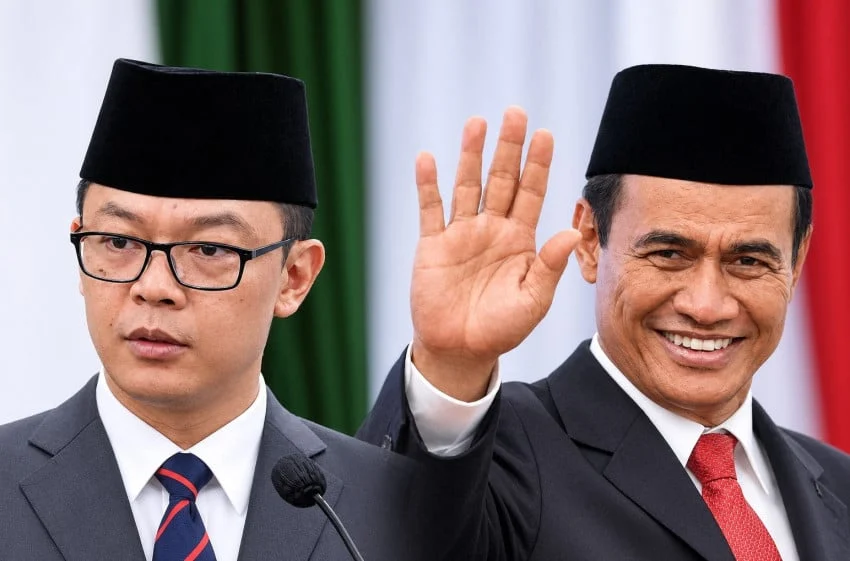
In a significant political maneuver that signals a potential restructuring of the Indonesian executive branch, President Prabowo Subianto formally submitted two names to the People’s Consultative Assembly (MPR) on Monday, November 23, 2026, as candidates for the office of Vice President. The proposal, which aims to fill the vacancy left by the departure of Gibran Rakabuming Raka, features two prominent figures within the current administration: Minister of Agriculture Andi Amran Sulaiman and Coordinating Minister for Human Development and Cultural Affairs (Menko PMK) Sugiono. The submission of these names marks a pivotal moment in the governance of the Prabowo administration, setting the stage for a legislative confirmation process that will likely dominate the national political discourse in the coming weeks.
The Formal Submission Process
The announcement was made official at the Parliament Complex in Senayan, Jakarta, where MPR Speaker Ahmad Muzani read the formal letter signed by President Prabowo. The legislative body now faces the task of vetting these candidates in accordance with constitutional mandates. The process is expected to follow established parliamentary procedures, involving committee reviews and a final plenary session to confirm the appointment of the next Vice President.
This move follows a period of intense speculation regarding the stability of the executive office following Gibran Rakabuming Raka’s exit. By presenting a shortlist comprising two high-ranking cabinet members, President Prabowo appears to be emphasizing a preference for administrative continuity and proven ministerial track records over external political appointments.
Comparative Profile of the Candidates
The inclusion of Andi Amran Sulaiman and Sugiono brings two distinct political and economic profiles to the forefront. A critical point of public and parliamentary interest has been the disclosure of their respective assets, as mandated by the Laporan Harta Kekayaan Penyelenggara Negara (LHKPN) for the 2025 fiscal period.
Andi Amran Sulaiman, a seasoned agricultural entrepreneur and current Minister of Agriculture, possesses a substantial financial footprint. According to the LHKPN data submitted on March 14, 2026, his gross assets reached approximately Rp2.03 trillion. After accounting for liabilities totaling Rp313.87 billion, his net worth stands at approximately Rp1.72 trillion. The composition of his wealth is heavily weighted toward securities, which account for roughly Rp1.11 trillion. Additionally, he maintains significant liquidity in the form of cash and cash equivalents totaling Rp595.75 billion, alongside extensive real estate holdings valued at Rp304.12 billion. His property portfolio spans key regions, including Makassar, Gowa, Bone, Pangkajene and Kepulauan, Jakarta Selatan, and Konawe Utara. His collection of luxury vehicles, including a 2021 Mercedes-Benz Maybach S-Class valued at Rp8.184 billion and a 2009 Hummer Jeep, further underscores his status as one of the most affluent cabinet ministers.
In contrast, Sugiono, the Coordinating Minister for Human Development and Cultural Affairs, presents a more modest financial profile by comparison. Reporting a net worth of Rp13.15 billion in the 2025 periodic disclosure, Sugiono represents a different demographic within the cabinet, focusing primarily on policy and human development sectors. This stark contrast in personal wealth between the two candidates has sparked public conversation regarding the diversity of the administration’s leadership and the varying paths to political prominence in modern Indonesia.
Political Context and Chronology
The vacancy in the vice presidency has necessitated a swift response from the executive to ensure the continuity of governance. The timeline leading up to this nomination reflects a period of internal deliberation within the Prabowo administration.
- Early 2026: Initial reports emerge regarding potential shifts in the executive branch and the departure of key personnel.
- Mid-2026: Intense discussions regarding potential successors for the vice presidency begin to circulate within the coalition, with various party leaders proposing different criteria.
- October 2026: Official confirmation of the vacancy creates a sense of urgency for the President to formalize a succession plan.
- November 20, 2026: Finalization of the shortlist involving Andi Amran Sulaiman and Sugiono.
- November 23, 2026: Official submission of the names to the MPR RI, initiating the formal legislative confirmation process.
Economic and Strategic Implications
The selection of these two candidates is not merely an administrative choice but a strategic one. Andi Amran Sulaiman is widely viewed as a technocrat with strong ties to the agrarian sector—a pillar of the Indonesian economy. His supporters argue that his business acumen and experience in managing large-scale agricultural infrastructure make him a suitable candidate to navigate the complex economic challenges currently facing the nation, including food security and rural development.
Conversely, Sugiono represents the administrative and developmental core of the government. His role as Menko PMK has positioned him at the center of social welfare, education, and human resource development policies. His supporters emphasize his loyalty and his deep involvement in the current government’s vision for human capital investment.
From an analytical standpoint, the nomination of these two figures suggests that President Prabowo is seeking to balance economic stability with social development. The choice will likely influence investor confidence and the implementation of national strategic projects. Market observers are closely monitoring the reaction of the legislative coalition, as the confirmation of either candidate will likely determine the policy trajectory of the government for the remainder of the presidential term.
Official Responses and Public Sentiment
While the MPR has acknowledged receipt of the names, individual political factions within the legislature have begun to signal their positions. Initial responses from coalition parties have been cautiously optimistic, highlighting the professional background of both candidates. However, opposition factions have requested a comprehensive public hearing process, emphasizing the need for transparency regarding the candidates’ future policy stances.
Public interest has been particularly high, as evidenced by the media coverage surrounding the candidates’ private residences and lifestyles. The scrutiny of Amran Sulaiman’s assets, while standard for high-level officials, highlights the public’s desire for accountability and clear justification for the wealth accumulated by those holding the nation’s highest offices.
The Legislative Vetting Process
The MPR’s role in this process is critical. The assembly is expected to conduct a series of meetings to evaluate the candidates’ eligibility, track record, and potential conflicts of interest. Under Indonesian law, the Vice President plays a significant role in assisting the President in the execution of executive functions and representing the government in international and domestic forums.
The criteria for selection will likely go beyond mere financial transparency. The legislature will examine:
- Political Alignment: The ability of the candidate to maintain cohesion within the existing government coalition.
- Administrative Competence: Evidence of successful implementation of national programs during their previous ministerial tenures.
- Public Perception: The degree of public trust in the individual’s integrity and leadership capacity.
Future Outlook
As the nation awaits the final decision from the MPR, the political climate remains expectant. The outcome of this selection will have lasting implications for the 2026-2029 administrative period. Should Amran Sulaiman be selected, it is expected that the administration will place a renewed emphasis on agrarian reform and economic self-sufficiency. If Sugiono is appointed, the focus is likely to remain on strengthening social safety nets and human development indices.
In conclusion, the proposal submitted by President Prabowo on November 23, 2026, represents a decisive step in restoring the structural integrity of the Indonesian government. By putting forward two candidates with vastly different backgrounds and financial portfolios, the President has invited a necessary national dialogue on the qualities required for the vice presidency. The coming weeks of legislative deliberation will prove essential in determining which vision for the future of the country will guide the administration as it moves forward. The Indonesian public, investors, and international observers remain attentive, waiting to see how the MPR balances the executive’s preference with the broader interests of the Indonesian state.