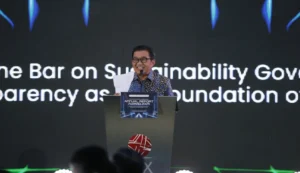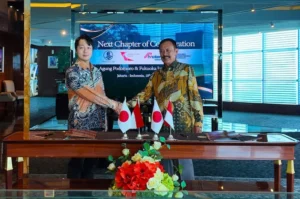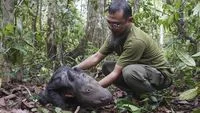
The Indonesian government, through the newly established Danantara Indonesia (Badan Pengelola Investasi Daya Anagata Nusantara), has officially signaled a transformative shift in the management of the nation’s protected areas, identifying Taman Nasional Way Kambas in Lampung as the inaugural pilot project for a high-value, sustainable ecotourism model. This strategic initiative, aimed at harmonizing conservation efforts with economic viability, was formalized during a high-level coordination meeting at Wisma Danantara on Monday, November 23, 2026. Attended by key stakeholders including the Minister of Finance Suahasil Nazara, Minister of Forestry Raja Juli Antoni, and Minister of Tourism Widiyanti Putri Wardhana, the meeting underscored a collaborative cross-ministerial approach to revitalizing Indonesia’s biodiversity assets.
A New Strategic Direction for Conservation
The selection of Way Kambas as the primary pilot site is rooted in both its ecological significance and its long-standing socio-economic challenges. Spanning approximately 125,000 hectares, the national park is a vital sanctuary for endangered species, most notably the Sumatran elephant, the Sumatran rhinoceros, and the Sumatran tiger. However, for decades, the park has been the epicenter of severe human-wildlife conflict. Encroachment, crop destruction, and retaliatory actions against wildlife have necessitated a more sophisticated management strategy that moves beyond traditional preservation models.
By transitioning the park’s operational status into a Badan Layanan Umum (BLU)—a Public Service Agency—the government intends to grant the site greater fiscal autonomy. This structural change is designed to facilitate faster decision-making, allow for the retention of non-tax state revenue (PNBP) for reinvestment into conservation efforts, and create a flexible framework for public-private partnerships.
The Role of Danantara Indonesia
Danantara Indonesia’s involvement marks a pivot toward institutionalizing investment in conservation. While the Ministry of Forestry will retain jurisdictional authority over the land and its biological resources, Danantara will spearhead the commercial development of the surrounding ecosystem. This model is explicitly inspired by successful international case studies, particularly the luxury ecotourism circuits in Tanzania and other parts of Africa, where high-end, low-impact tourism generates the necessary capital to fund anti-poaching units, habitat restoration, and local community development.
Rosan Roeslani, representing the investment body, clarified that Danantara’s mandate is strictly focused on the commercial aspects of the project, such as the development of premium, eco-friendly lodging that integrates seamlessly with the forest environment. He emphasized that the agency would not interfere with the Ministry of Forestry’s primary mandate of habitat protection, but rather provide the infrastructure and commercial framework to support it.
Addressing the Human-Wildlife Conflict
Minister of Forestry Raja Juli Antoni emphasized that the project is not merely an economic exercise but a necessity for the survival of the species under the park’s care. President Prabowo Subianto’s administration has identified the welfare of wildlife and the mitigation of human-wildlife conflict as a priority.
For years, the buffer zones surrounding Way Kambas have seen persistent friction between local agricultural communities and elephants whose migratory paths have been disrupted by land conversion. By introducing a sustainable tourism economy, the government hopes to provide local residents with alternative livelihoods—such as hospitality, guiding, and sustainable supply chain participation—thereby reducing their reliance on agriculture that encroaches upon the park. The goal is to make the presence of the elephant more valuable to the local community as a driver of tourism than as a threat to their subsistence farming.
Defining the Ecotourism Model: Niche vs. Mass
A critical distinction highlighted by government officials is the firm rejection of "mass tourism" concepts similar to the rapid development seen in areas like Bali. Instead, the administration is promoting a "niche market" strategy. This approach focuses on low-volume, high-value visitation, which reduces the environmental footprint while maximizing revenue per visitor.
The financial logic is straightforward: by catering to international and domestic travelers willing to pay a premium for exclusive, conservation-conscious experiences, the park can generate self-sustaining revenue. This income is intended to be cyclical—funding the very conservation efforts required to keep the environment pristine. This represents a fundamental change from the traditional government-budget-dependent model of national park management in Indonesia.
Timeline and Implementation Strategy
The planning process is set to move with significant urgency. According to the roadmap discussed at the November 23 summit, a technical team is scheduled to commence comprehensive site assessments and detailed master planning starting Friday, November 27, 2026. This team, comprised of experts from the involved ministries and Danantara, will be tasked with:
- Zoning Analysis: Defining strictly protected core areas versus development-ready commercial zones.
- Infrastructure Feasibility: Mapping out the necessary transport, utility, and facility requirements that minimize environmental disturbance.
- Financial Structuring: Defining the BLU financial protocols to ensure transparency and efficiency.
- Community Engagement: Developing social forestry programs to ensure that the surrounding villages are integrated into the economic benefits of the park.
A follow-up meeting is expected to take place shortly after the initial technical assessment to finalize the project timeline and milestones.
Implications for National Policy
The initiative at Way Kambas is being viewed as a potential blueprint for Indonesia’s extensive network of national parks. Indonesia is home to 54 national parks covering millions of hectares, many of which suffer from underfunding and insufficient protection. If the Danantara model proves successful in Lampung, it could be systematically scaled to other high-value conservation sites across the archipelago, such as the Tanjung Puting National Park in Central Kalimantan or the Komodo National Park.
However, the strategy is not without its challenges. Critics and environmental analysts point to the potential risks of commercializing protected land, noting that stringent oversight will be required to ensure that the "commercial development" does not lead to habitat degradation. The success of the project will depend entirely on the enforcement of strict environmental standards and the ability of the government to balance profit-seeking objectives with the ethical imperative of wildlife preservation.
Furthermore, the integration of local communities remains the most sensitive aspect of the transition. Historically, top-down conservation initiatives in Indonesia have sometimes alienated local populations. The government’s pledge to prioritize community welfare suggests an acknowledgment of this history, but the practical execution—ensuring that tourism revenue actually reaches the villagers—will be the true test of the program’s long-term sustainability.
Looking Ahead
As the technical teams prepare for their first site visit, the atmosphere among policymakers is one of cautious optimism. The convergence of the Ministry of Finance, the Ministry of Forestry, and Danantara suggests a level of bureaucratic alignment that has rarely been seen in previous efforts to manage national parks. By shifting the perspective of the national park from a "cost center" that requires state subsidies to an "economic engine" that supports its own survival, the Indonesian government is attempting to rewrite the narrative of conservation in the 21st century.
The eyes of the conservation community and the tourism industry are now fixed on Way Kambas. If the project succeeds in transforming the park into a global benchmark for managed, sustainable, and profitable ecotourism, it will mark a seminal moment in the administration of Indonesia’s natural heritage, signaling that the era of passive protection is being replaced by an era of active, strategic, and sustainable stewardship.